Heather Strang - Böcker
Visar alla böcker från författaren Heather Strang. Handla med fri frakt och snabb leverans.
9 produkter
9 produkter
1 200 kr
Skickas inom 5-8 vardagar
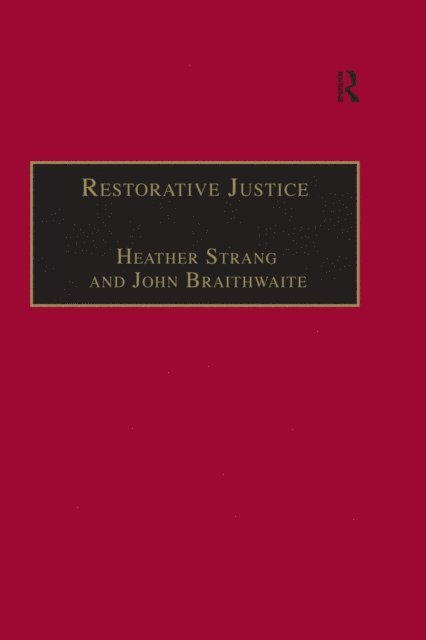
This book addresses the role of victims in our criminal justice system and the shortcomings they perceive in the way they are treated. It examines whether restorative justice can offer them more justice than they receive from the formal court-based system.Research into the shortcomings of the court-based system has identified a number of issues that victims want to address. In brief, they want a less formal process where their views count, more information about both the processing and the outcome of their case, a greater opportunity for participation in the way their case is dealt with, fairer and more respectful treatment, and emotional as well as material restoration as an outcome. Over the past three decades, the victim movement worldwide has agitated for an enhanced role for victims in criminal justice. Despite some successes, it appears that structural as well as political factors may mean that victims have won as much as they are likely to gain from formal justice.A series of randomized controlled trials in Canberra, known as the Reintegrative Shaming Experiments (RISE), has provided an opportunity to compare rigorously the impact on victims of court-based justice with a restorative justice program known as conferencing. In these experiments, middle-range property and violent offences committed by young offenders were assigned either to court (as they would normally have been treated) or to a conference. Empirical evidence from RISE examined in this book suggests that the restorative alternative of conferencing more often than court has the capacity to give victims what they say they want in achieving meaningful victim participation and restoration, especially emotional restoration.
543 kr
Skickas inom 5-8 vardagar
This book addresses the role of victims in our criminal justice system and the shortcomings they perceive in the way they are treated. It examines whether restorative justice can offer them more justice than they receive from the formal court-based system.Research into the shortcomings of the court-based system has identified a number of issues that victims want to address. In brief, they want a less formal process where their views count, more information about both the processing and the outcome of their case, a greater opportunity for participation in the way their case is dealt with, fairer and more respectful treatment, and emotional as well as material restoration as an outcome. Over the past three decades, the victim movement worldwide has agitated for an enhanced role for victims in criminal justice. Despite some successes, it appears that structural as well as political factors may mean that victims have won as much as they are likely to gain from formal justice.A series of randomized controlled trials in Canberra, known as the Reintegrative Shaming Experiments (RISE), has provided an opportunity to compare rigorously the impact on victims of court-based justice with a restorative justice program known as conferencing. In these experiments, middle-range property and violent offences committed by young offenders were assigned either to court (as they would normally have been treated) or to a conference. Empirical evidence from RISE examined in this book suggests that the restorative alternative of conferencing more often than court has the capacity to give victims what they say they want in achieving meaningful victim participation and restoration, especially emotional restoration.
418 kr
Skickas inom 7-10 vardagar
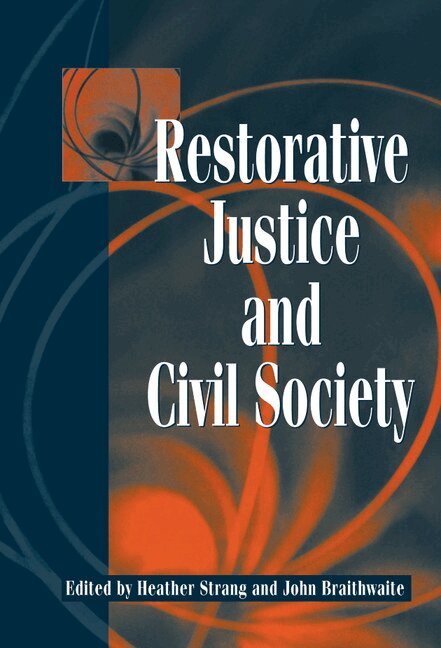
Advocates of restorative justice question the state's ability to deliver satisfactory justice to the community, both in criminal and other cases. This collaborative 2001 volume looks at the burgeoning restorative justice movement and considers the relationship between restorative justice and civil society, examining debates and exploring ideas about who should 'control' restorative justice, the state or civil society. A diverse range of chapters, written by leaders in the field, engage with different aspects of restorative justice. Genuinely international, the book addresses aspects of civil society including schools, families, churches and private workplaces, the women's movement, victims of crime and indigenous groups. It also considers broader issues such as democracy, human rights, access and equity. A dynamic and provocative volume, this book attempts to bring the ideals of restorative justice to life so that victims, offenders, their families and communities have more of a say in the justice process.
418 kr
Skickas inom 7-10 vardagar
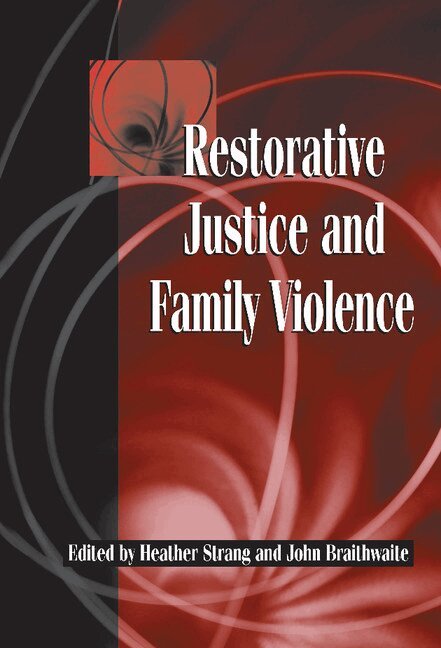
This 2002 book addresses one of the most controversial topics in restorative justice: its potential for dealing with conflicts within families. Most restorative justice programs specifically exclude family violence as an appropriate offence to be dealt with this way. This book focuses on the issues in family violence that may warrant special caution about restorative justice, in particular, feminist and indigenous concerns. At the same time it looks for ways of designing a place for restorative interventions that respond to these concerns. Further, it asks whether there are ways that restorative processes can contribute to reducing and preventing family violence, to healing its survivors and to confronting the wellsprings of this violence. The book discusses the shortcomings of the present criminal justice response to family violence. It suggests that these shortcomings require us to explore other ways of addressing this apparently intractable problem.
891 kr
Skickas inom 7-10 vardagar
Advocates of restorative justice question the state's ability to deliver satisfactory justice to the community, both in criminal and other cases. This collaborative 2001 volume looks at the burgeoning restorative justice movement and considers the relationship between restorative justice and civil society, examining debates and exploring ideas about who should 'control' restorative justice, the state or civil society. A diverse range of chapters, written by leaders in the field, engage with different aspects of restorative justice. Genuinely international, the book addresses aspects of civil society including schools, families, churches and private workplaces, the women's movement, victims of crime and indigenous groups. It also considers broader issues such as democracy, human rights, access and equity. A dynamic and provocative volume, this book attempts to bring the ideals of restorative justice to life so that victims, offenders, their families and communities have more of a say in the justice process.
927 kr
Skickas inom 7-10 vardagar
This 2002 book addresses one of the most controversial topics in restorative justice: its potential for dealing with conflicts within families. Most restorative justice programs specifically exclude family violence as an appropriate offence to be dealt with this way. This book focuses on the issues in family violence that may warrant special caution about restorative justice, in particular, feminist and indigenous concerns. At the same time it looks for ways of designing a place for restorative interventions that respond to these concerns. Further, it asks whether there are ways that restorative processes can contribute to reducing and preventing family violence, to healing its survivors and to confronting the wellsprings of this violence. The book discusses the shortcomings of the present criminal justice response to family violence. It suggests that these shortcomings require us to explore other ways of addressing this apparently intractable problem.
1 930 kr
Skickas inom 10-15 vardagar
The astonishing development of restorative justice practice over the past decade has inspired creative new thinking about the philosophy of punishment and principles of justice. Many of the questions raised in this book – such as the relationship between restorative and retributive justice and the values and processes which should guide restorative practice – are the subject of intense debates. With contributions from many of the most distinguished scholars in the field, this book analyzes the gap between philosophy and practice and the need for practice to be more informed by philosophy. This volume is a milestone in the development of those underlying principles which will direct the progress of restorative justice in the future.
1 235 kr
Skickas inom 10-15 vardagar
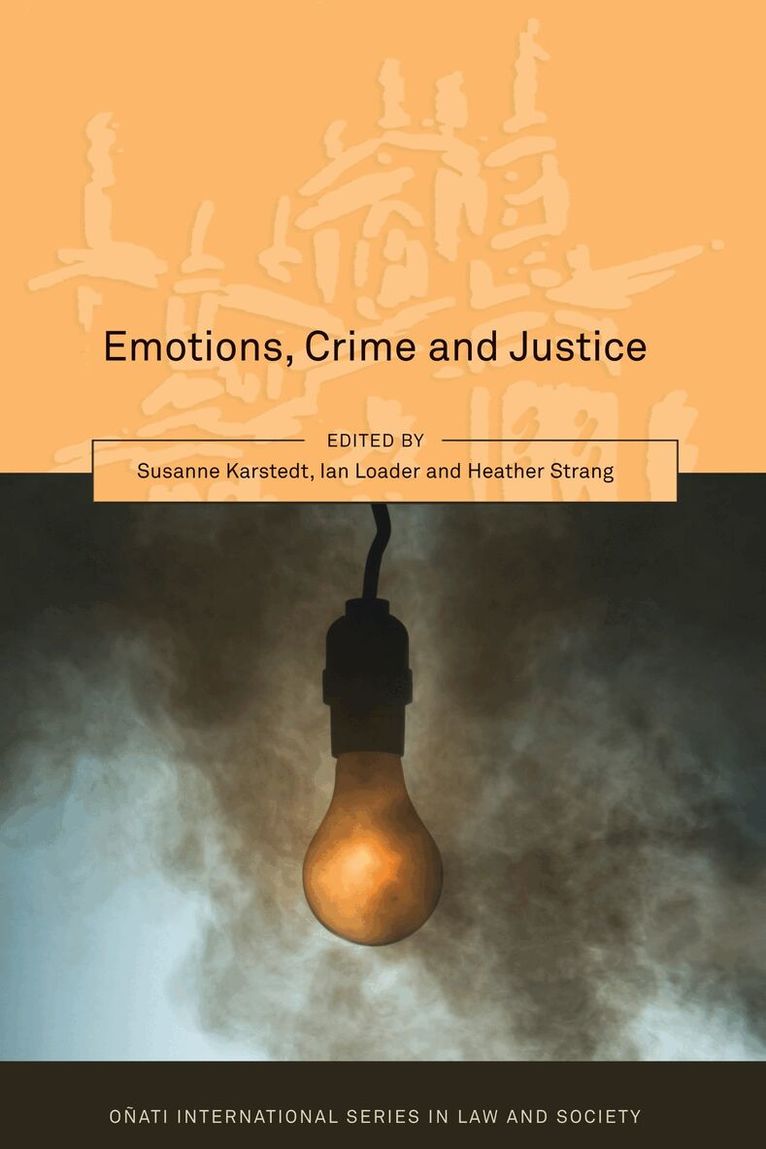
The return of emotions to debates about crime and criminal justice has been a striking development of recent decades across many jurisdictions. This has been registered in the return of shame to justice procedures, a heightened focus on victims and their emotional needs, fear of crime as a major preoccupation of citizens and politicians, and highly emotionalised public discourses on crime and justice. But how can we best make sense of these developments? Do we need to create "emotionally intelligent" justice systems, or are we messing recklessly with the rational foundations of liberal criminal justice? This volume brings together leading criminologists and sociologists from across the world in a much needed conversation about how to re-calibrate reason and emotion in crime and justice today. The contributions range from the micro-analysis of emotions in violent encounters to the paradoxes and tensions that arise from the emotionalisation of criminal justice in the public sphere. They explore the emotional labour of workers in police and penal institutions, the justice experiences of victims and offenders, and the role of vengeance, forgiveness and regret in the aftermath of violence and conflict resolution. The result is a set of original essays which offer a fresh and timely perspective on problems of crime and justice in contemporary liberal democracies.
408 kr
Skickas inom 10-15 vardagar
‘...the book is a must read. It presents a series of state of the art chapters on various subjects that are critical in criminology. The chapters are deeply rooted in the patrimony of criminological literature [and] offer an excellent balance of theoretical reflection and empirical work; the empirical methodology ranges from insightful qualitative observation, even introspective reflection, to clever quantitative measuring and sophisticated statistics’ Lode Walgrave, Criminology and Criminal JusticeThis volume brings together leading criminologists and sociologists from across the world in a much needed conversation about how to re-calibrate reason and emotion in crime and justice today. The contributions range from the micro-analysis of emotions in violent encounters to the paradoxes and tensions that arise from the emotionalisation of criminal justice in the public sphere. They explore the emotional labour in police and penal institutions, the justice experiences of victims and offenders, and the role of vengeance, forgiveness and regret. This set of original essays offers a fresh and timely perspective on problems of crime and justice in contemporary liberal democracies.