Heather Wiltse - Böcker
Visar alla böcker från författaren Heather Wiltse. Handla med fri frakt och snabb leverans.
3 produkter
3 produkter
1 754 kr
Skickas inom 10-15 vardagar
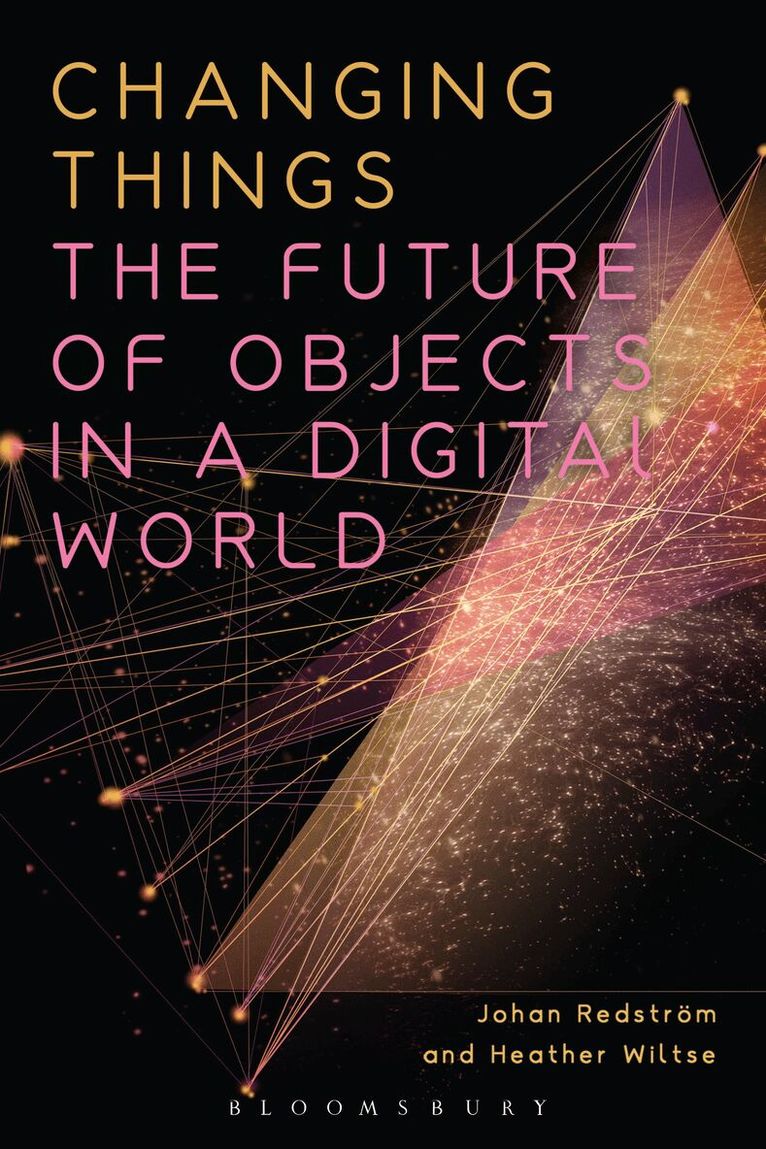
Many of the things we now live with do not take a purely physical form. Objects such as smart phones, laptops and wearable fitness trackers are different from our things of the past. These new digital forms are networked, dynamic and contextually configured. They can be changeable and unpredictable, even inscrutable when it comes to understanding what they actually do and whom they really serve.In this compelling new volume, Johan Redstrom and Heather Wiltse address critical questions that have assumed a fresh urgency in the context of these rapidly-developing forms. Drawing on critical traditions from a range of disciplines that have been used to understand the nature of things, they develop a new vocabulary and a theoretical approach that allows us to account for and address the multi-faceted, dynamic, constantly evolving forms and functions of contemporary things. In doing so, the book prototypes a new design discourse around everyday things, and describes them as fluid assemblages.Redstrom and Wiltse explore how a new theoretical framework could enable a richer understanding of things as fluid and networked, with a case study of the evolution of music players culminating in an in-depth discussion of Spotify. Other contemporary 'things' touched on in their analysis include smart phones and watches, as well as digital platforms and applications such as Google, Facebook and Twitter.
1 520 kr
Skickas inom 10-15 vardagar
We relate to things and things relate to us. Emerging technologies do this in ways that are interesting and exciting, but often also inaccessible or invisible. In this open access book, leading design researchers and philosophers respond to issues raised by this situation — inquiring into what it means to live with and relate to things that can actively relate to us, and that relate to each other in ways that do not involve us at all.Case studies include Amazon's Alexa, the Internet of Things, Pokémon Go and Roomba the robot vacuum cleaner. Authors explore everything from the care work undertaken by objects, reciprocal human/machine learning, technological mediation as a form of control, and what it takes to reveal things that tend to be hidden and that often (by design) conceal the ways in which they use us.As a whole, Relating to Things is a collaborative philosophical inquiry into the nature and consequences of contemporary technological things. It is a design inquiry into the current nature of the artificial, and possibilities for how things might be otherwise. The eBook editions of this book are available open access under a CC BY-NC-ND 4.0 licence on bloomsburycollections.com.
394 kr
Skickas inom 10-15 vardagar
Many of the things we now live with do not take a purely physical form. Objects such as smart phones, laptops and wearable fitness trackers are different from our things of the past. These new digital forms are networked, dynamic and contextually configured. They can be changeable and unpredictable, even inscrutable when it comes to understanding what they actually do and whom they really serve.In Changing Things, Johan Redstrom and Heather Wiltse address critical questions that have assumed a fresh urgency in the context of these rapidly-developing forms. Drawing on critical traditions from a range of disciplines that have been used to understand the nature of things, they develop a new vocabulary and a theoretical approach that allows us to account for and address the multi-faceted, dynamic, constantly evolving forms and functions of contemporary things. In doing so, the book prototypes a new design discourse around everyday things, and describes them as 'fluid assemblages'.Redstrom and Wiltse explore how a new theoretical framework could enable a richer understanding of things as fluid and networked, with a case study of the evolution of music players culminating in an in-depth discussion of Spotify. Other contemporary 'things' touched on in their analysis include smart phones and watches, as well as digital platforms and applications such as Google, Facebook and Twitter.