Heidi Kim – Författare
Visar alla böcker från författaren Heidi Kim. Handla med fri frakt och snabb leverans.
4 produkter
4 produkter
1 460 kr
Skickas inom 5-8 vardagar
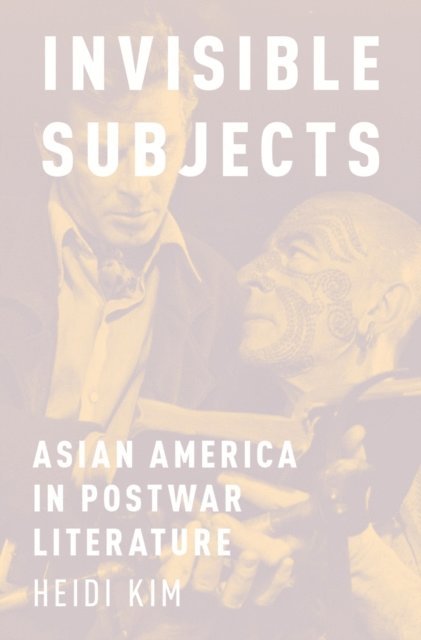
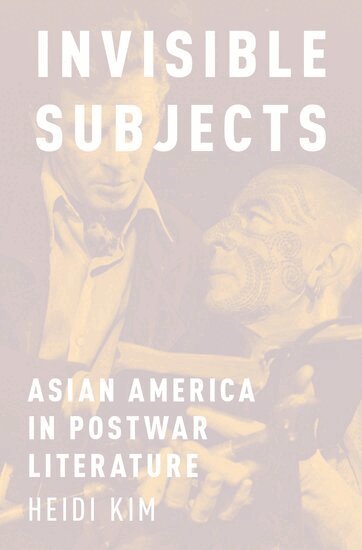
Invisible Subjects broadens the archive of Asian American studies, using advances in Asian American history and historiography to reinterpret the politics of the major figures of post-World War II American literature and criticism.Taking its theoretical inspiration from the work of Ralph Ellison and his focus on the invisibility of a racial minority in mainstream history, Heidi Kim argues that the work of American studies and literature in this era to explain and contain the troubling Asian figure reflects both the swift amnesia that covers the Pacific theater of WWII and the importance of the Asian to immigration debates and civil rights. From the Melville Revival through the myth and symbol school, as well as the fiction of John Steinbeck and William Faulkner, the postwar literary scene exhibits the ambiguity of Asian forms in the 1950s within the binaries of foreigner/native and black/white, as well as the constructs of gender and the nuclear family. It contrasts with the tortured redefinitions of race and nationality that appear in immigration acts and court cases, particularly those about segregation and interracial marriage. The Melville Revival critics' discussion of a mythic and yet realistic diabolical Asian, the role of a Chinese housekeeper in preserving the pioneer family in Steinbeck's East of Eden, and the extent to which the history of the Mississippi Chinese sheds light on Faulkner's stagnant societies all work to subsume a troubling presence.Detailing the archaeology and genealogy of Asian American Studies, Invisible Subjects offers an original, important, and vital contribution to both our understanding of American literary history and the general study of race and ethnicity in American cultural history.
Illegal Immigrants/Model Minorities
The Cold War of Chinese American Narrative
Inbunden, Engelska, 2021
1 342 kr
Skickas inom 7-10 vardagar
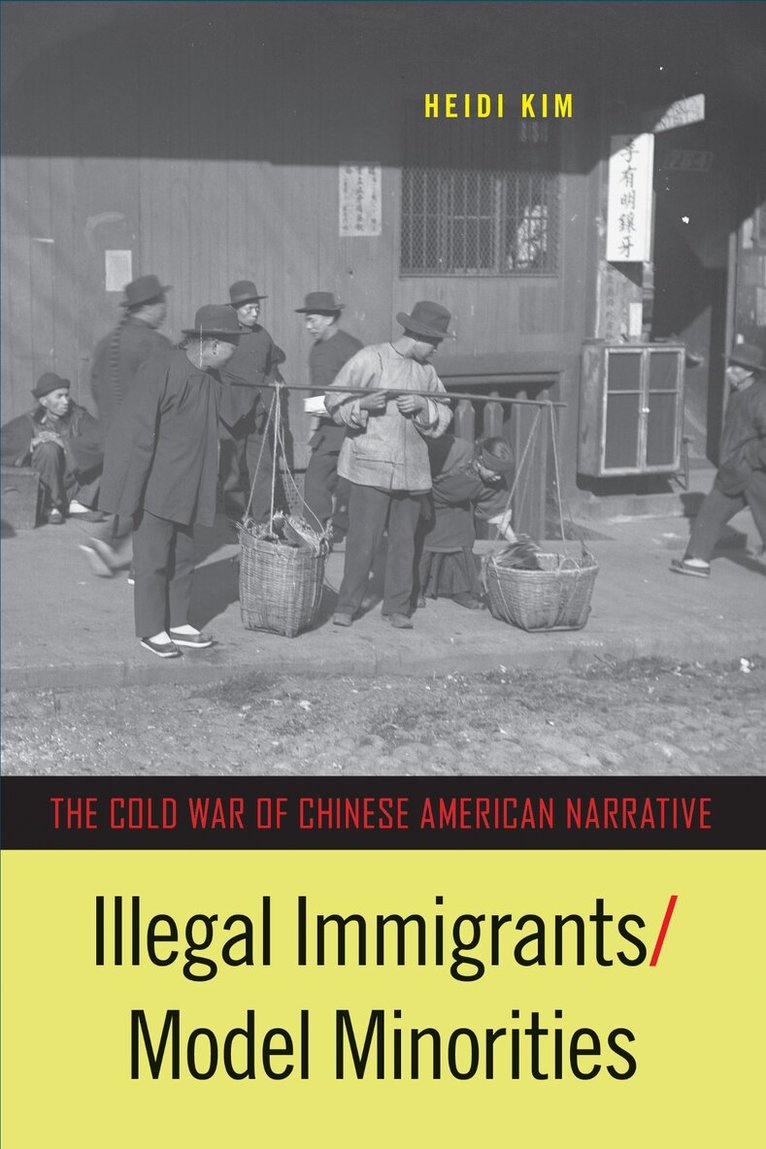
In the Cold War era, Chinese Americans were caught in a double-bind. The widespread stigma of illegal immigration, as it was often called, was most easily countered with the model minority, assimilating and forming nuclear families, but that in turn led to further stereotypes. In Illegal Immigrants/Model Minorities, Heidi Kim investigates how Chinese American writers navigated a strategy to normalize and justify the Chinese presence during a time when fears of Communism ran high.Kim explores how writers like Maxine Hong Kingston, Jade Snow Wong, and C. Y. Lee, among others, addressed issues of history, family, blood purity, and law through then-groundbreaking novels and memoirs. Illegal Immigrants/Model Minorities also uses legal cases, immigration documents, and law as well as mass media coverage to illustrate how writers constructed stories in relation to the political structures that allowed or disallowed their presence, their citizenship, and their blended identity. Kim illuminates the rapidly shifting political and social pressures on Chinese American authors who selectively concealed, revealed, and reconstructed issues of citizenship, belonging, and inclusion in their writing.
417 kr
Skickas inom 7-10 vardagar
In the Cold War era, Chinese Americans were caught in a double-bind. The widespread stigma of illegal immigration, as it was often called, was most easily countered with the model minority, assimilating and forming nuclear families, but that in turn led to further stereotypes. In Illegal Immigrants/Model Minorities, Heidi Kim investigates how Chinese American writers navigated a strategy to normalize and justify the Chinese presence during a time when fears of Communism ran high.Kim explores how writers like Maxine Hong Kingston, Jade Snow Wong, and C. Y. Lee, among others, addressed issues of history, family, blood purity, and law through then-groundbreaking novels and memoirs. Illegal Immigrants/Model Minorities also uses legal cases, immigration documents, and law as well as mass media coverage to illustrate how writers constructed stories in relation to the political structures that allowed or disallowed their presence, their citizenship, and their blended identity. Kim illuminates the rapidly shifting political and social pressures on Chinese American authors who selectively concealed, revealed, and reconstructed issues of citizenship, belonging, and inclusion in their writing.
360 kr
Skickas inom 5-8 vardagar
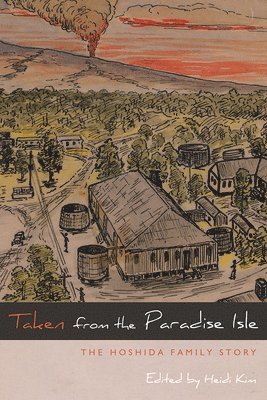
Crafted from George Hoshida’s diary and memoir, as well as letters faithfully exchanged with his wife Tamae, Taken from the Paradise Isle is an intimate account of the anger, resignation, philosophy, optimism, and love with which the Hoshida family endured their separation and incarceration during World War II.George and Tamae Hoshida and their children were a Japanese American family who lived in Hawai‘i. In 1942, George was arrested as a “potentially dangerous alien” and interned in a series of camps over the next two years. Meanwhile, forced to leave her handicapped eldest daughter behind in a nursing home in Hawai‘i, Tamae and three daughters, including a newborn, were incarcerated at the Jerome Relocation Center in Arkansas. George and Tamae regularly exchanged letters during this time, and George maintained a diary including personal thoughts, watercolors, and sketches. In Taken from the Paradise Isle these sources are bolstered by extensive archival documents and editor Heidi Kim’s historical contextualization, providing a new and important perspective on the tragedy of the incarceration as it affected Japanese American families in Hawai‘i.This personal narrative of the Japanese American experience adds to the growing testimony of memoirs and oral histories that illuminate the emotional, psychological, physical, and economic toll suffered by Nikkei as the result of the violation of their civil rights during World War II.