Helen Small - Böcker
Visar alla böcker från författaren Helen Small. Handla med fri frakt och snabb leverans.
15 produkter
15 produkter
124 kr
Skickas inom 5-8 vardagar
'All Hogglestock believed their parson to be innocent; but then all Hogglestock believed him to be mad.'Josiah Crawley lives with his family in the parish of Hogglestock, East Barsetshire, where he is perpetual curate. Impoverished like his parishioners, Crawley is hard-working and respected but he is an unhappy, disappointed man, ill-suited to cope when calamity strikes. He is accused of stealing a cheque to pay off his debts; too proud to defend himself, he risks ruin and disgrace unless the truth can be brought to light. Crawley's predicament divides the community into those who seek to help him despite himself, and those who, like Mrs Proudie, are convinced of his guilt. When the Archbishop's son, Major Grantly, falls in love with Crawley's daughter Grace, battle lines are drawn.The final volume in the Barsetshire series, The Last Chronicle draws to a close the stories of many beloved characters, including the old Warden, Mr Harding, Johnny Eames, and Lily Dale. Panoramic in scale, elegiac and moving, it is perhaps Trollope's greatest novel. ABOUT THE SERIES: For over 100 years Oxford World's Classics has made available the widest range of literature from around the globe. Each affordable volume reflects Oxford's commitment to scholarship, providing the most accurate text plus a wealth of other valuable features, including expert introductions by leading authorities, helpful notes to clarify the text, up-to-date bibliographies for further study, and much more.
103 kr
Skickas inom 5-8 vardagar
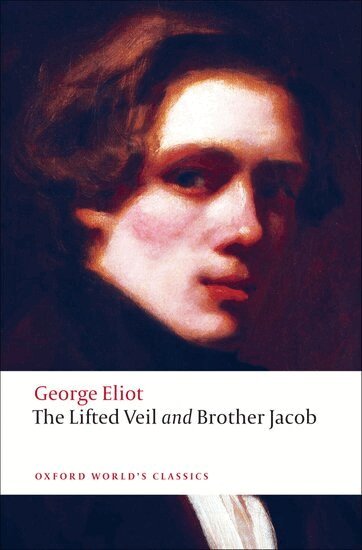
`She had believed that my wild poet's passion for her would make me her slave; and that, being her slave, I should execute her will in all things.'The Lifted Veil was first published in Blackwood's Magazine in 1859. A dark fantasy woven from contemporary scientific interest in the physiology of the brain, mesmerism, phrenology and experiments in revification it is Eliot's anatomy of her own moral philsophy - the ideal of imaginative sympathy or the ability to see into others' minds and emotions. Narrated by an egoccentric, morbid young clairvoyant man whose fascination for Bertha Grant lies partly in her obliquity, the story also explores fiction's ability to offer insight into the self, as well as being a remarkable portrait of a misdeveloped artist whose visionary powers merely blight his life. The Lifted Veil is now one of the most widely read and critically discussed of Eliot's works. Published as a companion piece to The Lifted Veil, Brother Jacob is by contrast Eliot's literary homage to Thackeray, a satirical modern fable that draws telling parallels between eating and reading. Yet both stories reveal Eliot's deep engagement with the question of whether there are 'necessary truths' independent of our perception of them and the boundaries of art and the self. Helen Small's introduction casts new light on works which fully deserve to be read alongside Eliot's novels. ABOUT THE SERIES: For over 100 years Oxford World's Classics has made available the widest range of literature from around the globe. Each affordable volume reflects Oxford's commitment to scholarship, providing the most accurate text plus a wealth of other valuable features, including expert introductions by leading authorities, helpful notes to clarify the text, up-to-date bibliographies for further study, and much more.
139 kr
Skickas inom 5-8 vardagar
'In Little Dorrit, Dickens attacked English institutions with a ferocity that has never since been approached' George OrwellA masterly evocation of the state and psychology of imprisonment, Little Dorrit is one of the supreme works of Dickens's maturity. It follows Arthur Clennam who, returning to England after many years abroad, takes a kindly interest in Amy Dorrit, his mother's seamstress, who was born and raised in the Marshalsea where her father has long been imprisoned for debt. As Arthur soon discovers, the dark shadow of the prison stretches far beyond its walls to affect the lives of many, from the kindly Mr Pancks, the reluctant rent-collector of Bleeding Heart Yard, to the bureaucratic Barnacles in the Circumlocution Office and Merdle, an unscrupulous financier. Edited with an Introduction and Notes by Stephen Wall and Helen Small
897 kr
Skickas inom 7-10 vardagar
Love's Madness makes an important new contribution to the interdisciplinary study of insanity. Focusing on the figure of the love-mad woman, Helen Small presents a significant reassessment of the ways in which British medical writers and novelists of the nineteenth century thought about madness, about femininity, and about narrative convention. At the centre of the book are studies of novels by Jane Austen, Sir Walter Scott, Charlotte Brontë, Wilkie Collins, and Charles Dickens, but Small also brings out the historical and literary interest of hitherto neglected writings by Charles Maturin, Lady Caroline Lamb, Edward Bulwer-Lytton, and others. Stories about women who go mad when they lose their lovers were extraordinarily popular during the late eighteenth and early nineteenth centuries, attracting novelists, poets, dramatists, musicians, painters, and sculptors. The representative figure of madness ceased to be the madman in chains and became instead the woman whose insanity was an extension of her female condition. Love's Madness traces the fortunes of love-mad women in fiction and in medicine between about 1800 and 1865. In literary terms, these dates demarcate the period between the decline of sentimentalism and the emergence of sensation fiction. In medical terms, they mark out a key stage in the history of insanity, beginning with major reform initiatives and ending with the establishment in 1865 of the Medico-Psychological Association. This original and highly readable study challenges previous assumptions about the relationship between medicine and the novel. A major addition to nineteenth-century studies, it will be of interest to students and scholars of literature, feminism, social history, and the history of medicine.
103 kr
Skickas inom 5-8 vardagar
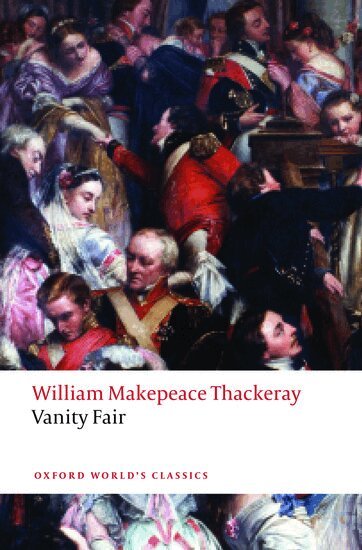
'I think I could be a good woman if I had five thousand a year.'Becky Sharp is sharp, calculating, and determined to succeed. Craving wealth and a position in society, she charms, hoodwinks, manipulates everyone she meets, rising in the world as she attaches herself to a succession of rich men. Becky's fortunes are contrasted with those of her best friend Amelia, who has none of Becky's wit and vitality but whose gentle-heartedness attracts the devotion of the loyal Dobbin. Set during the Napoleonic wars, Vanity Fair follows Becky as she cuts a swathe through Regency society. Thackeray paints a panoramic portrait of the age, with war, money and national identity his great subjects. The battle for social success is as fierce as the battle of Waterloo, and its casualties as stricken. The satire is at once biting and profound, sparing none in a clear-eyed exposure of a world on the make. Thackeray's scepticism of human motives borders on cynicism yet Vanity Fair is among the funniest novels of the Victorian age. This new edition includes all Thackeray's original illustrations. ABOUT THE SERIES: For over 100 years Oxford World's Classics has made available the widest range of literature from around the globe. Each affordable volume reflects Oxford's commitment to scholarship, providing the most accurate text plus a wealth of other valuable features, including expert introductions by leading authorities, helpful notes to clarify the text, up-to-date bibliographies for further study, and much more.
434 kr
Skickas
The Value of the Humanities provides a critical account of the principal arguments used to defend the value of the Humanities. The claims considered are: that the Humanities study the meaning-making practices of culture, and bring to their work a distinctive understanding of what constitutes knowledge and understanding; that, though useful to society in many ways, they remain laudably at odds with, or at a remove from, instrumental use value; that they contribute to human happiness; that they are a force for democracy; and that they are a good in themselves, to be valued 'for their own sake'. Engaging closely with contemporary literary and philosophical work in the field from the UK and US, Helen Small distinguishes between arguments that retain strong Victorian roots (Mill on happiness; Arnold on use value) and those that have developed or been substantially altered since. Unlike many works in this field, The Value of the Humanities is not a polemic or a manifesto. Its purpose is to explore the grounds for each argument, and to test its validity for the present day. Tough-minded, alert to changing historical conditions for argument and changing styles of rhetoric, it promises to sharpen the terms of the public debate.
609 kr
Skickas inom 5-8 vardagar
Cynicism is usually seen as a provocative mode of dissent from conventional moral thought, casting doubt on the motives that guide right conduct. When critics today complain that it is ubiquitous but lacks the serious bite of classical Cynicism, they express concern that it can now only be corrosively negative. The Function of Cynicism at the Present Time takes a more balanced view. Re-evaluating the role of cynicism in literature, cultural criticism, and philosophy from 1840 to the present, it treats cynic confrontationalism as a widely-employed credibility-check on the promotion of moral ideals--with roots in human psychology. Helen Small investigates how writers have engaged with Cynic traditions of thought, and later more gestural styles of cynicism, to re-calibrate dominant moral values, judgements of taste, and political agreements. The argument develops through a series of cynic challenges to accepted moral thinking: Friedrich Nietzsche on morality; Thomas Carlyle v. J. S. Mill on the permissible limits of moral provocation; Arnold on the freedom of criticism; George Eliot and Ford Madox Ford on cosmopolitanism; Bertrand Russell, John Dewey, and Laura Kipnis on the conditions of work in the university. The Function of Cynicism treats topics of present-day public concern: abrasive styles of public argument; debasing challenges to conventional morality; free speech, moral controversialism; the authority of reason and the limits of that authority; nationalism and resistance to nationalism; and liberty of expression as a core principle of the university.
1 059 kr
Skickas inom 5-8 vardagar
The Long Life invites the reader to range widely from the writings of Plato through to recent philosophical work by Derek Parfit, Bernard Williams, and others, and from Shakespeare's King Lear through works by Thomas Mann, Balzac, Dickens, Beckett, Stevie Smith, Philip Larkin, to more recent writing by Saul Bellow, Philip Roth, and J. M. Coetzee.Helen Small argues that if we want to understand old age, we have to think more fundamentally about what it means to be a person, to have a life, to have (or lead) a good life, to be part of a just society. What did Plato mean when he suggested that old age was the best place from which to practice philosophy - or Thomas Mann when he defined old age as the best time to be a writer - and were they right? If we think, as Aristotle did, that a good life requires the active pursuit of virtue, how will our view of later life be affected? If we think that lives and persons are unified, much as stories are said to be unified, how will our thinking about old age differ from that of someone who thinks that lives and/or persons can be strongly discontinuous? In a just society, what constitutes a fair distribution of limited resources between the young and the old? How, if at all, should recent developments in the theory of evolutionary senescence alter our thinking about what it means to grow old? This is a groundbreaking book, deep as well as broad, and likely to alter the way in which we talk about one of the great social concerns of our time - the growing numbers of those living to be old, and the growing proportion of the old to the young.
Literature, Science, Psychoanalysis, 1830-1970
Essays in Honour of Gillian Beer
Inbunden, Engelska, 2003
3 170 kr
Skickas inom 7-10 vardagar
The interactions between literature and science and between literature and psychoanalysis have been among the most thriving areas for interdisciplinary study in recent years. Work in these 'open fields' has taught us to recognize the interdependence of different cultures of knowledge and experience, revealing the multiple ways in which science, literature, and psychoanalysis have been mutually enabling and defining, as well as corrective and contestatory of each other. Inspired by Gillian Beer's path-breaking work on literature and science, this volume presents fourteen new essays by leading American and British writers. They focus on the evolutionary sciences in the nineteeth-century; the early years of psychoanalysis, from Freud to Ella Freeman Sharpe; and the modern development of the physical sciences. Drawing on recent debates within the history of science, psychoanalytic literary criticism, intellectual history, and gender studies, the volume makes a major contribution to our understanding of the formation of knowledge. Among its recurrent themes are: curiosity and epistemology; 'growth', 'maturity', and 'coming of age' as structuring metaphors (several essays focus especially on childhood); taxonomy; sleep and dreaming and elusive knowledge; the physiology of truth; and the gender politics of scientific theory and practice. The essays also reflect Beer's extensive influence as a literary critic, with close readings of works by Charlotte Brontë, Alfred Lord Tennyson, George Eliot, Thomas Hardy, Henry James, Oscar Wilde, H. G. Wells, Edith Ayrton Zangwill, Charlotte Haldane, Virginia Woolf, George Orwell, and Karin Boye.
129 kr
Skickas inom 5-8 vardagar
'She liked lies...To lie readily and cleverly, recklessly and yet successfully, was, according to the lessons which she had learned, a necessity in a woman'Lizzie Eustace is young, beautiful, and widowed. Her determination to hold on to the Eustace family's diamond necklace in the face of legal harassment by her brother-in-law's solicitor entangles her in a series of crimes - apparent and real - and contrived love-affairs. Her cousin Frank, Tory MP and struggling barrister, loyally assists her, to the distress of his fiancée, Lucy Morris. A pompous Under-Secretary of State, an exploitative and acquisitive American and her unhappy niece, a shady radical peer, and a brutal aristocrat are only some of the characters in this, one of Trollope's most engaging novels: part sensation fiction, part detective story, part political satire, and part ironic romance.The Eustace Diamonds (1873) belongs to Trollope's Palliser series. Though often considered the least political of the six novels, it is a highly revealing study of Victorian Britain, its colonial activities in Ireland and India, its veneration of wealth, and its pervasive dishonesty. ABOUT THE SERIES: For over 100 years Oxford World's Classics has made available the widest range of literature from around the globe. Each affordable volume reflects Oxford's commitment to scholarship, providing the most accurate text plus a wealth of other valuable features, including expert introductions by leading authorities, helpful notes to clarify the text, up-to-date bibliographies for further study, and much more.
594 kr
Skickas inom 7-10 vardagar
The Long Life invites the reader to range widely from the writings of Plato through to recent philosophical work by Derek Parfit, Bernard Williams, and others, and from Shakespeare's King Lear through works by Thomas Mann, Balzac, Dickens, Beckett, Stevie Smith, Philip Larkin, to more recent writing by Saul Bellow, Philip Roth, and J. M. Coetzee.Helen Small argues that if we want to understand old age, we have to think more fundamentally about what it means to be a person, to have a life, to have (or lead) a good life, to be part of a just society. What did Plato mean when he suggested that old age was the best place from which to practice philosophy - or Thomas Mann when he defined old age as the best time to be a writer - and were they right? If we think, as Aristotle did, that a good life requires the active pursuit of virtue, how will our view of later life be affected? If we think that lives and persons are unified, much as stories are said to be unified, how will our thinking about old age differ from that of someone who thinks that lives and/or persons can be strongly discontinuous? In a just society, what constitutes a fair distribution of limited resources between the young and the old? How, if at all, should recent developments in the theory of evolutionary senescence alter our thinking about what it means to grow old? This is a groundbreaking book, deep as well as broad, and likely to alter the way in which we talk about one of the great social concerns of our time - the growing numbers of those living to be old, and the growing proportion of the old to the young.
631 kr
Skickas inom 5-8 vardagar
The Value of the Humanities provides a critical account of the principal arguments used to defend the value of the Humanities. The claims considered are: that the Humanities study the meaning-making practices of culture, and bring to their work a distinctive understanding of what constitutes knowledge and understanding; that, though useful to society in many ways, they remain laudably at odds with, or at a remove from, instrumental use value; that they contribute to human happiness; that they are a force for democracy; and that they are a good in themselves, to be valued 'for their own sake'. Engaging closely with contemporary literary and philosophical work in the field from the UK and US, Helen Small distinguishes between arguments that retain strong Victorian roots (Mill on happiness; Arnold on use value) and those that have developed or been substantially altered since. Unlike many works in this field, The Value of the Humanities is not a polemic or a manifesto. Its purpose is to explore the grounds for each argument, and to test its validity for the present day. Tough-minded, alert to changing historical conditions for argument and changing styles of rhetoric, it promises to sharpen the terms of the public debate.
577 kr
Skickas inom 7-10 vardagar
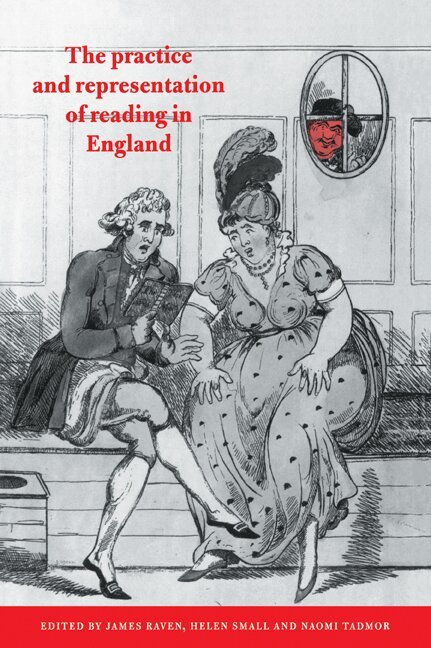
Developments in cultural history and literary criticism have suggested alternative ways of addressing the interpretation of reading. How did people read in the past? Where and why did they read? How were the manner and purpose of reading envisaged and recorded by contemporaries - and why? Drawing on fields as diverse as medieval pedagogy, textual bibliography, the history of science, and social and literary history, this collection of fourteen essays highlights both the singularity of personal reading experiences and the cultural conventions involved in reading and its perception. An introductory essay offers an important critical assessment of the various contributions to the development of the subject in recent times. This book constitutes a major addition to our understanding of the history of readers and reading.
1 282 kr
Skickas inom 7-10 vardagar
Developments in cultural history and literary criticism have suggested alternative ways of addressing the interpretation of reading. How did people read in the past? Where and why did they read? How were the manner and purpose of reading envisaged and recorded by contemporaries - and why? Drawing on fields as diverse as medieval pedagogy, textual bibliography, the history of science, and social and literary history, this collection of fourteen essays highlights both the singularity of personal reading experiences and the cultural conventions involved in reading and its perception. An introductory essay offers an important critical assessment of the various contributions to the development of the subject in recent times. This book constitutes a major addition to our understanding of the history of readers and reading.
547 kr
Skickas inom 7-10 vardagar
New essays by prestigious thinkers such as Edward Said, Bruce Robbins, Jacqueline Rose, and Stefan Collini on the public role of writers and intellectuals.