Helmut Müller-Sievers - Böcker
Visar alla böcker från författaren Helmut Müller-Sievers. Handla med fri frakt och snabb leverans.
5 produkter
5 produkter
1 017 kr
Skickas inom 3-6 vardagar
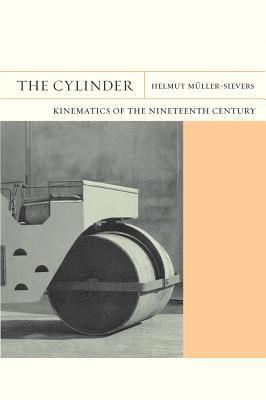
"The Cylinder" investigates the surprising proliferation of cylindrical objects in the nineteenth century, such as steam engines, phonographs, panoramas, rotary printing presses, silos, safety locks, and many more. Examining this phenomenon through the lens of kinematics, the science of forcing motion, Helmut Muller-Sievers provides a new view of the history of mechanics and of the culture of the industrial revolution, including its literature that focuses on the metaphysics and aesthetics of motion. Muller-Sievers explores how nineteenth-century prose falls in with the specific rhythm of cylindrical machinery, re-imagines the curvature of cylindrical spaces, and conjoins narrative progress and reflection in a single stylistic motion. Illuminating the intersection of engineering, culture, and literature, he argues for a concept of culture that includes an epoch's relation to the motion of its machines.
743 kr
Skickas inom 7-10 vardagar
The genealogy and function of epigenesis—the theory that organisms generate themselves under the guidance of a formative drive—provides a unique means of understanding the profound changes in philosophy, philosophy of language, and literature at the turn of the nineteenth century.The book begins by describing how and why epigenesis came to replace the reigning model of biological origination, preformation—the theory that all organisms were preformed at the creation of the world. Contemporary with these developments, Kant used the figures of epigenesis and self-formation to illustrate his concepts of the origin of the categories, the possible success of practical reason, and the validity of aesthetic and teleological judgments. The author shows how Kant's figurative use of self-generation was turned into an indispensable determination by Fichte and his successors: philosophical knowledge can claim absolute certainty only if it can prove that it generates itself in logically accountable procedures.This self-generating philosophy—also known as Idealism—was in turn accompanied by a revaluation of the origin of language, notably by Herder and by Humboldt, who attempted to formulate self-generation as the philosophical foundation for a future Science of Language. The book concludes by demonstrating that the biological, philosophical, and linguistic problematic of self-generation is at the heart of Goethe's novel Elective Affinities and Beaumarchais's The Marriage of Figaro.
Novel Experience
Reading Fiction with Nagarjuna, Nietzsche, and William James
Inbunden, Engelska, 2026
1 745 kr
Skickas inom 10-15 vardagar
The Novel Experience introduces new approaches to the study of narrative fiction, for scholars, critics, teachers, and readers. At the heart of this concise book is a conception of experience that is influenced by the musings of third-century Buddhist thinker Nāgārjuna on the fictionality of truth and the emptiness of reality. Combining this insight with Nietzsche's method of intellectual genealogy and William James's transformation of emotion into "pure experience," Helmut Müller-Sievers proposes a way to talk about the experience of reading a novel that suspends the rush to judgment and ever-new "turn" in modes of interpretation. In its meditative corporeality, it is also beyond the grasp of any AI.For Müller-Sievers, every experience is novel and every novel is an experience. He explicates this parallelism through philosophical works that privilege experience over knowledge (without denying the importance of understanding). Interspersing analyses of Nāgārjuna, Nietzsche, and James with personal essays about the lived experience of reading works like Ralph Ellison's Invisible Man and Heinrich von Kleist's The Marquise of O, The Novel Experience shows that reading about experiences in novels has a transformative effect on the reader's understanding of what it is to experience. Teachers and readers should attend to these changes, acknowledging their singularity while creating a community within which they can abide.
238 kr
Skickas inom 10-15 vardagar
The Novel Experience introduces new approaches to the study of narrative fiction, for scholars, critics, teachers, and readers. At the heart of this concise book is a conception of experience that is influenced by the musings of third-century Buddhist thinker Nāgārjuna on the fictionality of truth and the emptiness of reality. Combining this insight with Nietzsche's method of intellectual genealogy and William James's transformation of emotion into "pure experience," Helmut Müller-Sievers proposes a way to talk about the experience of reading a novel that suspends the rush to judgment and ever-new "turn" in modes of interpretation. In its meditative corporeality, it is also beyond the grasp of any AI.For Müller-Sievers, every experience is novel and every novel is an experience. He explicates this parallelism through philosophical works that privilege experience over knowledge (without denying the importance of understanding). Interspersing analyses of Nāgārjuna, Nietzsche, and James with personal essays about the lived experience of reading works like Ralph Ellison's Invisible Man and Heinrich von Kleist's The Marquise of O, The Novel Experience shows that reading about experiences in novels has a transformative effect on the reader's understanding of what it is to experience. Teachers and readers should attend to these changes, acknowledging their singularity while creating a community within which they can abide.
1 492 kr
Skickas inom 5-8 vardagar
One of the most contentious questions in contemporary literary studies is whether there can ever be a science of literature that can lay claim to objectivity and universality, for example by concentrating on philological criticism, by appealing to cognitive science, or by exposing the underlying media of literary communication. The present collection of essays seeks to open up this discussion by posing the question’s historical and systematic double: has there been a science of literature, i.e. a mode of presentation and practice of reference in science that owes its coherence to the discourse of literature? Detailed analyses of scientific, literary and philosophical texts show that from the late 18th to the late 19th century science and literature were bound to one another through an intricate web of mutual dependence and distinct yet incalculable difference. The Science of Literature suggests that this legacy continues to shape the relation between literary and scientific discourses inside and outside of academia.