Henrik Ringbom – författare
2 435 kr
Skickas inom 10-15 vardagar
575 kr
Skickas inom 10-15 vardagar
619 kr
Läs direkt efter köp
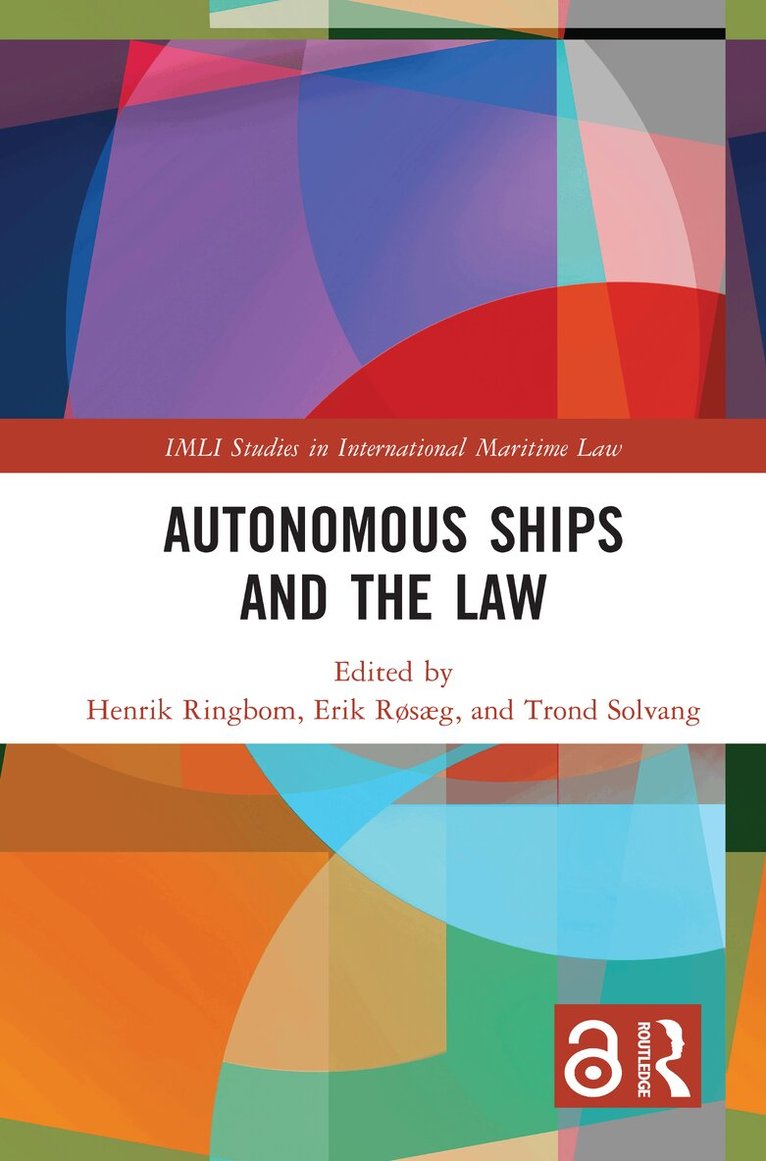
Interest in autonomous ships has grown exponentially over the past few years. Whereas a few years ago, the prospect of unmanned and autonomous vessels sailing on the seas was considered unrealistic, the debate now centers on when and in what format and pace the development will take place.
Law has a key role to play in this development and legal obstacles are often singled out as principal barriers to the rapid introduction of new technologies in shipping. Within a few years, autonomous ships have turned from a non-issue to one of the main regulatory topics being addressed by the International Maritime Organization. However, the regulatory discussion is still in its infancy, and while many new questions have been raised, few answers have been provided to them to date.
Increased automation of tasks that have traditionally been undertaken by ships'' crews raises interesting legal questions across the whole spectrum of maritime law. The first of its kind, this book explores the issue of autonomous ships from a wide range of legal perspectives, including both private law and public law at international and national level, making available cutting-edge research which will be of significant interest to researchers in maritime law.
Chapter 3 of this book is freely available as a downloadable Open Access PDF at http://www.taylorfrancis.com under a Creative Commons Attribution-Non Commercial (CC-BY-NC) 4.0 license.
619 kr
Läs direkt efter köp
Interest in autonomous ships has grown exponentially over the past few years. Whereas a few years ago, the prospect of unmanned and autonomous vessels sailing on the seas was considered unrealistic, the debate now centers on when and in what format and pace the development will take place.
Law has a key role to play in this development and legal obstacles are often singled out as principal barriers to the rapid introduction of new technologies in shipping. Within a few years, autonomous ships have turned from a non-issue to one of the main regulatory topics being addressed by the International Maritime Organization. However, the regulatory discussion is still in its infancy, and while many new questions have been raised, few answers have been provided to them to date.
Increased automation of tasks that have traditionally been undertaken by ships'' crews raises interesting legal questions across the whole spectrum of maritime law. The first of its kind, this book explores the issue of autonomous ships from a wide range of legal perspectives, including both private law and public law at international and national level, making available cutting-edge research which will be of significant interest to researchers in maritime law.
Chapter 3 of this book is freely available as a downloadable Open Access PDF at http://www.taylorfrancis.com under a Creative Commons Attribution-Non Commercial (CC-BY-NC) 4.0 license.
1 156 kr
Skickas inom 10-15 vardagar
585 kr
Läs direkt efter köp
585 kr
Läs direkt efter köp
543 kr
Skickas inom 10-15 vardagar
4 114 kr
Skickas inom 5-8 vardagar
3 472 kr
Läs direkt efter köp
Key Features:
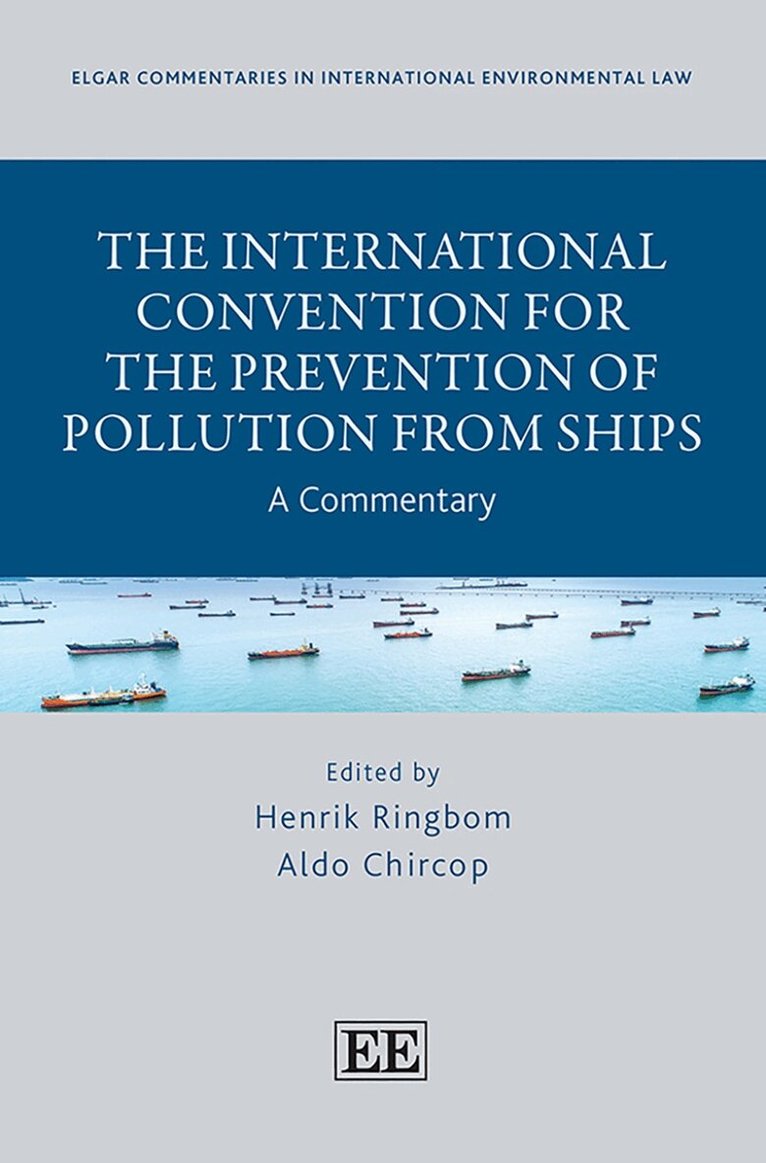
Examines the MARPOL system in detail including its annexes and regulationsInvestigates the history, purposes, rationale and regulatory approach of MARPOLIdentifies legal and regulatory issues as well as the challenges of implementation and enforcementEmphasizes the vital role that MARPOL has played in the protection of the marine environment from all forms of shippingThe International Convention for the Prevention of Pollution from Ships is invaluable to practitioners and professionals in ministries and departments of transport, national maritime administrations, intergovernmental organizations, shipping industries and international NGOs. It is also an essential resource for students and academics in international environmental law, law of the sea and international maritime law.
Regulatory Gaps in Baltic Sea Governance
Selected Issues
697 kr
Skickas inom 10-15 vardagar
Regulatory Gaps in Baltic Sea Governance
Selected Issues
993 kr
Skickas inom 10-15 vardagar
874 kr
Läs direkt efter köp
The focus of this publication is the uniqueness of the Baltic Sea from a legal perspective, and the regulatory voids that result from the multiple layers of regulation this area is subjected to: up to six layers of regulation (general international law, regional conventions, EU law, national laws, local and municipal rules plus a whole range of non-binding norms and other ''soft law'' arrangements) act in parallel. However, a large number of rules or regulatory layers does not in itself ensure effectiveness or consistency. When the regulatory landscape is approached from the point of view of individual substantive topics, it is apparent that the norms of different regulatory layers entail both overlaps, gaps and uncertainties, differently for each topic. This publication addresses a selection of topics that are decidedly international in nature, but for which current international and EU rules include important gaps or uncertainties.
In addition to presenting a set of legal analyses of topical issues for the region, which in itself is a meritorious objective in view of the relative scarcity of legal studies with a focus on the Baltic Sea, the publication also seeks to analyze the regulatory ''anatomy'' of the selected issues in more detail. Through the legal analyses the chapters explore how regulatory gaps are formed, how they are filled, how the rules of the different layers work together and interact with each other in the selected areas. Accordingly, the secondary ambition is to explore, through the chapters, whether more general conclusions can be drawn about the nature of the regulatory gaps and multi-layerism in order to produce a better understanding of how regulations on multiple levels operate in practice.
1 108 kr
Skickas inom 5-8 vardagar
3 867 kr
Läs direkt efter köp
The legal regime regulating ship safety and pollution prevention provides an excellent illustration of contemporary trends of international law in general, and of the law of the sea and international environmental law in particular. The sources of law are expanding in several directions. The number of global instruments - both ''soft'' and ''hard'' law - is constantly increasing and regional organizations are being more and more concerned with matters affecting traditional freedoms of the seas. Frequently different levels of norms cover the same issues, thus creating competing - possibly even conflicting - rules. The present volume provides not only a detailed examination of current legal issues relating to the variety of rules and rule-makers in the field of marine environmental protection, but also relates the recent developments to international law in a wider context. It contains revised and edited versions of the papers presented at a conference in the Åland Islands, Finland, in August 1996, convened by the Department of Law of Åbo Akademi University, Finland.
747 kr
Läs direkt efter köp
4 299 kr
Tillfälligt slut