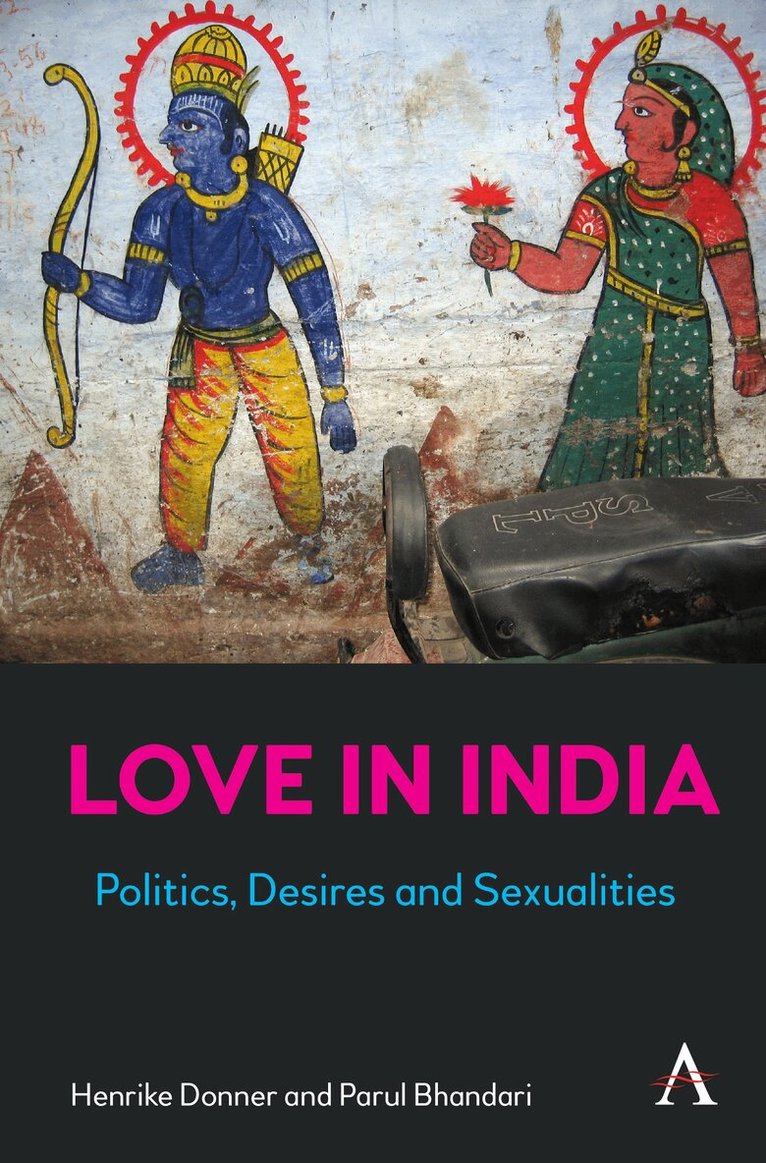
Henrike Donner – författare
2 176 kr
Skickas inom 10-15 vardagar
455 kr
Skickas inom 10-15 vardagar
2 246 kr
Skickas inom 10-15 vardagar
833 kr
Skickas inom 10-15 vardagar
682 kr
Läs direkt efter köp
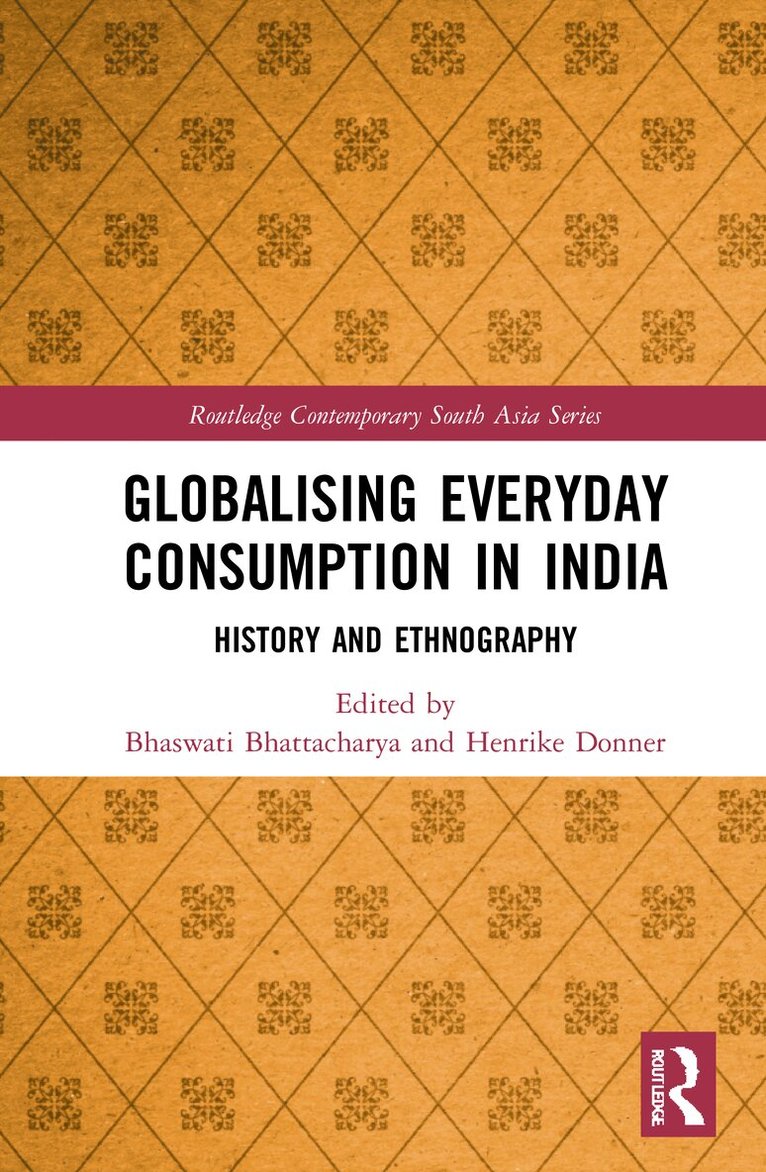
This book brings together historical and ethnographic perspectives on Indian consumer identities.
Through an in-depth analysis of local, regional, and national histories of marketing, regulatory bodies, public and domestic practices, this interdisciplinary volume charts the emergence of Indian consumer society and discusses commodity consumption as a main feature of Indian modernity.
Nationalist discourse was shaped by moral struggles over consumption patterns that became a hallmark of middle-class identity. But a number of chapters demonstrate how a wide range of social strata were targeted as markets for everyday commodities associated with global lifestyles early on. A section of the book illustrates how a new group of professionals engaged in advertising trying to create a market shaped tastes and discourses and how campaigns provided a range of consumers with guidance on ‘modern lifestyles’. Chapters discussing advertisements for consumables like coffee and cooking oil, show these to be part of new public cultures. The ethnographic chapters focus on contemporary practices and consumption as a main marker of class, caste and community. Throughout the book consumption is shown to determine communal identities, but some chapters also highlight how it reshapes intimate relationships. The chapters explore the middle-class family, microcredit schemes, and metropolitan youth cultures as sites in which consumer citizenship is realised.
The book will be of interest to readers from a range of disciplines, including anthropology, history, geography, sociology, South Asian studies, and visual cultures.
682 kr
Läs direkt efter köp
This book brings together historical and ethnographic perspectives on Indian consumer identities.
Through an in-depth analysis of local, regional, and national histories of marketing, regulatory bodies, public and domestic practices, this interdisciplinary volume charts the emergence of Indian consumer society and discusses commodity consumption as a main feature of Indian modernity.
Nationalist discourse was shaped by moral struggles over consumption patterns that became a hallmark of middle-class identity. But a number of chapters demonstrate how a wide range of social strata were targeted as markets for everyday commodities associated with global lifestyles early on. A section of the book illustrates how a new group of professionals engaged in advertising trying to create a market shaped tastes and discourses and how campaigns provided a range of consumers with guidance on ‘modern lifestyles’. Chapters discussing advertisements for consumables like coffee and cooking oil, show these to be part of new public cultures. The ethnographic chapters focus on contemporary practices and consumption as a main marker of class, caste and community. Throughout the book consumption is shown to determine communal identities, but some chapters also highlight how it reshapes intimate relationships. The chapters explore the middle-class family, microcredit schemes, and metropolitan youth cultures as sites in which consumer citizenship is realised.
The book will be of interest to readers from a range of disciplines, including anthropology, history, geography, sociology, South Asian studies, and visual cultures.
2 246 kr
Skickas inom 10-15 vardagar
595 kr
Skickas inom 10-15 vardagar
524 kr
Läs direkt efter köp
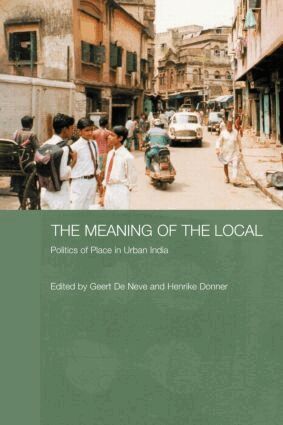
By zooming in on urban localities in India and by unpacking the ''meaning of the local'' for those who live in them, the ten papers in this volume redress a recurrent asymmetry in contemporary debates about globalisation. In much literature, the global is associated with transnationalism, dynamism and activity, and the local with static identities and history.
Focusing on a range of locales in India''s metropolitan areas and provincial small towns, the contributions move beyond the assertion that space is socially constructed to explore the ways in which social and political relations are themselves spatially and historically contingent. Using detailed ethnography, the authors highlight the vitality of place-making in the lives of urban dwellers and the centrality of a ''politics of place'' in the production of power, difference and inequality. The volume illustrates how urban spaces are increasingly interconnected through wider social and spatial processes, while local boundaries and group-based identities are at the same time reconstructed, and often even consolidated, through the use of ''traditional'' idioms and localised practices.
All contributions relate detailed case studies of everyday activities to a range of contemporary debates that highlight various spatial aspects of cultural identities, economic restructuring and political processes in India. The volume provides an interdisciplinary perspective on urban life in rapidly changing political and economic environments. It offers a contribution to policy-orientated debates on urban livelihoods and urban planning as well as a wealth of ethnographic material for those interested in the spatial dimensions of urban life in India.
519 kr
Läs direkt efter köp
By zooming in on urban localities in India and by unpacking the ''meaning of the local'' for those who live in them, the ten papers in this volume redress a recurrent asymmetry in contemporary debates about globalisation. In much literature, the global is associated with transnationalism, dynamism and activity, and the local with static identities and history.
Focusing on a range of locales in India''s metropolitan areas and provincial small towns, the contributions move beyond the assertion that space is socially constructed to explore the ways in which social and political relations are themselves spatially and historically contingent. Using detailed ethnography, the authors highlight the vitality of place-making in the lives of urban dwellers and the centrality of a ''politics of place'' in the production of power, difference and inequality. The volume illustrates how urban spaces are increasingly interconnected through wider social and spatial processes, while local boundaries and group-based identities are at the same time reconstructed, and often even consolidated, through the use of ''traditional'' idioms and localised practices.
All contributions relate detailed case studies of everyday activities to a range of contemporary debates that highlight various spatial aspects of cultural identities, economic restructuring and political processes in India. The volume provides an interdisciplinary perspective on urban life in rapidly changing political and economic environments. It offers a contribution to policy-orientated debates on urban livelihoods and urban planning as well as a wealth of ethnographic material for those interested in the spatial dimensions of urban life in India.
957 kr
Läs direkt efter köp
966 kr
Läs direkt efter köp
2 596 kr
Läs direkt efter köp
2 596 kr
Läs direkt efter köp
1 566 kr
Kommande
1 476 kr
Skickas inom 10-15 vardagar