Geert de Neve – författare
455 kr
Skickas inom 10-15 vardagar
2 246 kr
Skickas inom 10-15 vardagar
943 kr
Skickas inom 10-15 vardagar
458 kr
Läs direkt efter köp
909 kr
Läs direkt efter köp
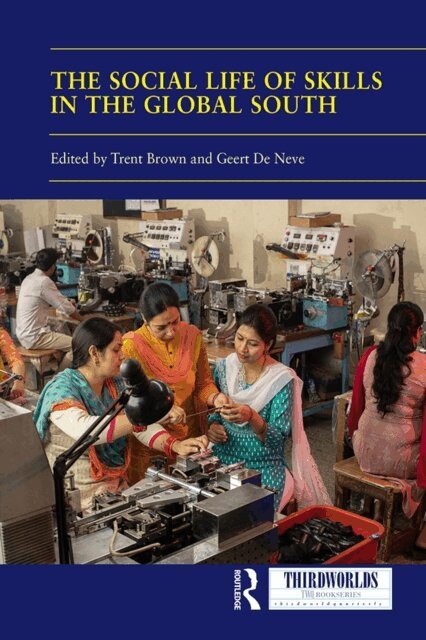
This book expands understandings of how skills are defined, acquired, and utilized in Global South contexts. ‘Skills’ and ‘skill development’ are increasingly prominent focal points for governments in the Global South and international development bodies. Yet, policymakers and practitioners promoting skill development often overlook the everyday realities of how skills are learned and acquired, and how they are deployed and valued by individuals and communities. Frequently, they ignore the social and institutional barriers that prevent people from using their skills in meaningful or remunerative ways.
By focusing on the ‘the social life of skills’, the chapters in this volume invite a broader conceptualization of skills, their development, and their application in Global South contexts. They explore four main areas of theorization and practice:
1. The social and political processes by which certain types of work – and people – are labeled as ‘skilled’ or ‘unskilled.’
2. The different ways people acquire skills: formal, informal, and nonformal.
3. The political economy of skills and skill development and their imbrication in forms of exploitation and intersecting inequalities.
4. The role of skills in the expression of aspirations, identities, and agency.
This book will appeal to students and researchers in the fields of development studies, sociology, anthropology, education, and labor studies, particularly those focusing on the Global South. It will also appeal to policymakers, practitioners, and development organizations working on skill development and vocational training.
The chapters in this book were originally published as a special issue of Third World Quarterly.
909 kr
Läs direkt efter köp
This book expands understandings of how skills are defined, acquired, and utilized in Global South contexts. ‘Skills’ and ‘skill development’ are increasingly prominent focal points for governments in the Global South and international development bodies. Yet, policymakers and practitioners promoting skill development often overlook the everyday realities of how skills are learned and acquired, and how they are deployed and valued by individuals and communities. Frequently, they ignore the social and institutional barriers that prevent people from using their skills in meaningful or remunerative ways.
By focusing on the ‘the social life of skills’, the chapters in this volume invite a broader conceptualization of skills, their development, and their application in Global South contexts. They explore four main areas of theorization and practice:
1. The social and political processes by which certain types of work – and people – are labeled as ‘skilled’ or ‘unskilled.’
2. The different ways people acquire skills: formal, informal, and nonformal.
3. The political economy of skills and skill development and their imbrication in forms of exploitation and intersecting inequalities.
4. The role of skills in the expression of aspirations, identities, and agency.
This book will appeal to students and researchers in the fields of development studies, sociology, anthropology, education, and labor studies, particularly those focusing on the Global South. It will also appeal to policymakers, practitioners, and development organizations working on skill development and vocational training.
The chapters in this book were originally published as a special issue of Third World Quarterly.
2 176 kr
Skickas inom 10-15 vardagar
524 kr
Läs direkt efter köp
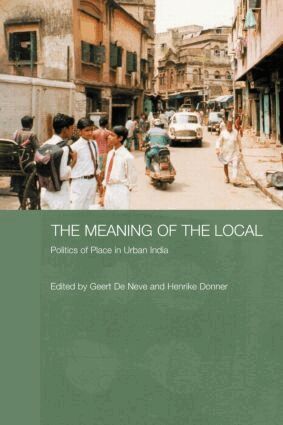
By zooming in on urban localities in India and by unpacking the ''meaning of the local'' for those who live in them, the ten papers in this volume redress a recurrent asymmetry in contemporary debates about globalisation. In much literature, the global is associated with transnationalism, dynamism and activity, and the local with static identities and history.
Focusing on a range of locales in India''s metropolitan areas and provincial small towns, the contributions move beyond the assertion that space is socially constructed to explore the ways in which social and political relations are themselves spatially and historically contingent. Using detailed ethnography, the authors highlight the vitality of place-making in the lives of urban dwellers and the centrality of a ''politics of place'' in the production of power, difference and inequality. The volume illustrates how urban spaces are increasingly interconnected through wider social and spatial processes, while local boundaries and group-based identities are at the same time reconstructed, and often even consolidated, through the use of ''traditional'' idioms and localised practices.
All contributions relate detailed case studies of everyday activities to a range of contemporary debates that highlight various spatial aspects of cultural identities, economic restructuring and political processes in India. The volume provides an interdisciplinary perspective on urban life in rapidly changing political and economic environments. It offers a contribution to policy-orientated debates on urban livelihoods and urban planning as well as a wealth of ethnographic material for those interested in the spatial dimensions of urban life in India.
519 kr
Läs direkt efter köp
By zooming in on urban localities in India and by unpacking the ''meaning of the local'' for those who live in them, the ten papers in this volume redress a recurrent asymmetry in contemporary debates about globalisation. In much literature, the global is associated with transnationalism, dynamism and activity, and the local with static identities and history.
Focusing on a range of locales in India''s metropolitan areas and provincial small towns, the contributions move beyond the assertion that space is socially constructed to explore the ways in which social and political relations are themselves spatially and historically contingent. Using detailed ethnography, the authors highlight the vitality of place-making in the lives of urban dwellers and the centrality of a ''politics of place'' in the production of power, difference and inequality. The volume illustrates how urban spaces are increasingly interconnected through wider social and spatial processes, while local boundaries and group-based identities are at the same time reconstructed, and often even consolidated, through the use of ''traditional'' idioms and localised practices.
All contributions relate detailed case studies of everyday activities to a range of contemporary debates that highlight various spatial aspects of cultural identities, economic restructuring and political processes in India. The volume provides an interdisciplinary perspective on urban life in rapidly changing political and economic environments. It offers a contribution to policy-orientated debates on urban livelihoods and urban planning as well as a wealth of ethnographic material for those interested in the spatial dimensions of urban life in India.
777 kr
Skickas inom 10-15 vardagar
892 kr
Läs direkt efter köp
892 kr
Läs direkt efter köp
320 kr
Skickas inom 5-8 vardagar
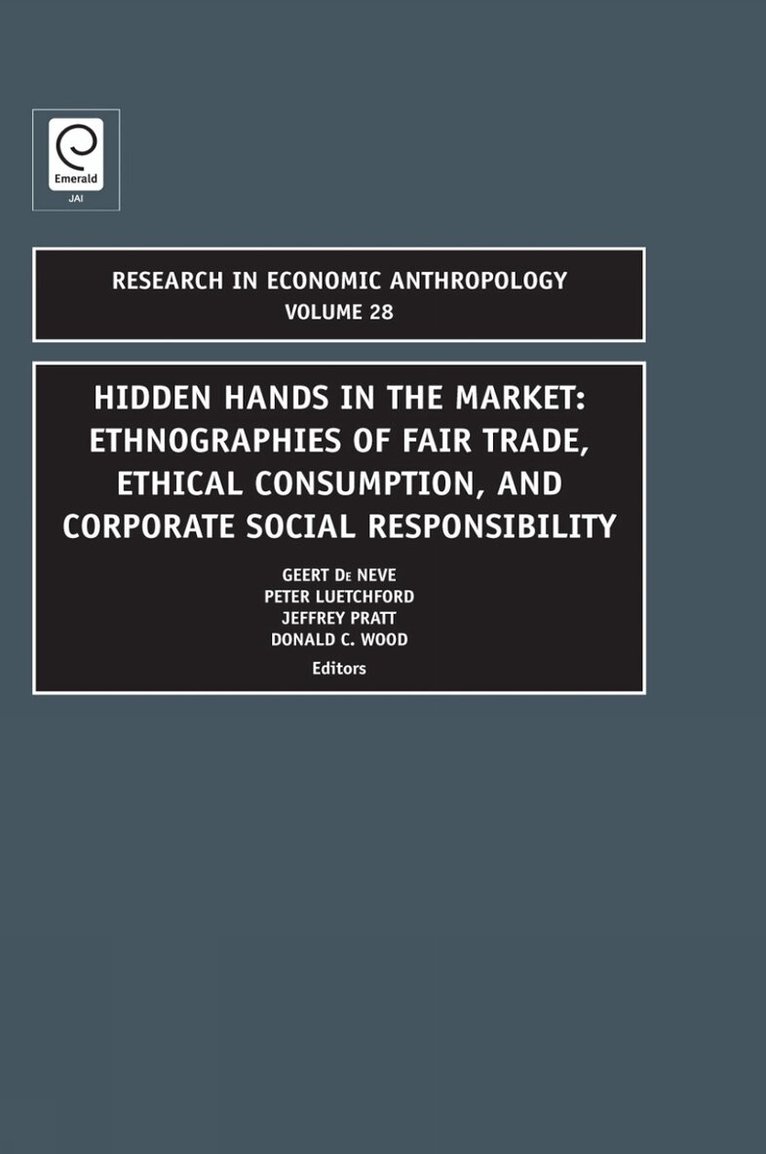
Hidden Hands in the Market
Ethnographies of Fair Trade, Ethical Consumption and Corporate Social Responsibility
552 kr
Skickas inom 5-8 vardagar
1 476 kr
Skickas inom 10-15 vardagar
595 kr
Skickas inom 10-15 vardagar
2 176 kr
Skickas inom 10-15 vardagar
Hidden Hands in the Market
Ethnographies of Fair Trade, Ethical Consumption and Corporate Social Responsibility
1 536 kr
Skickas inom 5-8 vardagar
575 kr
Läs direkt efter köp