Rebecca Prentice - Böcker
Visar alla böcker från författaren Rebecca Prentice. Handla med fri frakt och snabb leverans.
3 produkter
3 produkter
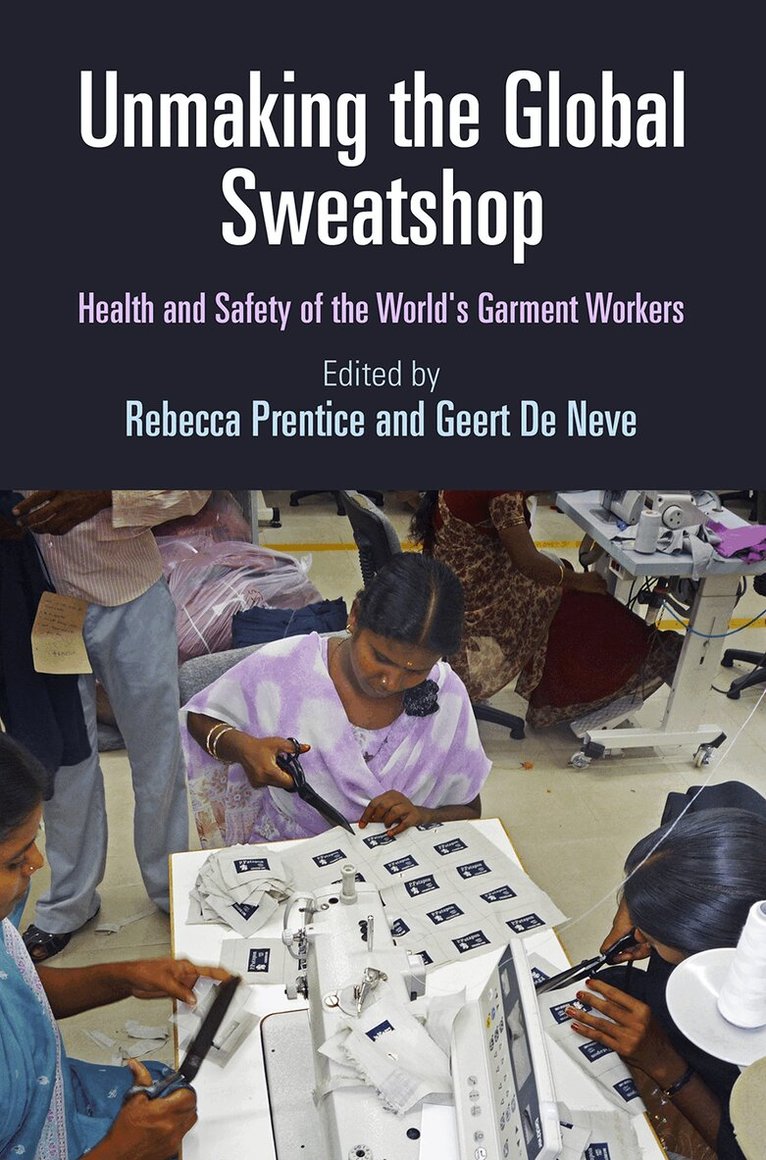
Unmaking the Global Sweatshop
Health and Safety of the World's Garment Workers
Inbunden, Engelska, 2017
914 kr
Skickas inom 10-15 vardagar
Anthropologists and ethnographers examine the global garment industry's impact on workers' well-beingThe 2013 collapse of Rana Plaza, an eight-story garment factory in Savar, Bangladesh, killed over a thousand workers and injured hundreds more. This disaster exposed the brutal labor conditions of the global garment industry and revealed its failures as a competitive and self-regulating industry. Over the past thirty years, corporations have widely adopted labor codes on health and safety, yet too often in their working lives, garment workers across the globe encounter death, work-related injuries, and unhealthy factory environments. Disasters such as Rana Plaza notwithstanding, garment workers routinely work under conditions that not only escape public notice but also undermine workers' long-term physical health, mental well-being, and the very sustainability of their employment.Unmaking the Global Sweatshop gathers the work of leading anthropologists and ethnographers studying the global garment industry to examine the relationship between the politics of labor and initiatives to protect workers' health and safety. Contributors analyze both the labor processes required of garment workers as well as the global dynamics of outsourcing and subcontracting that produce such demands on workers' health. The accounts contained in Unmaking the Global Sweatshop trace the histories of labor standards for garment workers in the global South; explore recent partnerships between corporate, state, and civil society actors in pursuit of accountable corporate governance; analyze a breadth of initiatives that seek to improve workers' health standards, from ethical trade projects to human rights movements; and focus on the ways in which risk, health, and safety might be differently conceptualized and regulated. Unmaking the Global Sweatshop argues for an expansive understanding of garment workers' lived experiences that recognizes the politics of labor, human rights, the privatization and individualization of health-related responsibilities as well as the complexity of health and well-being.Contributors: Mark Anner, Hasan Ashraf, Jennifer Bair, Jeremy Blasi, Geert De Neve, Saydia Gulrukh, Ingrid Hagen-Keith, Sandya Hewamanne, Caitrin Lynch, Alessandra Mezzadri, Patrick Neveling, Florence Palpacuer, Rebecca Prentice, Kanchana N. Ruwanpura, Nazneen Shifa, Dina M. Siddiqi, Mahmudul H. Sumon.
309 kr
Skickas inom 7-10 vardagar
Anthropologists and ethnographers examine the global garment industry's impact on workers' well-beingThe 2013 collapse of Rana Plaza, an eight-story garment factory in Savar, Bangladesh, killed over a thousand workers and injured hundreds more. This disaster exposed the brutal labor conditions of the global garment industry and revealed its failures as a competitive and self-regulating industry. Over the past thirty years, corporations have widely adopted labor codes on health and safety, yet too often in their working lives, garment workers across the globe encounter death, work-related injuries, and unhealthy factory environments. Disasters such as Rana Plaza notwithstanding, garment workers routinely work under conditions that not only escape public notice but also undermine workers' long-term physical health, mental well-being, and the very sustainability of their employment.Unmaking the Global Sweatshop gathers the work of leading anthropologists and ethnographers studying the global garment industry to examine the relationship between the politics of labor and initiatives to protect workers' health and safety. Contributors analyze both the labor processes required of garment workers as well as the global dynamics of outsourcing and subcontracting that produce such demands on workers' health. The accounts contained in Unmaking the Global Sweatshop trace the histories of labor standards for garment workers in the global South; explore recent partnerships between corporate, state, and civil society actors in pursuit of accountable corporate governance; analyze a breadth of initiatives that seek to improve workers' health standards, from ethical trade projects to human rights movements; and focus on the ways in which risk, health, and safety might be differently conceptualized and regulated. Unmaking the Global Sweatshop argues for an expansive understanding of garment workers' lived experiences that recognizes the politics of labor, human rights, the privatization and individualization of health-related responsibilities as well as the complexity of health and well-being.Contributors: Mark Anner, Hasan Ashraf, Jennifer Bair, Jeremy Blasi, Geert De Neve, Saydia Gulrukh, Ingrid Hagen-Keith, Sandya Hewamanne, Caitrin Lynch, Alessandra Mezzadri, Patrick Neveling, Florence Palpacuer, Rebecca Prentice, Kanchana N. Ruwanpura, Nazneen Shifa, Dina M. Siddiqi, Mahmudul H. Sumon.
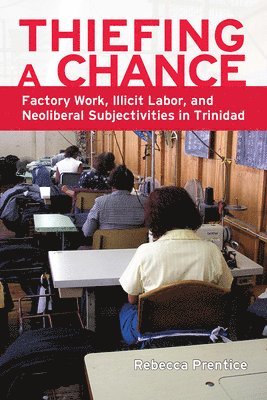
Thiefing a Chance
Factory Work, Illicit Labor, and Neoliberal Subjectivities in Trinidad
Häftad, Engelska, 2015
494 kr
Skickas inom 5-8 vardagar
When an IMF-backed program of liberalization opened Trinidad’s borders to foreign ready-made apparel, global competition damaged the local industry and unraveled worker entitlements and expectations but also presented new economic opportunities for engaging the “global” market. This fascinating ethnography explores contemporary life in the Signature Fashions garment factory, where the workers attempt to exploit gaps in these new labor configurations through illicit and informal uses of the factory, a practice they colloquially refer to as “thiefing a chance.”Drawing on fifteen months of fieldwork, author Rebecca Prentice combines a vivid picture of factory life, first-person accounts, and anthropological analysis to explore how economic restructuring has been negotiated, lived, and recounted by women working in the garment industry during Trinidad’s transition to a neoliberal economy. Through careful social coordination, the workers “thief” by copying patterns, taking portions of fabric, teaching themselves how to operate machines, and wearing their work outside the factory. Even so, the workers describe their “thiefing” as a personal, individualistic enterprise rather than a form of collective resistance to workplace authority. By making and taking furtive opportunities, they embrace a vision of themselves as enterprising subjects while actively complying with the competitive demands of a neoliberal economic order.Prentice presents the factory not as a stable institution but instead as a material and social space in which the projects, plans, and desires of workers and their employers become aligned and misaligned, at some moments in deep harmony and at others in rancorous conflict. Arguing for the productive power of the informal and illicit, Thiefing a Chance contributes to anthropological debates about the very nature of neoliberal capitalism and will be of great interest to undergraduate students, graduate students, and faculty in anthropology, labor studies, Caribbean studies, and development studies.