Henry M. McKiven, Jr. - Böcker
Visar alla böcker från författaren Henry M. McKiven, Jr.. Handla med fri frakt och snabb leverans.
2 produkter
2 produkter
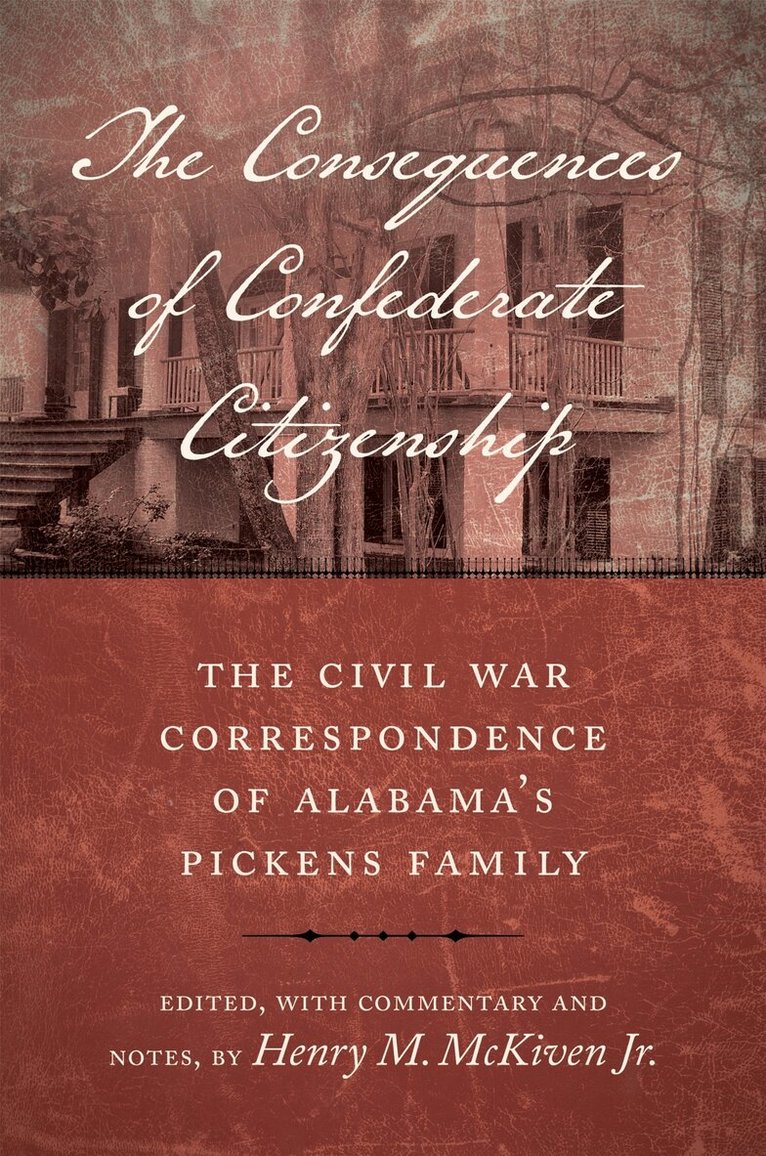
Consequences of Confederate Citizenship
The Civil War Correspondence of Alabama's Pickens Family
Inbunden, Engelska, 2025
555 kr
Skickas inom 10-15 vardagar
The Consequences of Confederate Citizenship is a vast collection of Civil War correspondence from the affluent Pickens family of Greene County, Alabama. Unlike nearly all published letter collections from the era, the Pickens family correspondence includes letters written on the home front as well as those penned by family members serving in the Army of Northern Virginia. The correspondence provides rare insight into the mutual dependence of family on the home front and kin at war to sustain morale and foster the formation of Confederate national identity. Expertly edited, annotated, and contextualized by Henry McKiven Jr., the correspondence between Mary Gaillard Pickens, a widow, and her two sons in Lee's army reveals the challenges she faced managing three plantations with at least two hundred enslaved people while struggling with anxiety and despondency brought on by fear that her sons would die in the war. The dispatches from Sam and James Pickens reveal much about their emotional struggle to maintain a commitment to the Confederacy, while their sister Mary's letters show how she grappled with the emotionally devastating impact of her fiancé dying in battle. As the letters attest, apprehension, dread, and despair were constants in the lives of the Pickens family. That emotional burden only served to bind the family together in defense of a way of life dependent upon the labor of enslaved people. The Pickens clan continued to grasp flickering hopes for victory until the bitter end, believing that somehow the Confederacy and the world they had known before the war would survive and ultimately flourish.
446 kr
Skickas inom 10-15 vardagar
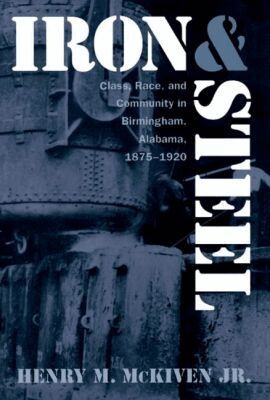
In this study of Birmingham's iron and steel workers, Henry McKiven unravels the complex connections between race relations and class struggle that shaped the city's social and economic order. He also traces the links between the process of class formation and the practice of community building and neighborhood politics. According to McKiven, the white men who moved to Birmingham soon after its founding to take jobs as skilled iron workers shared a free labor ideology that emphasized opportunity and equality between white employees and management at the expense of less skilled black laborers. But doubtful of their employers' commitment to white supremacy, they formed unions to defend their position within the racial order of the workplace. This order changed, however, when advances in manufacturing technology created more semiskilled jobs and broadened opportunities for black workers. McKiven shows how these race and class divisions also shaped working-class life away from the plant, as workers built neighborhoods and organized community and political associations that reinforced bonds of skill, race, and ethnicity. |In this study of iron and steel workers in Birmingham, Alabama, in the years 1875-1920, McKiven examines the complex connections between race relations and class struggle that shaped the city's social and economic order. In particular, he traces the links between the process of class formation, on the one hand, and the practice of community building and neighborhood politics, on the other.