Hester Baer – författare
395 kr
Läs direkt efter köp
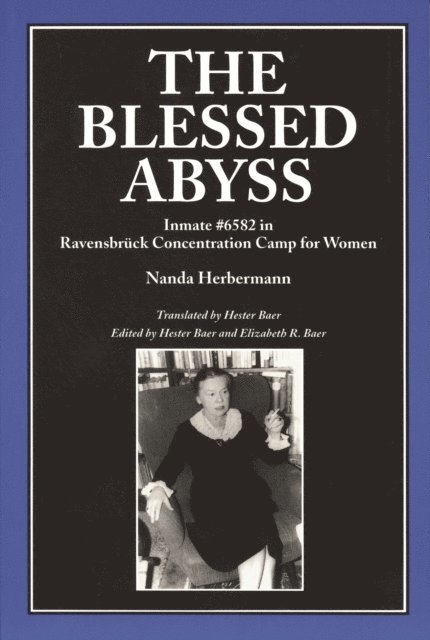
One woman’s memories of her deportation to Ravensbrück Concentration Camp for Women in July 1941.
On February 4, 1941, Nanda Herbermann, a German Catholic writer and editor, was arrested by the Gestapo in Münster, Germany. Accused of collaboration with the Catholic movement, Herbermann was deported to Ravensbrück Concentration Camp for Women in July 1941 and later released upon direct orders from Heinrich Himmler on March 19, 1943. Although she was instructed by the Gestapo not to reveal information about the camp, Herbermann soon began to record her memories of her experiences. The Blessed Abyss was originally published in German under the imprint of the Allied occupation forces in 1946, and it now appears in English for the first time. Hester Baer and Elizabeth Baer include an extensive introduction that situates Herbermann''s work within current debates about gender and the Holocaust and provides historical and biographical information about Herbermann, Ravensbrück, and the Third Reich.
Dismantling the Dream Factory
Gender, German Cinema, and the Postwar Quest for a New Film Language
279 kr
Skickas inom 3-6 vardagar
643 kr
Skickas inom 10-15 vardagar
314 kr
Skickas
946 kr
Skickas inom 5-8 vardagar
346 kr
Läs direkt efter köp
346 kr
Läs direkt efter köp
German Women's Writing in the Twenty-First Century
1 219 kr
Skickas inom 5-8 vardagar
German Women's Writing in the Twenty-First Century
332 kr
Skickas inom 5-8 vardagar
Cat Has Nine Lives
236 kr
Skickas
1 903 kr
Skickas inom 3-6 vardagar
244 kr
Läs direkt efter köp
The history of postwar German cinema has most often been told as a story of failure, a failure paradoxically epitomized by the remarkable popularity of film throughout the late 1940s and 1950s. Through the analysis of 10 representative films, Hester Baer reassesses this period, looking in particular at how the attempt to ‘dismantle the dream factory’ of Nazi entertainment cinema resulted in a new cinematic language which developed as a result of the changing audience demographic. In an era when female viewers comprised 70 per cent of cinema audiences a ‘women’s cinema’ emerged, which sought to appeal to female spectators through its genres, star choices, stories and formal conventions. In addition to analyzing the formal language and narrative content of these films, Baer uses a wide array of other sources to reconstruct the original context of their reception, including promotional and publicity materials, film programs, censorship documents, reviews and spreads in fan magazines. This book presents a new take on an essential period, which saw the rebirth of German cinema after its thorough delegitimization under the Nazi regime.
1 889 kr
Skickas inom 10-15 vardagar
2 283 kr
Läs direkt efter köp
This groundbreaking volume explores new artistic forms that emerged in German-speaking Europe and Japan in the wake of the 2011 Fukushima nuclear power plant disaster. Considering the cultural specificity of post-3.11 literature, poetry, theater, and film, while also attending to moments of crossing, hybridity, and transference, Nuclear Futures in the Post-Fukushima Age offers a critical model for examining the intertwining of transnational connection and ecological contamination in a global present marked by renewed nuclear threat. Bringing together incisive readings by eminent scholars of Germany and Japan as well as a newly translated work by Yōko Tawada, the volume offers a comparative humanities approach that is essential for reframing debates about environmental crisis and nuclear risk.
1 834 kr
Skickas inom 10-15 vardagar
1 931 kr
Skickas inom 10-15 vardagar