Hilary Koprowski – författare
Visar alla böcker från författaren Hilary Koprowski. Handla med fri frakt och snabb leverans.
19 produkter
19 produkter
E-bok
PDF, Engelska, 2014807 kr
Läs direkt efter köp
Methods in Virology, Volume VIII focuses on the methods used in virology, including microscopy, hybridization, viruses, and fingerprint analysis. The selection first offers information on the hybridization of viral nucleic acids; applications of oligonucleotide fingerprinting to the identification of viruses; and immunosorbent electron microscopy in plant virus studies. Discussions focus on the detection of double-stranded RNA, principles and mechanisms of fingerprint analysis, preparation of labeled nucleic acid probes, and basic methods of nucleic acid hybridization. The text then elaborates on quantitative transmission electron microscopy for the determination of mass-molecular weight of viruses and use of thin sectioning for visualization and identification of plant viruses. Topics include technical procedures for processing plant tissues, cytological modifications of diagnostic value, procedure and treatment of data to obtain the average mass of virus particles, and applications in virology. The book takes a look at the detection of genome-linked proteins of plant and animal viruses; methods for assay, purification, and characterization of prions; and the use of mosquitoes to detect and propagate viruses. The selection is a valuable source of information for researchers interested in the methods employed in virology.
E-bok
PDF, Engelska, 20141 045 kr
Läs direkt efter köp
Methods in Virology, Volume V focuses on the methods used in virology, including hybridization, gel electrophoresis, freeze-etching technique, and ultracentrifugation. The selection first offers information on the fusion of cells for virus studies and production of cell hybrids; approaches to ultracentrifugation; and polyacrylamide gel electrophoresis of viral RNA. Discussions focus on applications to virological problems and analysis of results; analysis of the distribution of RNA on polyacrylamide gels after electrophoresis; and biological analysis of DNA components. The book then examines the polyacrylamide gel electrophoresis of viral proteins, DNA-RNA and DNA-DNA hybridization in virus research, and techniques of RNA-DNA hybridization in solution for the study of viral transcription. Topics include preparation of nucleic acids, hybridization and elution procedures that minimize RNA degradation, and procedures for acrylamide gel electrophoresis. The text takes a look at freeze-etching technique for the study of virus ultrastructure; procedures to increase virus yield from infected plants; and the immunoperoxidase technique. Concerns include principles of the immunoperoxidase technique, histochemical detection of peroxidase activity, sequence of events in virus infection, and factors affecting virus yield. The selection is a valuable source of data for researchers interested in the methods employed in virology.
E-bok
PDF, Engelska, 20141 015 kr
Läs direkt efter köp
Methods in Virology, Volume III focuses on the advancements of methods employed in virology, including immunological, microscopic, and serological techniques and transformation assays. The selection first offers information on the analysis of protein constituents and lipid components of viruses. Discussions focus on the applications of the existing methodology to lipid-containing viruses; physical methods for the characterization of virus proteins; renaturation of virus proteins and reconstitution of viruses; and chemical methods for the characterization of virus proteins. The text then elaborates on RNA polymerase, immunological techniques for animal viruses, and serological techniques for plant viruses. The book tackles the plaque assay of animal viruses, transformation assays, and the methods for selecting RNA bacteriophage. Topics include identification of the nucleic acid, assay methods for particular viruses, general consideration of the plaque assay method, virus-dilution media and procedures, monolayer assay methods, and incubation and staining of plates and counting of plaques. The manuscript also takes a look at the structural studies of viruses, microscopic techniques, electron microscopy of isolated virus particles and their components, and the application of thin sectioning. The selection is a vital source of data for researchers interested in the methods employed in virology.
E-bok
PDF, Engelska, 2014779 kr
Läs direkt efter köp
Methods in Virology, Volume VII focuses on the methods used in virology, including radioimmunoassays, microscopy, hybridization, and mutagenesis. The selection first elaborates on monoclonal antibody techniques applied to viruses; competition radioimmunoassays for characterization of antibody reactions to viral antigens; and enzyme immunosorbent assays in plant virology. Discussions focus on the principles of enzyme immunosorbent assay, choice of enzyme and preparation of conjugate, determination of immunoglobulin class, and maintenance and specificity testing of hybridomas. The text then elaborates on electron microscopy for the identification of plant viruses in in vitro preparations and cloning and expression of viral antigens in Escherichia coli and other microorganisms, including influenza virus, expression of foreign coding sequences in Escherichia coli, hepatitis B virus, electron microscope, immunoelectron microscopy, and imaging of nucleic acids. The manuscript takes a look at the detection and characterization of subgenomic RNA in plant viruses; exploring the gene organization of baculoviruses; and spot hybridization for detection of viroids and viruses. Topics include application to viral diseases, mapping mutuations of baculoviruses, transcriptional mapping of baculovirus genomes, and genetic mapping by blot hybridization. The selection is a valuable source of information for researchers interested in the methods employed in virology.
E-bok
PDF, Engelska, 20121 408 kr
Läs direkt efter köp
The diversity of antigen-binding structures of antibody molecules is so vast that every conceivable antigen can be bound by an antibody molecule within the immune system. This is true even for the antigen binding sites of antibodies called idiotypes, which are bound by complementary bind ing sites of other antibodies called anti-idiotypes. Thus, anti-idiotypes are structural homologues of antigens. These idiotypic-anti-idiotypic interactions constitute a network within the immune system. Since one lymphocyte produces only one type of antibody molecule, this network is in fact a network of cells. We expect that the network is functional: the appearance of antigen will disturb the equilibrium of the network at the point where it competes with the anti idiotypic lymphocyte for binding to the idiotypic lympho cyte. It has been known for quite some time that anti idiotypic antibody can be used to prime the immune system for memory to an antigen that it has never seen. This phe nomenon is now being explored for possible use in immuni zation against viruses, bacteria, parasites and tumors as well as for the modulation of autoimmunity. The ability of anti-idiotypes to mimic, both antigenically and function ally, the corresponding biologically active molecules seen by an idiotypic antibody was first demonstrated for the hormone insulin and is now being observed in many other systems. The papers assembled in this volume· bring the reader to the cutting edge of the potential practical applica tions of the network theory of the immune system.
Del 119 - Current Topics in Microbiology and Immunology
Images of Biologically Active Structures in the Immune System
Their Use in Biology and Medicine
Häftad, Engelska, 2011
1 116 kr
Skickas inom 10-15 vardagar
The diversity of antigen-binding structures of antibody molecules is so vast that every conceivable antigen can be bound by an antibody molecule within the immune system. This is true even for the antigen binding sites of antibodies called idiotypes, which are bound by complementary bind ing sites of other antibodies called anti-idiotypes. Thus, anti-idiotypes are structural homologues of antigens. These idiotypic-anti-idiotypic interactions constitute a network within the immune system. Since one lymphocyte produces only one type of antibody molecule, this network is in fact a network of cells. We expect that the network is functional: the appearance of antigen will disturb the equilibrium of the network at the point where it competes with the anti idiotypic lymphocyte for binding to the idiotypic lympho cyte. It has been known for quite some time that anti idiotypic antibody can be used to prime the immune system for memory to an antigen that it has never seen. This phe nomenon is now being explored for possible use in immuni zation against viruses, bacteria, parasites and tumors as well as for the modulation of autoimmunity. The ability of anti-idiotypes to mimic, both antigenically and function ally, the corresponding biologically active molecules seen by an idiotypic antibody was first demonstrated for the hormone insulin and is now being observed in many other systems. The papers assembled in this volume· bring the reader to the cutting edge of the potential practical applica tions of the network theory of the immune system.
E-bok
PDF, Engelska, 20121 459 kr
Läs direkt efter köp
The humoral response of the immune system to a foreign antigen usually requires the recognition of two antigenic determinants. The one, called the carrier, is recognized by T-Iymphocytes, the other, called the hapten, by B-Iympho cytes. As a consequence, T - and B-Iymphocytes proliferate, B-Iymphocytes produce hapten-specific antibodies, and the system develops memory to the antigens. It was long thought that antigens would form a bridge to mediate the cooperation of T - and B-Iymphocytes. However, it now appears that antigens are broken down to fragments which then act as carrier determinants for T -lymphocytes. The cells which originally process antigen are called an tigen-presenting cells. They have phagocytic properties. They can take up and degrade antigens, in the case of pro teins to peptides. The peptides of protein antigens reappear on the surface of the antigen-presenting cells, where they must become associated with membrane proteins encoded by genes of the major histocompatibility complex (MHC) in order to be recognized by T-Iymphocytes. To activate helper T-Iym phocytes which cooperate in antibody responses, MHC class II molecules have to be expressed on the surface of the antigen-presenting cells. Once T -lymphocytes have be come activated, they are ready to cooperate with B cells.
Del 130 - Current Topics in Microbiology and Immunology
Peptides as Immunogens
Häftad, Engelska, 2011
1 116 kr
Skickas inom 10-15 vardagar
The humoral response of the immune system to a foreign antigen usually requires the recognition of two antigenic determinants. The one, called the carrier, is recognized by T-Iymphocytes, the other, called the hapten, by B-Iympho cytes. As a consequence, T - and B-Iymphocytes proliferate, B-Iymphocytes produce hapten-specific antibodies, and the system develops memory to the antigens. It was long thought that antigens would form a bridge to mediate the cooperation of T - and B-Iymphocytes. However, it now appears that antigens are broken down to fragments which then act as carrier determinants for T -lymphocytes. The cells which originally process antigen are called an tigen-presenting cells. They have phagocytic properties. They can take up and degrade antigens, in the case of pro teins to peptides. The peptides of protein antigens reappear on the surface of the antigen-presenting cells, where they must become associated with membrane proteins encoded by genes of the major histocompatibility complex (MHC) in order to be recognized by T-Iymphocytes. To activate helper T-Iym phocytes which cooperate in antibody responses, MHC class II molecules have to be expressed on the surface of the antigen-presenting cells. Once T -lymphocytes have be come activated, they are ready to cooperate with B cells.
E-bok
PDF, Engelska, 20121 408 kr
Läs direkt efter köp
Although retroviruses have long been associated with a variety of animal diseases, active research in the field of human retroviruses dates from the discovery of human immunodefici ency virus (HIV) in association with acquired immunodefici ency syndrome (AIDS). The enormous research efforts in this field have been directed toward understanding the nature of the virus and toward its elimination through preventive vaccin ation and the cure of the disease. Human T-cell leukemia virus (HTLV-l) was the first member of the human retrovirus family to be discovered. It was implicated as the cause of adult T-cell leukemia (ATL) even before the association of HIV and AIDS was established. Research on HTL V -1 has, however, been lagging behind that of HIV because of the importance of AIDS. Today HTLV-1 and possibly closely related HTLV-2 are associated with a variety of human neurologic diseases, and research activities in this field may show that human retroviruses can cause a variety of human diseases in addition to those affecting the nervous system. Papers in this volume attempt to acquaint the reader with the present state of research into retrovirus infection and related diseases of the nervous system.
Del 160 - Current Topics in Microbiology and Immunology
Retrovirus Infections of the Nervous System
Current and Future Perspectives
Häftad, Engelska, 2011
1 116 kr
Skickas inom 10-15 vardagar
Although retroviruses have long been associated with a variety of animal diseases, active research in the field of human retroviruses dates from the discovery of human immunodefici ency virus (HIV) in association with acquired immunodefici ency syndrome (AIDS). The enormous research efforts in this field have been directed toward understanding the nature of the virus and toward its elimination through preventive vaccin ation and the cure of the disease. Human T-cell leukemia virus (HTLV-l) was the first member of the human retrovirus family to be discovered. It was implicated as the cause of adult T-cell leukemia (ATL) even before the association of HIV and AIDS was established. Research on HTL V -1 has, however, been lagging behind that of HIV because of the importance of AIDS. Today HTLV-1 and possibly closely related HTLV-2 are associated with a variety of human neurologic diseases, and research activities in this field may show that human retroviruses can cause a variety of human diseases in addition to those affecting the nervous system. Papers in this volume attempt to acquaint the reader with the present state of research into retrovirus infection and related diseases of the nervous system.
Del 187 - Current Topics in Microbiology and Immunology
Lyssaviruses
Häftad, Engelska, 2011
1 116 kr
Skickas inom 10-15 vardagar
Lyssaviruses are the etiological agents of rabies, one of the oldest documented and feared maladies in medical history. The last century has been particularly fruitful in regard to progress in Iyssavirus phylogenetic affinities, diagnostics, pathogenesis, molecular virology and epidemiology, pro phylaxis and control. Yet, despite these academic and practical advances in research, the age-old horror evoked by rabies is still very real, with only four documented human recoveries once symptoms are realized. After decades of intense scrutiny and four recent books describing rabies and its viral relatives, there is still much to be learned. The great authority on rabies, Karl Habel, once related an incident of a very distraught elderly woman, who showed symptoms of neurological disease. She told Habel, "I don't need a physician. I know I have rabies. My beloved dog had rabies and died. Look", she exclaimed, while flinging down a goblet of water, "I have hydrophobia". Habel asked for her confinement for psychiatric examination.
E-bok
PDF, Engelska, 2012734 kr
Läs direkt efter köp
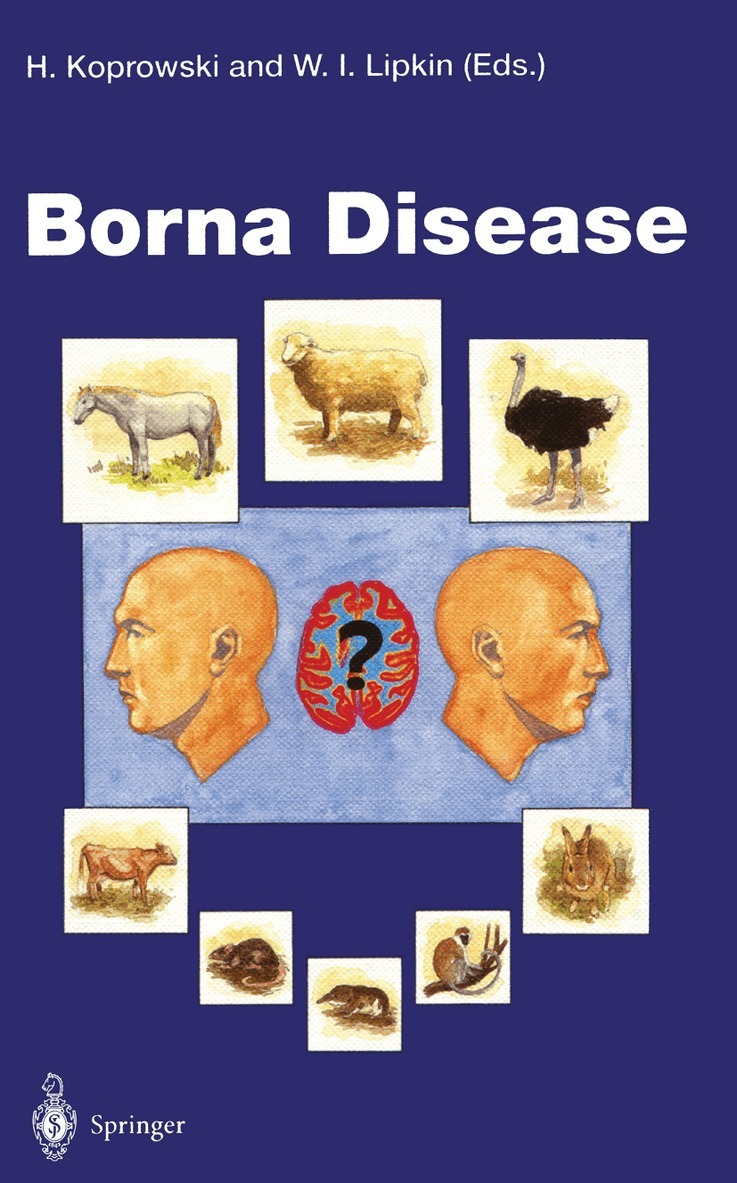
Borna disease was first described over 200 years ago, in what is now Southeastern Germany, as a fatal neurologic affliction of horses and was considered a curiosity for many decades. The causative agent was unknown, and the animal species infected in nature were limited to horses and sheep. Today, as described in this volume, the host range has extended to all warm-blooded animals, the genes and proteins of the virus have been identified, and many of the mechanisms responsible for behavioral disturbances are understood. Serologic studies suggest that BDV or related agents are likely to play a role in human neuropsychiatric diseases.
Del 190 - Current Topics in Microbiology and Immunology
Borna Disease
Häftad, Engelska, 2013
562 kr
Skickas inom 10-15 vardagar
Borna disease was first described over 200 years ago, in what is now Southeastern Germany, as a fatal neurologic affliction of horses and was considered a curiosity for many decades. The causative agent was unknown, and the animal species infected in nature were limited to horses and sheep. Today, as described in this volume, the host range has extended to all warm-blooded animals, the genes and proteins of the virus have been identified, and many of the mechanisms responsible for behavioral disturbances are understood. Serologic studies suggest that BDV or related agents are likely to play a role in human neuropsychiatric diseases.
E-bok
PDF, Engelska, 20121 459 kr
Läs direkt efter köp
Häftad, Engelska, 2014
1 116 kr
Skickas inom 10-15 vardagar
The genome of retroviruses contains three major coding regions for virion proteins, gag, pol and env. Gag encompasses information for nonglycosylated viral proteins that form the matrix, the capsid and the nucleoprotein structures. From pol derive reverse transcriptase and integrase, and env codes for the surface glycoproteins of the virion which consist of a transmembrane and a surface domain, linked by disulfide bonds. A viral protease is derived eitherfrom the gagorfrom the pol coding region, depending on the virus. Simple retroviruses contain only this elementary gag, pol, and env coding information. Once integrated, they are able to multiply efficiently, using the cellular transcriptional and replication machineries without intervention of viral transacting factors. Most oncogenic retroviruses belong in this category. Complex retroviruses, on the other hand, encode additional nonstructural proteins from multiply spliced messages. These proteins play important regulatory roles in the life cycle of the virus.They function as transacting factors that, in concert with cellular regulatory proteins, control viral gene expression and function and are essential components in the replication of complex retroviruses. To this category belong the lentiviruses, the spumaviruses and a group of oncogenic retroviruses that includes human T cell leukemia virus (HTLV) and bovine leukosis virus(BLV).
E-bok
PDF, Engelska, 2012734 kr
Läs direkt efter köp
Del 196 - Current Topics in Microbiology and Immunology
Role of Nitric Oxide in Physiology and Pathophysiology
Häftad, Engelska, 2011
562 kr
Skickas inom 10-15 vardagar
Nitric Oxide (NO) an endogenous free radical, has been shown recently to mediate several important biological effects. It plays a neuro-transmitter like role in vascular endothelium, a scond-messenger role in N-methyl-D-aspartate (NMDA) responsive neurons in the central nervous system (CNS), a neurotoxic role after its release from these neurons, and a cytotoxic role after its release by macrophages. This volume reviews among other topics the basic chemistry and physical properties of S-nitrosothiols (RS-NO) and their biochemical mechanisms of action, NO synthase isozymes, NO synthase structure, mechanisms of NO synthesis, regulation of NOS expression and posttranslational modification, and mechanisms involving NO of CNS's damage in virus infections.
E-bok
PDF, Engelska, 20121 459 kr
Läs direkt efter köp
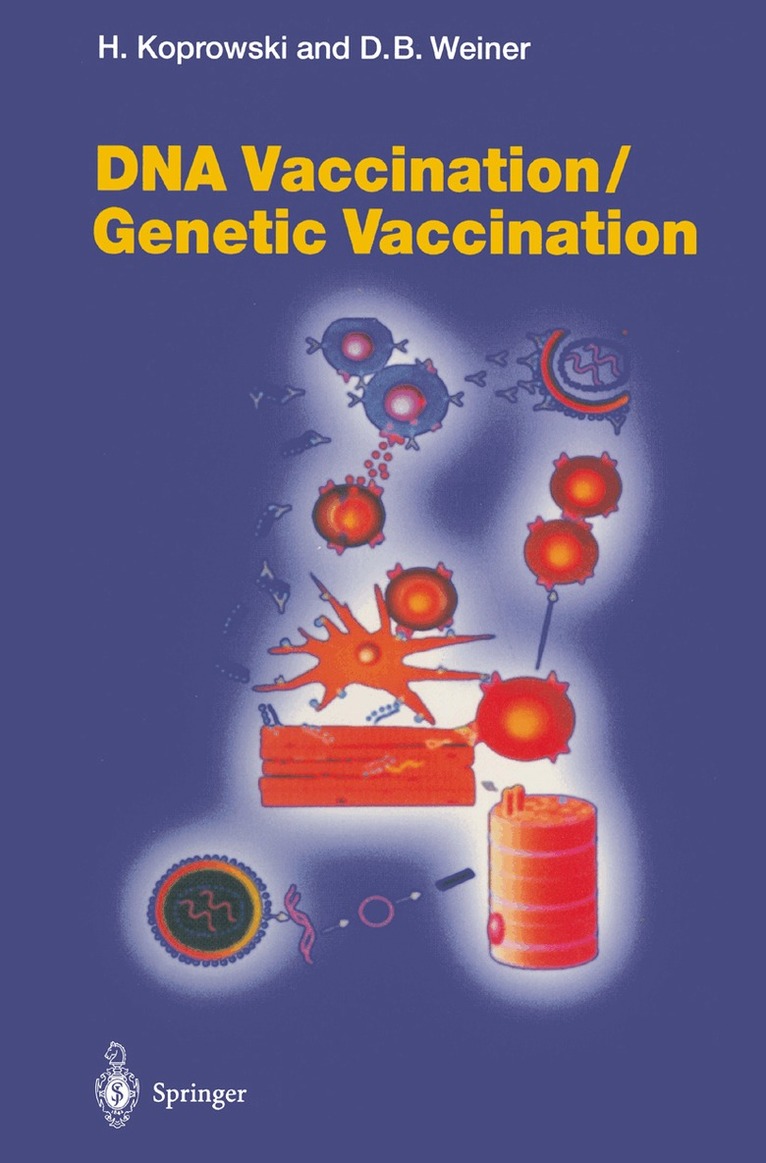
Genetic / DNA immunization represents a novel approach to vaccine and immune therapeutic development. The direct injec tion of nucleic acid expression cassettes into a living host results in a limited number of its cells becoming factories for production of the introduced gene products. This host-inappropriate gene expression has important immunological consequences, resulting in the specific immune activation of the host against the gene delivered antigen. The recent demonstration by a number of laboratories that the induced immune responses are functional in experimental models against both specific infectious diseases and cancers is likely to have dramatic consequences for the develop ment of a new generation of experimental vaccines and immune therapies. This technology has the potential to enable the pro duction of vaccines and immune-based therapies that are not only effective immunologically but are accessible to the entire world (rather than just to the most developed nations). Vaccine Development Vaccination against pathogenic microorganisms represents one of the most important advances in the history of medicine. Vaccines, including those against polio, measles, mumps, rubella, hepatitis A, hepatitis B, pertussis and other diseases, have dramatically improved and protected more human lives than any other avenue of modern medicine. The vaccine against smallpox, for example, has been so successful that it is now widely believed that this malicious killer, responsible for more deaths in the twentieth century than World Wars I and II combined, has been removed from the face of the earth.
Del 226 - Current Topics in Microbiology and Immunology
DNA Vaccination/Genetic Vaccination
Häftad, Engelska, 2011
1 116 kr
Skickas inom 10-15 vardagar
Genetic / DNA immunization represents a novel approach to vaccine and immune therapeutic development. The direct injec tion of nucleic acid expression cassettes into a living host results in a limited number of its cells becoming factories for production of the introduced gene products. This host-inappropriate gene expression has important immunological consequences, resulting in the specific immune activation of the host against the gene delivered antigen. The recent demonstration by a number of laboratories that the induced immune responses are functional in experimental models against both specific infectious diseases and cancers is likely to have dramatic consequences for the develop ment of a new generation of experimental vaccines and immune therapies. This technology has the potential to enable the pro duction of vaccines and immune-based therapies that are not only effective immunologically but are accessible to the entire world (rather than just to the most developed nations). Vaccine Development Vaccination against pathogenic microorganisms represents one of the most important advances in the history of medicine. Vaccines, including those against polio, measles, mumps, rubella, hepatitis A, hepatitis B, pertussis and other diseases, have dramatically improved and protected more human lives than any other avenue of modern medicine. The vaccine against smallpox, for example, has been so successful that it is now widely believed that this malicious killer, responsible for more deaths in the twentieth century than World Wars I and II combined, has been removed from the face of the earth.