Hilde Heynen - Böcker
Visar alla böcker från författaren Hilde Heynen. Handla med fri frakt och snabb leverans.
9 produkter
9 produkter
439 kr
Skickas inom 5-8 vardagar
2 305 kr
Skickas inom 10-15 vardagar
In the home the intricate relations between architecture, gender and domesticity become visible. Negotiating Domesticity investigates the many and complex themes evoked by the interconnections between these terms.Topics covered include famous as well as less well-known architectural examples and architects, which are explored from sociological, anthropological, philosophical and psychoanalytical approaches. The authors explore the relationships between modern domestic spaces and sexed subjectivities in a broad range of geographical locations of Western modernity.This richly interdisiplinary work presents architects and postgraduate students with an in-depth exploration of domesticity in the modern era.
851 kr
Skickas inom 10-15 vardagar
In the home the intricate relations between architecture, gender and domesticity become visible. Negotiating Domesticity investigates the many and complex themes evoked by the interconnections between these terms.Topics covered include famous as well as less well-known architectural examples and architects, which are explored from sociological, anthropological, philosophical and psychoanalytical approaches. The authors explore the relationships between modern domestic spaces and sexed subjectivities in a broad range of geographical locations of Western modernity.This richly interdisiplinary work presents architects and postgraduate students with an in-depth exploration of domesticity in the modern era.
389 kr
Skickas inom 7-10 vardagar
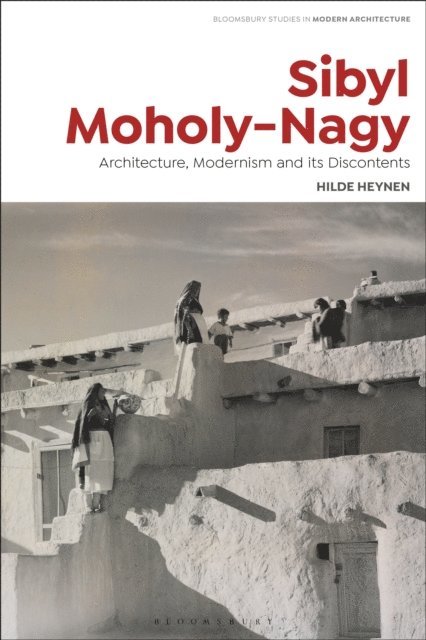
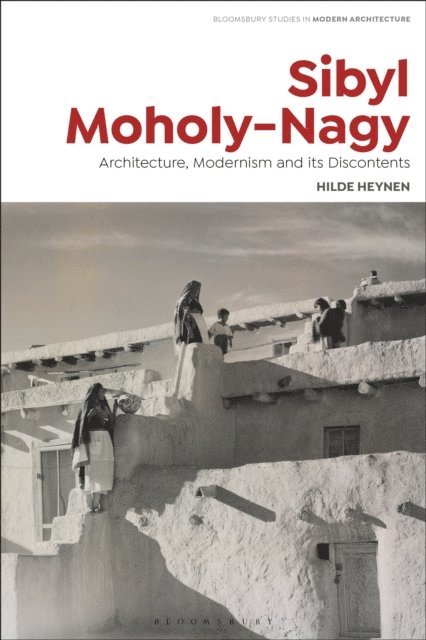
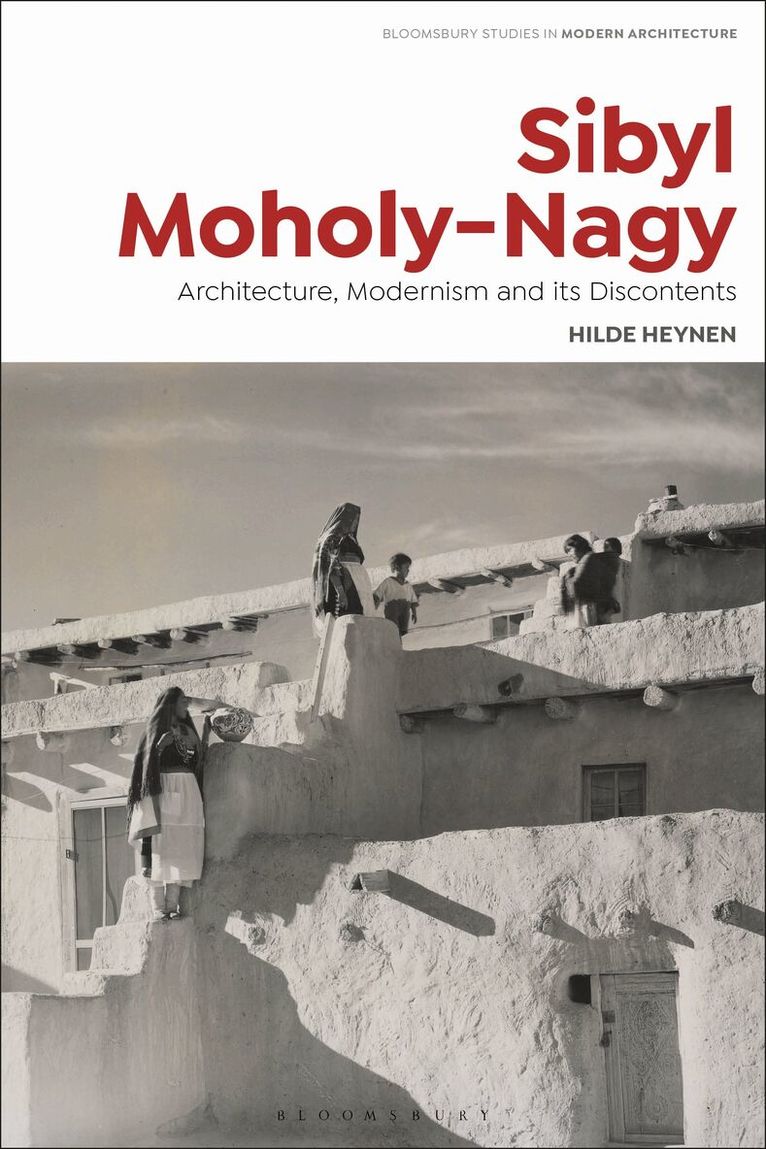
A major voice in the architectural culture of the mid-century, Sibyl Moholy-Nagy was uniquely engaged with modernism and modernity. As one of the very few female architectural critics of the time, she was an early voice articulating doubts about the path modernist architecture was taking, demystifying the myths of the masters, Mies, Le Corbusier and Gropius, and questioning their heroic, masculinist approach. Yet her writings and work are understudied, and have largely vanished from the canon of scholarly references on modernism.This book analyzes the significance of the life and work of Moholy-Nagy and explores the paradoxical aspects of the relationship between modernism and feminism. Published as part of the Bloomsbury Studies in Modern Architecture series, which brings to light the work of significant yet overlooked figures in modernism, it is both an examination of her work and legacy, and also a study on the roles of gender and of the changing nature of modernism in its trajectory from Europe to America.Drawing on personal papers, diaries, letters and lecture notes, as well as personal interviews with relatives, colleagues and students, this study is a key resource for scholars who would like to include the contributions of women in to their discussions of architecture and modernism.
3 094 kr
Skickas inom 3-6 vardagar
"Offers an intense scholarly experience in its comprehensiveness, its variety of voices and its formal organization... the editors took a risk, experimented and have delivered a much-needed resource that upends the status-quo."- Architectural Histories, journal of the European Architectural History Network "Architectural theory interweaves interdisciplinary understandings with different practices, intentions and ways of knowing. This handbook provides a lucid and comprehensive introduction to this challenging and shifting terrain, and will be of great interest to students, academics and practitioners alike."- Professor Iain Borden, UCL Bartlett School of Architecture"In this collection, architectural theory expands outward to interact with adjacent discourses such as sustainability, conservation, spatial practices, virtual technologies, and more. We have in The Handbook of Architectural Theory an example of the extreme generosity of architectural theory. It is a volume that designers and scholars of many stripes will welcome."- K. Michael Hays, Eliot Noyes Professor of Architectural Theory, Harvard UniversityThe SAGE Handbook of Architectural Theory documents and builds upon the most innovative developments in architectural theory over the last two decades. Bringing into dialogue a range of geographically, institutionally and historically competing positions, it examines and explores parallel debates in related fields. The book is divided into eight sections:Power/Difference/EmbodimentAesthetics/Pleasure/ExcessNation/World/SpectacleHistory/Memory/TraditionDesign/Production/PracticeScience/Technology/VirtualityNature/Ecology/SustainabilityCity/Metropolis/Territory.Creating openings for future lines of inquiry and establishing the basis for new directions for education, research and practice, the book is organized around specific case studies to provide a critical, interpretive and speculative enquiry into the relevant debates in architectural theory.
1 001 kr
Skickas inom 3-6 vardagar
"Offers an intense scholarly experience in its comprehensiveness, its variety of voices and its formal organization... the editors took a risk, experimented and have delivered a much-needed resource that upends the status-quo."- Architectural Histories, journal of the European Architectural History Network "Architectural theory interweaves interdisciplinary understandings with different practices, intentions and ways of knowing. This handbook provides a lucid and comprehensive introduction to this challenging and shifting terrain, and will be of great interest to students, academics and practitioners alike."- Professor Iain Borden, UCL Bartlett School of Architecture"In this collection, architectural theory expands outward to interact with adjacent discourses such as sustainability, conservation, spatial practices, virtual technologies, and more. We have in The Handbook of Architectural Theory an example of the extreme generosity of architectural theory. It is a volume that designers and scholars of many stripes will welcome."- K. Michael Hays, Eliot Noyes Professor of Architectural Theory, Harvard UniversityThe SAGE Handbook of Architectural Theory documents and builds upon the most innovative developments in architectural theory over the last two decades. Bringing into dialogue a range of geographically, institutionally and historically competing positions, it examines and explores parallel debates in related fields. The book is divided into eight sections:Power/Difference/EmbodimentAesthetics/Pleasure/ExcessNation/World/SpectacleHistory/Memory/TraditionDesign/Production/PracticeScience/Technology/VirtualityNature/Ecology/SustainabilityCity/Metropolis/Territory.Creating openings for future lines of inquiry and establishing the basis for new directions for education, research and practice, the book is organized around specific case studies to provide a critical, interpretive and speculative enquiry into the relevant debates in architectural theory.
396 kr
Skickas
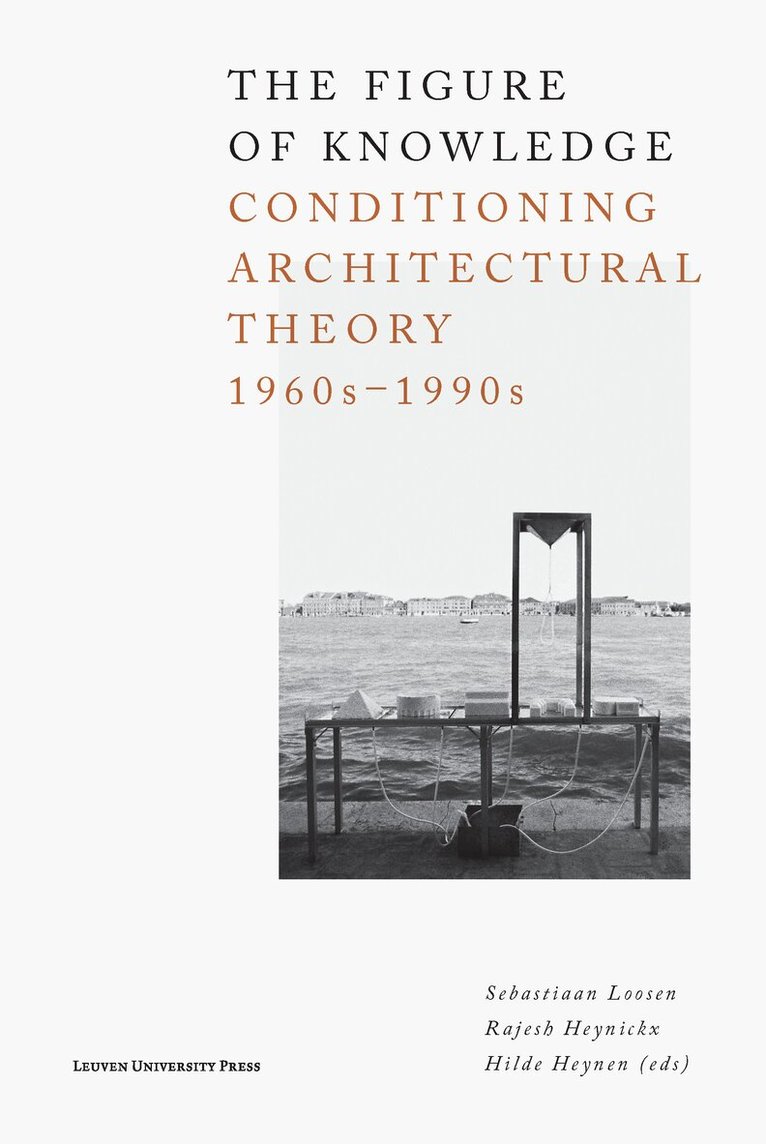
It is a major challenge to write the history of post-WWII architectural theory without boiling it down to a few defining paradigms. An impressive anthologising effort during the 1990s charted architectural theory mostly via the various theoretical frameworks employed, such as critical theory, critical regionalism, deconstructivism, and pragmatism.Yet the intellectual contours of what constitutes architectural theory have been constantly in flux. It is therefore paramount to ask what kind of knowledge has become important in the recent history of architectural theory and how the resulting figure of knowledge sets the conditions for the actual arguments made.The contributions in this volume focus on institutional, geographical, rhetorical, and other conditioning factors. They thus screen the unspoken rules of engagement that postwar architectural theory ascribed to.Contributors: Matthew Allen (University of Toronto), Karen Burns (University of Melbourne), Ole W. Fischer (University of Utah), Philip Goad (University of Melbourne), Hilde Heynen (KU Leuven), Rajesh Heynickx (KU Leuven), Paul Holmquist (Louisiana State University), Sandra Kaji-O'Grady (University of Queensland), Peter Lang (Royal Institute of Art, Stockholm), Andre Loeckx (KU Leuven), Sebastiaan Loosen (KU Leuven), Louis Martin (Universite du Quebec a Montreal), Joan Ockman (University of Pennsylvania), Carmen Popescu (ENSAB, Rennes), Ricardo Ruivo (Architectural Association, London), Andrew Toland (University of Technology Sydney).Free ebook available at OAPEN Library, JSTOR and ProjectMuse
861 kr
Skickas inom 5-8 vardagar
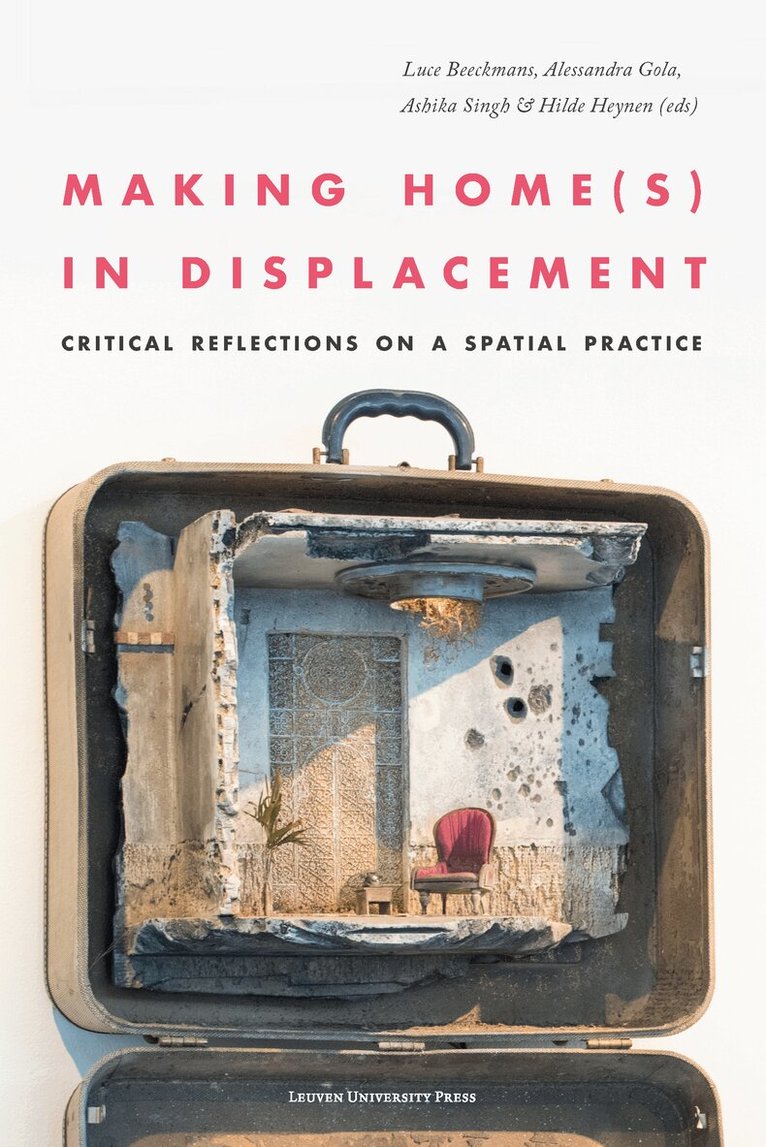
Making Home(s) in Displacement critically rethinks the relationship between home and displacement from a spatial, material, and architectural perspective. Recent scholarship in the social sciences has investigated how migrants and refugees create and reproduce home under new conditions, thereby unpacking the seemingly contradictory positions of making a home and overcoming its loss. Yet, making home(s) in displacement is also a spatial practice, one which intrinsically relates to the fabrication of the built environment worldwide.Conceptually the book is divided along four spatial sites, referred to as camp, shelter, city, and house, which are approached with a multitude of perspectives ranging from urban planning and architecture to anthropology, geography, philosophy, gender studies, and urban history, all with a common focus on space and spatiality. By articulating everyday homemaking experiences of migrants and refugees as spatial practices in a variety of geopolitical and historical contexts, this edited volume adds a novel perspective to the existing interdisciplinary scholarship at the intersection of home and displacement. It equally intends to broaden the canon of architectural histories and theories by including migrants' and refugees' spatial agencies and place-making practices to its annals. By highlighting the political in the spatial, and vice versa, this volume sets out to decentralise and decolonise current definitions of home and displacement, striving for a more pluralistic outlook on the idea of home.Free ebook available at OAPEN Library, JSTOR and Project MuseContributors: Fatina Abreek-Zubiedat (ETH, Zurich), Nurhan Abujidi (Zuyd University of Applied Sciences), Menna Agha (University of Oregon), Esra Akcan (Cornell University), Aikaterini Antonopoulou (University of Liverpool), Luce Beeckmans (Ghent University), Paolo Boccagni (University of Trento), Wafa Butmeh (independent architect / UN-Habitat), Somayeh Chitchian (Harvard University), Bruno de Meulder (KU Leuven), Anna Di Giusto (independent researcher), Maretha Dreyer (Hasselt University), Alessandra Gola (KU Leuven), Hilde Heynen (KU Leuven), Annorada Iyer Siddiqi (Barnard College-Columbia University), Irit Katz (University of Cambridge), Romola Sanyal (LSE), Ashika Singh (KU Leuven), Aleksander Stanicic (TU Delft), Huda Tayob (University of Johannesburg), Layla Zibar (Brandenburg University of Technology / KU Leuven)
621 kr
Skickas inom 5-8 vardagar
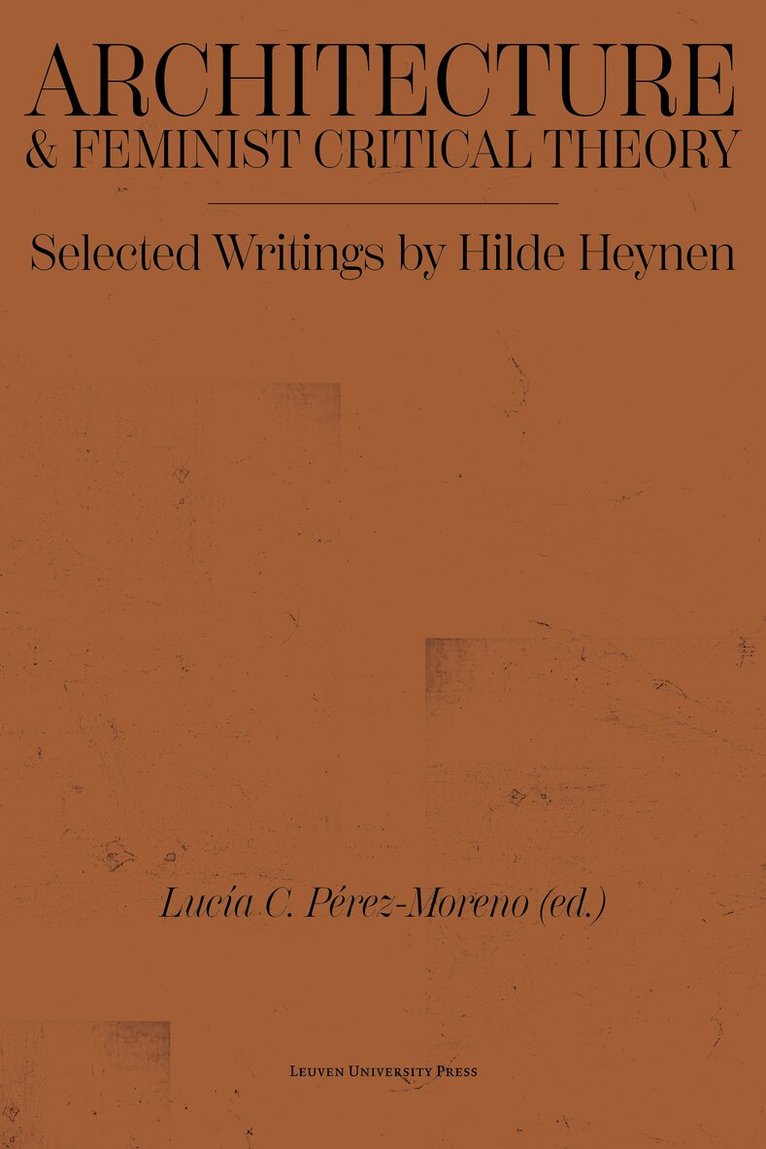
Three decades of intellectual work on architectural theory and feminist discourse.Hilde Heynen is a Belgian architectural theorist whose work bridges neo-Marxist critical theory and current feminist discourse, applying these perspectives to architectural culture. This volume collects her most significant texts from three decades of intellectual work, centred on three feature concepts: mimesis, dwelling, and displacement. It offers readers incisive reflections on architects' roles in shaping societies and the alliance between ideology, societal structures of injustice, political economy, housing and the built environment.Within a fierce post-critical debate among scholars who have begun to question the relevance of architectural theory to the discipline in the early twenty-first century, Heynen's position remains constant throughout her writings in defence of architectural theory as a social and transformative practice. This collection is essential reading for new generations of architects and cultural theorists interested in modernity, gender and criticality.