Hiroshi G. Okuno - Böcker
Visar alla böcker från författaren Hiroshi G. Okuno. Handla med fri frakt och snabb leverans.
5 produkter
5 produkter
915 kr
Skickas inom 10-15 vardagar
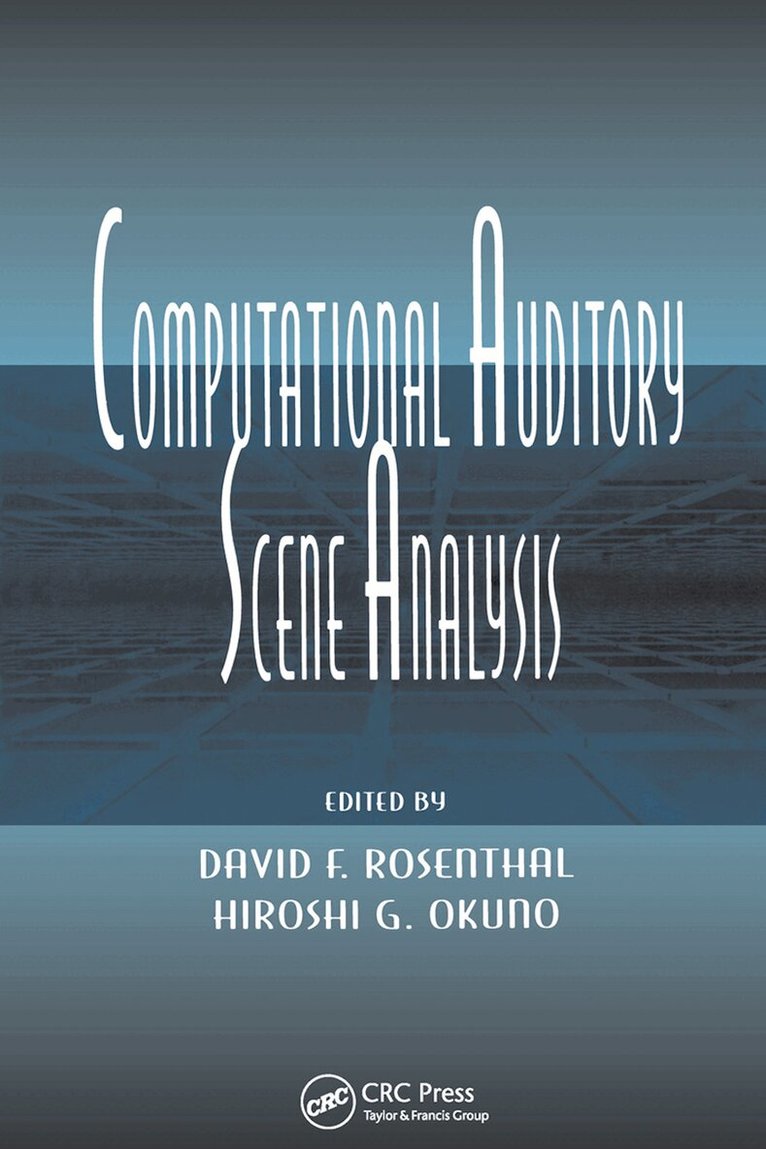
The interest of AI in problems related to understanding sounds has a rich history dating back to the ARPA Speech Understanding Project in the 1970s. While a great deal has been learned from this and subsequent speech understanding research, the goal of building systems that can understand general acoustic signals--continuous speech and/or non-speech sounds--from unconstrained environments is still unrealized. Instead, there are now systems that understand "clean" speech well in relatively noiseless laboratory environments, but that break down in more realistic, noisier environments. As seen in the "cocktail-party effect," humans and other mammals have the ability to selectively attend to sound from a particular source, even when it is mixed with other sounds. Computers also need to be able to decide which parts of a mixed acoustic signal are relevant to a particular purpose--which part should be interpreted as speech, and which should be interpreted as a door closing, an air conditioner humming, or another person interrupting. Observations such as these have led a number of researchers to conclude that research on speech understanding and on nonspeech understanding need to be united within a more general framework. Researchers have also begun trying to understand computational auditory frameworks as parts of larger perception systems whose purpose is to give a computer integrated information about the real world. Inspiration for this work ranges from research on how different sensors can be integrated to models of how humans' auditory apparatus works in concert with vision, proprioception, etc. Representing some of the most advanced work on computers understanding speech, this collection of papers covers the work being done to integrate speech and nonspeech understanding in computer systems.
928 kr
Skickas inom 10-15 vardagar
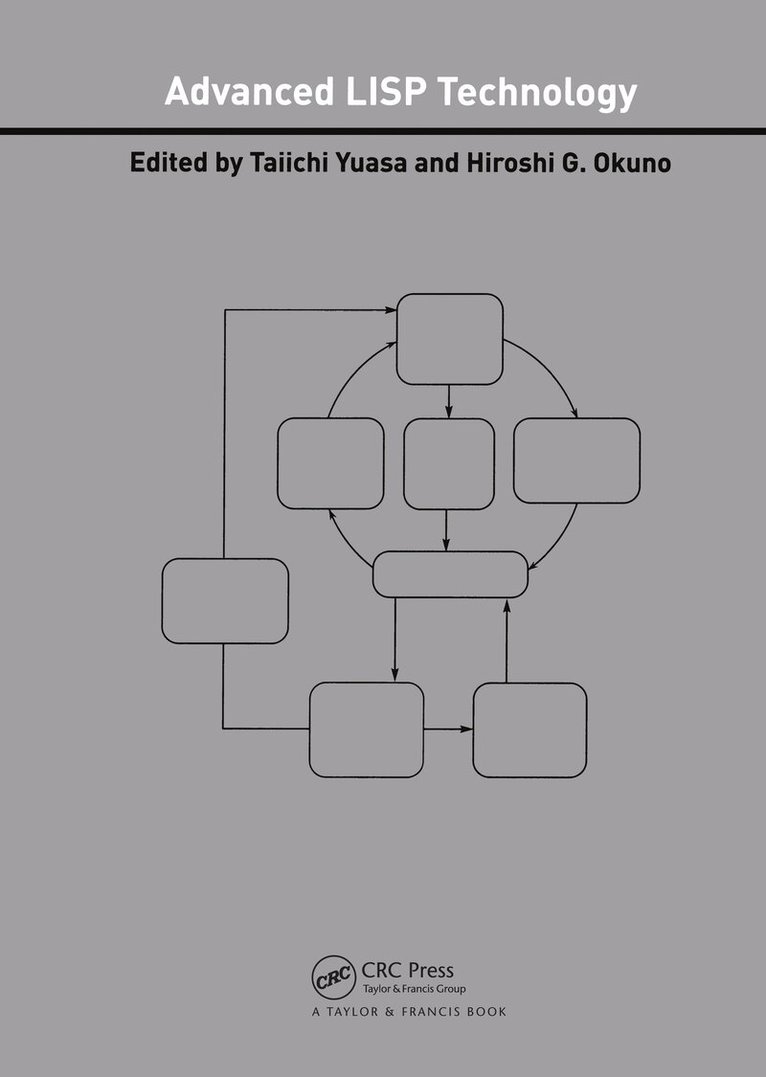
Developments in Lisp technology have been accelerated by a number of factors, including the increased interest in Artificial Intelligence and the emergence of Common Lisp. Advanced Lisp Technology, the fourth volume in the Advanced Information Processing Technology series, brings together various Japanese researchers working in the field of Lisp technology and reflects the growing interest in parallel and distributed processing.The book is divided into four parts. The first examines Lisp systems design and implementation in a wide variety of parallel and distributed computing environments, which provide the base system with constructs for parallel computation. The second part consists of papers on language features such as evaluation strategy for parallel symbolic computation, extension of first-class continuations for parallel Scheme systems, and lightweight process for real-time symbolic computations. The papers in the third part discuss memory management and garbage collection, and the fourth group of papers consider the programming environment.Graduates, researchers and professional programmers involved with programming language systems, list processing and garbage collection will find this book a valuable compilation of recent research in these fields.
2 565 kr
Skickas inom 10-15 vardagar
Developments in Lisp technology have been accelerated by a number of factors, including the increased interest in Artificial Intelligence and the emergence of Common Lisp. Advanced Lisp Technology, the fourth volume in the Advanced Information Processing Technology series, brings together various Japanese researchers working in the field of Lisp technology and reflects the growing interest in parallel and distributed processing.The book is divided into four parts. The first examines Lisp systems design and implementation in a wide variety of parallel and distributed computing environments, which provide the base system with constructs for parallel computation. The second part consists of papers on language features such as evaluation strategy for parallel symbolic computation, extension of first-class continuations for parallel Scheme systems, and lightweight process for real-time symbolic computations. The papers in the third part discuss memory management and garbage collection, and the fourth group of papers consider the programming environment.Graduates, researchers and professional programmers involved with programming language systems, list processing and garbage collection will find this book a valuable compilation of recent research in these fields.
2 565 kr
Skickas inom 10-15 vardagar
The interest of AI in problems related to understanding sounds has a rich history dating back to the ARPA Speech Understanding Project in the 1970s. While a great deal has been learned from this and subsequent speech understanding research, the goal of building systems that can understand general acoustic signals--continuous speech and/or non-speech sounds--from unconstrained environments is still unrealized. Instead, there are now systems that understand "clean" speech well in relatively noiseless laboratory environments, but that break down in more realistic, noisier environments. As seen in the "cocktail-party effect," humans and other mammals have the ability to selectively attend to sound from a particular source, even when it is mixed with other sounds. Computers also need to be able to decide which parts of a mixed acoustic signal are relevant to a particular purpose--which part should be interpreted as speech, and which should be interpreted as a door closing, an air conditioner humming, or another person interrupting. Observations such as these have led a number of researchers to conclude that research on speech understanding and on nonspeech understanding need to be united within a more general framework. Researchers have also begun trying to understand computational auditory frameworks as parts of larger perception systems whose purpose is to give a computer integrated information about the real world. Inspiration for this work ranges from research on how different sensors can be integrated to models of how humans' auditory apparatus works in concert with vision, proprioception, etc. Representing some of the most advanced work on computers understanding speech, this collection of papers covers the work being done to integrate speech and nonspeech understanding in computer systems.
1 292 kr
Skickas inom 10-15 vardagar
“The true sign of intelligence is not knowledge but imagination.” Albert Einstein Applied arti?cial intelligence researchers have been focusing on developing and employing methods and systems to solve real-life problems in all areas incl- ing engineering, science, industry, automation & robotics, business & ?nance, th cyberspace, and man–machine interactions. The 20 International Conference on Industrial, Engineering and Other Applications of Applied Intelligent S- tems (IEA/AIE-2007) held in Kyoto, Japan presented such work performed by many scientists worldwide. The previous IEA/AIE conference held in Japan was the Ninth International Conference on Industrial and Engineering Applications of Arti?cial Intelligence and Expert systems (IEA/AIE-1996) in Fukuoka in 1996. The duration of 11 years between two conferences demanded drastic changes around applied art- cialintelligenceresearch.ThemaincausesaretherapidexpansionoftheInternet and the deluge of electronic and on-line text data. The Program Committee - cusedonAsian-originatingtechnologies,suchasactivemining,integrationofthe Internet and broadcasting, chance discovery, real-world interactions, and fuzzy logic applications. The ?rst four are from Japan and the last one is from Taiwan and China. We received 462 papers from all parts of the world. Each paper was sent to at least three Program Committee members for review. Only 116 papers were selected for presentation and publication in the proceedings. We would like to express our sincere thanks to the Program Committee and all the reviewers for their hard work.