Holger Lengfeld - Böcker
Visar alla böcker från författaren Holger Lengfeld. Handla med fri frakt och snabb leverans.
7 produkter
7 produkter
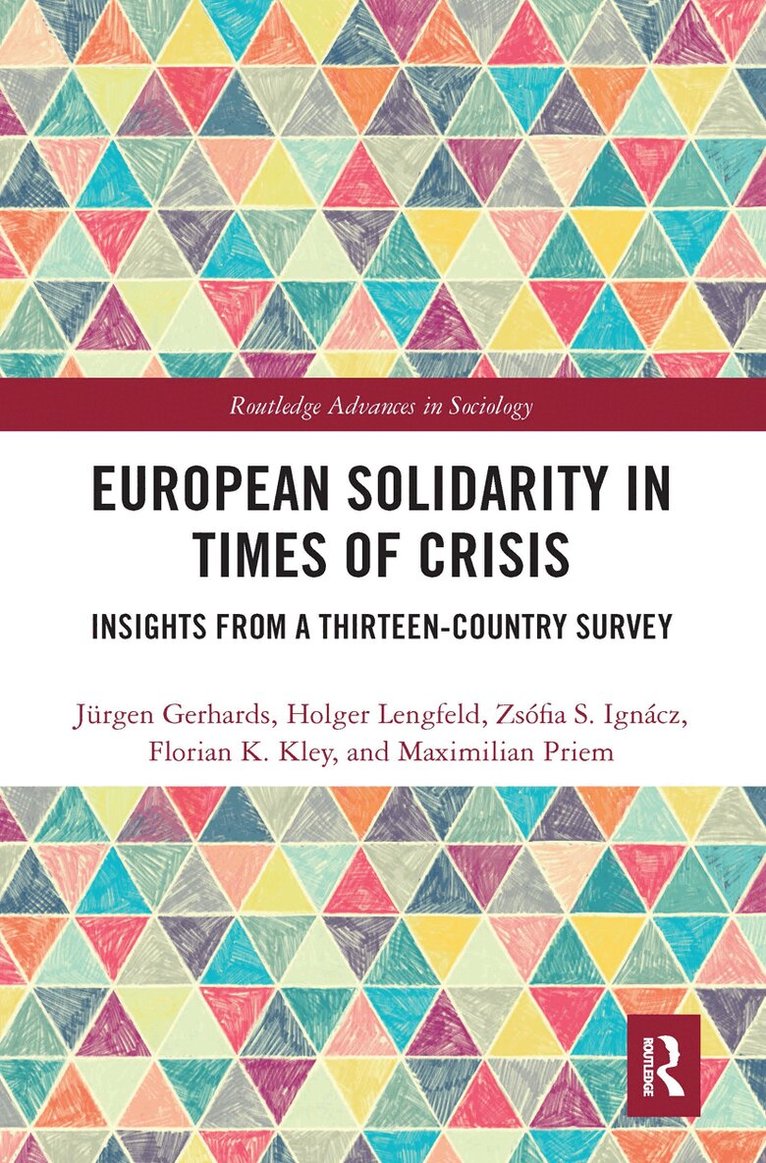
European Solidarity in Times of Crisis
Insights from a Thirteen-Country Survey
Inbunden, Engelska, 2019
1 765 kr
Skickas inom 10-15 vardagar
The euro crisis, several sovereign debt crises, the Great Recession, the refugee crisis, and Brexit have all challenged Europeans’ willingness to show solidarity with other European citizens and member states of the European Union. European Solidarity in Times of Crisis provides a clear theoretical framework to understand European solidarity for the first time. It offers a systematic empirical approach to determine the strength and causes of European solidarity. The authors distinguish between four domains of solidarity and test a set of theoretically derived criteria with a unique dataset to investigate European solidarity.Based on a survey conducted in thirteen EU member states in 2016, the empirical analysis leads to some unanticipated results. Europeans display a notably higher degree of solidarity than many politicians and social scientists have presumed so far. This especially applies to the support of people in need (welfare solidarity) and the reduction of territorial disparities between rich and poor EU countries (territorial solidarity), but also to the domain of fiscal solidarity (financial support of indebted EU countries). This optimistic view is less true for the domain of refugee solidarity. While citizens of western and southern EU countries accept the accommodation of refugees and their allocation between European countries, the majority of people in eastern European countries do not share this point of view. The book will appeal to students and scholars in fields such as comparative sociology, political science, social policy and migration research, and European studies. It is also relevant to a non-academic audience interested in the development of the European project.
509 kr
Skickas inom 10-15 vardagar
The euro crisis, several sovereign debt crises, the Great Recession, the refugee crisis, and Brexit have all challenged Europeans’ willingness to show solidarity with other European citizens and member states of the European Union. European Solidarity in Times of Crisis provides a clear theoretical framework to understand European solidarity for the first time. It offers a systematic empirical approach to determine the strength and causes of European solidarity. The authors distinguish between four domains of solidarity and test a set of theoretically derived criteria with a unique dataset to investigate European solidarity.Based on a survey conducted in thirteen EU member states in 2016, the empirical analysis leads to some unanticipated results. Europeans display a notably higher degree of solidarity than many politicians and social scientists have presumed so far. This especially applies to the support of people in need (welfare solidarity) and the reduction of territorial disparities between rich and poor EU countries (territorial solidarity), but also to the domain of fiscal solidarity (financial support of indebted EU countries). This optimistic view is less true for the domain of refugee solidarity. While citizens of western and southern EU countries accept the accommodation of refugees and their allocation between European countries, the majority of people in eastern European countries do not share this point of view. The book will appeal to students and scholars in fields such as comparative sociology, political science, social policy and migration research, and European studies. It is also relevant to a non-academic audience interested in the development of the European project.
725 kr
Skickas inom 10-15 vardagar
Since 2008, the European Union has been affected by one of the most severe crises in the history of Europe. This book builds on the work of Jürgen Habermas to answer the key question: is Europe strong enough to overcome the recent crisis? Arguing that recovery can only take place if the citizens of Europe regard themselves as members of a socially integrated European society, this volume sets out three conditions for successful European social integration: European citizens mutually respect each other as equals, accepting that all EU citizens should have equal economic, political and social rights.Those citizens objecting to the idea of European equality should not constitute a minority with potential for mobilisation that could impede the ongoing process of European social integration.Europeans act upon their equality beliefs in everyday practice – without differentiating between nationals and EU migrants. Based on a survey carried out in Germany, Spain, Poland and Turkey, the authors argue that the requirements for a socially integrated Europe are largely in place already. Their findings allow for optimism regarding the future of the EU, as the cultural foundations for a democratisation of Europe are laid.This volume develops a theoretical framework of a socially integrated European community, and will be useful for students and scholars of sociology, citizenship studies, social policy, political science and European studies.
2 088 kr
Skickas inom 10-15 vardagar
Since 2008, the European Union has been affected by one of the most severe crises in the history of Europe. This book builds on the work of Jürgen Habermas to answer the key question: is Europe strong enough to overcome the recent crisis? Arguing that recovery can only take place if the citizens of Europe regard themselves as members of a socially integrated European society, this volume sets out three conditions for successful European social integration: European citizens mutually respect each other as equals, accepting that all EU citizens should have equal economic, political and social rights.Those citizens objecting to the idea of European equality should not constitute a minority with potential for mobilisation that could impede the ongoing process of European social integration.Europeans act upon their equality beliefs in everyday practice – without differentiating between nationals and EU migrants. Based on a survey carried out in Germany, Spain, Poland and Turkey, the authors argue that the requirements for a socially integrated Europe are largely in place already. Their findings allow for optimism regarding the future of the EU, as the cultural foundations for a democratisation of Europe are laid.This volume develops a theoretical framework of a socially integrated European community, and will be useful for students and scholars of sociology, citizenship studies, social policy, political science and European studies.
382 kr
Skickas inom 10-15 vardagar
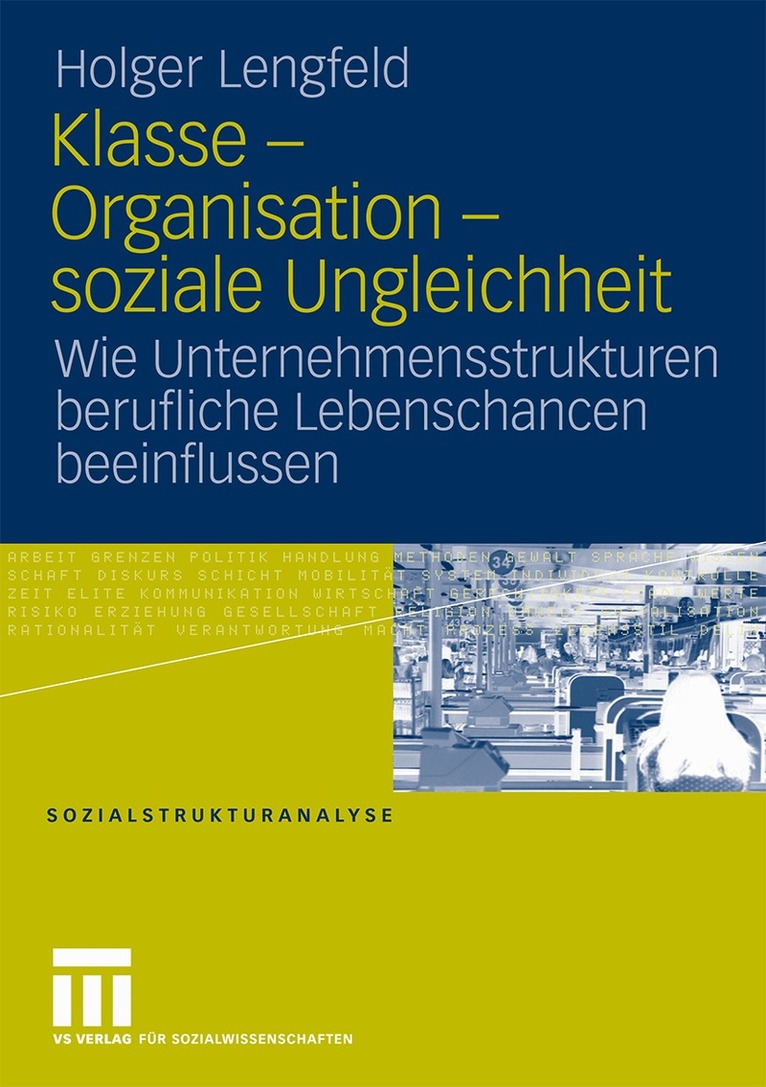
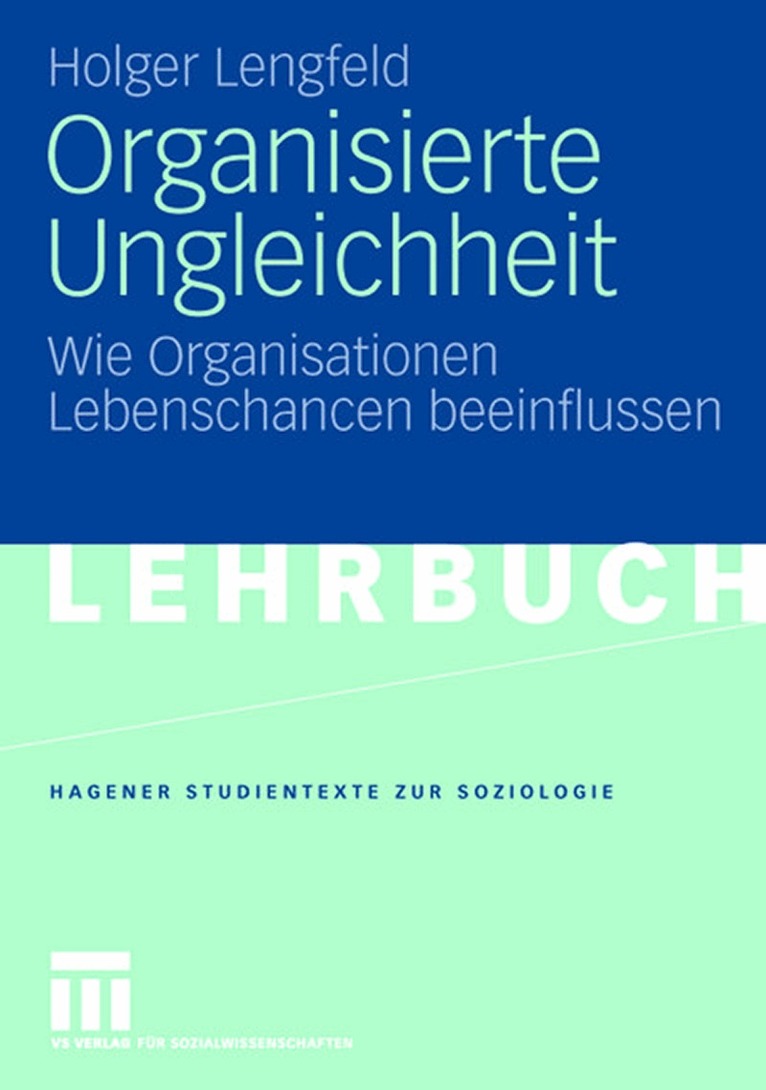
Klasse - Organisation - soziale Ungleichheit
Wie Unternehmensstrukturen berufliche Lebenschancen beeinflussen
Häftad, Tyska, 2009
501 kr
Skickas inom 10-15 vardagar
Dieses Buch handelt vom Einfluss der Organisationsstruktur von Unternehmen und Verwaltungen auf soziale Ungleichheit. Es thematisiert damit einen Geg- stand, der in die Zuständigkeit der Sozialstrukturanalyse fällt, der aber auch eine große Schnittmenge mit der Organisationssoziologie aufweist. Bis in die 1990er Jahre hinein wurden auf diesem Forschungsfeld umfangreiche Studien durch- führt. Seither geht es dort deutlich ruhiger zu; offenbar scheinen die meisten Probleme gelöst worden zu sein. Dennoch habe ich mich, gegen den Trend, dem Gegenstand erneut zugewandt. Dabei habe ich mich zu Beginn meiner Rech- chen darüber gewundert, dass wir zwar umfangreiches Detailwissen über den Einfluss von vielfältigen Organisationsstrukturen auf ungleiche Güterverteil- gen angehäuft haben, dass von diesem Wissen in der Breite des Fachs Sozi- strukturanalyse aber kaum Kenntnis genommen wurde. Dies gilt, so meine ich, insbesondere für solche Makrotheorien, die mit dem Klassen- oder Schichtun- konzept operieren. Meine Hoffnung ist, mit dieser Studie auch eine Brücke zu schlagen zwischen der organisationsbezogenen Ungleichheitsforschung auf der einen Seite und der makrosoziologischen Sozialstrukturanalyse auf der anderen. Die vorliegende Studie wurde im Jahr 2008 als Habilitationsschrift am Fachbereich Politik- und Sozialwissenschaften der Freien Universität Berlin angenommen. Für den Druck wurde sie etwas gekürzt und um ein neues Kapitel ergänzt. Bei ihrer Abfassung habe ich von der Unterstützung durch eine Reihe von Menschen profitiert. Jürgen Gerhards (FU Berlin) hat den Fortgang der Arbeit ideenreich kommentiert; Jürgen Schupp (DIW Berlin) hat konstruktive Hinweise vor allem zur Empirie gegeben; Arne Kalleberg (Univ.
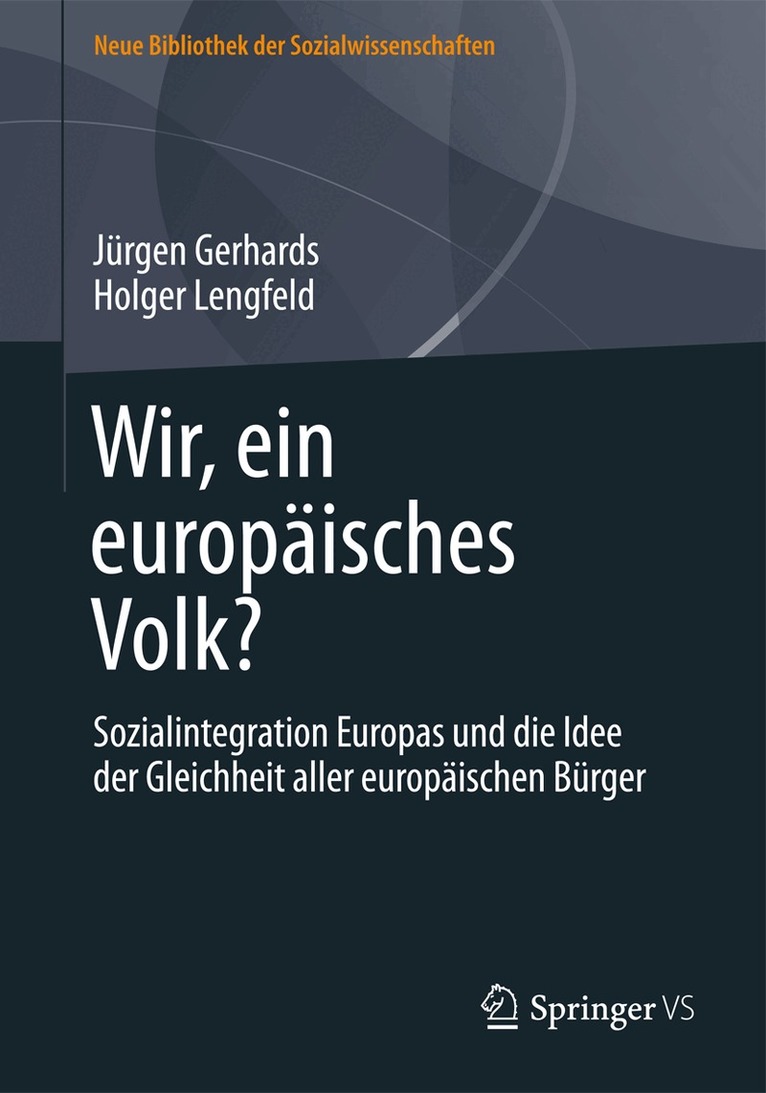
Wir, ein europäisches Volk?
Sozialintegration Europas und die Idee der Gleichheit aller europäischen Bürger
Inbunden, Tyska, 2013
600 kr
Skickas inom 10-15 vardagar
Die Eurokrise ist eine der schwersten Krisen der EU seit ihrer Gründung. Bei ihrer Lösung geht es nicht allein um den Erfolg von konkreten wirtschaftspolitischen Maßnahmen, sondern um den Zusammenhalt zwischen den Bürgern der verschiedenen Mitgliedsländer. Jürgen Gerhards und Holger Lengfeld entwickeln ein Konzept einer sozial integrierten europäischen Gesellschaft, das auf der Annahme beruht, dass sich die EU-Bürger unabhängig von ihrer jeweils konkreten nationalen Herkunft als Gleiche anerkennen. Anhand von Daten einer Umfrage aus vier Ländern prüfen sie, in welchem Maße die Europäer diese Idee einer europäisierten Chancengleichheit unterstützen oder ob sie weiterhin einem nationalstaatlich geschlossenen Gleichheitskonzept anhängen. Die empirischen Befunde der Studie stimmen optimistisch: Die kulturellen Grundlagen für ein sozial integriertes Europa scheinen gegeben zu sein, da sich die Bürger der Europäischen Union in hohem Maße als Gleiche anerkennen, sich kaum gesellschaftliche Konfliktlinien um die Zubilligung gleicher Rechte für Bürger aus anderen EU-Ländern zeigen und die Menschen sich auch in der Alltagspraxis weitgehend an diesen Werten orientieren.