Jürgen Gerhards – författare
1 811 kr
Skickas inom 10-15 vardagar
520 kr
Skickas inom 10-15 vardagar
631 kr
Skickas inom 10-15 vardagar
1 451 kr
Skickas
451 kr
Skickas inom 10-15 vardagar
2 222 kr
Skickas inom 10-15 vardagar
742 kr
Skickas inom 10-15 vardagar
600 kr
Läs direkt efter köp
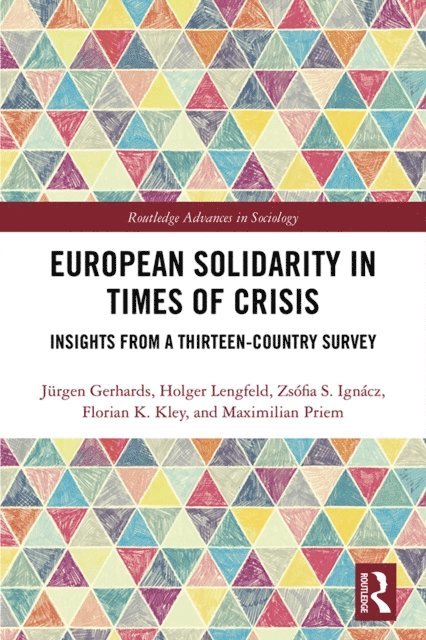
The euro crisis, several sovereign debt crises, the Great Recession, the refugee crisis, and Brexit have all challenged Europeans’ willingness to show solidarity with other European citizens and member states of the European Union. European Solidarity in Times of Crisis provides a clear theoretical framework to understand European solidarity for the first time. It offers a systematic empirical approach to determine the strength and causes of European solidarity. The authors distinguish between four domains of solidarity and test a set of theoretically derived criteria with a unique dataset to investigate European solidarity.
Based on a survey conducted in thirteen EU member states in 2016, the empirical analysis leads to some unanticipated results. Europeans display a notably higher degree of solidarity than many politicians and social scientists have presumed so far. This especially applies to the support of people in need (welfare solidarity) and the reduction of territorial disparities between rich and poor EU countries (territorial solidarity), but also to the domain of fiscal solidarity (financial support of indebted EU countries). This optimistic view is less true for the domain of refugee solidarity. While citizens of western and southern EU countries accept the accommodation of refugees and their allocation between European countries, the majority of people in eastern European countries do not share this point of view.
The book will appeal to students and scholars in fields such as comparative sociology, political science, social policy and migration research, and European studies. It is also relevant to a non-academic audience interested in the development of the European project.
600 kr
Läs direkt efter köp
The euro crisis, several sovereign debt crises, the Great Recession, the refugee crisis, and Brexit have all challenged Europeans’ willingness to show solidarity with other European citizens and member states of the European Union. European Solidarity in Times of Crisis provides a clear theoretical framework to understand European solidarity for the first time. It offers a systematic empirical approach to determine the strength and causes of European solidarity. The authors distinguish between four domains of solidarity and test a set of theoretically derived criteria with a unique dataset to investigate European solidarity.
Based on a survey conducted in thirteen EU member states in 2016, the empirical analysis leads to some unanticipated results. Europeans display a notably higher degree of solidarity than many politicians and social scientists have presumed so far. This especially applies to the support of people in need (welfare solidarity) and the reduction of territorial disparities between rich and poor EU countries (territorial solidarity), but also to the domain of fiscal solidarity (financial support of indebted EU countries). This optimistic view is less true for the domain of refugee solidarity. While citizens of western and southern EU countries accept the accommodation of refugees and their allocation between European countries, the majority of people in eastern European countries do not share this point of view.
The book will appeal to students and scholars in fields such as comparative sociology, political science, social policy and migration research, and European studies. It is also relevant to a non-academic audience interested in the development of the European project.
519 kr
Läs direkt efter köp
Within a few years the European Union will be enlarged from fifteen to twenty-eight member states, including Turkey. Cultural Overstretch investigates whether the new countries culturally fit into the European Union. Interpreting the European treaties and the European Law, Gerhards describes in a first step what he calls ''The value script of the European Union''. Using survey data from twenty-eight countries the author examines in a second step whether citizens support the value script of the European Union and whether there are significant differences between old and new member states and candidate countries. The book also highlights cultural differences by referring to modernization theory and forecasts in the concluding chapter the political consequences of a possible cultural overstretch of the European Union.
519 kr
Läs direkt efter köp
Within a few years the European Union will be enlarged from fifteen to twenty-eight member states, including Turkey. Cultural Overstretch investigates whether the new countries culturally fit into the European Union. Interpreting the European treaties and the European Law, Gerhards describes in a first step what he calls ''The value script of the European Union''. Using survey data from twenty-eight countries the author examines in a second step whether citizens support the value script of the European Union and whether there are significant differences between old and new member states and candidate countries. The book also highlights cultural differences by referring to modernization theory and forecasts in the concluding chapter the political consequences of a possible cultural overstretch of the European Union.
2 097 kr
Skickas inom 10-15 vardagar
701 kr
Skickas inom 10-15 vardagar
2 158 kr
Skickas inom 10-15 vardagar
730 kr
Läs direkt efter köp
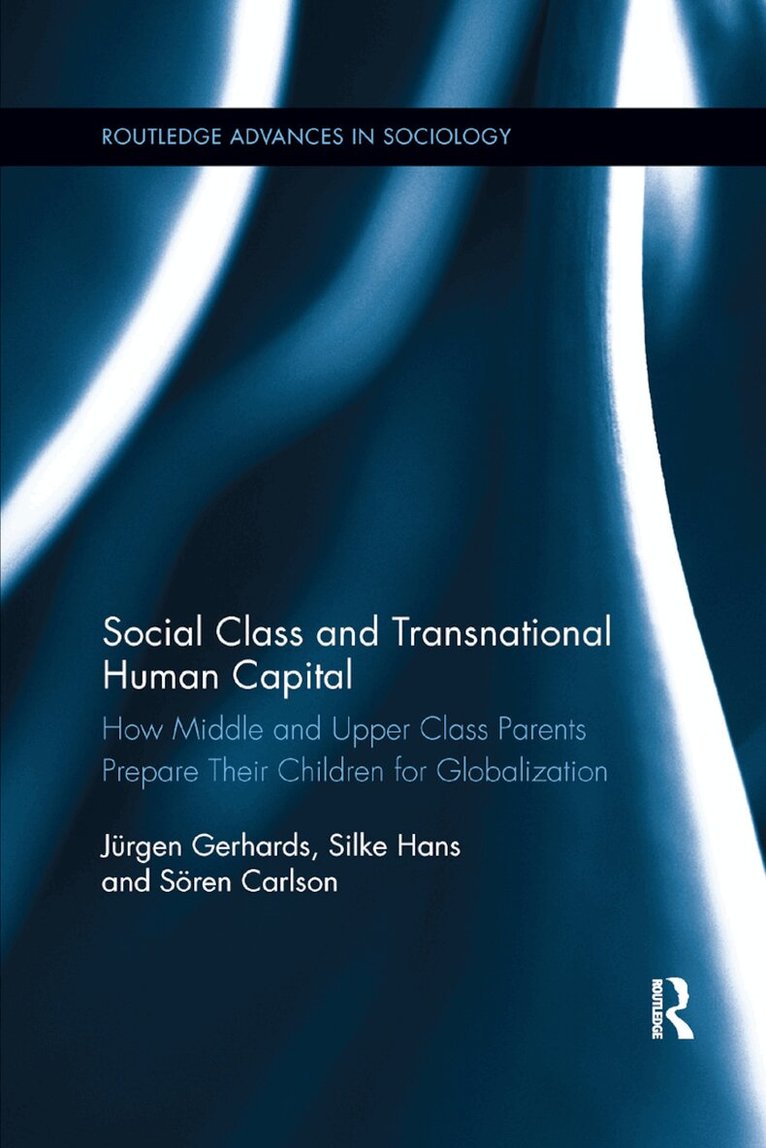
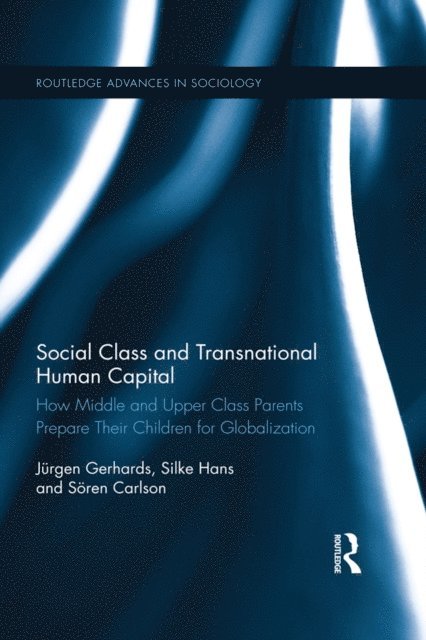
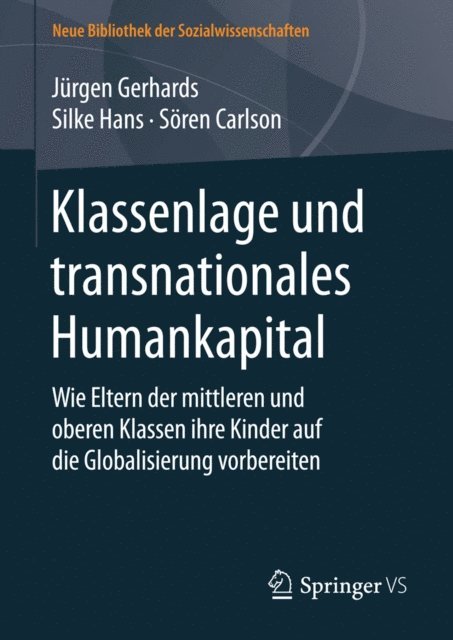
Due to globalization processes, foreign language skills, knowledge about other countries and intercultural competences have increasingly become important for societies and people’s social positions. Previous research on social inequality, however, has dominantly focused on the reproduction of class structures within the boundaries of a particular nation-state without considering the importance of these specific skills and competences.
Within Social Class and Transnational Human Capital authors Gerhards, Hans and Carlson refer to these skills as ‘transnational human capital’ and ask to what extent access to this increasingly sought-after resource depends on social class. Based on Pierre Bourdieu’s theory of class, they investigate this question via both quantitative and qualitative empirical analyses. In doing so the authors focus, among other examples, on the so-called school year abroad, i.e. students spending up to a year abroad while attending school – a practice which is rather popular in Germany, but also quite common in many other countries. Thus, this insightful volume explores how inequalities in the acquisition of transnational human capital and new forms of social distinction are produced within families, depending on their class position and the educational strategies parents pursue when trying to prepare their children for a globalizing world.
An enlightening title, this book will appeal to undergraduate and postgraduate students, as well as postdoctoral researchers interested in fields such as sociology, social inequality research, globalization studies and educational studies.
730 kr
Läs direkt efter köp
Due to globalization processes, foreign language skills, knowledge about other countries and intercultural competences have increasingly become important for societies and people’s social positions. Previous research on social inequality, however, has dominantly focused on the reproduction of class structures within the boundaries of a particular nation-state without considering the importance of these specific skills and competences.
Within Social Class and Transnational Human Capital authors Gerhards, Hans and Carlson refer to these skills as ‘transnational human capital’ and ask to what extent access to this increasingly sought-after resource depends on social class. Based on Pierre Bourdieu’s theory of class, they investigate this question via both quantitative and qualitative empirical analyses. In doing so the authors focus, among other examples, on the so-called school year abroad, i.e. students spending up to a year abroad while attending school – a practice which is rather popular in Germany, but also quite common in many other countries. Thus, this insightful volume explores how inequalities in the acquisition of transnational human capital and new forms of social distinction are produced within families, depending on their class position and the educational strategies parents pursue when trying to prepare their children for a globalizing world.
An enlightening title, this book will appeal to undergraduate and postgraduate students, as well as postdoctoral researchers interested in fields such as sociology, social inequality research, globalization studies and educational studies.
860 kr
Läs direkt efter köp
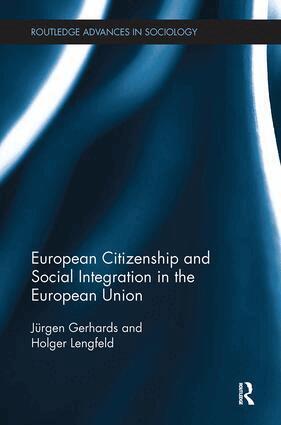
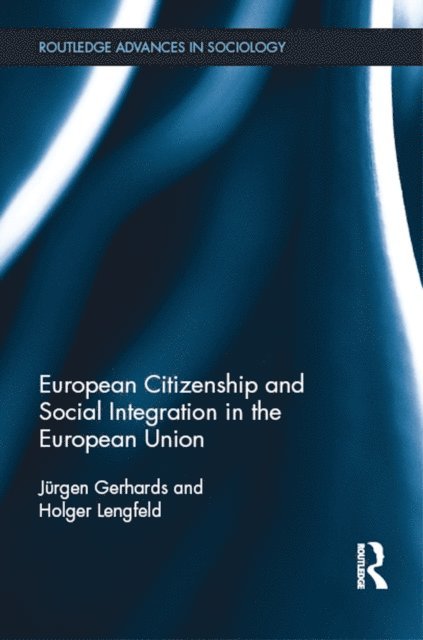
Since 2008, the European Union has been affected by one of the most severe crises in the history of Europe. This book builds on the work of Jürgen Habermas to answer the key question: is Europe strong enough to overcome the recent crisis? Arguing that recovery can only take place if the citizens of Europe regard themselves as members of a socially integrated European society, this volume sets out three conditions for successful European social integration:
European citizens mutually respect each other as equals, accepting that all EU citizens should have equal economic, political and social rights. Those citizens objecting to the idea of European equality should not constitute a minority with potential for mobilisation that could impede the ongoing process of European social integration. Europeans act upon their equality beliefs in everyday practice – without differentiating between nationals and EU migrants.
Based on a survey carried out in Germany, Spain, Poland and Turkey, the authors argue that the requirements for a socially integrated Europe are largely in place already. Their findings allow for optimism regarding the future of the EU, as the cultural foundations for a democratisation of Europe are laid.
This volume develops a theoretical framework of a socially integrated European community, and will be useful for students and scholars of sociology, citizenship studies, social policy, political science and European studies.
860 kr
Läs direkt efter köp
Since 2008, the European Union has been affected by one of the most severe crises in the history of Europe. This book builds on the work of Jürgen Habermas to answer the key question: is Europe strong enough to overcome the recent crisis? Arguing that recovery can only take place if the citizens of Europe regard themselves as members of a socially integrated European society, this volume sets out three conditions for successful European social integration:
European citizens mutually respect each other as equals, accepting that all EU citizens should have equal economic, political and social rights. Those citizens objecting to the idea of European equality should not constitute a minority with potential for mobilisation that could impede the ongoing process of European social integration. Europeans act upon their equality beliefs in everyday practice – without differentiating between nationals and EU migrants.
Based on a survey carried out in Germany, Spain, Poland and Turkey, the authors argue that the requirements for a socially integrated Europe are largely in place already. Their findings allow for optimism regarding the future of the EU, as the cultural foundations for a democratisation of Europe are laid.
This volume develops a theoretical framework of a socially integrated European community, and will be useful for students and scholars of sociology, citizenship studies, social policy, political science and European studies.
763 kr
Läs direkt efter köp
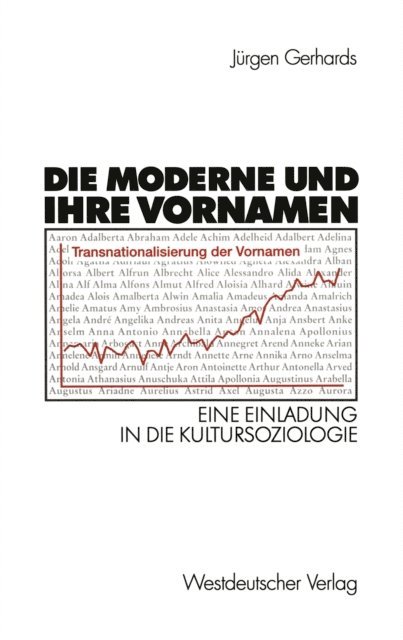
From decade to decade, significant changes occur in the choice of first names for children. One-time favorites are perceived as old fashioned and replaced by new choices. In The Name Game, Jurgen Gerhards shows that shifts in the choice of names are based on more than arbitrary trends of fashion. Instead, he demonstrates, they are determined by larger currents in cultural modernization. Using classic tools of sociology, Gerhards focuses on changing atterns of first names in Germany from the end of the nineteenth century to the end of the twentieth, using these as an indicator of cultural change. Among the influences he considers are religion, and he notes a trend toward greater secularization in first names. He considers the extent to which Christian names have been displaced, and whether the process is similar for Catholics and Protestants. He traces the impact of different political regimes (Second Empire, Weimar Republic, Third Reich, West Germany, East Germany) and the accompanying rise and fall of German nationalist sentiment. He also investigates the dissolution of the family as a unit of production, and its impact on the naming of children. He shows that the weakening of traditional ties of religion, nation, and family has led to greater individuation and greater receptivity toward foreign first names. Gerhards concludes with a discussion of whether the blurring of gender and sex roles is reflected in the decrease of gender-specific names. Written in a lucid, approachable style, The Name Game will be of interest not only to sociologists and cultural studies specialists, but also non-professionals, especially parents who are interested in reflecting on the process of name giving.
763 kr
Läs direkt efter köp
From decade to decade, significant changes occur in the choice of first names for children. One-time favorites are perceived as old fashioned and replaced by new choices. In The Name Game, Jurgen Gerhards shows that shifts in the choice of names are based on more than arbitrary trends of fashion. Instead, he demonstrates, they are determined by larger currents in cultural modernization. Using classic tools of sociology, Gerhards focuses on changing atterns of first names in Germany from the end of the nineteenth century to the end of the twentieth, using these as an indicator of cultural change. Among the influences he considers are religion, and he notes a trend toward greater secularization in first names. He considers the extent to which Christian names have been displaced, and whether the process is similar for Catholics and Protestants. He traces the impact of different political regimes (Second Empire, Weimar Republic, Third Reich, West Germany, East Germany) and the accompanying rise and fall of German nationalist sentiment. He also investigates the dissolution of the family as a unit of production, and its impact on the naming of children. He shows that the weakening of traditional ties of religion, nation, and family has led to greater individuation and greater receptivity toward foreign first names. Gerhards concludes with a discussion of whether the blurring of gender and sex roles is reflected in the decrease of gender-specific names. Written in a lucid, approachable style, The Name Game will be of interest not only to sociologists and cultural studies specialists, but also non-professionals, especially parents who are interested in reflecting on the process of name giving.
565 kr
Läs direkt efter köp
471 kr
Läs direkt efter köp
555 kr
Läs direkt efter köp
519 kr
Läs direkt efter köp
559 kr
Skickas inom 10-15 vardagar
559 kr
Skickas inom 10-15 vardagar
559 kr
Skickas inom 10-15 vardagar
559 kr
Skickas inom 10-15 vardagar
559 kr
Skickas inom 10-15 vardagar
610 kr
Skickas inom 10-15 vardagar