Holger Pettersson – författare
Visar alla böcker från författaren Holger Pettersson. Handla med fri frakt och snabb leverans.
7 produkter
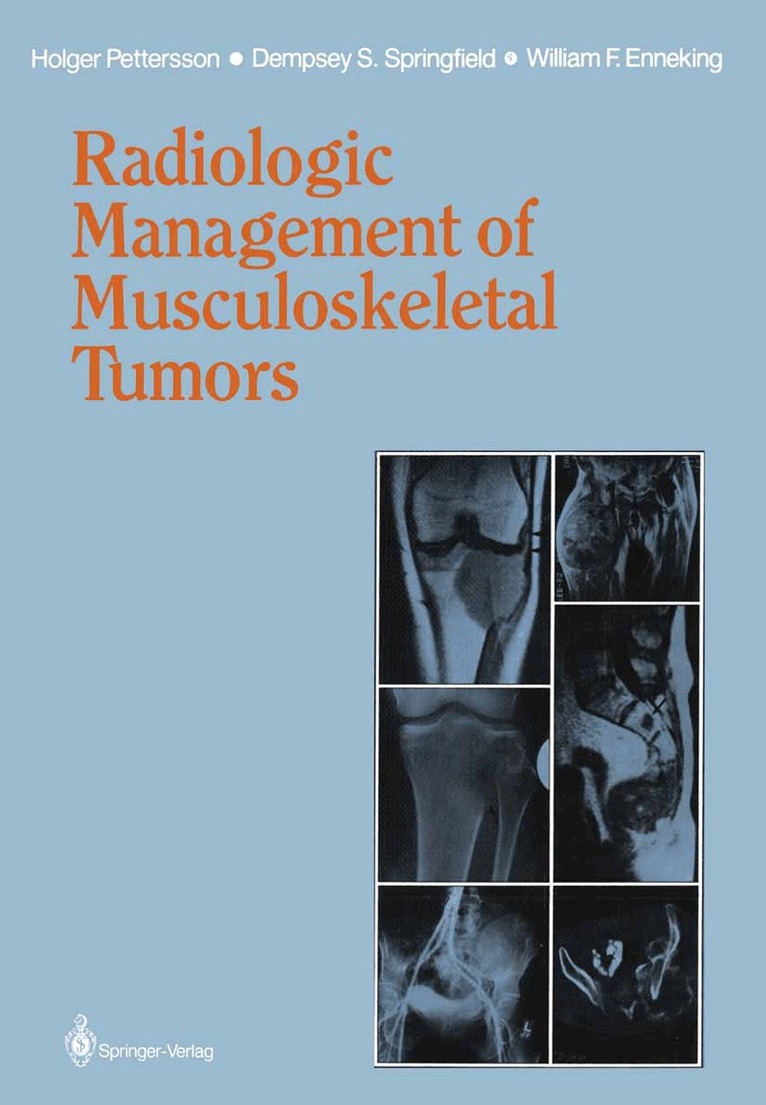
Radiologic Management of Musculoskeletal Tumors
Av William F. Enneking, Dempsey S. Springfield m. fl.
E-bok, 2012
755 kr
Lägg i varukorg
During the last decade the therapeutic approach to musculoskeletal tumors has changed dramatically, from ablative surgery with ampu tation ofthe limb to reconstructive surgery with transplantation of bone and vessels combined with radio-and chemotherapy. This has changed the demands on …
Radiologic Management of Musculoskeletal Tumors
Av Holger Pettersson, Dempsey S. Springfield m. fl.
Häftad, 2011
568 kr
Lägg i varukorg
During the last decade the therapeutic approach to musculoskeletal tumors has changed dramatically, from ablative surgery with ampu tation ofthe limb to reconstructive surgery with transplantation of bone and vessels combined with radio-and chemotherapy. This has changed the demands on …
Measurements in Pediatric Radiology
Av Hans Ringertz, Holger Pettersson
E-bok, 2012
732 kr
Lägg i varukorg
A thorough knowledge of normal radiological anatomy is necessary for detection and evaluation of pathological changes. In pediatric radiology, normal anatomy and normal proportions of anatomical structures may differ considerably from the adult, and may vary during growth. Therefore, in pediatric …
Measurements in Pediatric Radiology
Av Holger Pettersson, Hans Ringertz
Häftad, 2011
568 kr
Lägg i varukorg
A thorough knowledge of normal radiological anatomy is necessary for detection and evaluation of pathological changes. In pediatric radiology, normal anatomy and normal proportions of anatomical structures may differ considerably from the adult, and may vary during growth. Therefore, in pediatric …
Orthopedic Imaging
Techniques and Applications
Av Holger Pettersson, A. Mark Davies
E-bok, 2012
1502 kr
Lägg i varukorg
Musculoskeletal studies account for an important proportion of the daily clinical practice of most radiologists. For many years following Rontgen''s discovery of x-rays in 1895, these studies were confined to plain films and conventional tomography, which substantially limited the contribution of …
Orthopedic Imaging
Techniques and Applications
Av A. Mark Davies, Holger Pettersson
Häftad, 2011
1130 kr
Lägg i varukorg
Musculoskeletal studies account for an important proportion of the daily clinical practice of most radiologists. For many years following Rontgen's discovery of x-rays in 1895, these studies were confined to plain films and conventional tomography, which substantially limited the contribution of …
WHO Manual of Diagnostic Imaging
Radiographic Anatomy and Interpretation of the Musculoskeletal System
Av A. M. Davies, World Health Organization m. fl.
Häftad, 2002
604 kr
Lägg i varukorg