Horst Niemes – författare
Visar alla böcker från författaren Horst Niemes. Handla med fri frakt och snabb leverans.
7 produkter
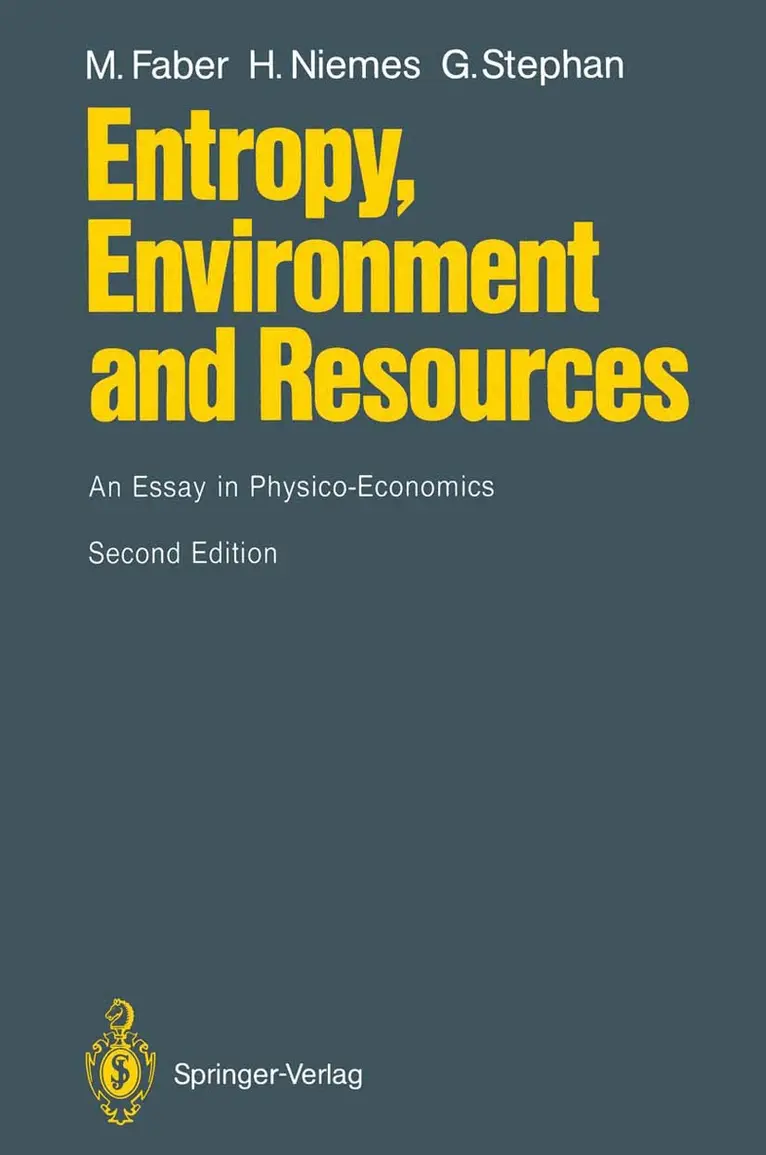
Entropy, Environment and Resources
An Essay in Physico-Economics
Av Malte Faber, Horst Niemes m. fl.
Häftad, 1995
568 kr
Lägg i varukorg
Long run aspects of environmental protection and of the use of resources are analyzed within a planning model. To this end fundamental concepts of thermodynamics are explained in a simple manner. The relationships between entropy, energy necessary for the extraction of a resource and the …
Entropy, Environment and Resources
An Essay in Physico-Economics
Av Gunter Stephan, Horst Niemes m. fl.
E-bok, 2012
734 kr
Lägg i varukorg
Long run aspects of environmental protection and of the use of resources are analyzed within a planning model. To this end fundamental concepts of thermodynamics are explained in a simple manner. The relationships between entropy, energy necessary for the extraction of a resource and the …
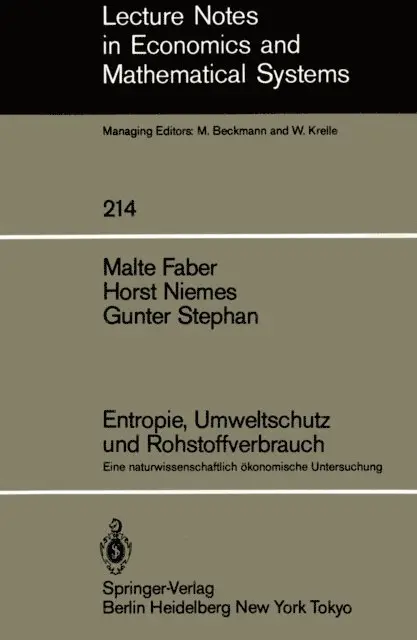
Entropie, Umweltschutz und Rohstoffverbrauch
Eine naturwissenschaftlich ökonomische Untersuchung
Av Gunter Stephan, Horst Niemes m. fl.
E-bok, 2013
554 kr
Lägg i varukorg
Entropy, Environment and Resources
An Essay in Physico-Economics
Av Gunter Stephan, Horst Niemes m. fl.
E-bok, 2012
1174 kr
Lägg i varukorg
Long run aspects of environmental protection and of the useof resources areanalyzed within a planning model. To thisend fundamental concepts of thermodynamics are explained ina simple manner. The relationships between entropy, energynecessary for the extraction of a resource and theconcentration of …
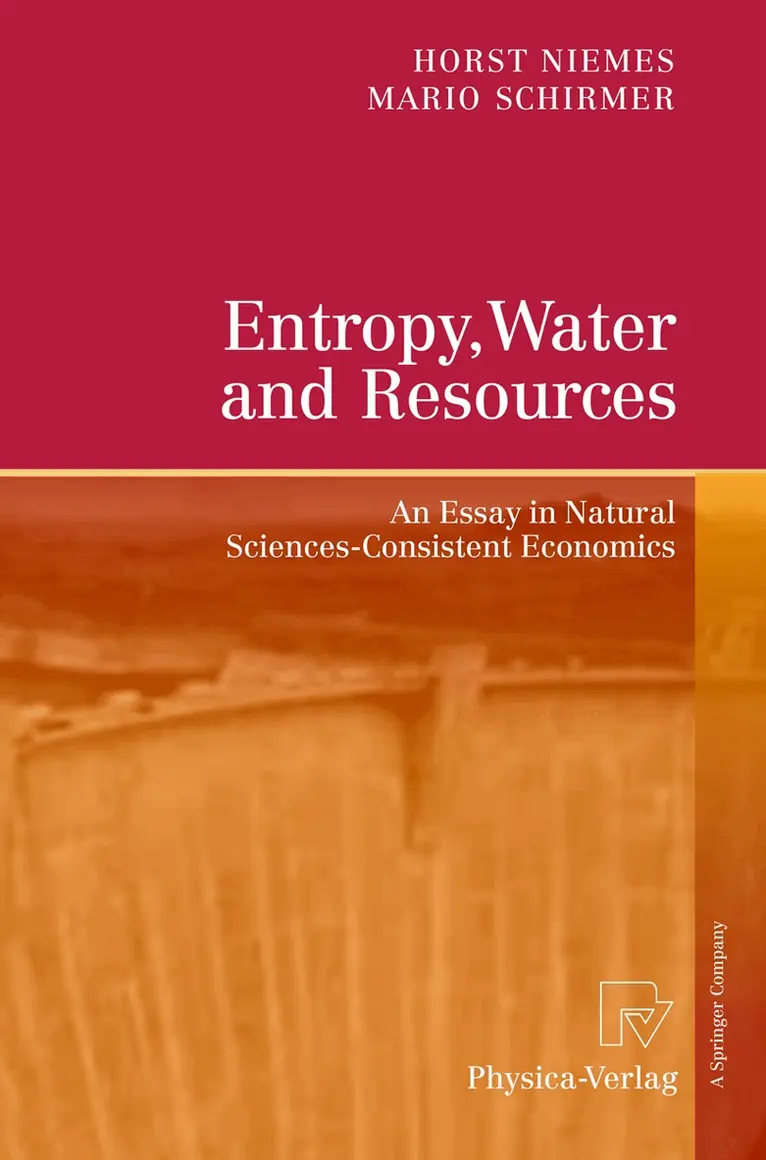
Entropy, Water and Resources
An Essay in Natural Sciences-Consistent Economics
Av Horst Niemes, Mario Schirmer
Inbunden, 2010
1093 kr
Lägg i varukorg
This book lies at the intersection of natural sciences, economics, and water en- neering and is in line with the long tradition of environmental economics at the University of Heidelberg. In the 1970s, the Neo-Austrian Capital Theory was developed using the fundamental laws of thermodynamics as a …
Entropy, Water and Resources
An Essay in Natural Sciences-Consistent Economics
Av Mario Schirmer, Horst Niemes
E-bok, 2010
1459 kr
Lägg i varukorg
This book lies at the intersection of natural sciences, economics, and water en- neering and is in line with the long tradition of environmental economics at the University of Heidelberg. In the 1970s, the Neo-Austrian Capital Theory was developed using the fundamental laws of thermodynamics as a …
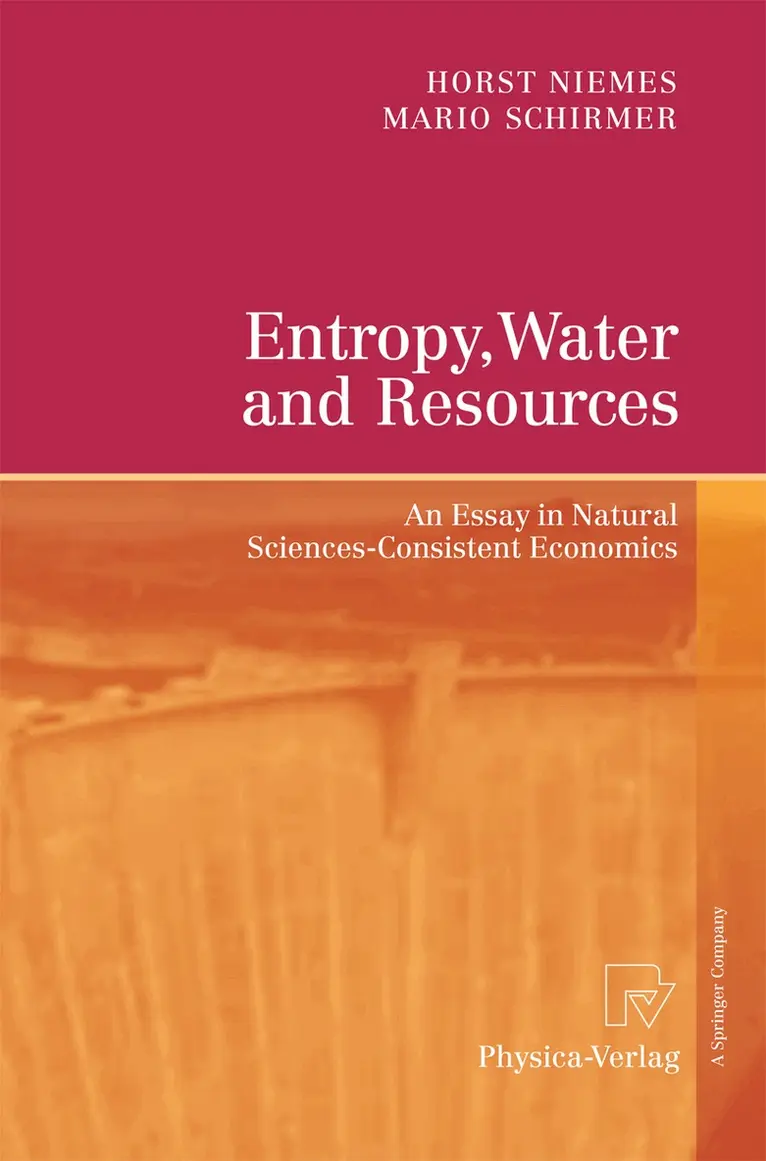
Entropy, Water and Resources
An Essay in Natural Sciences-Consistent Economics
Av Horst Niemes, Mario Schirmer
Häftad, 2014
1093 kr
Lägg i varukorg
This book lies at the intersection of natural sciences, economics, and water en- neering and is in line with the long tradition of environmental economics at the University of Heidelberg. In the 1970s, the Neo-Austrian Capital Theory was developed using the fundamental laws of thermodynamics as a …