Hung-Gay Fung – författare
Visar alla böcker från författaren Hung-Gay Fung. Handla med fri frakt och snabb leverans.
18 produkter
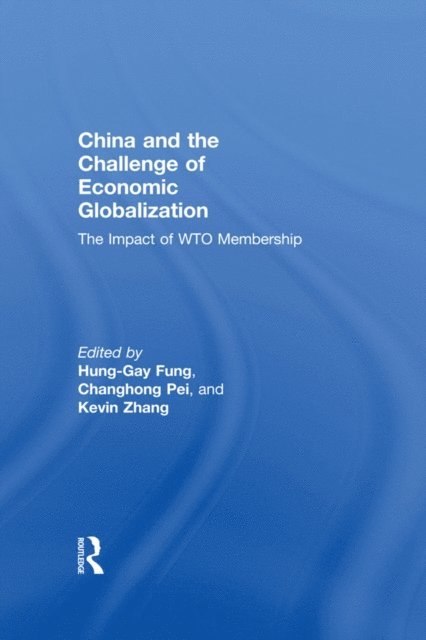
China and the Challenge of Economic Globalization
The Impact of WTO Membership
Av Hung-Gay Fung, Pei Changhong m. fl.
Häftad, 2020
650 kr
Lägg i varukorg
First Published in 2006.
International Bank Management
Av Hung-Gay Fung, Dileep Mehta
E-bok, 2008
823 kr
Lägg i varukorg
This text provides current and integrated coverage of the important topics in international banking, including foreign exchange markets, derivatives, country risk analysis, asset-liability management, and banking strategies. In order to incorporate the central elements of this field, the text …
Financial Markets and Foreign Direct Investment in Greater China
Av Hung-Gay Fung, Yahong Zhang
Inbunden, 2001
1571 kr
Lägg i varukorg
Based on rigorous state-of-the-art research techniques, this book deals with critical issues regarding China's financial markets and foreign direct investment -- key components of China's economic transformation.
China and the Challenge of Economic Globalization
The Impact of WTO Membership
Av Hung-Gay Fung, Pei Changhong m. fl.
Inbunden, 2015
3917 kr
Lägg i varukorg
China emerged as the largest recipient of foreign direct investment (FDI) and the fifth largest trading nation in the world in 2002. China’s entry into the World Trade Organization (WTO) represents a huge stride forward in its reform efforts. These reforms include liberalization and modernization …
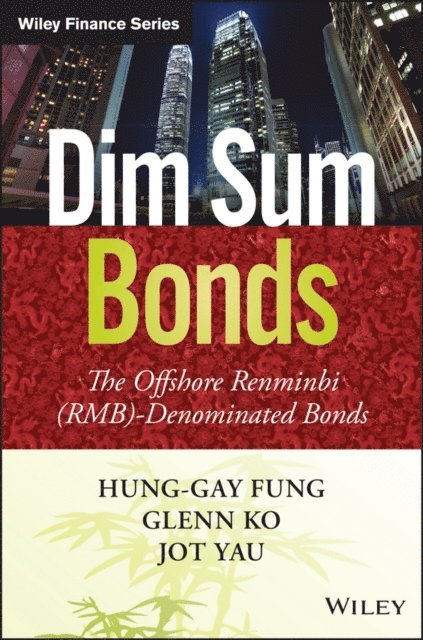
Dim Sum Bonds
The Offshore Renminbi (RMB)-Denominated Bonds
Av Hung-Gay Fung, Glenn Chi-Wo Ko m. fl.
Inbunden, 2014
961 kr
Lägg i varukorg
A comprehensive guide to understanding and assimilating into dim sum bond marketsThe expansive growth of the dim sum bond market in the last five years has peaked investor interest and inspired companies to seek out investing opportunities that negate China's capital controls. In a four-pronged …
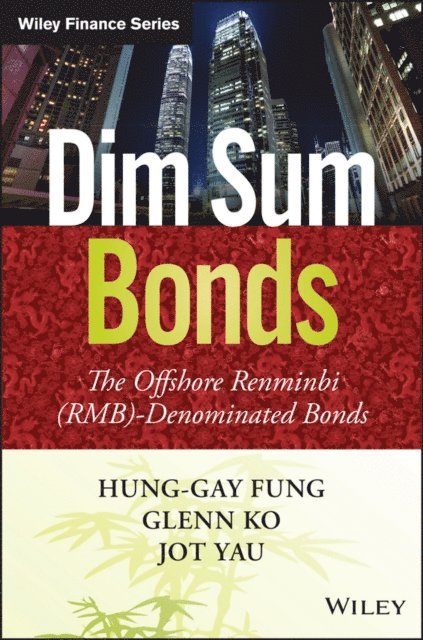
Dim Sum Bonds
The Offshore Renminbi (RMB)-Denominated Bonds
Av Jot Yau, Glenn Chi-Wo Ko m. fl.
E-bok, 2014
831 kr
Lägg i varukorg
A comprehensive guide to understanding and assimilating into dim sum bond markets The expansive growth of the dim sum bond market in the last five years has peaked investor interest and inspired companies to seek out investing opportunities that negate China''s capital controls. In a four-pronged …
Dim Sum Bonds
The Offshore Renminbi (RMB)-Denominated Bonds
Av Jot Yau, Glenn Chi-Wo Ko m. fl.
E-bok, 2013
813 kr
Lägg i varukorg
A comprehensive guide to understanding and assimilating into dim sum bond markets The expansive growth of the dim sum bond market in the last five years has peaked investor interest and inspired companies to seek out investing opportunities that negate China''s capital controls. In a four-pronged …
China and the Challenge of Economic Globalization
The Impact of WTO Membership
Av Kevin Zhang, Pei Changhong m. fl.
E-bok, 2017
745 kr
Lägg i varukorg
China emerged as the largest recipient of foreign direct investment (FDI) and the fifth largest trading nation in the world in 2002. China’s entry into the World Trade Organization (WTO) represents a huge stride forward in its reform efforts. These reforms include liberalization and modernization …
China and the Challenge of Economic Globalization
The Impact of WTO Membership
Av Kevin Zhang, Pei Changhong m. fl.
E-bok, 2017
767 kr
Lägg i varukorg
China emerged as the largest recipient of foreign direct investment (FDI) and the fifth largest trading nation in the world in 2002. China’s entry into the World Trade Organization (WTO) represents a huge stride forward in its reform efforts. These reforms include liberalization and modernization …
Financial Markets and Foreign Direct Investment in Greater China
Av Yahong Zhang, Hung-Gay Fung
E-bok, 2016
838 kr
Lägg i varukorg
Based on rigorous state-of-the-art research techniques, this book deals with critical issues regarding China''s financial markets and foreign direct investment -- key components of China''s economic transformation.
Financial Markets and Foreign Direct Investment in Greater China
Av Yahong Zhang, Hung-Gay Fung
E-bok, 2016
856 kr
Lägg i varukorg
Based on rigorous state-of-the-art research techniques, this book deals with critical issues regarding China''s financial markets and foreign direct investment -- key components of China''s economic transformation.
International Bank Management
Av Dileep Mehta, Hung-Gay Fung
Inbunden, 2003
477 kr
Lägg i varukorg
This text provides current and integrated coverage of the important topics in international banking, including foreign exchange markets, derivatives, country risk analysis, asset-liability management, and banking strategies. In order to incorporate the central elements of this field, the text …
International Financial Markets
Inbunden, 2013
1423 kr
Lägg i varukorg
In recent years, the globalization of financial asset markets has become increasingly important and has led to closer linkages among these markets. New global investment instruments such as sovereign credit default swaps, exchange traded funds, and bond markets have been created, enabling investors …
International Financial Markets
E-bok, 2013
1542 kr
Lägg i varukorg
In recent years, the globalization of financial asset markets has become increasingly important and has led to closer linkages among these markets. New global investment instruments such as sovereign credit default swaps, exchange traded funds, and bond markets have been created, enabling investors …
China’s Capital Markets
Challenges from WTO Membership
Av Kam C. Chan, Hung-Gay Fung m. fl.
Inbunden, 2007
2408 kr
Lägg i varukorg
China's accession agreements to the World Trade Organization promised to open up the financial sector to foreign competition by the end of 2006, affording a wealth of opportunities for domestic and international investors. However, there also exist inherent risks and challenges, including …
Socially Responsible Investment in a Global Environment
Av Hung-Gay Fung, Sheryl A. Law m. fl.
Inbunden, 2010
1804 kr
Lägg i varukorg
Socially responsible investment (SRI) is becoming increasingly popular and can be potentially rewarding to all parties concerned. This book discusses the opportunities, challenges, and practices of SRI in a global financial environment in a consistent and integrated framework of risk management. It …
Socially Responsible Investment in a Global Environment
Av Jot Lau, Sheryl A. Law m. fl.
E-bok, 2010
472 kr
Lägg i varukorg
Socially responsible investment (SRI) is becoming increasingly popular and can be potentially rewarding to all parties concerned. This book discusses the opportunities, challenges, and practices of SRI in a global financial environment in a consistent and integrated framework of risk management. It …
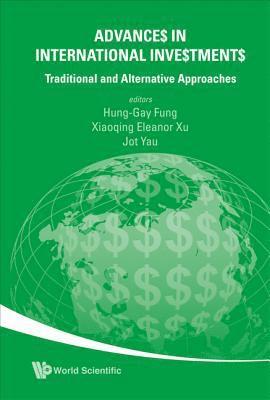
ADVANCES IN INTERNATIONAL INVESTMENTS: TRADITIONAL AND ALTERNATIVE APPROACHES
Av AL HUNG-GAY FUNG ET, Hung-Gay Fung m. fl.
Inbunden, 2008
2312 kr
Tillfälligt slut
The globalization of financial markets has led to an integrated world market. Emerging economies such as China and India have opened up their markets to foreign investors. New instruments such as exchange-traded funds are being created, and current instruments are being expanded to include real …