Hyung-A Kim – författare
Visar alla böcker från författaren Hyung-A Kim. Handla med fri frakt och snabb leverans.
9 produkter
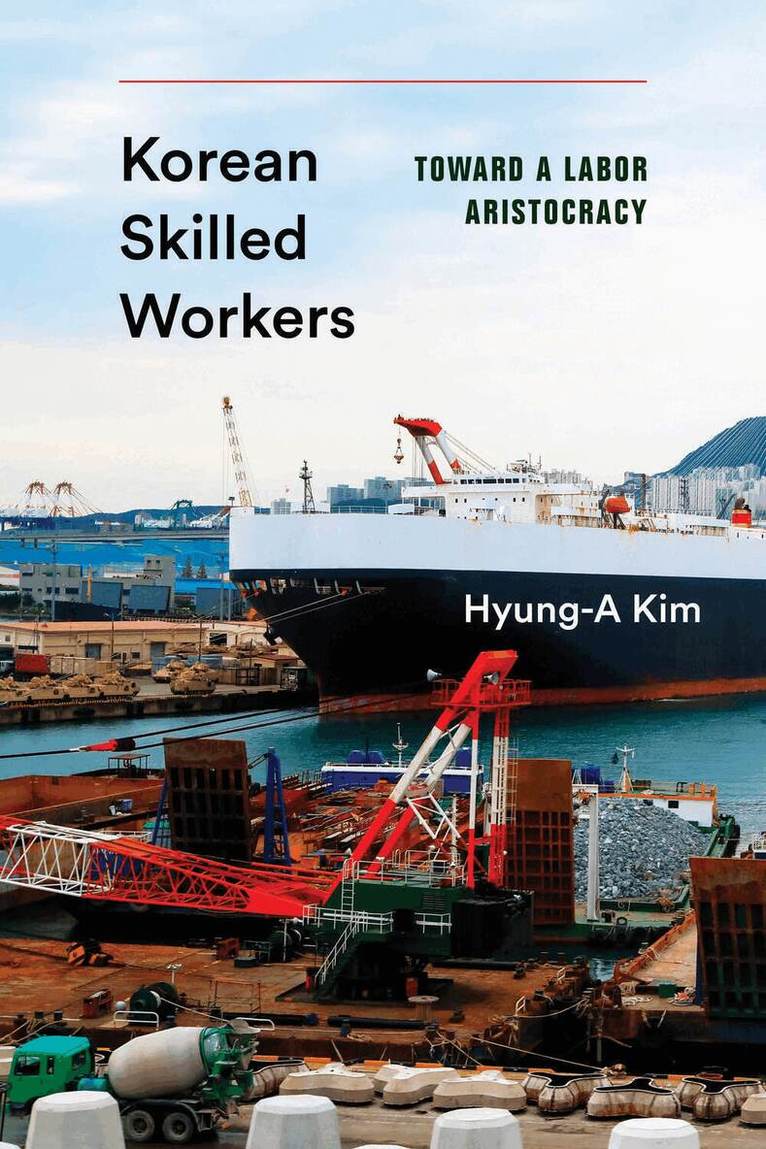
Korean Skilled Workers
Toward a Labor Aristocracy
Av Hyung-A Kim, Clark W. Sorensen
Inbunden, 2020
1921 kr
Lägg i varukorg
South Korea’s triumphant development has catapulted the country’s economy to the eleventh largest in the world. Large family-owned conglomerates, or chaebŏls, such as Samsung, Hyundai, and LG, have become globally preeminent manufacturing brands. Yet Korea’s highly disciplined, technologically …
Korean Skilled Workers
Toward a Labor Aristocracy
Av Hyung-A Kim, Clark W. Sorensen m. fl.
Häftad, 2020
549 kr
Lägg i varukorg
South Korea’s triumphant development has catapulted the country’s economy to the eleventh largest in the world. Large family-owned conglomerates, or chaebŏls, such as Samsung, Hyundai, and LG, have become globally preeminent manufacturing brands. Yet Korea’s highly disciplined, technologically …
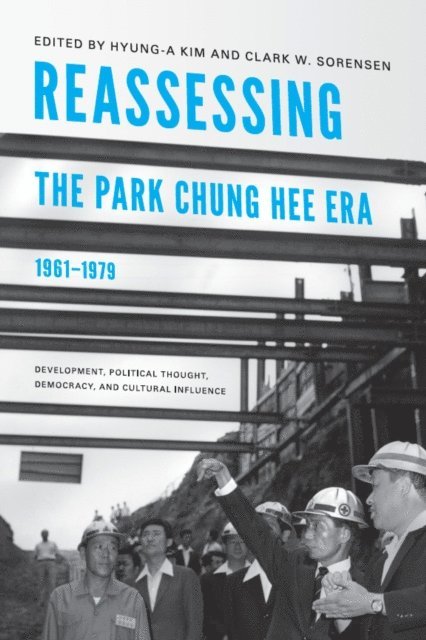
Reassessing the Park Chung Hee Era, 1961-1979
Development, Political Thought, Democracy, and Cultural Influence
Av Clark W. Sorensen, Hyung-A Kim
E-bok, 2011
785 kr
Lägg i varukorg
The Republic of Korea achieved a double revolution in the second half of the twentieth century. In just over three decades, South Korea transformed itself from an underdeveloped, agrarian country into an affluent, industrialized one. At the same time, democracy replaced a long series of military …
Reassessing the Park Chung Hee Era, 1961-1979
Development, Political Thought, Democracy, and Cultural Influence
Av Hyung-A Kim, Clark W. Sorensen
Häftad, 2011
758 kr
Lägg i varukorg
The Republic of Korea achieved a double revolution in the second half of the twentieth century. In just over three decades, South Korea transformed itself from an underdeveloped, agrarian country into an affluent, industrialized one. At the same time, democracy replaced a long series of military …
Reassessing the Park Chung Hee Era, 1961-1979
Development, Political Thought, Democracy, and Cultural Influence
Av Hyung-A Kim, Clark W. Sorensen
Inbunden, 2015
1819 kr
Lägg i varukorg
The Republic of Korea achieved a double revolution in the second half of the twentieth century. In just over three decades, South Korea transformed itself from an underdeveloped, agrarian country into an affluent, industrialized one. At the same time, democracy replaced a long series of military …
Korea's Development Under Park Chung Hee
Av Hyung-A Kim
Inbunden, 2003
2585 kr
Lägg i varukorg
Based on personal interviews with the principal policy-makers of the 1970s, Korea's Development under Park Chung-Hee examines how the president sought to develop South Korea into an independent, autonomous sovereign state both economically and militarily. Kim provides a new narrative in the complex …
Korea's Development Under Park Chung Hee
Av Hyung-A Kim
Häftad, 2011
936 kr
Lägg i varukorg
Based on personal interviews with the principal policy-makers of the 1970s, Korea's Development under Park Chung-Hee examines how the president sought to develop South Korea into an independent, autonomous sovereign state both economically and militarily. Kim provides a new narrative in the complex …
Korea's Development Under Park Chung Hee
Av Hyung-A Kim
E-bok, 2004
1106 kr
Lägg i varukorg
Based on personal interviews with the principal policy-makers of the 1970s, Korea''s Development under Park Chung-Hee examines how the president sought to develop South Korea into an independent, autonomous sovereign state both economically and militarily. Kim provides a new narrative in the …
Korea's Development Under Park Chung Hee
Av Hyung-A Kim
E-bok, 2004
1106 kr
Lägg i varukorg
Based on personal interviews with the principal policy-makers of the 1970s, Korea''s Development under Park Chung-Hee examines how the president sought to develop South Korea into an independent, autonomous sovereign state both economically and militarily. Kim provides a new narrative in the …