I. Alon - Böcker
Visar alla böcker från författaren I. Alon. Handla med fri frakt och snabb leverans.
8 produkter
8 produkter
1 099 kr
Skickas inom 10-15 vardagar
Franchising Globally is first of its kind to examine franchising both from an entrepreneurial and from an international perspective. The book includes theoretical discussions and practical examples of international franchising as well as both micro and macro studies of franchising environments in different parts of the world.
1 099 kr
Skickas inom 10-15 vardagar
The 21st century has been dubbed the Chinese century. This text brings together interdisciplinary Chinese scholars to assess the impact of Chinese business on global business and environments, disseminate knowledge on the emergence of globalizing Chinese firms, and to address issues relating to corporate sustainable development and outsourcing
537 kr
Skickas inom 10-15 vardagar
The development of the Chinese MNC is a new feature of globalization, one that will undoubtedly change the world. Why Chinese firms internationalize, how they do so, and what the impact of their internationalization on developed markets will be are the foci of this book.
553 kr
Skickas inom 10-15 vardagar
Social franchising represents a third generation form of franchising development, after trade-name and business-format franchising. At the intersection of social enterprise and micro finance literatures, this book reviews a variety of social franchising formats across a number of developing countries.
1 105 kr
Skickas inom 10-15 vardagar
Franchising Globally is first of its kind to examine franchising both from an entrepreneurial and from an international perspective. The book includes theoretical discussions and practical examples of international franchising as well as both micro and macro studies of franchising environments in different parts of the world.
540 kr
Skickas inom 10-15 vardagar
The development of the Chinese MNC is a new feature of globalization, one that will undoubtedly change the world. Why Chinese firms internationalize, how they do so, and what the impact of their internationalization on developed markets will be are the foci of this book.
1 582 kr
Skickas inom 10-15 vardagar
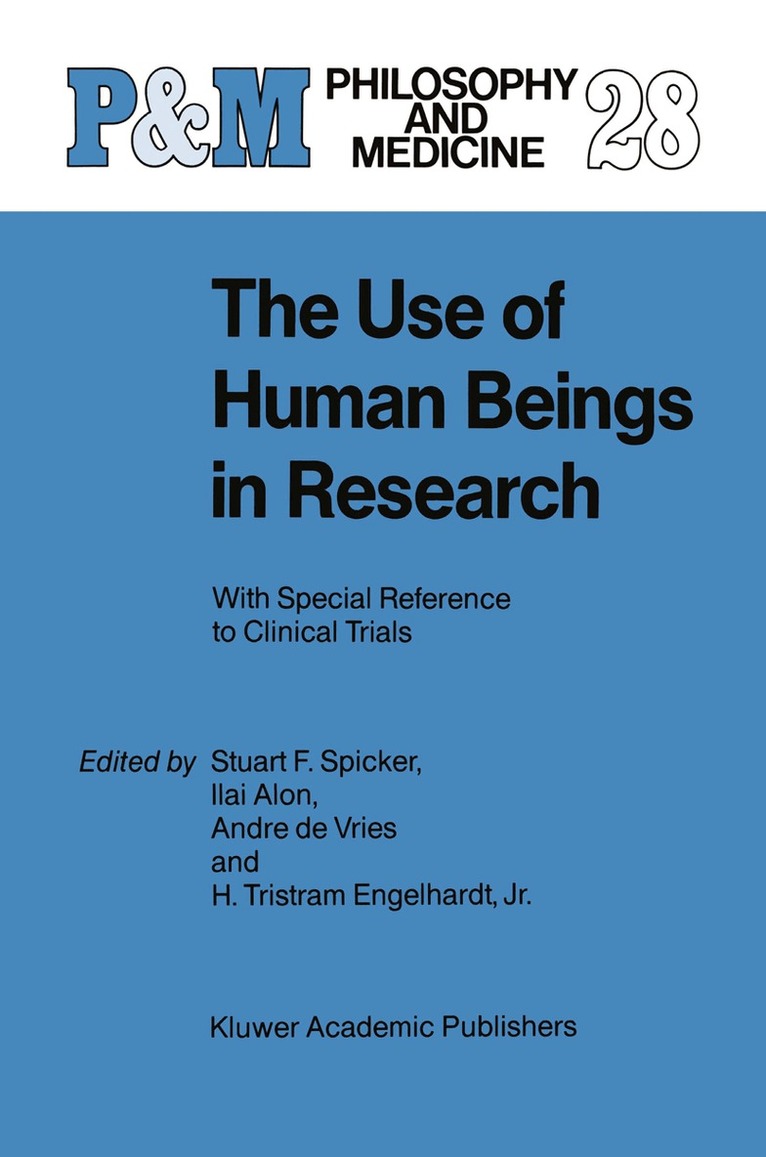
This volume, which has developed from the Fourteenth Trans Disciplinary Symposium on Philosophy and Medicine, September 5-8, 1982, at Tel Aviv University, Israel, contains the contributions of a group of distinguished scholars who together examine the ethical issues raised by the advance of biomedical science and technology. We are, of course, still at the beginning of a revolution in our understanding of human biology; scientific medicine and clinical research are scarcely one hundred years old. Both the sciences and the technology of medicine until ten or fifteen years ago had the feeling of the 19th century about them; we sense that they belonged to an older time; that era is ending. The next twenty-five to fifty years of investigative work belong to neurobiology, genetics, and reproductive biology. The technologies of information processing and imaging will make diagnosis and treatment almost incomprehensible by my generation of physicians. Our science and technology will become so powerful that we shall require all of the art and wisdom we can muster to be sure that they remain dedicated, as Francis Bacon hoped four centuries ago, "to the uses of life." It is well that, as philosophers and physicians, we grapple with the issues now when they are relatively simple, and while the pace of change is relatively slow. We require a strategy for the future; that strategy must be worked out by scientists, philosophers, physicians, lawyers, theologians, and, I should like to add, artists and poets.
1 582 kr
Skickas inom 10-15 vardagar
This volume, which has developed from the Fourteenth Trans Disciplinary Symposium on Philosophy and Medicine, September 5-8, 1982, at Tel Aviv University, Israel, contains the contributions of a group of distinguished scholars who together examine the ethical issues raised by the advance of biomedical science and technology. We are, of course, still at the beginning of a revolution in our understanding of human biology; scientific medicine and clinical research are scarcely one hundred years old. Both the sciences and the technology of medicine until ten or fifteen years ago had the feeling of the 19th century about them; we sense that they belonged to an older time; that era is ending. The next twenty-five to fifty years of investigative work belong to neurobiology, genetics, and reproductive biology. The technologies of information processing and imaging will make diagnosis and treatment almost incomprehensible by my generation of physicians. Our science and technology will become so powerful that we shall require all of the art and wisdom we can muster to be sure that they remain dedicated, as Francis Bacon hoped four centuries ago, "to the uses of life." It is well that, as philosophers and physicians, we grapple with the issues now when they are relatively simple, and while the pace of change is relatively slow. We require a strategy for the future; that strategy must be worked out by scientists, philosophers, physicians, lawyers, theologians, and, I should like to add, artists and poets.