I. Thorn – författare
Visar alla böcker från författaren I. Thorn. Handla med fri frakt och snabb leverans.
4 produkter
4 produkter
Inbunden, Engelska, 1997
1 938 kr
Skickas inom 10-15 vardagar
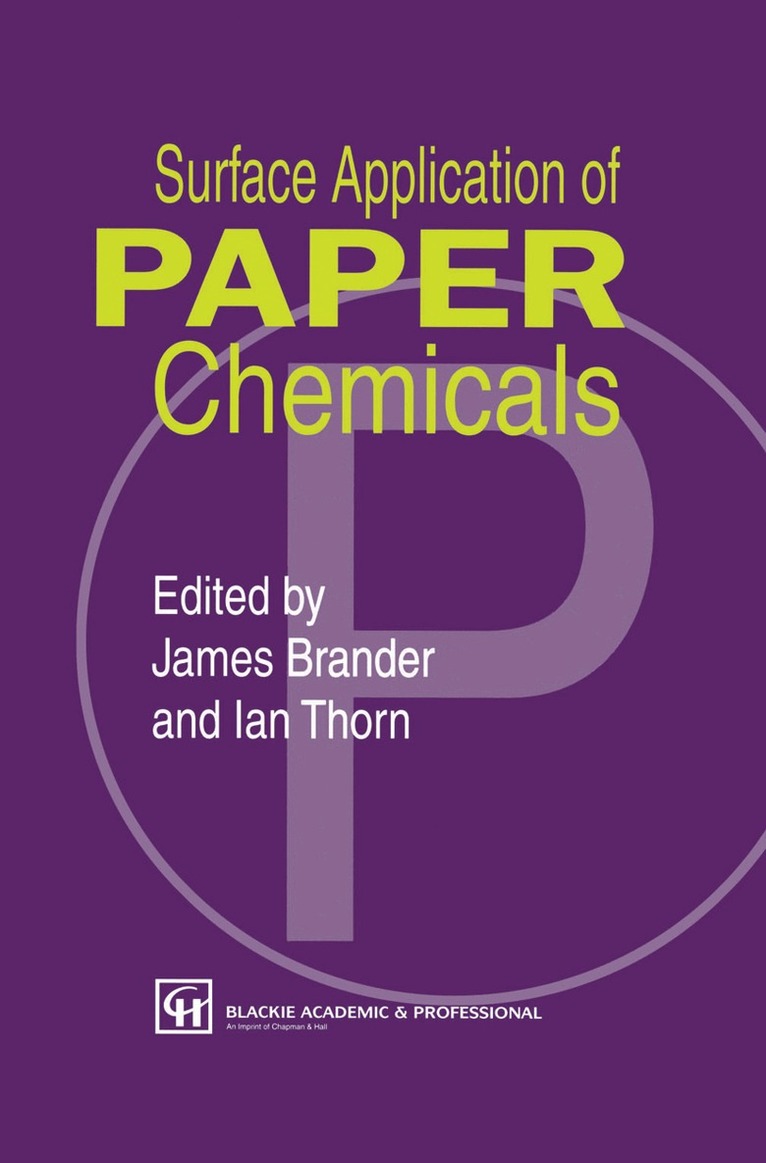
With the exception of a slight hiccup during the height of the recent environmental movement (during the early 1990s), when for a year or two consumers were prepared to pay a price premium for lower quality recycled paper than for the virgin product, the inexorable improvement in the quality demanded of paper products continues. This demand for quality covers not only the aesthetics ofthe product but also its performance. Moreover, it is becoming increasingly the case that papers designed for a particular use must, as it were incidentally, also perform well in alternative applications. An example is that of office and printing papers, which are expected to perform as well in copier machines as in all the various forms of impact and non-impact printers. But even greater demands are made in other product areas, where board designed for dry foods can also be expected to protect moist and fatty materials and be made of 100% recycled fibre. The need to isolate foodstuffs from some of the contaminants that can affect recycled board is a· serious challenge. Thus, papermakers are constantly striving to meet a broadening spectrum of demands on their products; often while accepting declining quality of raw materials. The product design philosophy that has arisen in response to this is increasingly to isolate the bulk of a paper from its uses: to engineer the needed performance characteristics into the paper surfaces while more or less ignoring what happens inside.
E-bok
PDF, Engelska, 20122 524 kr
Läs direkt efter köp
With the exception of a slight hiccup during the height of the recent environmental movement (during the early 1990s), when for a year or two consumers were prepared to pay a price premium for lower quality recycled paper than for the virgin product, the inexorable improvement in the quality demanded of paper products continues. This demand for quality covers not only the aesthetics ofthe product but also its performance. Moreover, it is becoming increasingly the case that papers designed for a particular use must, as it were incidentally, also perform well in alternative applications. An example is that of office and printing papers, which are expected to perform as well in copier machines as in all the various forms of impact and non-impact printers. But even greater demands are made in other product areas, where board designed for dry foods can also be expected to protect moist and fatty materials and be made of 100% recycled fibre. The need to isolate foodstuffs from some of the contaminants that can affect recycled board is a· serious challenge. Thus, papermakers are constantly striving to meet a broadening spectrum of demands on their products; often while accepting declining quality of raw materials. The product design philosophy that has arisen in response to this is increasingly to isolate the bulk of a paper from its uses: to engineer the needed performance characteristics into the paper surfaces while more or less ignoring what happens inside.
Häftad, Engelska, 2011
1 938 kr
Skickas inom 10-15 vardagar
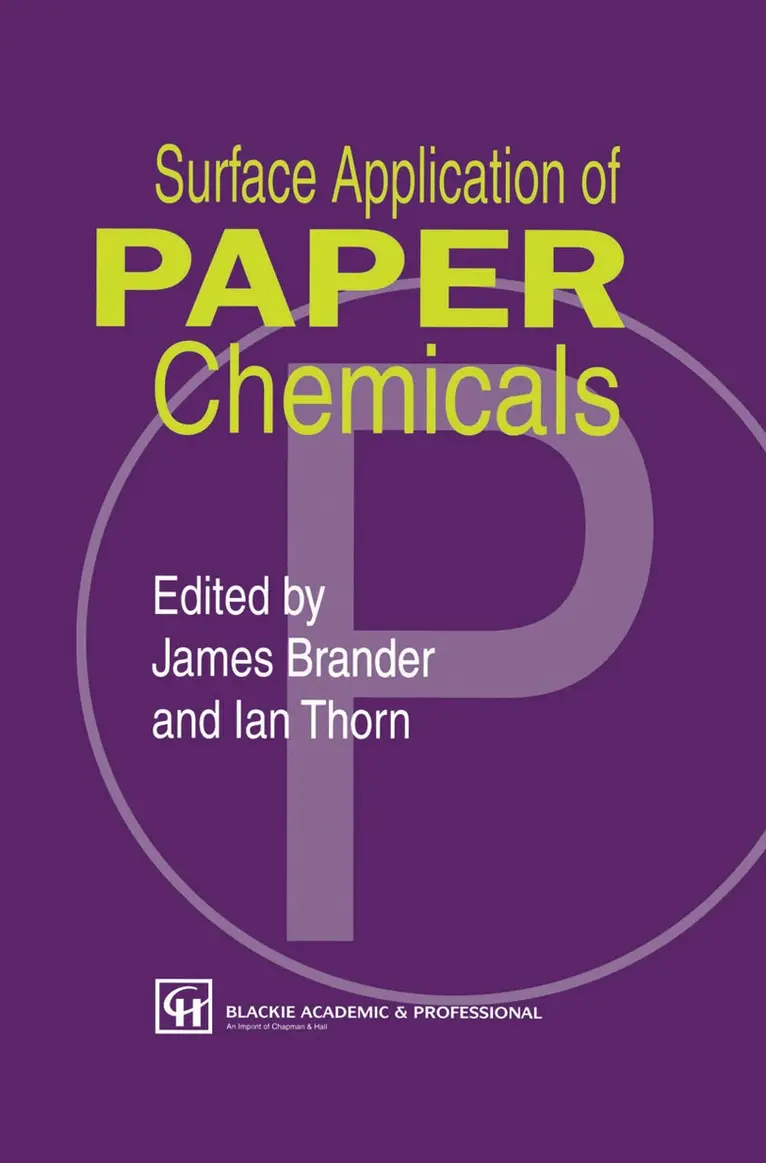
With the exception of a slight hiccup during the height of the recent environmental movement (during the early 1990s), when for a year or two consumers were prepared to pay a price premium for lower quality recycled paper than for the virgin product, the inexorable improvement in the quality demanded of paper products continues. This demand for quality covers not only the aesthetics ofthe product but also its performance. Moreover, it is becoming increasingly the case that papers designed for a particular use must, as it were incidentally, also perform well in alternative applications. An example is that of office and printing papers, which are expected to perform as well in copier machines as in all the various forms of impact and non-impact printers. But even greater demands are made in other product areas, where board designed for dry foods can also be expected to protect moist and fatty materials and be made of 100% recycled fibre. The need to isolate foodstuffs from some of the contaminants that can affect recycled board is a· serious challenge. Thus, papermakers are constantly striving to meet a broadening spectrum of demands on their products; often while accepting declining quality of raw materials. The product design philosophy that has arisen in response to this is increasingly to isolate the bulk of a paper from its uses: to engineer the needed performance characteristics into the paper surfaces while more or less ignoring what happens inside.
E-bok
PDF, Engelska, 20131 140 kr
Läs direkt efter köp
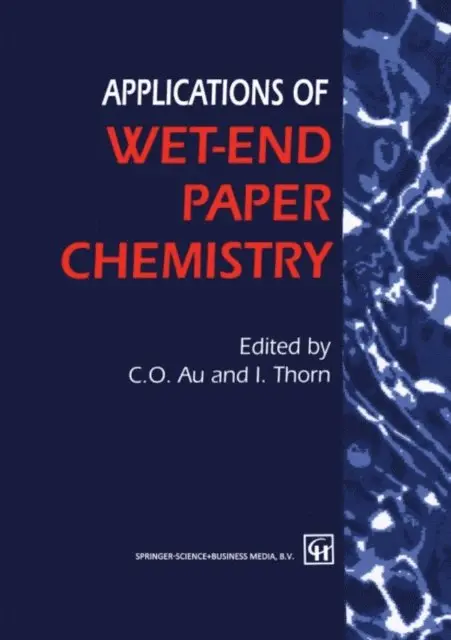
Commercial demands and increasing global competition have led to enormous mechanical evolution over recent years. Twin-wires, wide-nip presses, steam boxes and speed sizers have all played a part in improving both the productivity and quality of paper and board products. With the emphasis on mechanical and electrical engineering and the ever increasing pressures of quality measurement and control, little time has been available within a technical department for much reflection on the chemistry of the process. Thus there is a growing trend for the management of the wet-end to be delegated to the chemical supplier. The advances in scale of paper manufacture, environmental sensitivity and higher quality of end-product requirements have all had an impact on the chemistry of the wet-end. The increased production means, for example, that down time is more of an anathema now when capacity is critical. Similarly, with the greater rigours of quality management, anything which causes breaks or holes must be eradicated. Environmental pressures too are growing on the papermaking process. Even if consideration is restricted to only the closure of the white water circuit, it alone throws down a challenge to the potency of biocides, retention aids and other chemicals. These chemicals are detriment ally affected by an increasing concentration of water soluble pulp extractives and surfactants, adhesives and polysaccharides from broke and recycled paper.