J. Brander – författare
Visar alla böcker från författaren J. Brander. Handla med fri frakt och snabb leverans.
6 produkter
6 produkter
Inbunden, Engelska, 1997
1 938 kr
Skickas inom 10-15 vardagar
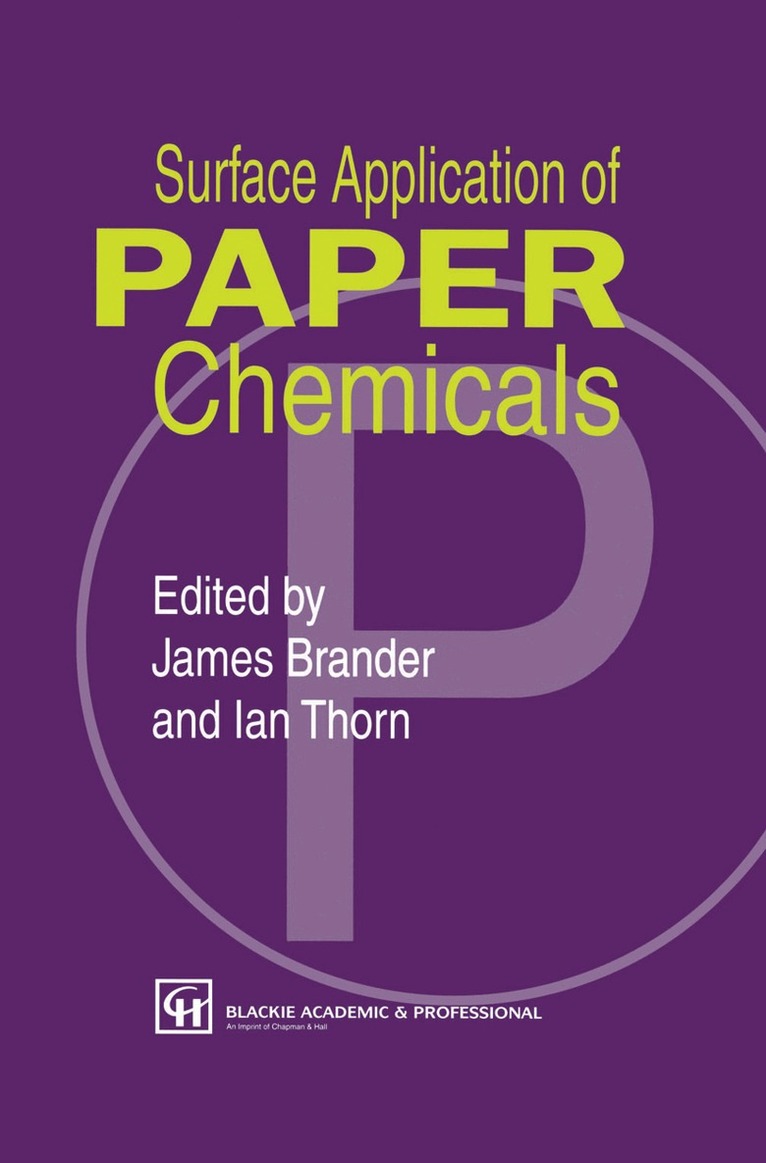
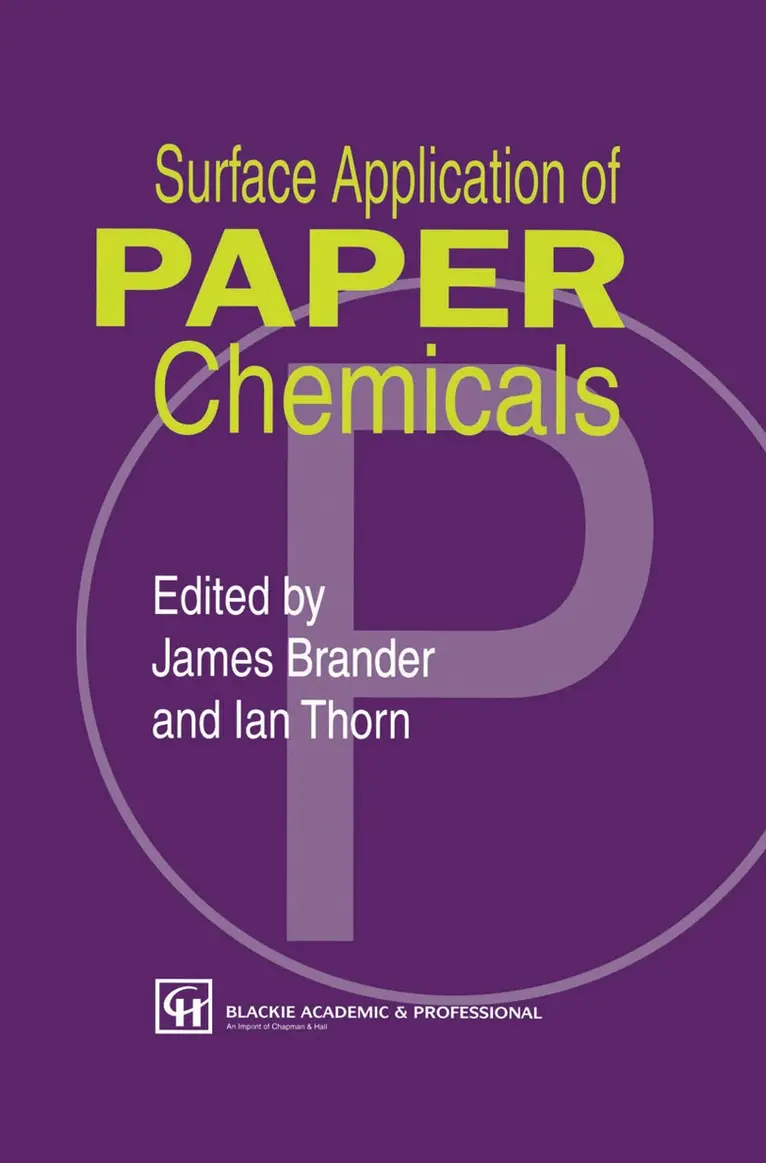
With the exception of a slight hiccup during the height of the recent environmental movement (during the early 1990s), when for a year or two consumers were prepared to pay a price premium for lower quality recycled paper than for the virgin product, the inexorable improvement in the quality demanded of paper products continues. This demand for quality covers not only the aesthetics ofthe product but also its performance. Moreover, it is becoming increasingly the case that papers designed for a particular use must, as it were incidentally, also perform well in alternative applications. An example is that of office and printing papers, which are expected to perform as well in copier machines as in all the various forms of impact and non-impact printers. But even greater demands are made in other product areas, where board designed for dry foods can also be expected to protect moist and fatty materials and be made of 100% recycled fibre. The need to isolate foodstuffs from some of the contaminants that can affect recycled board is a· serious challenge. Thus, papermakers are constantly striving to meet a broadening spectrum of demands on their products; often while accepting declining quality of raw materials. The product design philosophy that has arisen in response to this is increasingly to isolate the bulk of a paper from its uses: to engineer the needed performance characteristics into the paper surfaces while more or less ignoring what happens inside.
E-bok
PDF, Engelska, 2025936 kr
Läs direkt efter köp
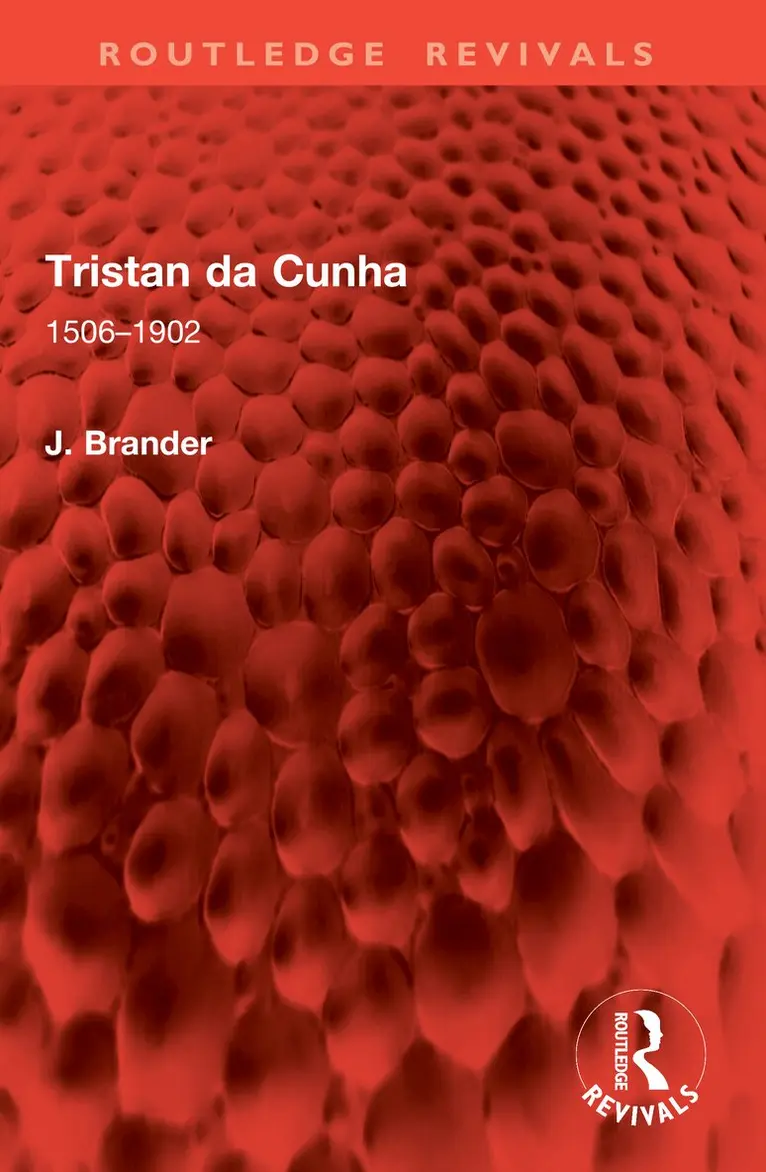
The story of the lonely island of Tristan da Cunha is one of enduring interest. It was discovered in 1506 by the Portuguese when sailing to India. In the following century the Dutch and English considered the possibilities of industrialization and colonization of the island. French explorers and American adventurers in the eighteenth-century paid visits of varying duration.After the military occupation by England from 1816 to 1817, the real colonization of Tristan da Cunha began with the foundation by the Scotsman Corporal William Glass and his family, and two Englishmen, of a communist community in the principal island. Later they were joined by more Englishmen, then two Americans, two Italians, a Dane, and a Dutchman. Several of them left sooner or later through disappointment. The women on the island were mostly mulattos from St. Helena. When the pioneer and headman, William Glass, died in 1853, the Dutchman, Peter Green, became the leader of the small community. During the latter's life the island was reunited with the British Empire (1876). Peter Green died in 1902 at the advanced age of 94.First published in 1940, Tristan da Cunha is a well-documented book on the island, giving much more of the historical side than many recent books have done. It is a story of profound human interest.Due to modern production methods, it has not been possible to include the fold-out map within the book. Any purchasers of the book will be able to receive a free pdf of the relevant pages by contacting Routledge Customer Services. https://www.routledge.com/contacts/customer-service
E-bok
Engelska, 2025970 kr
Läs direkt efter köp
The story of the lonely island of Tristan da Cunha is one of enduring interest. It was discovered in 1506 by the Portuguese when sailing to India. In the following century the Dutch and English considered the possibilities of industrialization and colonization of the island. French explorers and American adventurers in the eighteenth-century paid visits of varying duration.After the military occupation by England from 1816 to 1817, the real colonization of Tristan da Cunha began with the foundation by the Scotsman Corporal William Glass and his family, and two Englishmen, of a communist community in the principal island. Later they were joined by more Englishmen, then two Americans, two Italians, a Dane, and a Dutchman. Several of them left sooner or later through disappointment. The women on the island were mostly mulattos from St. Helena. When the pioneer and headman, William Glass, died in 1853, the Dutchman, Peter Green, became the leader of the small community. During the latter's life the island was reunited with the British Empire (1876). Peter Green died in 1902 at the advanced age of 94.First published in 1940, Tristan da Cunha is a well-documented book on the island, giving much more of the historical side than many recent books have done. It is a story of profound human interest.Due to modern production methods, it has not been possible to include the fold-out map within the book. Any purchasers of the book will be able to receive a free pdf of the relevant pages by contacting Routledge Customer Services. https://www.routledge.com/contacts/customer-service
Inbunden, Engelska, 2025
1 671 kr
Skickas inom 10-15 vardagar
The story of the lonely island of Tristan da Cunha is one of enduring interest. It was discovered in 1506 by the Portuguese when sailing to India. In the following century the Dutch and English considered the possibilities of industrialization and colonization of the island. French explorers and American adventurers in the eighteenth-century paid visits of varying duration.After the military occupation by England from 1816 to 1817, the real colonization of Tristan da Cunha began with the foundation by the Scotsman Corporal William Glass and his family, and two Englishmen, of a communist community in the principal island. Later they were joined by more Englishmen, then two Americans, two Italians, a Dane, and a Dutchman. Several of them left sooner or later through disappointment. The women on the island were mostly mulattos from St. Helena. When the pioneer and headman, William Glass, died in 1853, the Dutchman, Peter Green, became the leader of the small community. During the latter’s life the island was reunited with the British Empire (1876). Peter Green died in 1902 at the advanced age of 94.First published in 1940, Tristan da Cunha is a well-documented book on the island, giving much more of the historical side than many recent books have done. It is a story of profound human interest.Due to modern production methods, it has not been possible to include the fold-out map within the book. Any purchasers of the book will be able to receive a free pdf of the relevant pages by contacting Routledge Customer Services. https://www.routledge.com/contacts/customer-service
E-bok
PDF, Engelska, 20122 524 kr
Läs direkt efter köp
With the exception of a slight hiccup during the height of the recent environmental movement (during the early 1990s), when for a year or two consumers were prepared to pay a price premium for lower quality recycled paper than for the virgin product, the inexorable improvement in the quality demanded of paper products continues. This demand for quality covers not only the aesthetics ofthe product but also its performance. Moreover, it is becoming increasingly the case that papers designed for a particular use must, as it were incidentally, also perform well in alternative applications. An example is that of office and printing papers, which are expected to perform as well in copier machines as in all the various forms of impact and non-impact printers. But even greater demands are made in other product areas, where board designed for dry foods can also be expected to protect moist and fatty materials and be made of 100% recycled fibre. The need to isolate foodstuffs from some of the contaminants that can affect recycled board is a· serious challenge. Thus, papermakers are constantly striving to meet a broadening spectrum of demands on their products; often while accepting declining quality of raw materials. The product design philosophy that has arisen in response to this is increasingly to isolate the bulk of a paper from its uses: to engineer the needed performance characteristics into the paper surfaces while more or less ignoring what happens inside.
Häftad, Engelska, 2011
1 938 kr
Skickas inom 10-15 vardagar
With the exception of a slight hiccup during the height of the recent environmental movement (during the early 1990s), when for a year or two consumers were prepared to pay a price premium for lower quality recycled paper than for the virgin product, the inexorable improvement in the quality demanded of paper products continues. This demand for quality covers not only the aesthetics ofthe product but also its performance. Moreover, it is becoming increasingly the case that papers designed for a particular use must, as it were incidentally, also perform well in alternative applications. An example is that of office and printing papers, which are expected to perform as well in copier machines as in all the various forms of impact and non-impact printers. But even greater demands are made in other product areas, where board designed for dry foods can also be expected to protect moist and fatty materials and be made of 100% recycled fibre. The need to isolate foodstuffs from some of the contaminants that can affect recycled board is a· serious challenge. Thus, papermakers are constantly striving to meet a broadening spectrum of demands on their products; often while accepting declining quality of raw materials. The product design philosophy that has arisen in response to this is increasingly to isolate the bulk of a paper from its uses: to engineer the needed performance characteristics into the paper surfaces while more or less ignoring what happens inside.