I. Thornton – författare
Visar alla böcker från författaren I. Thornton. Handla med fri frakt och snabb leverans.
4 produkter
4 produkter
Del 31 - Environment & Policy
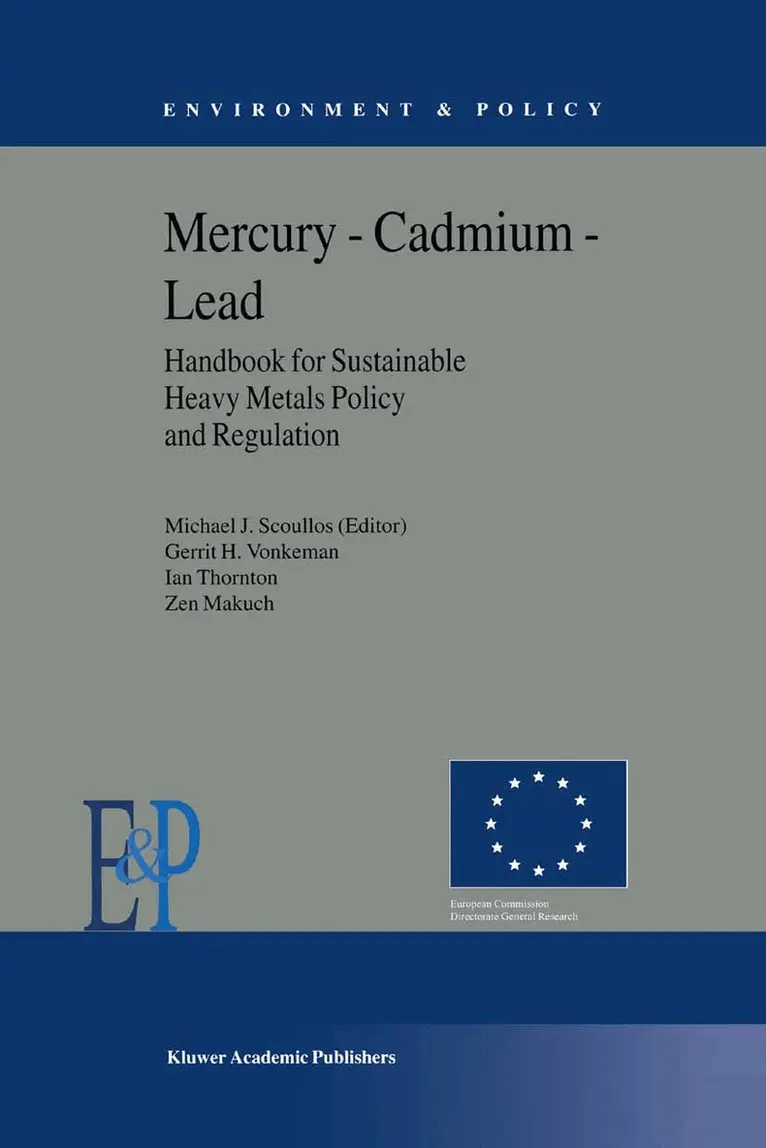
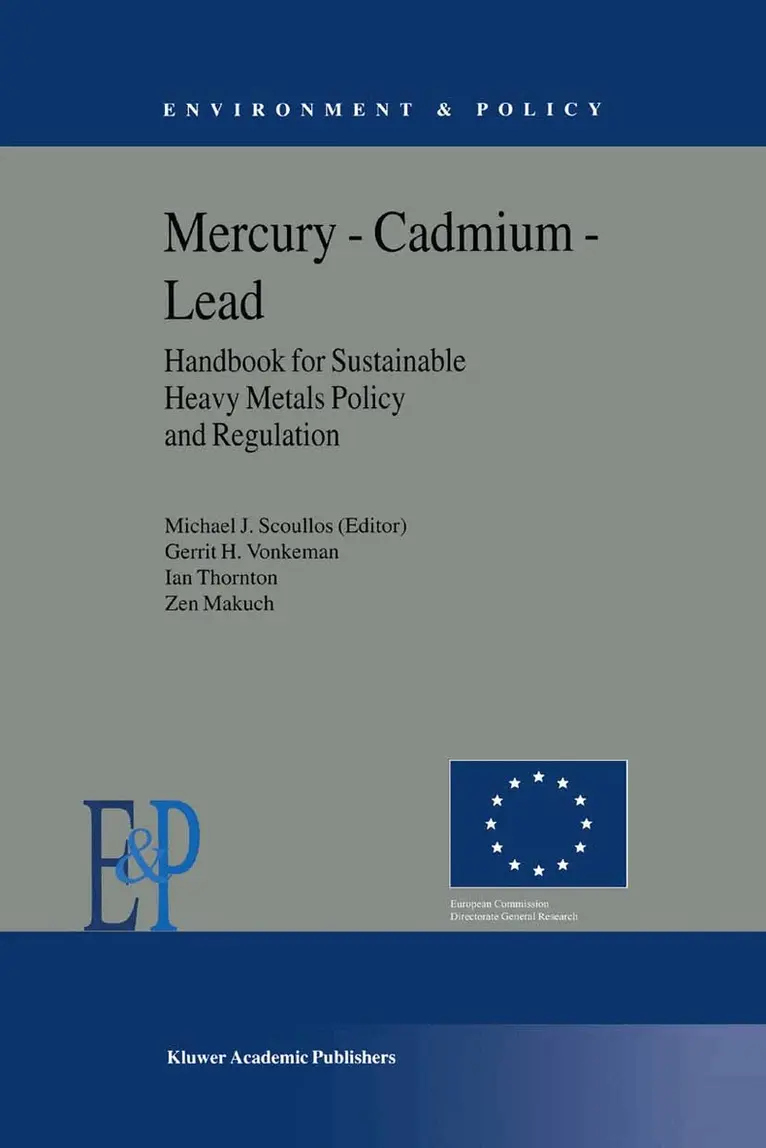
Mercury — Cadmium — Lead Handbook for Sustainable Heavy Metals Policy and Regulation
Inbunden, Engelska, 2001
2 117 kr
Skickas inom 10-15 vardagar
Although this is a handbook for policy and regulation, the major part of it is filled with data on the three heavy metals that serve as examples: mercury, cadmium and lead. Their stocks, productions, prices, trade flows, uses and applications, recovery and recycling, as well as their (eco)toxicological characteristics have been collected and presented. In addition, they are analysed for consistency, future developments and trends and their consequences for sustainable development and future policy and regulation. The second part, on policy and regulation, begins with a consideration of the characteristics of a sustainable heavy metals policy, whereby innovative policy tools are developed. In many aspects, these considerations are also valid for other metals and even non-metallic persistent substances. Addressing the European Union in particular, its policy-making structure and practice are critically analysed, in order to develop feasible and viable guidelines for long, medium and short term EU policy measures. The results of this exercise are then applied to the three heavy metals.Existing EU measures are presented in detail and confronted with better practices elsewhere, resulting in suggestions and recommendations for the future. This handbook should be useful for policy-makers and administrators at all levels, as well as for their counterparts in a wide variety of industries. In addition, it should be suitable for environmental science courses at academic or higher professional level.
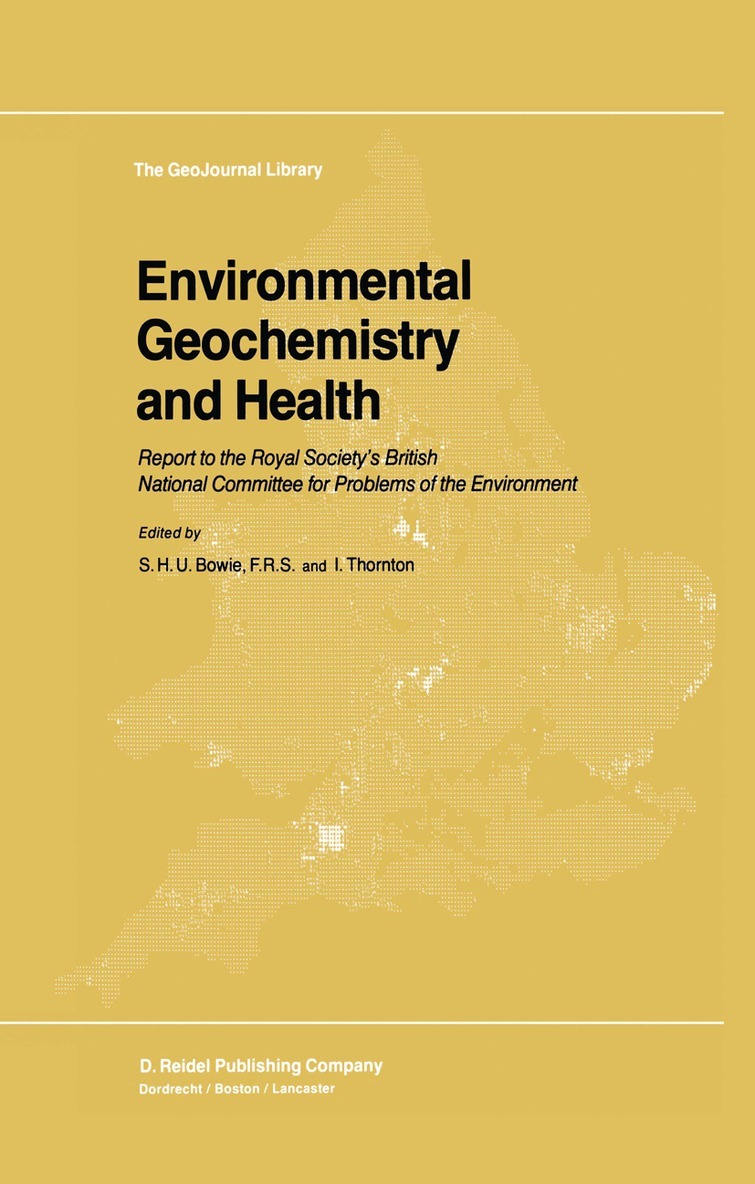
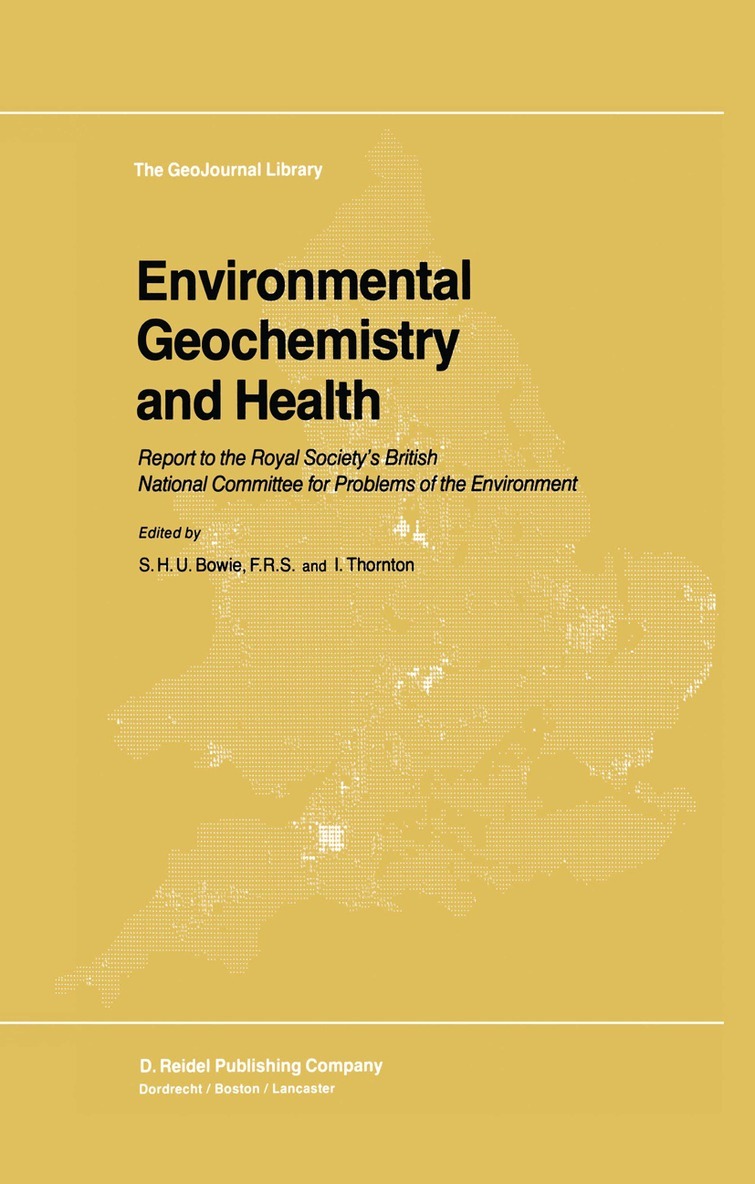
Environmental Geochemistry and Health
Report to the Royal Society’s British National Committee for Problems of the Environment
Inbunden, Engelska, 1985
1 062 kr
Skickas inom 10-15 vardagar
One of the main outcomes of the eleven meetings of the Working Party was the recognition of the importance of interdisciplinary studies linking regional geochemistry with plant, animal and human health. The effects of major element deficiencies or excesses on plant health are well known; this is not the case for trace elements. In fact, rapid and reliable analytical methods for determining trace element abundances have only recently become available, and it is to be expected that important new information on trace element levels will be forthcoming. This, however, is only part of the problem because other factors such as element speciation, uptake and transmission may be more significant than total concentration. The pathways of elements from crops to animals are relatively well defined, but the aetiology of diseases attributable to elemental inadequacies or excesses is generally quite complex. Nevertheless, there is good evidence for diseases in livestock in the British Isles induced by deficiencies of Cu, Se and Co and Mo excess. On a world scale there is also convincing data on the effect of Na, P and I deficiencies and F excess on animal health. What is generally lacking, however, is adequate interaction between geochemists and biochemists, veterinary scientists and other concerned with animal health. Interpretation of geochemical data is complex as are connections between elemental abundances and the health of animals.
Mercury — Cadmium — Lead Handbook for Sustainable Heavy Metals Policy and Regulation
Häftad, Engelska, 2012
1 947 kr
Skickas inom 10-15 vardagar
Although this is a handbook for policy and regulation, the major part of it is filled with data on the three heavy metals that served as examples: mercury, cadmium and lead. Their stocks, productions, prices, trade flows, uses and applications, recovery and recycling, as well as their (eco)toxicological characteristics have been collected and presented to their fullest extent. In addition, they are thoroughly analysed for consistency, future developments and trends and, of course, their consequences for sustainable development and future policy and regulation. The second part, on policy and regulation, begins with an extensive and fundamental consideration on the characteristics of a sustainable heavy metals policy, whereby innovative policy tools are developed. In many aspects, these considerations are also valid for other metals and even non-metallic persistent substances. Addressing the European Union in particular, its policy-making structure and practice are critically analysed, in order to develop feasible and viable guidelines for long-, medium- and short-term EU policy measures. The results of this exercise are then applied to the three heavy metals. In each of these three chapters, all existing EU measures are presented in detail and confronted with better practices elsewhere, resulting in many suggestions and recommendations for the future. In the last chapter, the main conclusions and recommendations are carefully summarised. Together with a very extended table of contents, this makes the book easily accessible, in spite of its volume. This Handbook is a must for policy-makers and administrators at all levels, as well as for their counterparts in a wide variety of industries. In addition, it is well-suited for environmental science courses at academic or higher professional level.
Environmental Geochemistry and Health
Report to the Royal Society’s British National Committee for Problems of the Environment
Häftad, Engelska, 2011
1 094 kr
Skickas inom 10-15 vardagar
One of the main outcomes of the eleven meetings of the Working Party was the recognition of the importance of interdisciplinary studies linking regional geochemistry with plant, animal and human health. The effects of major element deficiencies or excesses on plant health are well known; this is not the case for trace elements. In fact, rapid and reliable analytical methods for determining trace element abundances have only recently become available, and it is to be expected that important new information on trace element levels will be forthcoming. This, however, is only part of the problem because other factors such as element speciation, uptake and transmission may be more significant than total concentration. The pathways of elements from crops to animals are relatively well defined, but the aetiology of diseases attributable to elemental inadequacies or excesses is generally quite complex. Nevertheless, there is good evidence for diseases in livestock in the British Isles induced by deficiencies of Cu, Se and Co and Mo excess. On a world scale there is also convincing data on the effect of Na, P and I deficiencies and F excess on animal health. What is generally lacking, however, is adequate interaction between geochemists and biochemists, veterinary scientists and other concerned with animal health. Interpretation of geochemical data is complex as are connections between elemental abundances and the health of animals.