Ian D. Armour - Böcker
Visar alla böcker från författaren Ian D. Armour. Handla med fri frakt och snabb leverans.
6 produkter
6 produkter
649 kr
Skickas inom 10-15 vardagar
The Wilhelmine period is a crucial period of German history and the focus of great historical controversy; greater understanding of this period is also vital to explain the rise of the Third Reich. The authors focus on Germany's role as a major military and imperial power, industrialiastion and the economy, the crucial effects of the war years and the disturbing evidence that Germany's response to Hitler is to be found in the Wilhelmine era.
2 150 kr
Skickas inom 10-15 vardagar
The Wilhelmine period is a crucial period of German history and the focus of great historical controversy; greater understanding of this period is also vital to explain the rise of the Third Reich. The authors focus on Germany's role as a major military and imperial power, industrialiastion and the economy, the crucial effects of the war years and the disturbing evidence that Germany's response to Hitler is to be found in the Wilhelmine era.
History of Eastern Europe 1918 to the Present
Modernisation, Ideology and Nationality
Häftad, Engelska, 2021
453 kr
Skickas inom 10-15 vardagar
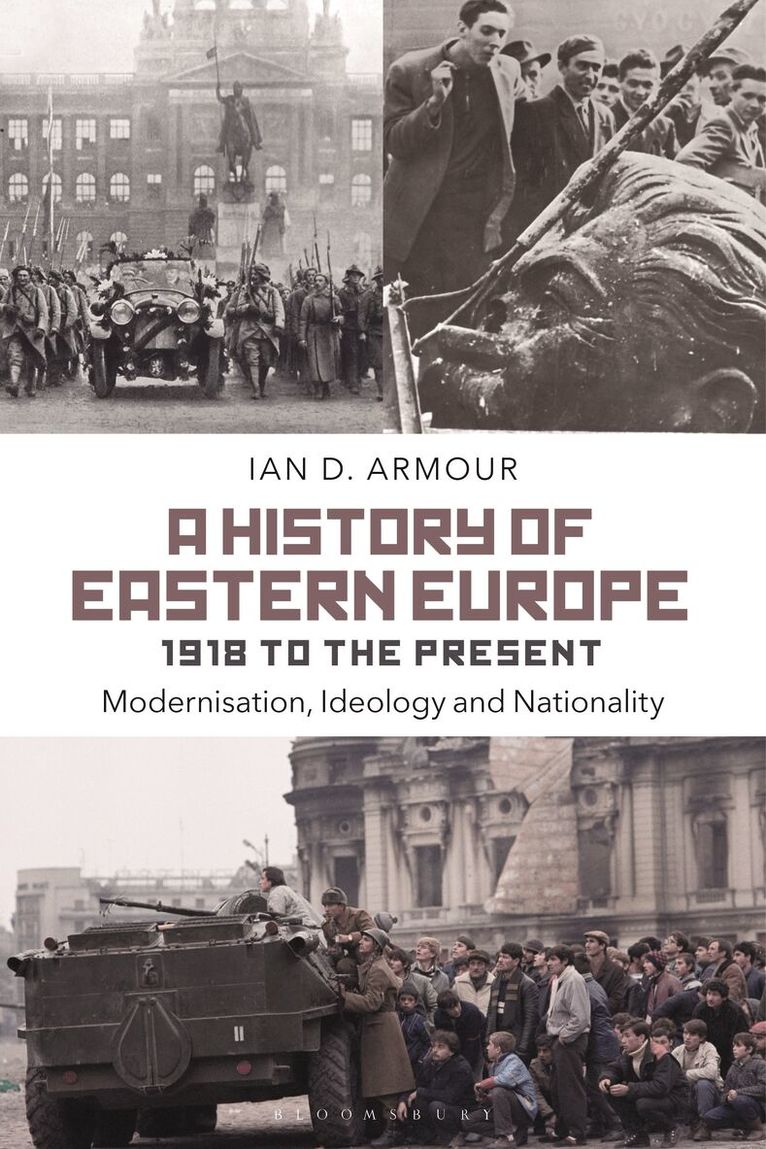
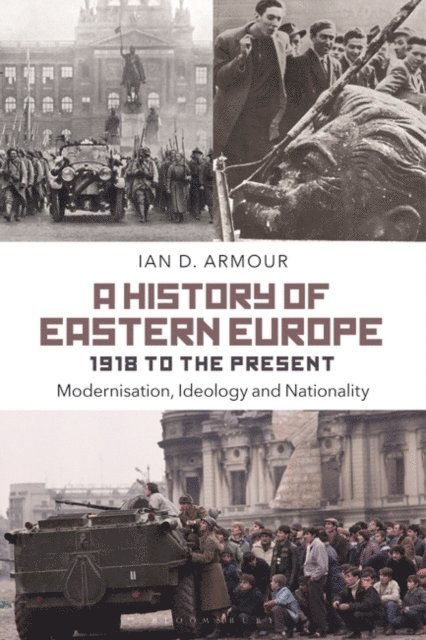
Why is Eastern Europe still different from Western Europe, more than a quarter-century after the collapse of Communism? A History of Eastern Europe 1918 to the Present shows how the roots of this difference are based in Eastern Europe's tortured 20th century.Eastern Europe emerged in 1918 as the 'lands between', new states whose weakness vis-à-vis Germany and Soviet Russia soon became obvious. The region was the main killing-field of the Second World War, which visited unimaginable horrors on its inhabitants before their 'liberation' by the Soviets in 1945. The imposition of Communist dictatorships on the region, ironically, only deepened Eastern Europe's backwardness. Even in the post-Communist period, its problems continue to make it a fertile breeding-ground for nationalism and political extremism.A History of Eastern Europe 1918 to the Present explores the comparative backwardness of Eastern Europe and how this has driven strategies of modernisation; it looks at the ways in which the region has served as a giant test-tube for political experimentation and, in particular, at the enduring strength of nationalism, which since 1989 has re-emerged more virulent than ever.This book in the essential textbook for any student of 20th-century Eastern Europe.
History of Eastern Europe 1918 to the Present
Modernisation, Ideology and Nationality
Inbunden, Engelska, 2021
1 520 kr
Skickas inom 10-15 vardagar
Why is Eastern Europe still different from Western Europe, nearly a quarter-century after the collapse of Communism? It is the premise of A History of Eastern Europe 1918 to the Present that the answer to this question can only be found in Eastern Europe's tortured twentieth-century history.Eastern Europe emerged in 1918 as the 'lands between', new states whose weakness vis-à-vis Germany and Soviet Russia soon became obvious. The region was the main killing-field of the Second World War, which visited unimaginable horrors on its inhabitants before their 'liberation' by the Soviets in 1945. The imposition of Communist dictatorships on the region, ironically, only deepened Eastern Europe's backwardness. Even in the post-Communist period, its problems continue to make it a fertile breeding-ground for nationalism and political extremism. A History of Eastern Europe 1918 to the Present explores the comparative backwardness of Eastern Europe and how this has driven strategies of modernisation; it looks at the ways in which the region has served as a giant test-tube for political experimentation and, in particular, at the enduring strength of nationalism, which since 1989 has re-emerged more virulent than ever. Complete with a useful chronology, maps and a helpful glossary, this book in the essential textbook for any student of twentieth-century Eastern Europe.
433 kr
Skickas inom 10-15 vardagar
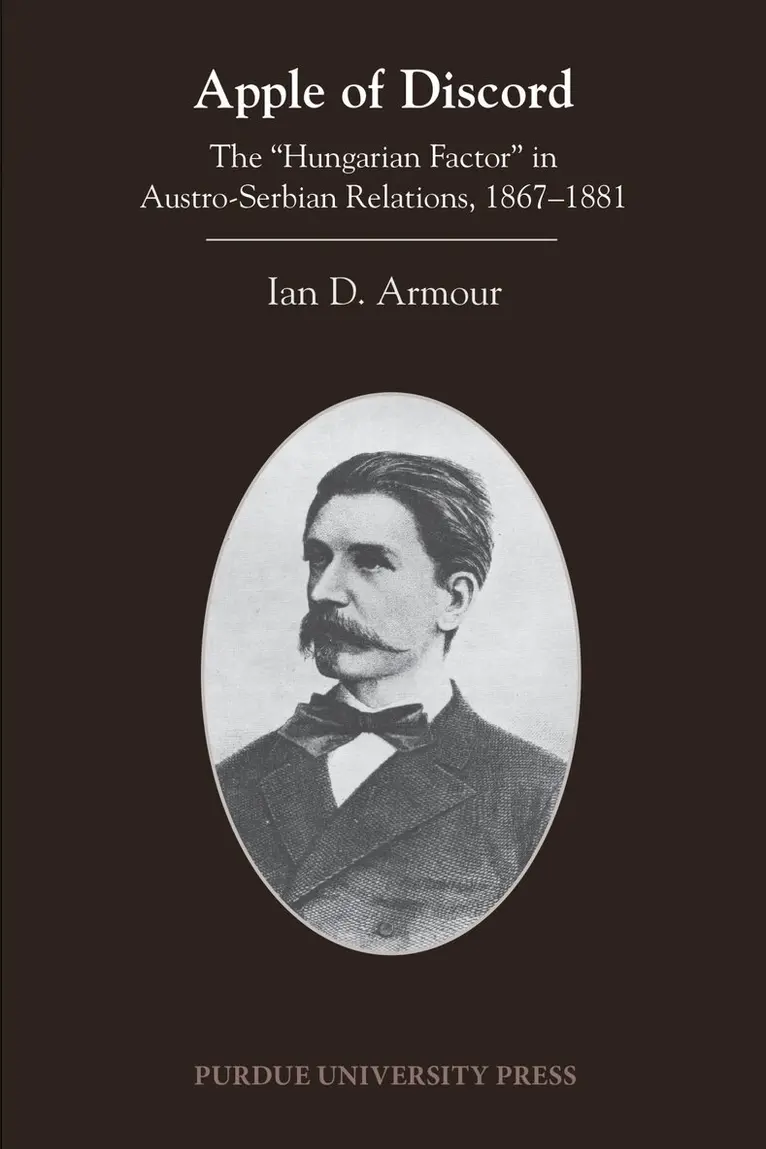
When seeking the origins of World War I, the chain of events in the late nineteenth century that led to the breakdown of relations between Austria-Hungary and Serbia and facilitated the rise of an aggressive Serbian nationalism needs to be understood. This book focuses on the hitherto unexplored Hungarian influence on the Habsburg Monarchy's policy toward Serbia after the 1867 Ausgleich, and it argues that this early period was critical in shaping policy after 1871, down to the imposition on Serbia in 1881 of a system of economic and political control.The Ausgleich, the Austro-Hungarian compromise that reconstituted the Empire as a dual monarchy, gave Hungary a limited voice in foreign affairs; and it was at the request of the Hungarian premier, Count Gyula Andrássy, that the young politician Benjámin Kállay was appointed representative at Belgrade in 1868. Both men were obsessed with the threat posed by Russia and particularly concerned that Serbia might be used as a stalking horse for Russian influence among the Monarchy's South Slavs. They pursued a shadow policy designed to draw Serbia firmly into the Monarchy's sphere of influence, which contradicted that of the foreign minister, Count Beust, and resulted in a serious deterioration in relations with Serbia by 1871. After 1871 Andrássy, as foreign minister, laid the foundations for a more explicit control of Serbia; Kállay, as a senior diplomat, negotiated the treaties that, by 1881, locked Serbia into satellite status for a generation.Through detailed archival research in multiple languages and a painstaking reconstruction of diplomatic events, Armour illuminates a crucial period in Central European history, showing how the origins of a war that claimed millions of lives can be traced to political maneuverings almost fifty years before.
544 kr
Skickas inom 10-15 vardagar
A History of Eastern Europe 1740-1918: Empires, Nations and Modernisation provides a comprehensive, authoritative account of the region during a troubled period that finished with the First World War. Ian Armour focuses on the three major themes that have defined Eastern Europe in the modern period - empire, nationhood and modernisation - whilst chronologically tracing the emergence of Eastern Europe as a distinct concept and place. Detailed coverage is given to the Habsburg, Ottoman, German and Russian Empires that struggled for dominance during this time.In this exciting new edition, Ian Armour incorporates findings from new research into the nature and origins of nationalism and the attempts of supranational states to generate dynastic loyalties as well as concepts of empire. Armour's insightful guide to early Eastern Europe considers the important figures and governments, analyses the significant events and discusses the socio-economic and cultural developments that are crucial to a rounded understanding of the region in that era.Features of this new edition include:* A fully updated and enlarged bibliography and notes* Eight useful maps* Updated content throughout the textA History of Eastern Europe 1740-1918 is the ideal textbook for students studying Eastern European history.