Ian M. Evans - Böcker
Visar alla böcker från författaren Ian M. Evans. Handla med fri frakt och snabb leverans.
8 produkter
8 produkter
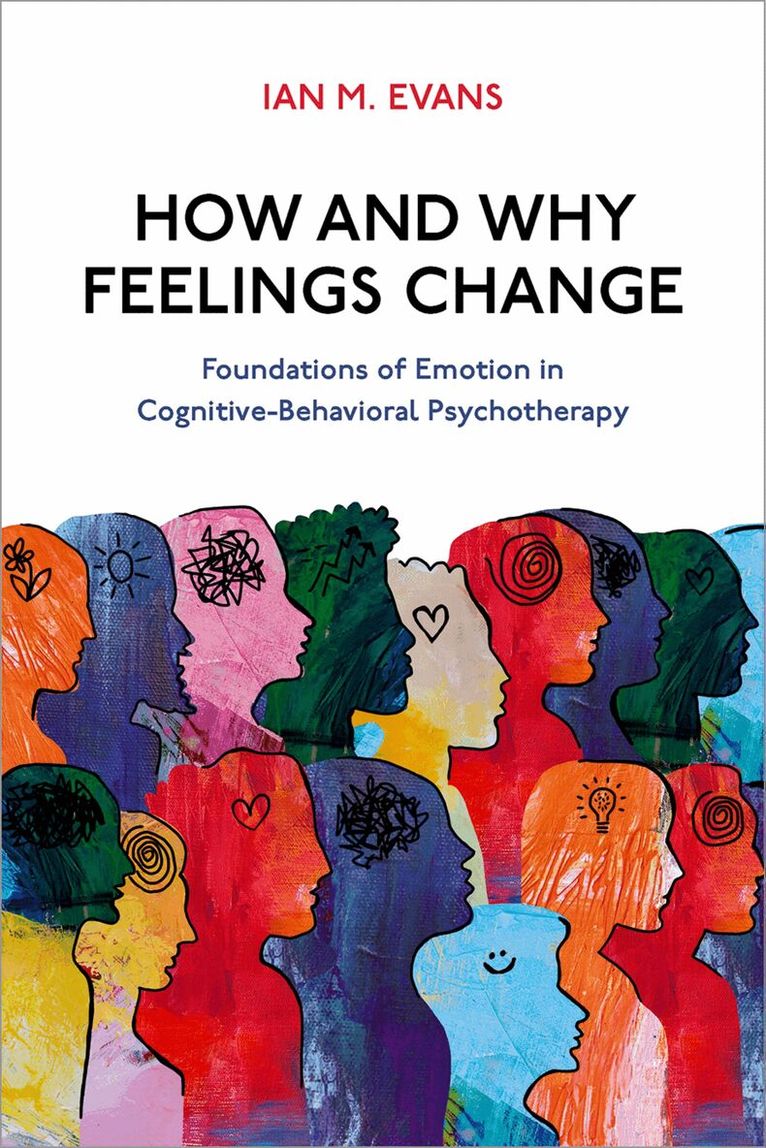
How and Why Feelings Change
Foundations of Emotion in Cognitive-Behavioral Psychotherapy
Inbunden, Engelska, 2026
629 kr
Kommande
The dominant theories and techniques making up modern cognitive-behavioral therapy (CBT) address client behaviors (activities) and their cognitions (thoughts) in great detail. In contrast, the targeting of their emotions is more often restricted to clients' diagnosable mental disorder symptomatology--anxiety, depression, anger, and cravings. Their feelings--the subjective experience of their fluctuating affect--have not received the same applied scientific attention. In How and Why Feelings Change, Ian M. Evans attempts to fill a gap by exploring the full range of relevant feelings across the lifespan. The empirical research on feelings is linked to the traditional origins of CBT: physiological reactions, conditioning, reinforcement contingencies, cognitive processes, and social learning. This is not a treatment manual, nor does it focus on any specific mental disorder or category of client. The emphasis is to show how current and past research on the complexities of feelings enhances the therapeutic work of trainees in clinical and counseling psychology. It is also designed for more experienced psychologists and mental health providers who already know that their own and their clients' feelings can dominate the realities of their practice. Feelings change over time and are influenced by a wide range of contexts and events. How feelings are elicited, expressed, and regulated, how they are balanced between positive and negative effects, and how they influence further feelings, are all described. The psychology of feelings includes other affective phenomena such as moods, likes and dislikes, attitudes and values, urges, and affective forecasting--the ability to anticipate future feelings. CBT practices are not challenged but are augmented by consideration of the feelings that disturb us all: fear, anger, pain, sorrow, hatred. Without these feelings, however, we cannot experience those that enrich our lives: security, forgiveness, well-being, joy, love.
948 kr
Skickas inom 5-8 vardagar
Cognitive therapy, a core approach within a collection of psychotherapeutic techniques known as cognitive behavioral therapy (CBT), is fundamentally about changing peoples' thoughts-helping them overcome difficulties by recognizing and changing dysfunctional thinking styles. Among other strategies, it requires encouraging the development of skills for rehearsing new habits of thought, modifying biases in judging and interpreting social and emotional information, and for testing assumptions underlying dysfunctional and negative, distorted thinking. In How and Why Thoughts Change, Dr. Ian Evans deconstructs the nature of cognitive therapy by examining the cognitive element of CBT, that is, how and why thoughts change behavior and emotion. There are a number of different approaches to cognitive therapy, including the classic Beck approach, the late Albert Ellis's rational-emotive psychotherapy, Young's schema-focused therapy, and newer varieties such as mindfulness training, Acceptance and Commitment Therapy (ACT), and problem-solving strategies. Evans identifies the common principles underlying these methods, attempts to integrate them, and makes suggestions as to how our current cognitive therapies might be improved. He draws on a broad survey of contemporary research on basic cognitive processes and integrates these with therapeutic approaches. While it may seem obvious that how and what we think determines how and in what manner we behave, the relationship between thought and action is not a simple one. Evans addresses questions such as: What is the difference between a thought and a belief? How do we find the cause of a thought? And can it really be that thought causes behavior and emotion, or could it be the other way around? In a reader-friendly style that avoids jargon, this innovative book answers some pertinent questions about cognitive therapy in a way that clarifies exactly how and why thoughts change. Evans demonstrates that understanding these concepts is a linchpin to providing and improving therapy for clients.
1 020 kr
Skickas inom 5-8 vardagar
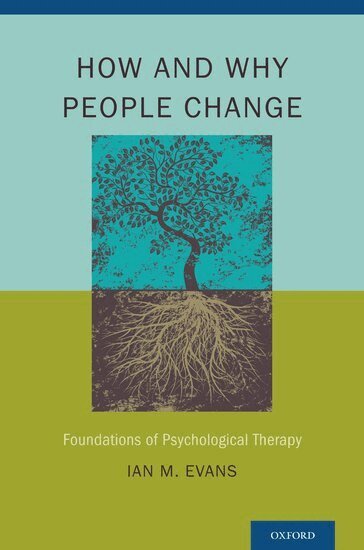
Human beings change constantly; we are in an endless state of flux as we grow, mature, learn, and adapt to a myriad of physical, environmental, social, educational, and cultural influences. Change can be thought of as planful when it is motivated by the desire to be and feel different, such as the change that comes about as a result of deliberate intervention, usually initiated by a troubled individual and aided by another, typically a professional.In How and Why People Change Dr. Ian M. Evans revisits many of the fundamental principles of behavior change in order to deconstruct what it is we try to achieve in psychological therapies. All of the conditions that impact people when seeking therapy are brought together in one cohesive framework: assumptions of learning, motivation, approach and avoidance, barriers to change, personality dynamics, and the way that individual behavioral repertoires are inter-related. Special emphasis is placed on environmental, social, and cultural influences that allow people to manage their feelings and promote adaptive thoughts and activities. The result is a novel and refreshing look at factors that help people change, which can be mobilized by individuals themselves or their therapists. By looking past the formal techniques of cognitive-behavior therapy, this book explores the processes of therapy as well as the nature of meaningful, long-range, and lasting change. Drawing on a variety of classic and new research studies, this unifying approach is evidence-based, but in a different way from the empirical validation of standardized protocols and manuals. The aim is to encourage both novice therapists and experienced clinicians to re-evaluate basic psychological assumptions in order to promote innovative, individualized, and culturally acceptable interventions. By understanding the sources of change that most influence clients' functioning, the commonalities in apparently different therapeutic theories are recognized, providing a critical perspective for clinical researchers. Rather than suggesting how therapy should be conducted, Evans shows how many different approaches can be understood on the basis of common underlying principles.
561 kr
Skickas inom 3-6 vardagar
A positive model for restorative discipline If you would like a more effective way to deal with discipline issues than "old school" punishment, this book is for you. The authors provide a research-based and field-tested model that gives school leaders more productive alternatives to reprimands, exclusion, and out-of-school suspension. This positive program helps improve behavior and keep students in school. This guide′s model covers school-wide prevention, restoration, and intervention needs for students with emotional, behavioral, and conduct disorders (such as bullying) as well as developmental disabilities and autism. Key topics include:The latest research on the effectiveness of restorative disciplineHow to implement a comprehensive, school-wide discipline planWays to support and sustain the plan with teacher teamsNetworking with community services such as child protection, child welfare, juvenile justice, and mental health professionalsThis program has high social validity and utility for actual school and classroom settings. In addition to content learning, students need to learn appropriate behavior and social skills to succeed in school and in life. This book offers a solid, proven, and humane program that benefits students and keeps the focus where it should be—on learning.
Childhood Aggression and Violence
Sources of Influence, Prevention, and Control
Häftad, Engelska, 2012
536 kr
Skickas inom 10-15 vardagar
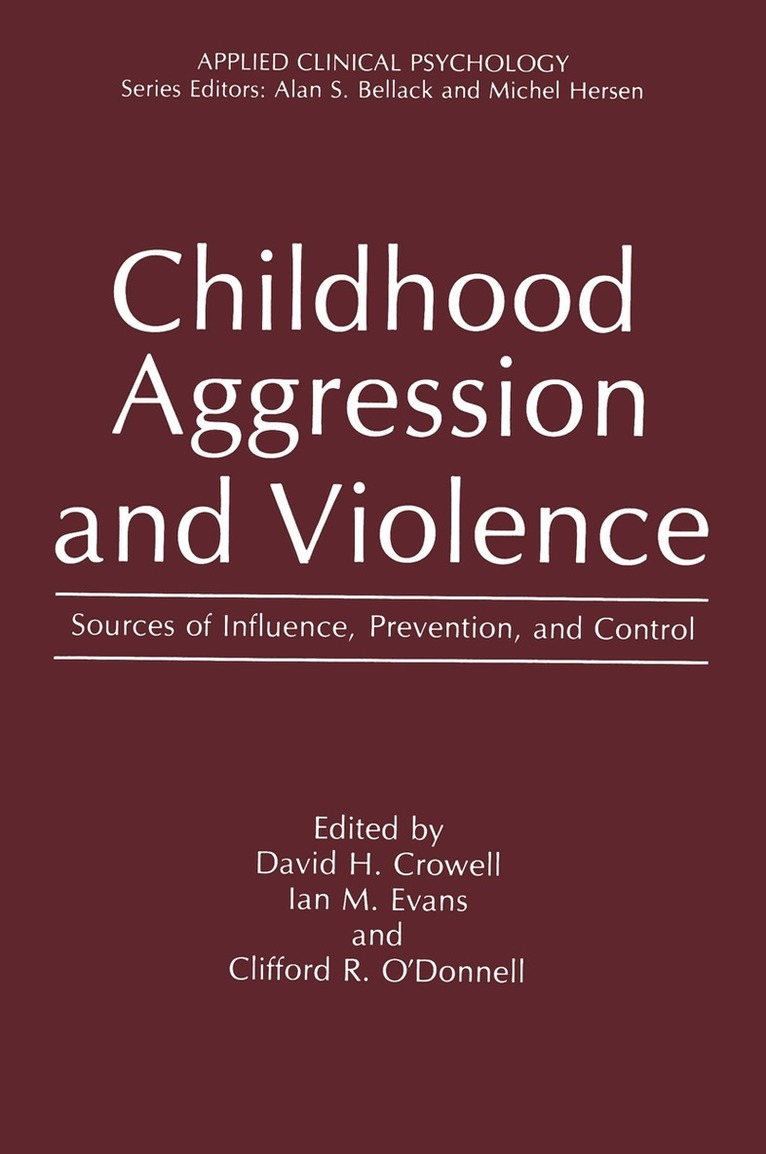
The conference on which this volume is based was one of a series of symposia initiated by the Department of Psychology at the University of Hawaii at Manoa on the theory and research surrounding topics of interest to the faculty and germane to the Hawaiian community. In order to encourage interaction around specific themes, the symposium series has assembled a small, select group of scholars to exchange knowledge, ideas, and enthusiasm with the resident faculty, students, and the community at large. The first two symposia concentrated on cross-cultural themes (Marsella, Tharp, & Ciborowski, 1979; Marsella, DeVos, & Hsu, 1985). The third one addressed a significant social problem: aggression and violence in children. At the time that our plan was being developed, Hawaii, along with mainland states, was experiencing or at least expressing widespread alarm over the involvement of children and youth in violent crime, in belligerence at school, as perpetrators of aggression at home, and as victims of physical abuse. This symposium was planned around a major area within the department, the Clinical Studies Program. The Clinical Studies Program has developed along two interrelated lines of concentration: one emphasized the foundation of clin cical psychology in basic science and the other expanded its purview into the broader community, covering prevention, systems change, and social networks.
258 kr
Skickas inom 5-8 vardagar
129 kr
Tillfälligt slut
158 kr
Skickas