Ian Mason - Böcker
Visar alla böcker från författaren Ian Mason. Handla med fri frakt och snabb leverans.
7 produkter
7 produkter
2 150 kr
Skickas inom 10-15 vardagar
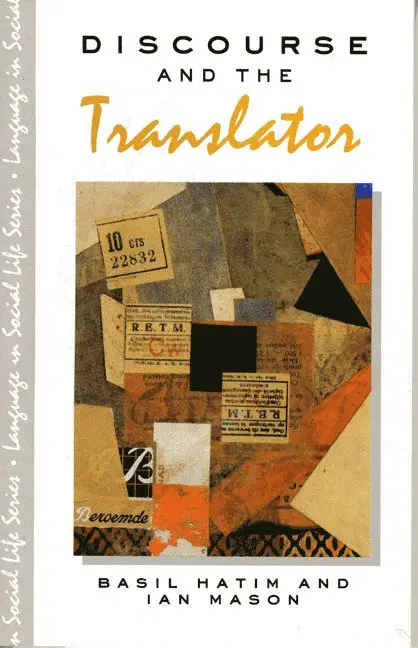
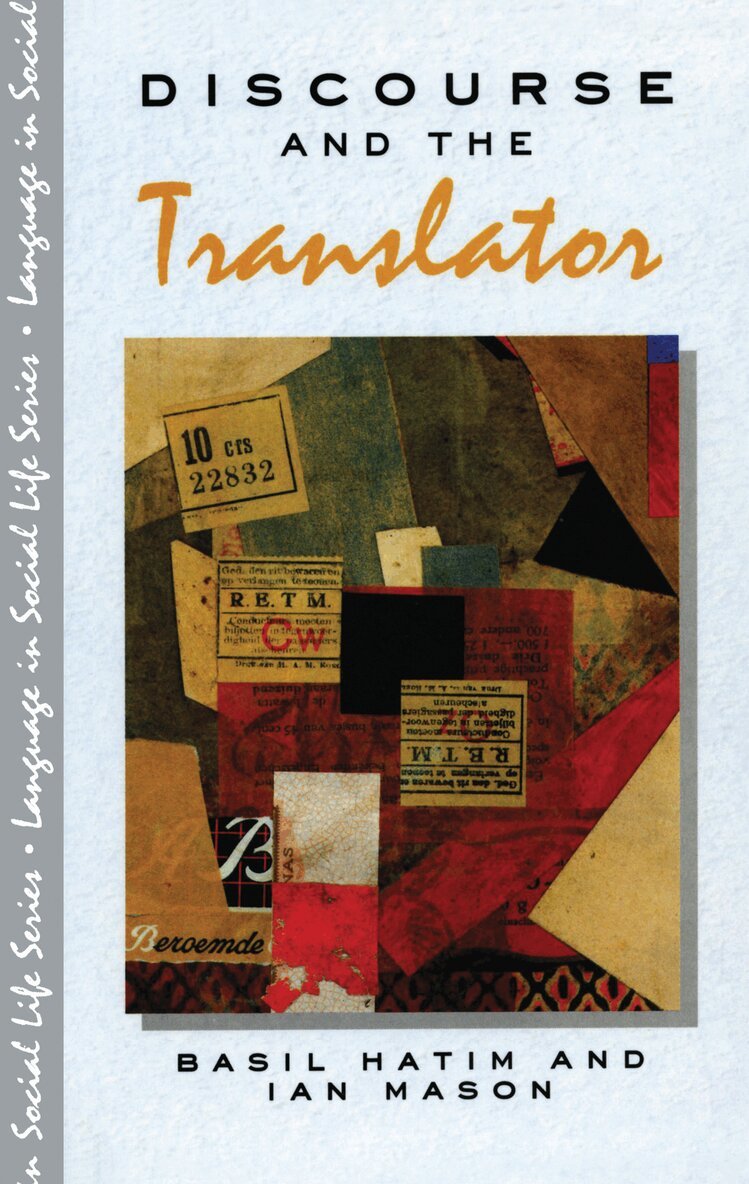
By taking an integrated approach to the practice of translation, Hatim and Mason provide a refreshingly unprejudiced contribution to translation theory. They argue that the division of the subject into literary and non-literary, technical and non-technical and so on, is unhelpful and misleading. Instead of dwelling on these differentials, the authors focus on what common ground exists between these distinctions. The proposed model is presented through a series of case studies, each of which has as its focus one particular feature of text constitution, while not losing sight of how this contributes to the whole analytic apparatus. Topics covered include: * a comprehensive description of the interpreting process * power and ideology in translation * discourse errors * curriculum design for translator training
705 kr
Skickas inom 10-15 vardagar
By taking an integrated approach to the practice of translation, Hatim and Mason provide a refreshingly unprejudiced contribution to translation theory. They argue that the division of the subject into literary and non-literary, technical and non-technical and so on, is unhelpful and misleading. Instead of dwelling on these differentials, the authors focus on what common ground exists between these distinctions. The proposed model is presented through a series of case studies, each of which has as its focus one particular feature of text constitution, while not losing sight of how this contributes to the whole analytic apparatus. Topics covered include: * a comprehensive description of the interpreting process * power and ideology in translation * discourse errors * curriculum design for translator training
733 kr
Skickas inom 10-15 vardagar
Incorporating research in sociolinguistics, discourse studies, pragmatics and semiotics, this book analyses the process and product of translation in different social contexts, and examines the practice of translation in the context of theoretical linguistics.
1 804 kr
Skickas inom 10-15 vardagar
Discourse and the Translator both incorporates and moves beyond previous studies of translation. Its logical and informative approach to the problems of translation ensures that it will be essential for all those who work with languages 'in contact'. Incorporating research in sociolinguistics, discourse studies, pragmatics and semiotics, the authors analyse the process and product of translation in their social contexts. Through this analysis, the book emphasises the importance of the translator as a mediator between cultures.
2 150 kr
Skickas inom 10-15 vardagar
Dialogue interpreting is a generic term covering a diverse range of fields of interpreting which have in common the basic feature of face-to-face interaction between three parties: the interpreter and (at least) two other speakers. The interaction consists of spontaneous dialogue, involving relatively short turns at talk, in two languages. It is usually goal-directed in the sense that there is some outcome to be negotiated. The studies in this volume cover several different fields: courtroom interpreting, doctor-patient interviews, immigration interviews, etc., and involve a range of different languages: Spanish, Portuguese, Polish, More and Austrian Sign Language. They have in common that they view the interpreter as just one of the parties to this three-way exchange, in which each participant's moves can affect each other participant and thus the outcome of the event.In Part I, new research directions are explored in studies which piece together evidence of the ways dialogue interpreters actually behave and the effects of their behaviour. This is followed by two studies which discuss traditional interpreter roles - the 'King's Linguist' in Burkina Faso and the Oranda Tsûji, official interpreters employed in isolationist eighteenth-century Japan to ensure contact with the outside world. Finally, issues involved in training are the subject of two chapters relating to Austria and the UK. The variety of aspects and approaches represented in the volume - linguistic, cultural, pragmatic, historical - offer a rich and fascinating overview of the field of dialogue interpreting studies as it now stands.
663 kr
Skickas inom 10-15 vardagar
Dialogue interpreting includes what is variously referred to in English as Community, Public Service, Liaison, Ad Hoc or Bilateral Interpreting - the defining characteristic being interpreter-mediated communication in spontaneous face-to-face interaction. Included under this heading are all kinds of professional encounters: police, immigration and welfare services interviews, doctor-patient interviews, business negotiations, political interviews, lawyer-client and courtroom interpreting and so on. Whereas research into conference interpreting is now well established, the investigation of dialogue interpreting as a professional activity is still in its infancy, despite some highly promising publications in recent years. This special issue of The Translator, guest-edited by one of the leading scholars in translation studies, provides a forum for bringing together separate strands within this developing field and should create an impetus for further research.Viewing the interpreter as a gatekeeper, coordinator and negotiator of meanings within a three-way interaction, the descriptive studies included in this volume focus on issues such as role-conflict, in-group loyalties, participation status, relevance and the negotiation of face, thus linking the observation of interpreting practice to pragmatic constraints such as power, distance and face-threat and to semiotic constraints such as genres and discourses as socio-textual practices of particular cultural communities.
797 kr
Skickas inom 10-15 vardagar
Dialogue interpreting is a generic term covering a diverse range of fields of interpreting which have in common the basic feature of face-to-face interaction between three parties: the interpreter and (at least) two other speakers. The interaction consists of spontaneous dialogue, involving relatively short turns at talk, in two languages. It is usually goal-directed in the sense that there is some outcome to be negotiated. The studies in this volume cover several different fields: courtroom interpreting, doctor-patient interviews, immigration interviews, etc., and involve a range of different languages: Spanish, Portuguese, Polish, More and Austrian Sign Language. They have in common that they view the interpreter as just one of the parties to this three-way exchange, in which each participant's moves can affect each other participant and thus the outcome of the event.In Part I, new research directions are explored in studies which piece together evidence of the ways dialogue interpreters actually behave and the effects of their behaviour. This is followed by two studies which discuss traditional interpreter roles - the 'King's Linguist' in Burkina Faso and the Oranda Tsûji, official interpreters employed in isolationist eighteenth-century Japan to ensure contact with the outside world. Finally, issues involved in training are the subject of two chapters relating to Austria and the UK. The variety of aspects and approaches represented in the volume - linguistic, cultural, pragmatic, historical - offer a rich and fascinating overview of the field of dialogue interpreting studies as it now stands.