• Fri frakt över 249 kr
  • •
  • Snabba leveranser
  • •
  • Billiga böcker
Kundservice

Du är på sajten för privatpersoner.

Företag, bibliotek eller offentlig verksamhet?

Du handlar på classic.bokus.com, där alla dina funktioner finns intakta.
Till classic.bokus.com
Bokus logotyp. Gå till startsidan.
  • Erbjudanden
  • Nyheter
  • Student
  • Topplistor
  • Barn & ungdom
  • Bokus Play
  • E-böcker
  • Pocketböcker
  • Spel & pussel

10% rabatt på allt med kod NYSTART10 →

Sidfot

Mina sidor

    Hjälp

    • Kundservice
    • Vanliga frågor och svar
    • Frakt och leverans
    • Retur vid ångerrätt
    • Reklamera vara
    • Betalning
    • Köpvillkor
    • Allmänna villkor
    • Information om webbplatsens tillgänglighet

    Om Bokus

    • Om oss
    • Pressrum
    • För studenter
    • För företag
    • För bibliotek och offentlig verksamhet
    • För leverantörer
    • Hållbarhet

    Populärt

    • Aktuella erbjudanden
    • Presentkort
    • Studentlitteratur
    • Nya böcker
    • Topplistor
    • Signerade böcker
    • Engelska böcker

    Inspiration

    • Boktips
    • BookTok
    • Populära bokserier
    • Barnbokskaraktärer
    • Populära författare
    Logotyp för Bokus
    Följ oss på Facebook (extern länk)Följ oss på Instagram (extern länk)Följ oss på YouTube (extern länk)Följ oss på TikTok (extern länk)
    bokus @ CookiesAnpassa cookiesIntegritetspolicyKöpvillkor
    Till Citymail hemsida (extern länk)Till Budbee hemsida (extern länk)Till Postnord hemsida (extern länk)Till Schenker hemsida (extern länk)Till Early Bird hemsida (extern länk)Till Walleys hemsida (extern länk)
    1. Psykologi och pedagogik
    2. Psykologi
    3. Socialpsykologi och gruppsykologi

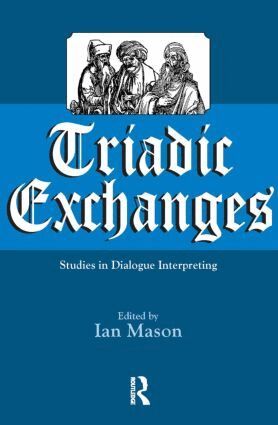
    Triadic Exchanges

    Studies in Dialogue Interpreting

    AvIan Mason

    Häftad, Engelska, 2001

    867 kr

    Beställningsvara. Skickas inom 10-15 vardagar. Fri frakt över 249 kr.

    Beskrivning

    Dialogue interpreting is a generic term covering a diverse range of fields of interpreting which have in common the basic feature of face-to-face interaction between three parties: the interpreter and (at least) two other speakers. The interaction consists of spontaneous dialogue, involving relatively short turns at talk, in two languages. It is usually goal-directed in the sense that there is some outcome to be negotiated. The studies in this volume cover several different fields: courtroom interpreting, doctor-patient interviews, immigration interviews, etc., and involve a range of different languages: Spanish, Portuguese, Polish, More and Austrian Sign Language. They have in common that they view the interpreter as just one of the parties to this three-way exchange, in which each participant's moves can affect each other participant and thus the outcome of the event.In Part I, new research directions are explored in studies which piece together evidence of the ways dialogue interpreters actually behave and the effects of their behaviour. This is followed by two studies which discuss traditional interpreter roles - the 'King's Linguist' in Burkina Faso and the Oranda Tsûji, official interpreters employed in isolationist eighteenth-century Japan to ensure contact with the outside world. Finally, issues involved in training are the subject of two chapters relating to Austria and the UK. The variety of aspects and approaches represented in the volume - linguistic, cultural, pragmatic, historical - offer a rich and fascinating overview of the field of dialogue interpreting studies as it now stands.

    Produktinformation

    • Utgivningsdatum:2001-01-01
    • Mått:156 x 234 x 18 mm
    • Vikt:220 g
    • Format:Häftad
    • Språk:Engelska
    • Antal sidor:208
    • Förlag:St Jerome Publishing
    • ISBN:9781900650366

    Utforska kategorier

    • Socialpsykologi och gruppsykologi inom Psykologi och pedagogik
    • Språkvetenskap och lingvistik inom Språk och ordböcker
    • Sociologi inom Samhälle och politik

    Recensioner i media

    Dialogue interpreting is a generic term covering a diverse range of fields of interpreting which have in common the basic feature of face-to-face interaction between three parties: the interpreter and (at least) two other speakers. The interaction consists of spontaneous dialogue, involving relatively short turns at talk, in two languages. It is usually goal-directed in the sense that there is some outcome to be negotiated. The studies in this volume cover several different fields: courtroom interpreting, doctor-patient interviews, immigration interviews, etc., and involve a range of different languages: Spanish, Portuguese, Polish, More and Austrian Sign Language. They have in common that they view the interpreter as just one of the parties to this three-way exchange, in which each participant's moves can affect each other participant and thus the outcome of the event. In Part I, new research directions are explored in studies which piece together evidence of the ways dialogue interpreters actually behave and the effects of their behaviour. This is followed by two studies which discuss traditional interpreter roles - the 'King's Linguist' in Burkina Faso and the Oranda Tsuji, official interpreters employed in isolationist eighteenth-century Japan to ensure contact with the outside world. Finally, issues involved in training are the subject of two chapters relating to Austria and the UK. The variety of aspects and approaches represented in the volume - linguistic, cultural, pragmatic, historical - offer a rich and fascinating overview of the field of dialogue interpreting studies as it now stands.

    Innehållsförteckning

    • Part I Research Directions; Chapter 1 Interpreting Expert Witness Testimony, Cynthia Miguélez; Chapter 2 How are Courtroom Questions Interpreted?, Sandra Hale; Chapter 3 Interactional Pragmatics, Face and the Dialogue Interpreter, Ian Mason, Miranda Stewart; Chapter 4 Interpreting in Crisis, Cecilia Wadensjö; Chapter 5 How Untrained Interpreters Handle Medical Terms, Bernd Meyer; Part II Traditions; Chapter 6 The Rebirth of the King’s Linguist, Pierre Kouraogo; Chapter 7 Oranda Tsûjiand the Sidotti Incident, Yukino Semizu; Part III Issues in Training; Chapter 8 First Steps on Firmer Ground, Nadja Grbic; Chapter 9 Teaching Liaison Interpreting, Annalisa Sandrelli;