Ianir Milevski – författare
Visar alla böcker från författaren Ianir Milevski. Handla med fri frakt och snabb leverans.
10 produkter
10 produkter
Häftad, Engelska, 2016
779 kr
Skickas inom 10-15 vardagar
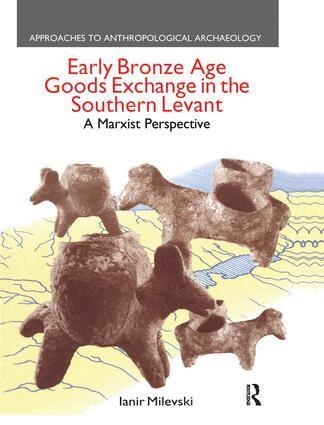
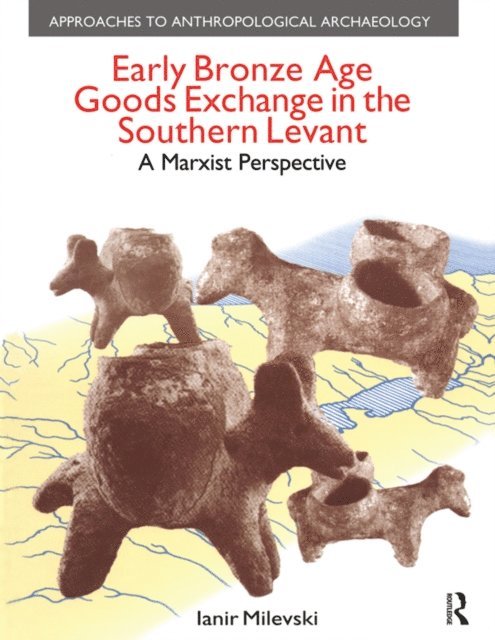
The Southern Levant was a thriving centre of religious and cultural exchange during the Bronze Age. 'Early Bronze Age Goods Exchange in the Southern Levant' provides an overview of the sources and distribution of commodities. The book presents a study of key production centres and the process of purchase and exchange. The book establishes a theoretical framework - based in political economy, ethnoarchaeology and economic anthropology - for understanding the exchange of commodities in a precapitalist society. 'Early Bronze Age Goods Exchange in the Southern Levant' is unique in presenting archaeological sources and prehistoric economics through modern, notably Marxist, theories of human development.
E-bok
Engelska, 2016918 kr
Läs direkt efter köp
The Southern Levant was a thriving centre of religious and cultural exchange during the Bronze Age. ''Early Bronze Age Goods Exchange in the Southern Levant'' provides an overview of the sources and distribution of commodities. The book presents a study of key production centres and the process of purchase and exchange. The book establishes a theoretical framework - based in political economy, ethnoarchaeology and economic anthropology - for understanding the exchange of commodities in a precapitalist society. ''Early Bronze Age Goods Exchange in the Southern Levant'' is unique in presenting archaeological sources and prehistoric economics through modern, notably Marxist, theories of human development.
E-bok
PDF, Engelska, 2016918 kr
Läs direkt efter köp
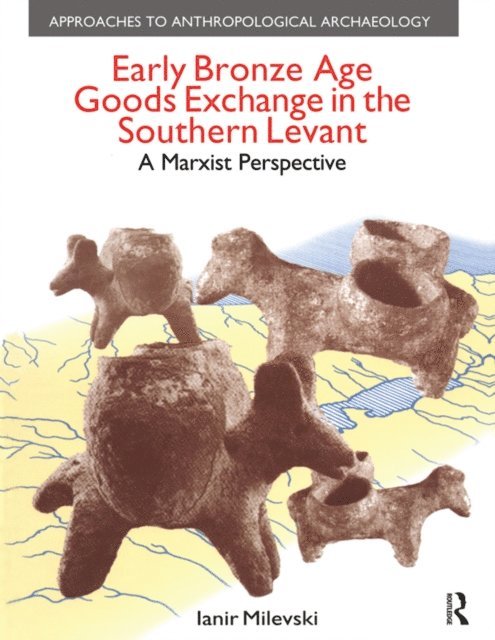
The Southern Levant was a thriving centre of religious and cultural exchange during the Bronze Age. ''Early Bronze Age Goods Exchange in the Southern Levant'' provides an overview of the sources and distribution of commodities. The book presents a study of key production centres and the process of purchase and exchange. The book establishes a theoretical framework - based in political economy, ethnoarchaeology and economic anthropology - for understanding the exchange of commodities in a precapitalist society. ''Early Bronze Age Goods Exchange in the Southern Levant'' is unique in presenting archaeological sources and prehistoric economics through modern, notably Marxist, theories of human development.
Inbunden, Engelska, 2016
1 319 kr
Skickas inom 5-8 vardagar
This volume presents a series of studies by scholars working in Middle Eastern archaeology who actively apply social theory to interpret their fieldwork. It aims to highlight the value of using social theory in the interpretation of field work in a region where, traditionally, such approaches have not played a major role. There are a number of factors that account for why social theory is often under-exploited by archaeologists in this part of the world. In many countries, where large numbers of the foreign archaeologists are involved, a division between those doing fieldwork and those undertaking archaeological interpretation can easily arise. Or, the lack of interest in social theory may stem from a legacy of positivism that overrides other approaches. There is also the fact that archaeology and anthropology often belong to separate academic departments and are considered two separate disciplines disconnected from each other. In some cases the centrality of historical paradigms has precluded the use of social theory. There are also divisions between universities and other research institutions, such as departments of antiquities, which is not conductive to interdisciplinary cooperation. This factor is especially debilitating in contexts of rapid destruction of sites and the exponential growth of salvage excavations and emergency surveys. The papers integrate a wide range of perspectives including 'New' or 'Processual' archaeology, Marxist, 'Post-Processual', evolutionist, cognitive, symbolic, and Cyber- archaeologies and touch on many topics including 3D representation, GIS, mapping and social theory, semiotics and linguistics, gender and bioarchaeology, social and technical identities, and modern historical modelling and social practices in Middle Eastern archaeology.
Häftad, Engelska, 2017
504 kr
Skickas inom 5-8 vardagar
This volume presents a series of studies by scholars working in Middle Eastern archaeology who actively apply social theory to interpret their fieldwork. It aims to highlight the value of using social theory in the interpretation of field work in a region where, traditionally, such approaches have not played a major role. There are a number of factors that account for why social theory is often under-exploited by archaeologists in this part of the world. In many countries, where large numbers of the foreign archaeologists are involved, a division between those doing fieldwork and those undertaking archaeological interpretation can easily arise. Or, the lack of interest in social theory may stem from a legacy of positivism that overrides other approaches. There is also the fact that archaeology and anthropology often belong to separate academic departments and are considered two separate disciplines disconnected from each other. In some cases the centrality of historical paradigms has precluded the use of social theory. There are also divisions between universities and other research institutions, such as departments of antiquities, which is not conductive to interdisciplinary cooperation. This factor is especially debilitating in contexts of rapid destruction of sites and the exponential growth of salvage excavations and emergency surveys. The papers integrate a wide range of perspectives including 'New' or 'Processual' archaeology, Marxist, 'Post-Processual', evolutionist, cognitive, symbolic, and Cyber- archaeologies and touch on many topics including 3D representation, GIS, mapping and social theory, semiotics and linguistics, gender and bioarchaeology, social and technical identities, and modern historical modelling and social practices in Middle Eastern archaeology.
Inbunden, Engelska, 2015
3 040 kr
Skickas inom 5-8 vardagar
The Southern Levant was a thriving centre of religious and cultural exchange during the Bronze Age. 'Early Bronze Age Goods Exchange in the Southern Levant' provides an overview of the sources and distribution of commodities. The book presents a study of key production centres and the process of purchase and exchange. The book establishes a theoretical framework - based in political economy, ethnoarchaeology and economic anthropology - for understanding the exchange of commodities in a precapitalist society. 'Early Bronze Age Goods Exchange in the Southern Levant' is unique in presenting archaeological sources and prehistoric economics through modern, notably Marxist, theories of human development.
Del 18 - Estudios del Mediterráneo Antiguo / Pefscea
Relaciones entre Egipto y Palestina en el IV milenio a.C.
Modelos e interpretaciones
Häftad, Spanska, 2023
222 kr
Skickas inom 5-8 vardagar
E-bok
Spanska, 202370 kr
Läs direkt efter köp
Las relaciones entre Egipto y Palestina a lo largo de la Antigüedad han sido estudiadas a través de testimonios arqueológicos, iconográficos y escritos por innumerables investigadores de ambas regiones del Cercano Oriente. La investigación tanto del Egipto protodinástico y dinástico temprano como de la llamada Edad del Bronce Antiguo en lo que se conoce como Canaán (Palestina) en el IV milenio A.C. ha avanzado mucho en el último medio siglo a partir de estudios que consideran los hallazgos por lugar de origen y distribución, permitiendo la elaboración de estudios pormenorizados acerca de esas relaciones. Con frecuencia, testimonios originarios de Canaán han sido encontrados en Egipto, y viceversa, hallazgos de tipo egipcio han sido encontrados en Canaán. Sin embargo, los estudiosos no coinciden unánimemente acerca de la naturaleza de las relaciones entre ambas regiones y entre las entidades sociales que tomaron parte de dichas relaciones. Este libro representa el trabajo de un grupo de investigadores de la Argentina, Israel, Polonia y Alemania, que trabajan en el campo de la historia y la arqueología de esas sociedades. Es una iniciativa de un grupo de trabajo argentino nucleado en un Proyecto PICT de la Agencia Nacional de Promoción de la Investigación, el Desarrollo Tecnológico y la Innovación, enriquecida a partir de su articulación con colegas de diversos ámbitos académicos, lo que ha conferido un carácter internacional a los resultados reunidos en este volumen. Escriben: Ianir Milevski, Bernardo Gandulla, Marcelo Campagno, M. Belén Daizo, Marcin Czarnowicz, Florian Klimscha, Dmitry Yegorov, Martín David Pasternak, Eliot Braun, Yuval Yekutieli y Pablo Jaruf.
Del 296 - Historical Materialism Book Series
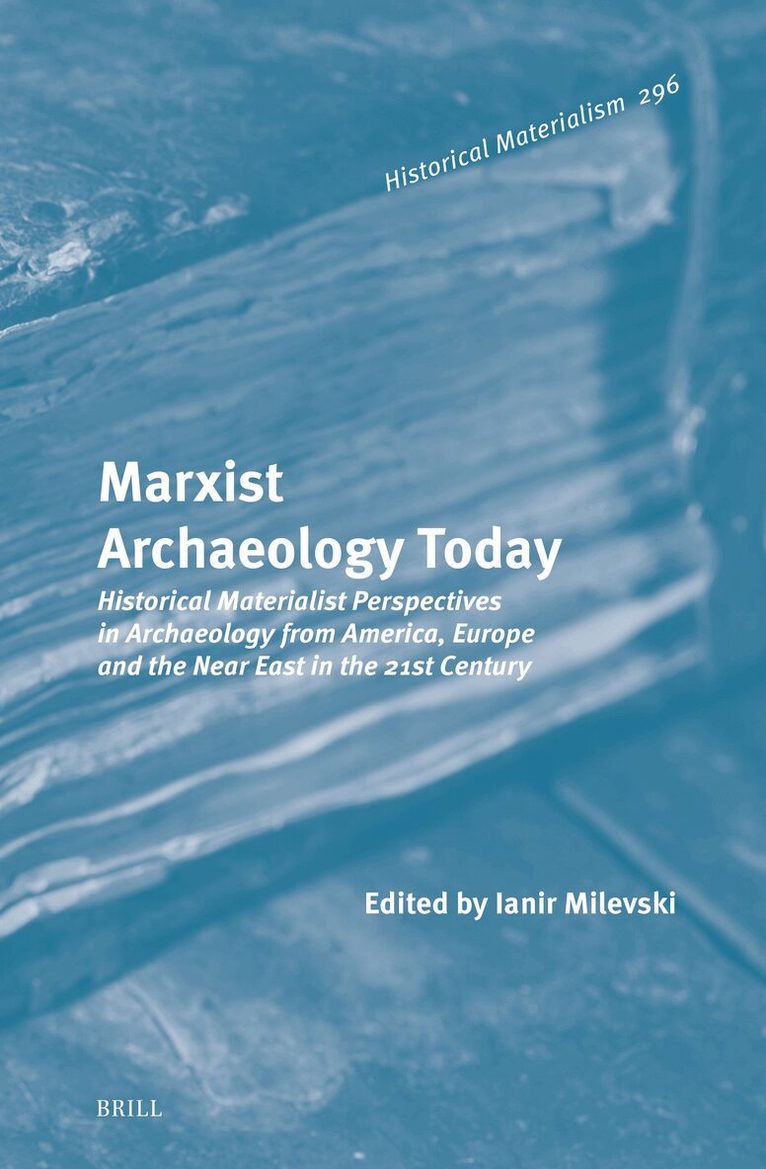
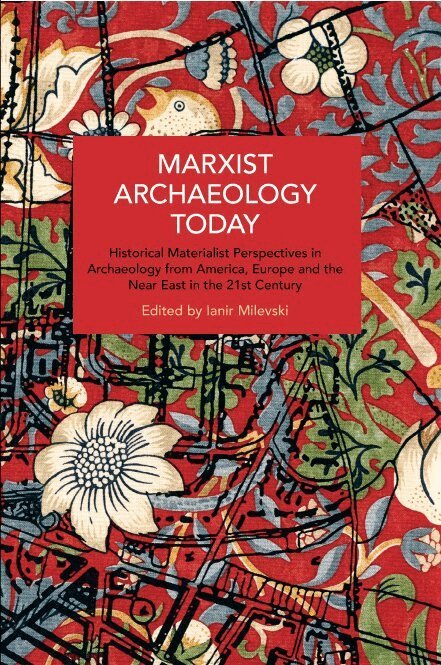
Marxist Archaeology Today
Historical Materialist Perspectives in Archaeology from America, Europe and the Near East in the 21st Century
Inbunden, Engelska, 2023
2 597 kr
Skickas inom 5-8 vardagar
This volume gathers papers written by archaeologists utilising the methods of historical materialism, attesting not only to what Marxism has contributed to archaeology, but also to what archaeology has contributed, and can contribute, to Marxism as a method for interpreting the history of humanity. The book’s contributors consider the question of what archaeology can contribute to a historical perspective on the overcoming of present-day capitalism, synthesising developments in world archaeology, and supplying concrete case studies of the archaeology of the Americas, Europe and the Near East.Contributors are: Guillermo Acosta Ochoa, Marcus Bajema, Bernardo Gandulla, Alex Gonzales-Panta, Pablo Jaruf, Vicente Lull, Savas Michael-Matsas, Rafael Micó, Ianir Milevski, Patricia Pérez Martínez, Cristina Rihuete Herrada, Roberto Risch, Steve Roskams, Henry Tantaleán, Marcelo Vitores, and LouAnn Wurst.
Häftad, Engelska, 2024
422 kr
Skickas inom 5-8 vardagar
Marxist Archaeology Today gathers important papers written by archaeologists who utilise the methods of historical materialism, demonstrating not only what Marxism has contributed to archaeology, but also what archaeology has contributed, and can contribute, to Marxism as a method for interpreting the history of humanity.The book's contributors consider the question of what archaeology can contribute to a historical perspective on the overcoming of present-day capitalism, synthesising developments in world archaeology, and supplying concrete case studies of the archaeology of the Americas, Europe and the Near East.Contributors are: Guillermo Acosta Ochoa, Marcus Bajema, Bernardo Gandulla, Alex Gonzales-Panta, Pablo Jaruf, Vicente Lull, Savas Michael-Matsas, Rafael Micó, Ianir Milevski, Patricia Pérez Martínez, Cristina Rihuete Herrada, Roberto Risch, Steve Roskams, Henry Tantaleán, Marcelo Vitores, and LouAnn Wurst..