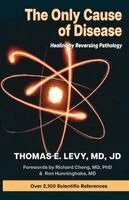
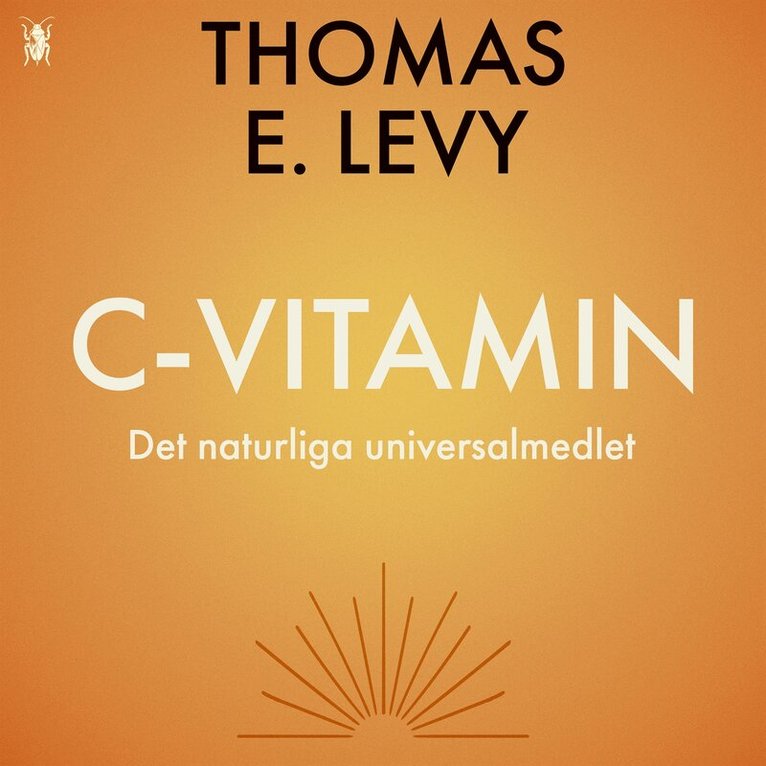
Thomas E. Levy – författare
Visar alla böcker från författaren Thomas E. Levy. Handla med fri frakt och snabb leverans.
18 produkter
18 produkter
Häftad, Svenska, 2021
268 kr
Skickas inom 5-8 vardagar
En översättning av boken "Primal Panacea" som handlar om hur C-vitamin fungerar i kroppen och varför vi stundtals behöver tillföra extra mycket C-vitamin. "Primal Panacea" är skriven av Thomas E. Levy, med dr och juris dr, som är en världsledande expert på C-vitamin och föreläser regelbundet om C-vitaminets och antioxidanters användning för sjukvårdspersonal över hela världen. Boken kan med behållning läsas av den som är intresserad av hälsa och de som arbetar inom sjukvården.
Häftad, Engelska, 2011
337 kr
Skickas inom 3-6 vardagar
Häftad, Engelska, 2023
1 324 kr
Skickas inom 3-6 vardagar
Häftad, Engelska, 2017
487 kr
Skickas inom 5-8 vardagar
Inbunden, Engelska, 2022
1 352 kr
Skickas inom 5-8 vardagar
In late August 2015, international media outlets and cultural institutions reported that the Islamic State beheaded the Syrian scholar Khaled al Asaad and destroyed the 1st-century CE Temple of Bel in Palmyra, Syria. The world was horrorstruck. Apart from the human tragedy, archaeologists and the international communities were shocked by the wanton destruction of ancient remains that had survived for millennia. However, warfare and ideological destruction contribute just a fraction of the ongoing devastation of our forebears' traces. This book brings attention to the magnitude of the silent loss of cultural heritage occurring worldwide and the even more insidious loss of knowledge due to the lack of publication and preservation of original data, notes, plans, and photographs of excavated archaeological sites. Highlighting a growing sense of urgency to intervene in whatever way possible, this book provides readers with a non-technical overview of how archaeologists and other stakeholders are increasingly turning to digital methods to mitigate some of the threats to at-risk cultural heritage. This volume is a gateway to enhancing the scale and reach of capturing, analyzing, managing, curating, and disseminating cultural heritage knowledge in sustainable ways and promoting collaboration among scholars and stakeholder communities.
Inbunden, Engelska, 2024
1 430 kr
Skickas inom 5-8 vardagar
Mediterranean Resilience examines various forms of adaptation adopted by coastal societies in the ancient Mediterranean in response to external pressures they occasionally experienced. The investigation spans the longue durée stretching from the epi-paleolithic to the Medieval period. Special attention is given to the impact of two groups of variables: climate and sea level changes on the one hand, and fluctuations in political circumstances connected with the domination of empires, on the other hand. For adaptation, the volume analyses modes of coastal residence, subsistence, and maritime connectivity, not as a static feature, constant throughout history, but as a process that requires permanent adjustments due to changes in environmental, social and political conditions. Methodologically, various forms of case studies are employed, isolating thematic issues, geographic micro-regions, temporal boundaries, and disciplinary perspectives, ultimately seeking to embrace as wide an array of phenomena as possible in the human experience of collapse and adaptation.
Del 35 - Monumenta Archaeologica
New Insights into the Iron Age Archaeology of Edom, Southern Jordan
Inbunden, Engelska, 2014
2 508 kr
Skickas inom 5-8 vardagar
Situated south of the Dead Sea, near the famous Nabatean capital of Petra, the Faynan region in Jordan contains the largest deposits of copper ore in the southern Levant. The Edom Lowlands Regional Archaeology Project (ELRAP) takes an anthropological-archaeology approach to the deep-time study of culture change in one of the Old World's most important locales for studying technological development. Using innovative digital tools for data recording, curation, analyses, and dissemination, the researchers focused on ancient mining and metallurgy as the subject of surveys and excavations related to the Iron Age (ca. 1200-500 BCE), when the first local, historical state-level societies appeared in this part of the eastern Mediterranean basin. This comprehensive and important volume challenges the current scholarly consensus concerning the emergence and historicity of the Iron Age polity of biblical Edom and some of its neighbors, such as ancient Israel. Excavations and radiometric dating establish a new chronology for Edom, adding almost 500 more years to the Iron Age, including key periods of biblical history when David, Solomon, and the Egyptian pharaoh Shoshenq I are alleged to have interacted with Edom. Included is a 7 gigabyte DVD with over 55,000 files of additional data and photographs from the project.
Inbunden, Engelska, 2015
2 202 kr
Skickas inom 5-8 vardagar
The Bible's grand narrative about Israel's Exodus from Egypt is central to Biblical religion, Jewish, Christian, and Muslim identity and the formation of the academic disciplines studying the ancient Near East. It has also been a pervasive theme in artistic and popular imagination. Israel's Exodus in Transdisciplinary Perspective is a pioneering work surveying this tradition in unprecedented breadth, combining archaeological discovery, quantitative methodology and close literary reading. Archaeologists, Egyptologists, Biblical Scholars, Computer Scientists, Geoscientists and other experts contribute their diverse approaches in a novel, transdisciplinary consideration of ancient topography, Egyptian and Near Eastern parallels to the Exodus story, the historicity of the Exodus, the interface of the Exodus question with archaeological fieldwork on emergent Israel, the formation of biblical literature, and the cultural memory of the Exodus in ancient Israel and beyond.Thisedited volume contains research presented at the groundbreaking symposium "Out of Egypt: Israel’s Exodus Between Text and Memory, History and Imagination" held in 2013 at the Qualcomm Institute of the University of California, San Diego. The combination of 44 contributions by an international group of scholars from diverse disciplines makes this the first such transdisciplinary study of ancient text and history. In the original conference and with this new volume, revolutionary media, such as a 3D immersive virtual reality environment, impart innovative, Exodus-based research to a wider audience. Out of archaeology, ancient texts, science and technology emerge an up-to-date picture of the Exodus for the 21st Century and a new standard for collaborative research.
Häftad, Engelska, 2016
2 202 kr
Skickas inom 10-15 vardagar
The Bible's grand narrative about Israel's Exodus from Egypt is central to Biblical religion, Jewish, Christian, and Muslim identity and the formation of the academic disciplines studying the ancient Near East. It has also been a pervasive theme in artistic and popular imagination. Israel's Exodus in Transdisciplinary Perspective is a pioneering work surveying this tradition in unprecedented breadth, combining archaeological discovery, quantitative methodology and close literary reading. Archaeologists, Egyptologists, Biblical Scholars, Computer Scientists, Geoscientists and other experts contribute their diverse approaches in a novel, transdisciplinary consideration of ancient topography, Egyptian and Near Eastern parallels to the Exodus story, the historicity of the Exodus, the interface of the Exodus question with archaeological fieldwork on emergent Israel, the formation of biblical literature, and the cultural memory of the Exodus in ancient Israel and beyond.Thisedited volume contains research presented at the groundbreaking symposium "Out of Egypt: Israel’s Exodus Between Text and Memory, History and Imagination" held in 2013 at the Qualcomm Institute of the University of California, San Diego. The combination of 44 contributions by an international group of scholars from diverse disciplines makes this the first such transdisciplinary study of ancient text and history. In the original conference and with this new volume, revolutionary media, such as a 3D immersive virtual reality environment, impart innovative, Exodus-based research to a wider audience. Out of archaeology, ancient texts, science and technology emerge an up-to-date picture of the Exodus for the 21st Century and a new standard for collaborative research.
Inbunden, Engelska, 2017
1 434 kr
Skickas inom 10-15 vardagar
This book examines how computer-based programs can be used to acquire ‘big’ digital cultural heritage data, curate, and disseminate it over the Internet and in 3D visualization platforms with the ultimate goal of creating long-lasting “digital heritage repositories.’ The organization of the book reflects the essence of new technologies applied to cultural heritage and archaeology. Each of these stages bring their own challenges and considerations that need to be dealt with. The authors in each section present case studies and overviews of how each of these aspects might be dealt with. While technology is rapidly changing, the principles laid out in these chapters should serve as a guide for many years to come. The influence of the digital world on archaeology and cultural heritage will continue to shape these disciplines as advances in these technologies facilitate new lines of research. serif">The book is divided into three sections covering acquisition, curation, and dissemination (the major life cycles of cultural heritage data). Acquisition is one of the fundamental challenges for practitioners in heritage and archaeology, and the chapters in this section provide a template that highlights the principles for present and future work that will provide sustainable models for digital documentation. Following acquisition, the next section highlights how equally important curation is as the future of digital documentation depends on it. Preservation of digital data requires preservation that can guarantee a future for generations to come. The final section focuses on dissemination as it is what pushes the data beyond the shelves of storage and allows the public to experience the past through these new technologies, but also opens new lines of investigation by giving access to these data to researchers around the globe. Digital technology promises significant changes in how we approach social sciences, cultural heritage, and archaeology. However, researchersmust consider not only the acquisition and curation, but also the dissemination of these data to their colleagues and the public.Throughout the book, many of the authors have highlighted the usefulness of Structure from Motion (SfM) work for cultural heritage documentation; others the utility and excitement of crowdsourcing as a ‘citizen scientist’ tool to engage not only trained students and researchers, but also the public in the cyber-archaeology endeavor. Both innovative tools facilitate the curation of digital cultural heritage and its dissemination. Together with all the chapters in this volume, the authors will help archaeologists, researchers interested in the digital humanities and scholars who focus on digital cultural heritage to assess where the field is and where it is going.
Inbunden, Engelska, 2017
940 kr
Skickas inom 10-15 vardagar
This volume asks how the current Information Technology Revolution influences archaeological interpretations of techno-social change. Does cyber-archaeology provide a way to breathe new life into grand narratives of technological revolution and culture change, or does it further challenge these high-level theoretical explanations? Do digital recording methods have the potential to create large, regional-scale databases to ease investigation of high-level theoretical issues, or have they simply exposed deeper issues of archaeological practice that prevent this? In short, this volume cuts beyond platitudes about the revolutionary potential of the Information Technology Revolution and instead critically engages both its possibilities and limitations.The contributions to this volume are drawn from long-term regional studies employing a cyber-archaeology framework, primarily in the southern Levant, a region with rich archaeological data sets spanning the Paleolithicto the present day. As such, contributors are uniquely placed to comment on the interface between digital methods and grand narratives of long-term techno-social change. Cyber-Archaeology and Grand Narratives provides a much-needed challenge to current approaches, and a first step toward integrating innovative digital methods with archaeological theory.
Häftad, Engelska, 2018
1 434 kr
Skickas inom 10-15 vardagar
This book examines how computer-based programs can be used to acquire ‘big’ digital cultural heritage data, curate, and disseminate it over the Internet and in 3D visualization platforms with the ultimate goal of creating long-lasting “digital heritage repositories.’ The organization of the book reflects the essence of new technologies applied to cultural heritage and archaeology. Each of these stages bring their own challenges and considerations that need to be dealt with. The authors in each section present case studies and overviews of how each of these aspects might be dealt with. While technology is rapidly changing, the principles laid out in these chapters should serve as a guide for many years to come. The influence of the digital world on archaeology and cultural heritage will continue to shape these disciplines as advances in these technologies facilitate new lines of research. serif">The book is divided into three sections covering acquisition, curation, and dissemination (the major life cycles of cultural heritage data). Acquisition is one of the fundamental challenges for practitioners in heritage and archaeology, and the chapters in this section provide a template that highlights the principles for present and future work that will provide sustainable models for digital documentation. Following acquisition, the next section highlights how equally important curation is as the future of digital documentation depends on it. Preservation of digital data requires preservation that can guarantee a future for generations to come. The final section focuses on dissemination as it is what pushes the data beyond the shelves of storage and allows the public to experience the past through these new technologies, but also opens new lines of investigation by giving access to these data to researchers around the globe. Digital technology promises significant changes in how we approach social sciences, cultural heritage, and archaeology. However, researchersmust consider not only the acquisition and curation, but also the dissemination of these data to their colleagues and the public.Throughout the book, many of the authors have highlighted the usefulness of Structure from Motion (SfM) work for cultural heritage documentation; others the utility and excitement of crowdsourcing as a ‘citizen scientist’ tool to engage not only trained students and researchers, but also the public in the cyber-archaeology endeavor. Both innovative tools facilitate the curation of digital cultural heritage and its dissemination. Together with all the chapters in this volume, the authors will help archaeologists, researchers interested in the digital humanities and scholars who focus on digital cultural heritage to assess where the field is and where it is going.
Häftad, Engelska, 2018
666 kr
Skickas inom 10-15 vardagar
This volume asks how the current Information Technology Revolution influences archaeological interpretations of techno-social change.
Inbunden, Tyska
115 kr
Skickas inom 3-6 vardagar
Inbunden, Tyska
115 kr
Skickas inom 3-6 vardagar
Häftad, Tyska, 2024
105 kr
Skickas inom 3-6 vardagar
Häftad, Kinesiska
765 kr
Skickas inom 3-6 vardagar
Häftad, Engelska, 2025
343 kr
Skickas inom 3-6 vardagar