Indira Viswanathan Peterson – författare
Visar alla böcker från författaren Indira Viswanathan Peterson. Handla med fri frakt och snabb leverans.
7 produkter
7 produkter
326 kr
Skickas inom 7-10 vardagar
The first complete English translation of one of the great court epics of Sanskrit literature.Kirātārjunīya, or Arjuna and the Hunter, is one of the great court epics of the Sanskrit literary canon. Written by the sixth-century poet Bharavi, it is also the first and most remarkable reinterpretation of a pivotal episode in the Mahābhārata, India’s ancient epic. The warrior Arjuna travels to the Himalayas to perform penance and win a boon from the god Shiva that will help his brothers, the Pandavas, overcome their enemies in righteous war. Appearing in the guise of a hunter, Shiva tests Arjuna’s courage in combat, ultimately reveals himself, and bestows upon the hero an invincible weapon.In Bharavi’s hands, the episode is turned into a masterful contemplation of heroic action, ethical conduct, ascetic discipline, and religious devotion—core values in India’s classical civilization and enduring themes in Indian literature. But the poem’s fame rests above all on its aesthetic achievement. With its elegant, epigrammatic verse, powerful imagery, dramatic speeches, and vivid descriptions, Arjuna and the Hunter, now made available for the first time in a complete English translation and accompanied by the Sanskrit original in the Devanagari script, will dazzle and move contemporary readers no less powerfully than its first courtly connoisseurs.
672 kr
Skickas inom 7-10 vardagar
Composed by three poet-saints between the sixth and eighth centuries A.D., the Tevaram hymns are the primary scripture of the Tamil Saivism, one of the first popular large-scale devotional movements within Hinduism. Indira Peterson eloquently renders into English a substantial portion of these hymns, which provide vivid and moving portraits of the images, myths, rites, and adoration of Siva and which continue to be loved and sung by the millions of followers of the Tamil Saiva tradition. Her introduction and annotations illuminate the work's literary, religious, and cultural contexts, making this anthology a rich sourcebook for the study of South Indian popular religion. Indira Peterson highlights the Tevaram as a seminal text in Tamil cultural history, a synthesis of pan-Indian and Tamil civilization, as well as a distinctly Tamil expression of the love of song, sacred landscape, and ceremonial religion. Her discussion of this work draws on her pioneering research into the performance of the hymns and their relation to the art and ritual of the South Indian temple. Originally published in 1989.The Princeton Legacy Library uses the latest print-on-demand technology to again make available previously out-of-print books from the distinguished backlist of Princeton University Press. These editions preserve the original texts of these important books while presenting them in durable paperback and hardcover editions. The goal of the Princeton Legacy Library is to vastly increase access to the rich scholarly heritage found in the thousands of books published by Princeton University Press since its founding in 1905.
3 127 kr
Skickas inom 3-6 vardagar
Composed by three poet-saints between the sixth and eighth centuries A.D., the Tevaram hymns are the primary scripture of the Tamil Saivism, one of the first popular large-scale devotional movements within Hinduism. Indira Peterson eloquently renders into English a substantial portion of these hymns, which provide vivid and moving portraits of the images, myths, rites, and adoration of Siva and which continue to be loved and sung by the millions of followers of the Tamil Saiva tradition. Her introduction and annotations illuminate the work's literary, religious, and cultural contexts, making this anthology a rich sourcebook for the study of South Indian popular religion. Indira Peterson highlights the Tevaram as a seminal text in Tamil cultural history, a synthesis of pan-Indian and Tamil civilization, as well as a distinctly Tamil expression of the love of song, sacred landscape, and ceremonial religion. Her discussion of this work draws on her pioneering research into the performance of the hymns and their relation to the art and ritual of the South Indian temple. Originally published in 1989.The Princeton Legacy Library uses the latest print-on-demand technology to again make available previously out-of-print books from the distinguished backlist of Princeton University Press. These editions preserve the original texts of these important books while presenting them in durable paperback and hardcover editions. The goal of the Princeton Legacy Library is to vastly increase access to the rich scholarly heritage found in the thousands of books published by Princeton University Press since its founding in 1905.
1 057 kr
Tillfälligt slut
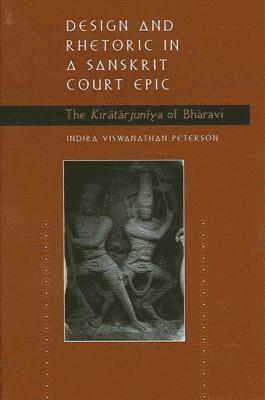
Explores the earliest literary treatment of Arjuna's combat with the great god Siva, providing an introduction to the Sanskrit court epic."Peterson proves that it is possible and fruitful to approach mahakavya such as 'Arjuna and the Hunter' through the aesthetic values it embodies. She succeeds in making one of the greatest works of literature accessible and meaningful to non-specialists, as well as useful for teachers of South Asian culture and religion." — History of ReligionsIndira Viswanathan Peterson provides an introduction to the Sanskrit court epic (mahākāvya), an important genre in classical Indian poetry, and the first study of a celebrated sixth-century poem, the Kirātārjunīya (Arjuna and the Hunter) of Bhāravi. Sanskrit court epics are shown to be characterized both by formalism and a deep engagement with enduring Indian values.The Kirātārjunīya is the earliest literary treatment of the narrative of the Pandava hero Arjuna's combat with the great god Śiva, a seminal episode in the war epic Mahābhārata. Through a close analysis of the structural strategies of Bhāravi's poem, the author illuminates the aesthetic of the mahākāvya genre. Peterson demonstrates that the classical poet uses figurative language, rhetorical devices, and structural design as the primary instruments for advancing his argument, the reconciliation of heroic action, ascetic self-control, social duty, and devotion to God. Her discussion of the Kirātārjunīya in relation to its historical setting and to renderings of this epic episode in literary texts and temple sculpture of later periods reveals the existence of complex transactions in Indian civilization between the discourses of heroic epic and court poetry, political ideologies and devotional religion, Sanskrit and the regional languages, and classical and folk traditions. Selections from the Kirātārjunīya are presented in poetic translation.
402 kr
Tillfälligt slut
Explores the earliest literary treatment of Arjuna's combat with the great god Siva, providing an introduction to the Sanskrit court epic."Peterson proves that it is possible and fruitful to approach mahakavya such as 'Arjuna and the Hunter' through the aesthetic values it embodies. She succeeds in making one of the greatest works of literature accessible and meaningful to non-specialists, as well as useful for teachers of South Asian culture and religion." — History of ReligionsIndira Viswanathan Peterson provides an introduction to the Sanskrit court epic (mahākāvya), an important genre in classical Indian poetry, and the first study of a celebrated sixth-century poem, the Kirātārjunīya (Arjuna and the Hunter) of Bhāravi. Sanskrit court epics are shown to be characterized both by formalism and a deep engagement with enduring Indian values.The Kirātārjunīya is the earliest literary treatment of the narrative of the Pandava hero Arjuna's combat with the great god Śiva, a seminal episode in the war epic Mahābhārata. Through a close analysis of the structural strategies of Bhāravi's poem, the author illuminates the aesthetic of the mahākāvya genre. Peterson demonstrates that the classical poet uses figurative language, rhetorical devices, and structural design as the primary instruments for advancing his argument, the reconciliation of heroic action, ascetic self-control, social duty, and devotion to God. Her discussion of the Kirātārjunīya in relation to its historical setting and to renderings of this epic episode in literary texts and temple sculpture of later periods reveals the existence of complex transactions in Indian civilization between the discourses of heroic epic and court poetry, political ideologies and devotional religion, Sanskrit and the regional languages, and classical and folk traditions. Selections from the Kirātārjunīya are presented in poetic translation.
989 kr
Skickas inom 7-10 vardagar
How perceptions of land and space influence social and aesthetic conditions in the Tamil region of India.This interdisciplinary work explores how people in the Tamil region of India think about space and land, and how this, in turn, influences the creation of the social and aesthetic world they live in. Contributors focus on the notion of geography in its strictest sense, on verbal descriptions of land and space and how these descriptions build and inform diverse social and aesthetic realities. The essays examine "texts" drawn from a range of time periods and a variety of sources in Tamil culture, including imaginative literature, historical events and narratives, religious rituals, and daily life in contemporary Tamil Nadu. The book clearly demonstrates the ways in which early Tamil aesthetic and linguistic paradigms have survived to the present as living, vital expressions through which contemporary boundaries and social identities are shaped and constructed.
372 kr
Skickas inom 7-10 vardagar
How perceptions of land and space influence social and aesthetic conditions in the Tamil region of India.This interdisciplinary work explores how people in the Tamil region of India think about space and land, and how this, in turn, influences the creation of the social and aesthetic world they live in. Contributors focus on the notion of geography in its strictest sense, on verbal descriptions of land and space and how these descriptions build and inform diverse social and aesthetic realities. The essays examine "texts" drawn from a range of time periods and a variety of sources in Tamil culture, including imaginative literature, historical events and narratives, religious rituals, and daily life in contemporary Tamil Nadu. The book clearly demonstrates the ways in which early Tamil aesthetic and linguistic paradigms have survived to the present as living, vital expressions through which contemporary boundaries and social identities are shaped and constructed.