Inke Du Bois - Böcker
Visar alla böcker från författaren Inke Du Bois. Handla med fri frakt och snabb leverans.
3 produkter
3 produkter
2 815 kr
Skickas inom 3-6 vardagar
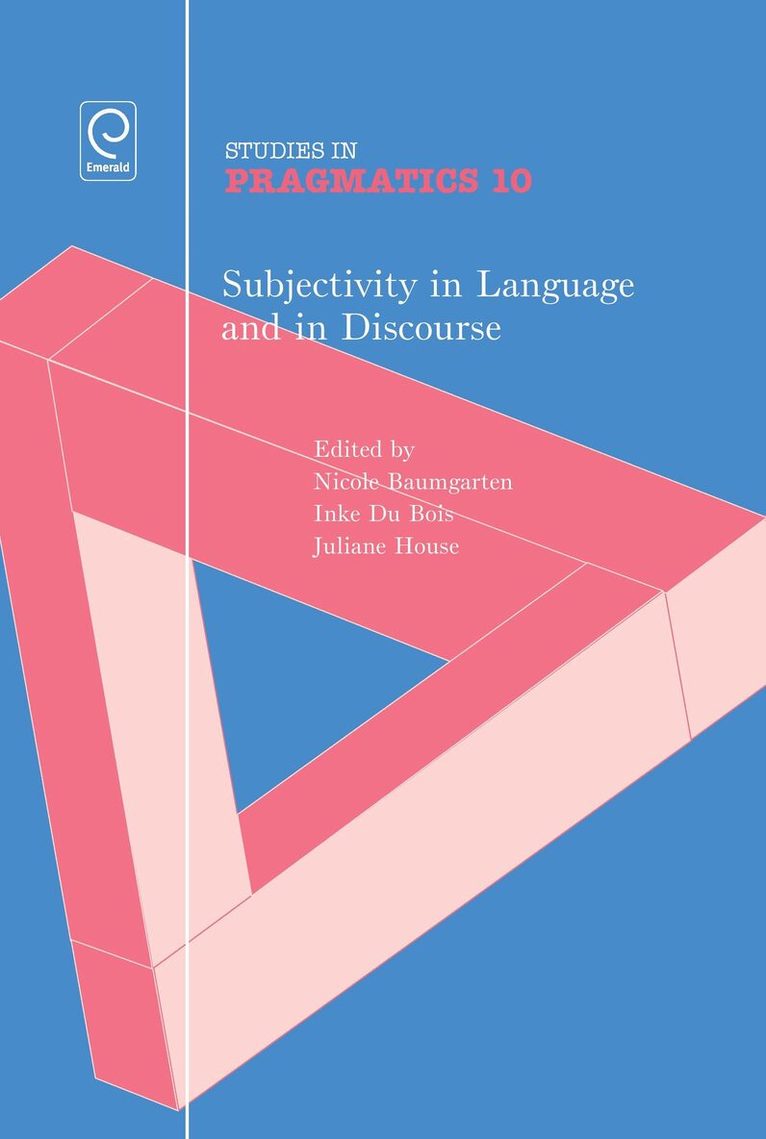
Subjectivity in Language and in Discourse deals with the linguistic encoding and discursive construction of subjectivity across languages and registers. The aim of this book is to complement the highly specialized, parallel and often separate research strands on the phenomenon of subjectivity with a volume that gives a forum to diverse theoretical vantage points and methodological approaches, presenting research results in one place which otherwise would most likely be found in substantially different publications and would have to be collected from many different sources. Taken together, the chapters in this volume reflect the rich diversity in contemporary research on the phenomenon of subjectivity. They cover numerous languages, colloquial, academic and professional registers, spoken and written discourse, diverse communities of practice, speaker and interaction types, native and non-native language use, and Lingua Franca communication. The studies investigate both already well explored languages and registers (e.g. American English, academic writing, conversation) and with respect to subjectivity, less studied languages (Greek, Italian, Persian, French, Russian, Swedish, Danish, German, Australian English) as well as many different communicative settings and contexts, ranging from conference talk, promotional business writing, academic advising, disease counselling to internet posting, translation, and university classroom and research interview talk. Some contributions focus on individual linguistic devices, such as pronouns, intensifiers, comment clauses, modal verbs, adjectives and adverbs, and their capacity of introducing the speaker's subjective perspective in discourse and interactional sequence; others examine the role of larger functional categories, such as hedging and metadiscourse, or interactional sequencing.
Discursive Constructions of Immigrant Identity
A Sociolinguistic Trend Study on Long-Term American Immigrants
Inbunden, Engelska, 2011
443 kr
Tillfälligt slut
In which way can language be an indicator for cultural identity in immigration contexts? How are collective identity, social networks and the use of the inclusive pronoun ‘we’ connected? Does code-switching in additive bilingualism and first language attrition indicate a loss of home cultural identity? Designed as a longitudinal trend study, this book answers such complex questions as it investigates data collected from interviews with thirty U.S. Americans who immigrated to Germany between 1963 and 2001. On the one hand, in-depth discourse analyses take the discursive construction of identity within the sociopolitical context of Germany into account. Narrative structures, person and place deictics and code-switching are indexical for cultural identity. On the other hand, socio-demographic factors such as age at arrival, length of residence, social networks and education are relevant for the identification of the Americans and their linguistic choices. Qualitative and quantitative methods are applied and result in a synthesis of in-depth linguistic analyses and general trends of language variation within the cohort.
621 kr
Skickas inom 5-8 vardagar
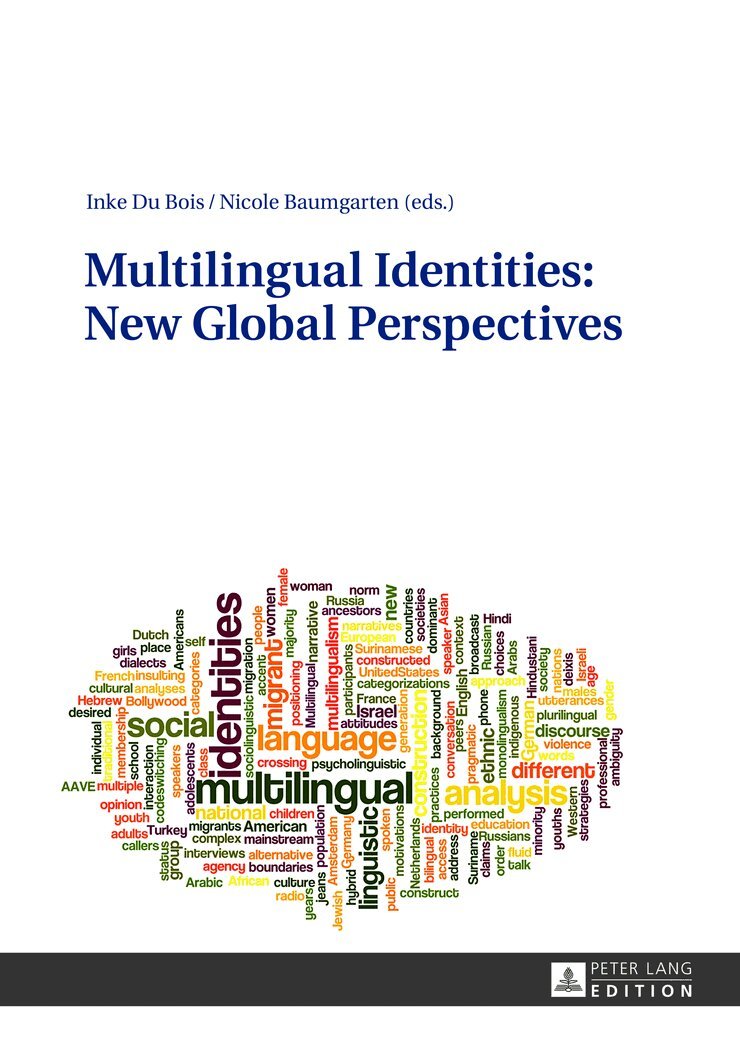
The contributions in this volume shed light on lived multilingualism around the globe. A small, but still representative selection of the multitude of migrant experiences, all studies share the intertwining of geographical mobility and non-mainstream linguistic practices which serves as a resource of agency and promotes alternative multiple identities of the immigrant speakers. This volume is based on the two core tenets of sociolinguistic identity research. First, it accepts the idea that identities or sub-identities are in a sense pre-given and can be formulated through membership categories. Second, identities are viewed as being enacted and performed, thus constituting social realities. In the social construction of identity, national and linguistic boundaries dissolve. The originating countries of the participants (and/or their ancestors) in the studies of this volume include Argentina, Ethiopia, Yugoslavia, Russia, Morocco, the Phillipines, Korea, Kazakhstan, Suriname and India. The countries of immigration include Germany, the USA, Israel, France and the Netherlands.