
Ira Sharkansky – författare
Visar alla böcker från författaren . Handla med fri frakt och snabb leverans.
19 produkter
19 produkter
Inbunden, Engelska, 1999
1 041 kr
Skickas inom 10-15 vardagar
Sharkansky asserts that the use of ambiguity and other forms of coping are more suitable than problem solving in dealing with certain kinds of public problems. However, there are costs as well as benefits associated with these less than perfect ways of policy making. Sharkansky's approach conveys both optimism and pessimism. The bright side is that ambiguity works; the dark side is not so much its disadvantages as the realization that many commentators and practitioners of the craft seem unwilling to recognize its advantages and appear unwilling to promote its use for problems where it might be most useful.Ambiguities surrounding the name of Jerusalem lead to insights and possibilities with respect to the city's future, as well as with respect to other disputes involved in the peace process between Israel and its neighbors. Ambiguities also appear in sophisticated modes of social science, and they raise the question, if research is unclear, can policy making be substantially different? As Sharkansky makes clear, there are negative as well as positive aspects to coping and ambiguity, and he suggests ways of dealing with the disadvantages. This frontal attack on widely advocated, conventional modes of thinking about public problems and policy making will be stimulating to students, researchers, and policy makers dealing with Israeli-Arab issues specifically and policy issues generally.
Inbunden, Engelska, 2000
1 247 kr
Skickas inom 10-15 vardagar
Prominent political theorist Ira Sharkansky looks at the intersection of religion and politics, using the case of Israel—where a chief rabbi officiates along with a prime minister—to examine how the two inform each other.Focusing more on similarities than differences, Sharkansky demonstrates that both religion and politics can justify their position on the moral high ground. Both are involved in shaping our values and standard of living; however, neither religion nor politics can claim a monopoly of virtue: Political demagogues have their religious equivalents in self-serving prophets and false messiahs, and politicians and religious leaders both may violate the morality that they preach. Sharkansky examines the place of intellectual certainty, doubt, charisma, and passion in both realms. He argues that Israel, among other Western democracies where politics and religion intersect, supports a successful fusion of the two.
Inbunden, Engelska, 2005
2 404 kr
Skickas inom 10-15 vardagar
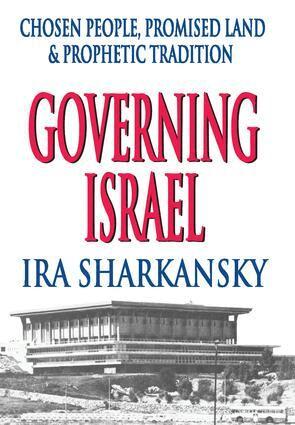
Israeli politics and policymaking reflect themes long imbedded in Jewish culture. The concepts of Chosen People and Promised Land, and their meaning in Christian as well as Jewish religious traditions, assure that Israel is perpetually in the international spotlight. They also impose a sense of distinctiveness on the Israeli population. Some Israelis trumpet their country's accomplishments with unrestrained superlatives. Social critics accuse Israel of having the worst of the world's conditions. In this they reflect another trait that seems to have been inherited from the ancients: the prophetic tradition of extreme self-criticism. In reality, much of what occurs in Israel is similar to what occurs in countries that share its characteristics: democracy, western culture, and an advanced level of economic development. Such an idea may seem bizarre alongside headlines about suicide bombings and the country's aggressive defensive posture. This misses what is normal about Israel. In Israel policymakers weigh benefits and costs of various options, and generally choose something moderate, just as they do elsewhere. But this reality does not dim the rhetoric of politics, where hyperbole frequently seems more evident than rational discourse. Sharkansky discusses three central issues in Israeli public affairs: religion, national security, and social policy. He describes how policymakers relate to these issue and themes. Major problems may not be solved, but they are managed in a way that is tolerable. It is in this trait that Israel resembles other western democracies. In sum, biblical themes affect Israel's political rhetoric more than they affect the way officials actually work out their problems. Pragmatic coping with worldly realities generally overcomes emotional expressions that convey ingredients of spirituality.
Inbunden, Engelska, 2007
2 404 kr
Skickas inom 10-15 vardagar
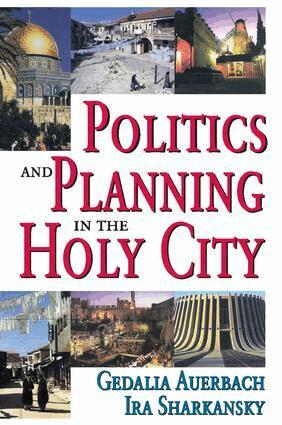
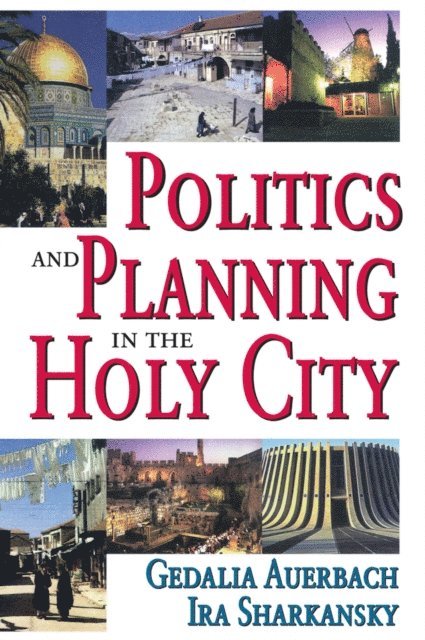
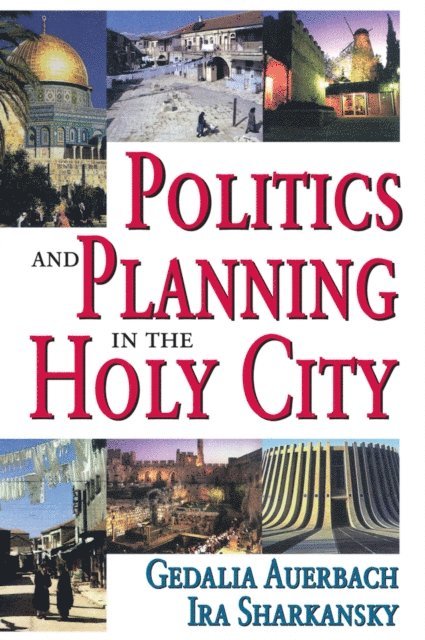
Jerusalem is not just another city that illustrates the conflict between interests of professional planners and competing political perspectives. It is the Holy City, with a history of some 3,000 years. Moreover, numerous layers of historical remains have importance for intense and competitive religious and national interests. Israelis claim it as the capital of their country, and Palestinians want it--or part of it--as the capital of their not yet created state.Jerusalem is also a place where more than 700,000 people live, and the center of a metropolitan area with more than twice that number. Along with religious and national interests, there are the customary conflicts between what various groups--property developers, politicians, professional planners, neighborhood residents, and environmental activists--want to do with the land. Politics and Planning in the Holy City describes and analyzes the tensions between politics and planning.The authors tackle the economic, social, and political contexts that shape conflicts. Such problems include deciding what should be called "Jerusalem" and difficulties surrounding the construction of a defense barrier to protect Israelis from Palestinian terrorists--in the framework of a multicultural city where 30 to 40 percent of its residents are Palestinians. There is dissent over locating rail lines to the city, as some interests want them here, there, or nowhere, and over building a light rail line within a city already crowded and beset with conflicting interests. The creation of a football stadium is another venue for conflict, as many religious Jews view sports as a threat to their way of life.Issues include locating a site for housing new immigrants, as few Jerusalemites want large numbers of newcomers in their neighborhoods, and deciding which sites merit preservation in a city with many deserving candidates, but severely limited resources. This volume will attract urban specialists as well as those concerned with larger political issues.
Inbunden, Engelska, 1996
2 765 kr
Skickas inom 10-15 vardagar
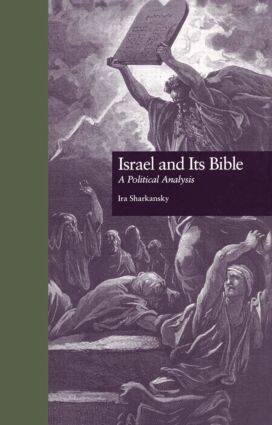
First Published in 1996. This study provides a political viewpoint on Israel and the Bible. It covers reading the Bible politically as well as considering if it has political reality. Part II extends to discuss Moses as a political leader and David as a builder of a state. Part III focuses more on the modern relevance of Biblical politics, Jewish vitality and the Case of Jerusalem.
Inbunden, Engelska, 1987
2 476 kr
Skickas inom 10-15 vardagar
The resurgence of political economy as an important topic reflects the deep interpenetration of politics and economics. There are few economic issues of consequence that are not shaped by government decisions, and there are few governments whose agendas are not dominated by economic issues. No country reflects the interpenetration of politics and economics as much as Israel.In this analysis, Ira Sharkansky examines the extensive involvement of the Israeli government in the country's economy, reflected in governmental expenditures that exceed the gross national product, intimate links between governmental activity and Israeli's standard of living, high inflation and other economic problems, and policymaking behaviors that include entrepreneurialism and indirection. He explores the strategic points of Israel's political economy, pursuing a qualitative analysis of Israeli problems and strategies for dealing with them. Those interested in policy analysis, political economy, comparative politics, comparative public administration, and Israeli politics will find this book invaluable.Contents: The Political Economy of Israel; What is the Israeli State? How Large is the Government Budget?; Israel's Standard of Living; Israeli Municipalities: Local Initiative amidst Central Controls; Who Gets What amidst High Inflation? Winners and Losers in the Israeli Budget 1978-1984; Conundrums of Israel's Political Economy: Problems without Solutions; Public Sector Entrepreneurialism; Policymaking by Indirection; Perspective on Israel's Political Economy.
E-bok
PDF, Engelska, 2014891 kr
Läs direkt efter köp
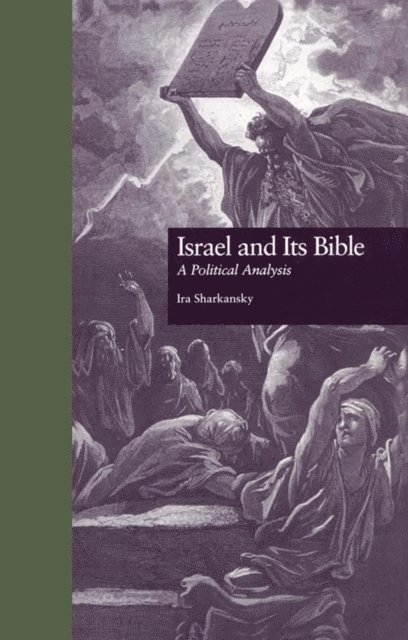
First Published in 1996. This study provides a political viewpoint on Israel and the Bible. It covers reading the Bible politically as well as considering if it has political reality. Part II extends to discuss Moses as a political leader and David as a builder of a state. Part III focuses more on the modern relevance of Biblical politics, Jewish vitality and the Case of Jerusalem.
E-bok
Engelska, 2014891 kr
Läs direkt efter köp
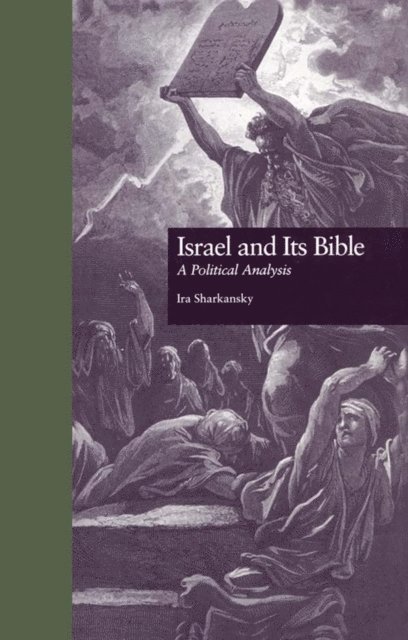
First Published in 1996. This study provides a political viewpoint on Israel and the Bible. It covers reading the Bible politically as well as considering if it has political reality. Part II extends to discuss Moses as a political leader and David as a builder of a state. Part III focuses more on the modern relevance of Biblical politics, Jewish vitality and the Case of Jerusalem.
Häftad, Engelska, 2017
718 kr
Skickas inom 10-15 vardagar
Israeli politics and policymaking reflect themes long imbedded in Jewish culture. The concepts of Chosen People and Promised Land, and their meaning in Christian as well as Jewish religious traditions, assure that Israel is perpetually in the international spotlight. They also impose a sense of distinctiveness on the Israeli population. Some Israelis trumpet their country's accomplishments with unrestrained superlatives. Social critics accuse Israel of having the worst of the world's conditions. In this they reflect another trait that seems to have been inherited from the ancients: the prophetic tradition of extreme self-criticism. In reality, much of what occurs in Israel is similar to what occurs in countries that share its characteristics: democracy, western culture, and an advanced level of economic development. Such an idea may seem bizarre alongside headlines about suicide bombings and the country's aggressive defensive posture. This misses what is normal about Israel. In Israel policymakers weigh benefits and costs of various options, and generally choose something moderate, just as they do elsewhere. But this reality does not dim the rhetoric of politics, where hyperbole frequently seems more evident than rational discourse. Sharkansky discusses three central issues in Israeli public affairs: religion, national security, and social policy. He describes how policymakers relate to these issue and themes. Major problems may not be solved, but they are managed in a way that is tolerable. It is in this trait that Israel resembles other western democracies. In sum, biblical themes affect Israel's political rhetoric more than they affect the way officials actually work out their problems. Pragmatic coping with worldly realities generally overcomes emotional expressions that convey ingredients of spirituality.
Häftad, Engelska, 2017
718 kr
Skickas inom 10-15 vardagar
Jerusalem is not just another city that illustrates the conflict between interests of professional planners and competing political perspectives. It is the Holy City, with a history of some 3,000 years. Moreover, numerous layers of historical remains have importance for intense and competitive religious and national interests. Israelis claim it as the capital of their country, and Palestinians want it--or part of it--as the capital of their not yet created state.Jerusalem is also a place where more than 700,000 people live, and the center of a metropolitan area with more than twice that number. Along with religious and national interests, there are the customary conflicts between what various groups--property developers, politicians, professional planners, neighborhood residents, and environmental activists--want to do with the land. Politics and Planning in the Holy City describes and analyzes the tensions between politics and planning.The authors tackle the economic, social, and political contexts that shape conflicts. Such problems include deciding what should be called "Jerusalem" and difficulties surrounding the construction of a defense barrier to protect Israelis from Palestinian terrorists--in the framework of a multicultural city where 30 to 40 percent of its residents are Palestinians. There is dissent over locating rail lines to the city, as some interests want them here, there, or nowhere, and over building a light rail line within a city already crowded and beset with conflicting interests. The creation of a football stadium is another venue for conflict, as many religious Jews view sports as a threat to their way of life.Issues include locating a site for housing new immigrants, as few Jerusalemites want large numbers of newcomers in their neighborhoods, and deciding which sites merit preservation in a city with many deserving candidates, but severely limited resources. This volume will attract urban specialists as well as those concerned with larger political issues.
Häftad, Engelska, 2017
739 kr
Skickas inom 10-15 vardagar
The resurgence of political economy as an important topic reflects the deep interpenetration of politics and economics. There are few economic issues of consequence that are not shaped by government decisions, and there are few governments whose agendas are not dominated by economic issues. No country reflects the interpenetration of politics and economics as much as Israel.In this analysis, Ira Sharkansky examines the extensive involvement of the Israeli government in the country's economy, reflected in governmental expenditures that exceed the gross national product, intimate links between governmental activity and Israeli's standard of living, high inflation and other economic problems, and policymaking behaviors that include entrepreneurialism and indirection. He explores the strategic points of Israel's political economy, pursuing a qualitative analysis of Israeli problems and strategies for dealing with them. Those interested in policy analysis, political economy, comparative politics, comparative public administration, and Israeli politics will find this book invaluable.Contents: The Political Economy of Israel; What is the Israeli State? How Large is the Government Budget?; Israel's Standard of Living; Israeli Municipalities: Local Initiative amidst Central Controls; Who Gets What amidst High Inflation? Winners and Losers in the Israeli Budget 1978-1984; Conundrums of Israel's Political Economy: Problems without Solutions; Public Sector Entrepreneurialism; Policymaking by Indirection; Perspective on Israel's Political Economy.
Häftad, Engelska, 2016
787 kr
Skickas inom 10-15 vardagar
First Published in 1996. This study provides a political viewpoint on Israel and the Bible. It covers reading the Bible politically as well as considering if it has political reality. Part II extends to discuss Moses as a political leader and David as a builder of a state. Part III focuses more on the modern relevance of Biblical politics, Jewish vitality and the Case of Jerusalem.
E-bok
Engelska, 2017858 kr
Läs direkt efter köp
The resurgence of political economy as an important topic reflects the deep interpenetration of politics and economics. There are few economic issues of consequence that are not shaped by government decisions, and there are few governments whose agendas are not dominated by economic issues. No country reflects the interpenetration of politics and economics as much as Israel.In this analysis, Ira Sharkansky examines the extensive involvement of the Israeli government in the country''s economy, reflected in governmental expenditures that exceed the gross national product, intimate links between governmental activity and Israeli''s standard of living, high inflation and other economic problems, and policymaking behaviors that include entrepreneurialism and indirection. He explores the strategic points of Israel''s political economy, pursuing a qualitative analysis of Israeli problems and strategies for dealing with them. Those interested in policy analysis, political economy, comparative politics, comparative public administration, and Israeli politics will find this book invaluable.Contents: The Political Economy of Israel; What is the Israeli State? How Large is the Government Budget?; Israel''s Standard of Living; Israeli Municipalities: Local Initiative amidst Central Controls; Who Gets What amidst High Inflation? Winners and Losers in the Israeli Budget 1978-1984; Conundrums of Israel''s Political Economy: Problems without Solutions; Public Sector Entrepreneurialism; Policymaking by Indirection; Perspective on Israel''s Political Economy.
E-bok
PDF, Engelska, 2017858 kr
Läs direkt efter köp
The resurgence of political economy as an important topic reflects the deep interpenetration of politics and economics. There are few economic issues of consequence that are not shaped by government decisions, and there are few governments whose agendas are not dominated by economic issues. No country reflects the interpenetration of politics and economics as much as Israel.In this analysis, Ira Sharkansky examines the extensive involvement of the Israeli government in the country''s economy, reflected in governmental expenditures that exceed the gross national product, intimate links between governmental activity and Israeli''s standard of living, high inflation and other economic problems, and policymaking behaviors that include entrepreneurialism and indirection. He explores the strategic points of Israel''s political economy, pursuing a qualitative analysis of Israeli problems and strategies for dealing with them. Those interested in policy analysis, political economy, comparative politics, comparative public administration, and Israeli politics will find this book invaluable.Contents: The Political Economy of Israel; What is the Israeli State? How Large is the Government Budget?; Israel''s Standard of Living; Israeli Municipalities: Local Initiative amidst Central Controls; Who Gets What amidst High Inflation? Winners and Losers in the Israeli Budget 1978-1984; Conundrums of Israel''s Political Economy: Problems without Solutions; Public Sector Entrepreneurialism; Policymaking by Indirection; Perspective on Israel''s Political Economy.
E-bok
Engelska, 2017858 kr
Läs direkt efter köp
Jerusalem is not just another city that illustrates the conflict between interests of professional planners and competing political perspectives. It is the Holy City, with a history of some 3,000 years. Moreover, numerous layers of historical remains have importance for intense and competitive religious and national interests. Israelis claim it as the capital of their country, and Palestinians want it--or part of it--as the capital of their not yet created state.Jerusalem is also a place where more than 700,000 people live, and the center of a metropolitan area with more than twice that number. Along with religious and national interests, there are the customary conflicts between what various groups--property developers, politicians, professional planners, neighborhood residents, and environmental activists--want to do with the land. Politics and Planning in the Holy City describes and analyzes the tensions between politics and planning.The authors tackle the economic, social, and political contexts that shape conflicts. Such problems include deciding what should be called Jerusalem and difficulties surrounding the construction of a defense barrier to protect Israelis from Palestinian terrorists--in the framework of a multicultural city where 30 to 40 percent of its residents are Palestinians. There is dissent over locating rail lines to the city, as some interests want them here, there, or nowhere, and over building a light rail line within a city already crowded and beset with conflicting interests. The creation of a football stadium is another venue for conflict, as many religious Jews view sports as a threat to their way of life.Issues include locating a site for housing new immigrants, as few Jerusalemites want large numbers of newcomers in their neighborhoods, and deciding which sites merit preservation in a city with many deserving candidates, but severely limited resources. This volume will attract urban specialists as well as those concerned with larger p
E-bok
PDF, Engelska, 2017858 kr
Läs direkt efter köp
Jerusalem is not just another city that illustrates the conflict between interests of professional planners and competing political perspectives. It is the Holy City, with a history of some 3,000 years. Moreover, numerous layers of historical remains have importance for intense and competitive religious and national interests. Israelis claim it as the capital of their country, and Palestinians want it--or part of it--as the capital of their not yet created state.Jerusalem is also a place where more than 700,000 people live, and the center of a metropolitan area with more than twice that number. Along with religious and national interests, there are the customary conflicts between what various groups--property developers, politicians, professional planners, neighborhood residents, and environmental activists--want to do with the land. Politics and Planning in the Holy City describes and analyzes the tensions between politics and planning.The authors tackle the economic, social, and political contexts that shape conflicts. Such problems include deciding what should be called Jerusalem and difficulties surrounding the construction of a defense barrier to protect Israelis from Palestinian terrorists--in the framework of a multicultural city where 30 to 40 percent of its residents are Palestinians. There is dissent over locating rail lines to the city, as some interests want them here, there, or nowhere, and over building a light rail line within a city already crowded and beset with conflicting interests. The creation of a football stadium is another venue for conflict, as many religious Jews view sports as a threat to their way of life.Issues include locating a site for housing new immigrants, as few Jerusalemites want large numbers of newcomers in their neighborhoods, and deciding which sites merit preservation in a city with many deserving candidates, but severely limited resources. This volume will attract urban specialists as well as those concerned with larger p
E-bok
Engelska, 2017845 kr
Läs direkt efter köp
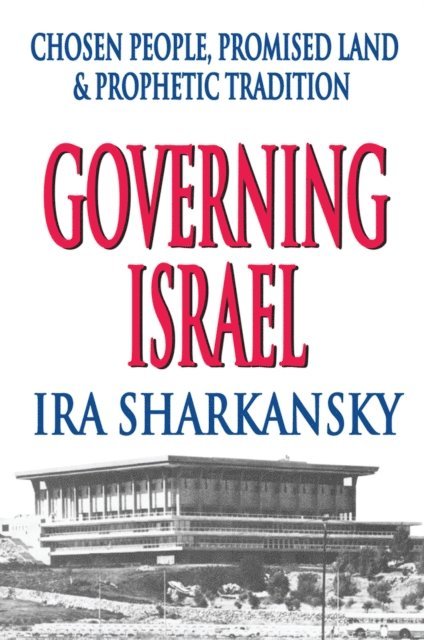
Israeli politics and policymaking reflect themes long imbedded in Jewish culture. The concepts of Chosen People and Promised Land, and their meaning in Christian as well as Jewish religious traditions, assure that Israel is perpetually in the international spotlight. They also impose a sense of distinctiveness on the Israeli population. Some Israelis trumpet their country''s accomplishments with unrestrained superlatives. Social critics accuse Israel of having the worst of the world''s conditions. In this they reflect another trait that seems to have been inherited from the ancients: the prophetic tradition of extreme self-criticism. In reality, much of what occurs in Israel is similar to what occurs in countries that share its characteristics: democracy, western culture, and an advanced level of economic development. Such an idea may seem bizarre alongside headlines about suicide bombings and the country''s aggressive defensive posture. This misses what is normal about Israel. In Israel policymakers weigh benefits and costs of various options, and generally choose something moderate, just as they do elsewhere. But this reality does not dim the rhetoric of politics, where hyperbole frequently seems more evident than rational discourse. Sharkansky discusses three central issues in Israeli public affairs: religion, national security, and social policy. He describes how policymakers relate to these issue and themes. Major problems may not be solved, but they are managed in a way that is tolerable. It is in this trait that Israel resembles other western democracies. In sum, biblical themes affect Israel''s political rhetoric more than they affect the way officials actually work out their problems. Pragmatic coping with worldly realities generally overcomes emotional expressions that convey ingredients of spirituality.
E-bok
PDF, Engelska, 2017845 kr
Läs direkt efter köp
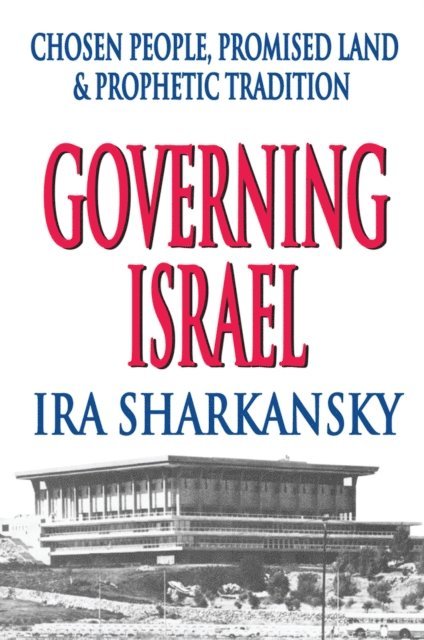
Israeli politics and policymaking reflect themes long imbedded in Jewish culture. The concepts of Chosen People and Promised Land, and their meaning in Christian as well as Jewish religious traditions, assure that Israel is perpetually in the international spotlight. They also impose a sense of distinctiveness on the Israeli population. Some Israelis trumpet their country''s accomplishments with unrestrained superlatives. Social critics accuse Israel of having the worst of the world''s conditions. In this they reflect another trait that seems to have been inherited from the ancients: the prophetic tradition of extreme self-criticism. In reality, much of what occurs in Israel is similar to what occurs in countries that share its characteristics: democracy, western culture, and an advanced level of economic development. Such an idea may seem bizarre alongside headlines about suicide bombings and the country''s aggressive defensive posture. This misses what is normal about Israel. In Israel policymakers weigh benefits and costs of various options, and generally choose something moderate, just as they do elsewhere. But this reality does not dim the rhetoric of politics, where hyperbole frequently seems more evident than rational discourse. Sharkansky discusses three central issues in Israeli public affairs: religion, national security, and social policy. He describes how policymakers relate to these issue and themes. Major problems may not be solved, but they are managed in a way that is tolerable. It is in this trait that Israel resembles other western democracies. In sum, biblical themes affect Israel''s political rhetoric more than they affect the way officials actually work out their problems. Pragmatic coping with worldly realities generally overcomes emotional expressions that convey ingredients of spirituality.
Häftad, Engelska, 1991
395 kr
Tillfälligt slut
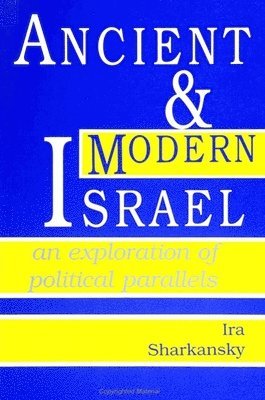
This book identifies and examines those parallels between ancient and modern Israel that help to clarify the conflicts apparent in modern Israel. It discusses such contemporary issues as the Arab uprising and the Israeli government's ambivalence in dealing with it; the government's inability to come to a permanent solution concerning the territories occupied in 1967; and the lack of a clear-cut consensus in the 1988 elections.By comparing these and other modern issues to those of ancient Israel, Sharkansky shows that Israel's deeply-rooted problems as a nation are likely to continue, occasionally punctuated by violent outbursts.