Irene Bloom - Böcker
Visar alla böcker från författaren Irene Bloom. Handla med fri frakt och snabb leverans.
5 produkter
5 produkter
958 kr
Skickas inom 3-6 vardagar
731 kr
Skickas inom 3-6 vardagar
The essays gathered here, in addition to those by editors Wm. Theodore de Bary and Irene Bloob, are written by leading scholars of Asian cultures--among them Donald Keene, Peter Awn, Barbara Stoler Miller, Ainslie Embree, Burton Watson, C.T. Hsia, Paul Anderer, and others. They introduce classics from the Islamic, Indian, Chinese, and Japanese traditions, providing entree to texts which have emerged as monuments of Asian thought and literature. Among the works discussed are the Qu'ran, the philosophy of history of Ibn Khaldun, the Upanishads, the epic Mahabarata, the philosopher Mencius, the Lotus Sutra, T'and Poetry, the Tale of Genji, and the poet Basho.
337 kr
Skickas inom 7-10 vardagar
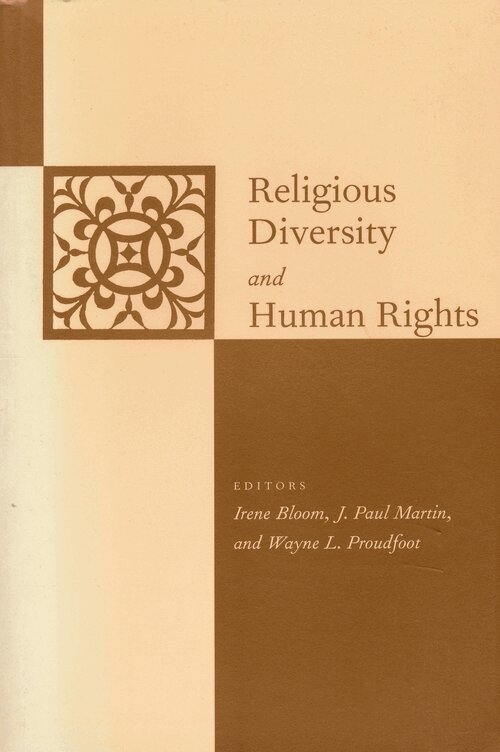
An invaluable resource for readers seeking to understand how traditional religious ideas and values relate to modern ideas of human rights, how Western models of human rights are perceived in non-Western traditions, and what these traditions may have to offer in the realm of human rights. Together, the authors work to reassess both the rich and diverse resources of the major religious traditions and some of the most challenging problems of the contemporary world. The collection's central theme is the way in which the diversity of religious beliefs and practices-from Judaism, Christianity, and Islam to Hinduism, Buddhism, and Confucianism-relates and can come in conflict with the moral universalism implied by the concept of human rights.
1 563 kr
Skickas inom 7-10 vardagar
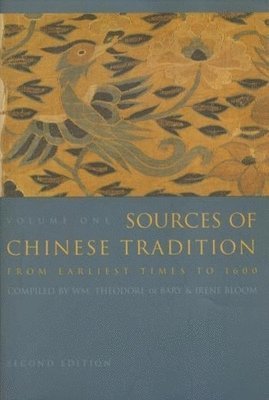
A collection of seminal primary readings on the social, intellectual, and religious traditions of China, Sources of Chinese Tradition, Volume 1 has been widely used and praised for almost forty years as an authoritative resource for scholars and students and as a thorough and engaging introduction for general readers. Here at last is a completely revised and expanded edition of this classic sourcebook, compiled by noted China scholars Wm. Theodore de Bary and Irene Bloom. Updated to reflect recent scholarly developments, with extensive material on popular thought and religion, social roles, and women's education, this edition features new translations of more than half the works from the first edition, as well as many new selections. Arranged chronologically, this anthology is divided into four parts, beginning at the dawn of literate Chinese civilization with the Oracle-Bone inscriptions of the late Shang dynasty (1571-1045 B.C.E.) and continuing through the end of the Ming dynasty (C.E. 1644). Each chapter has an introduction that provides useful historical context and offers interpretive strategies for understanding the readings.The first part, The Chinese Tradition in Antiquity, considers the early development of Chinese civilization and includes selections from Confucius's Analects, the texts of Mencius and Laozi, as well as other key texts from the Confucian, Daoist, and Legalist schools. Part 2, The Making of a Classical Culture, focuses on Han China with readings from the Classic of Changes (I Jing), the Classic of Filiality, major Han syntheses, and the great historians of the Han dynasty. The development of Buddhism, from the earliest translations from Sanskrit to the central texts of the Chan school (which became Zen in Japan), is the subject of the third section of the book. Titled Later Daoism and Mahayana Buddhism in China, this part also covers the teachings of Wang Bi, Daoist religion, and texts of the major schools of Buddhist doctrine and practice. The final part, The Confucian Revival and Neo-Confucianism, details the revival of Confucian thought in the Tang, Song, and Ming periods, with historical documents that link philosophical thought to political, social, and educational developments in late imperial China.With annotations, a detailed chronology, glossary, and a new introduction by the editors, Sources of Chinese Tradition will continue to be a standard resource, guidebook, and introduction to Chinese civilization well into the twenty-first century.
573 kr
A collection of seminal primary readings on the social, intellectual, and religious traditions of China, Sources of Chinese Tradition, Volume 1 has been widely used and praised for almost forty years as an authoritative resource for scholars and students and as a thorough and engaging introduction for general readers. Here at last is a completely revised and expanded edition of this classic sourcebook, compiled by noted China scholars Wm. Theodore de Bary and Irene Bloom. Updated to reflect recent scholarly developments, with extensive material on popular thought and religion, social roles, and women's education, this edition features new translations of more than half the works from the first edition, as well as many new selections. Arranged chronologically, this anthology is divided into four parts, beginning at the dawn of literate Chinese civilization with the Oracle-Bone inscriptions of the late Shang dynasty (1571-1045 B.C.E.) and continuing through the end of the Ming dynasty (C.E. 1644). Each chapter has an introduction that provides useful historical context and offers interpretive strategies for understanding the readings.The first part, The Chinese Tradition in Antiquity, considers the early development of Chinese civilization and includes selections from Confucius's Analects, the texts of Mencius and Laozi, as well as other key texts from the Confucian, Daoist, and Legalist schools. Part 2, The Making of a Classical Culture, focuses on Han China with readings from the Classic of Changes (I Jing), the Classic of Filiality, major Han syntheses, and the great historians of the Han dynasty. The development of Buddhism, from the earliest translations from Sanskrit to the central texts of the Chan school (which became Zen in Japan), is the subject of the third section of the book. Titled Later Daoism and Mahayana Buddhism in China, this part also covers the teachings of Wang Bi, Daoist religion, and texts of the major schools of Buddhist doctrine and practice. The final part, The Confucian Revival and Neo-Confucianism, details the revival of Confucian thought in the Tang, Song, and Ming periods, with historical documents that link philosophical thought to political, social, and educational developments in late imperial China.With annotations, a detailed chronology, glossary, and a new introduction by the editors, Sources of Chinese Tradition will continue to be a standard resource, guidebook, and introduction to Chinese civilization well into the twenty-first century.