Iris Seri-Hersch – författare
Visar alla böcker från författaren Iris Seri-Hersch. Handla med fri frakt och snabb leverans.
3 produkter
3 produkter
Häftad, Franska, 2018
361 kr
Skickas inom 5-8 vardagar
E-bok
PDF, Franska, 2018385 kr
Läs direkt efter köp
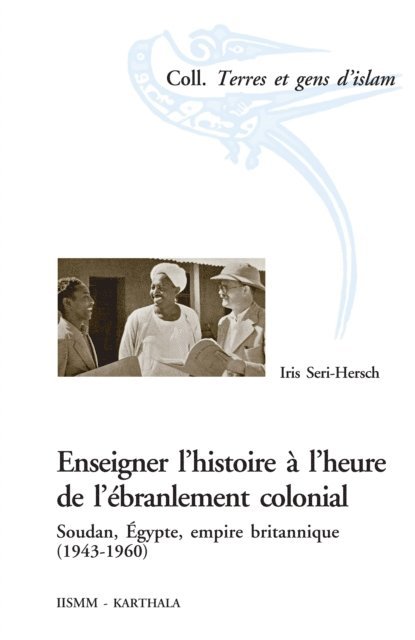
Alors que les combats de la Seconde Guerre mondiale achevaient de dissoudre le mythe de la supériorité de l’homme blanc, le Soudan était disputé par ses deux maîtres officiels, la Grande-Bretagne et l’Égypte. Le territoire s’acheminait-il vers l’indépendance ou une union politique avec son voisin méditerranéen ? La rivalité anglo-égyptienne, couplée à un impérialisme britannique soucieux de « préparer » les sociétés africaines à la souveraineté nationale, déboucha sur l’unification hâtive du Nord et du Sud-Soudan en 1947. Parvenues à des positions de pouvoir une décennie avant l’indépendance (1956), les élites du Nord s’attachèrent à faire du Soudan, pays à forte pluralité ethnolinguistique et religieuse, un État-nation arabe et musulman.Dans ce contexte, un nouvel enseignement d’histoire fut élaboré pour les écoles élémentaires soudanaises. Quels en étaient les acteurs, les récits, les pratiques ? Cet ouvrage décortique les représentations, les apprentissages et les rapports sociaux sous-tendant la production et l’usage de manuels en langue arabe dans le Soudan colonial tardif. L’auteure propose également un éclairage comparatif sur l’histoire enseignée dans d’autres territoires de l’empire britannique en voie d’émiettement.Ce livre offre de nouvelles clés de compréhension d’une séquence charnière dans l’histoire du monde contemporain. Au regard de l’actualité plus récente, il montre quel rôle l’histoire scolaire a pu jouer dans l’éclatement du cadre national soudanais après 1956, aboutissant à la scission du Soudan en deux États en 2011.
Inbunden, Engelska, 2023
1 033 kr
Skickas inom 5-8 vardagar
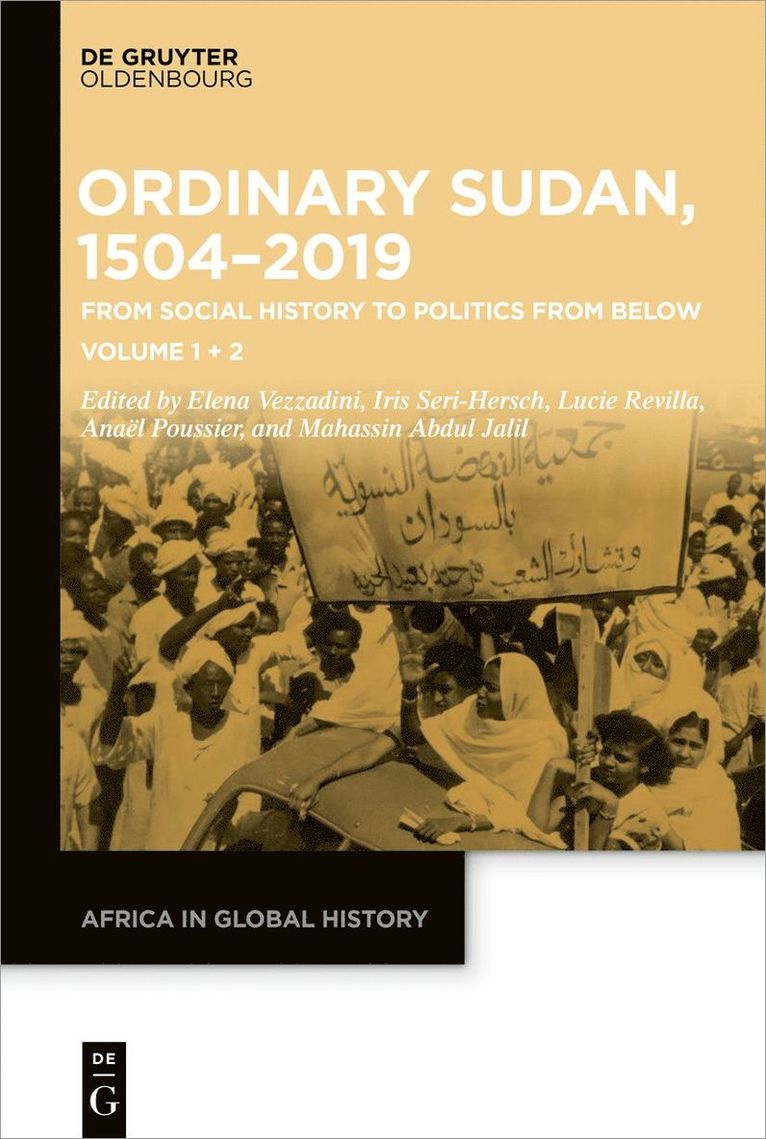
This book starts from the premise that the study of "exceptionally normal" women and men – as conceived by microhistory – has radical implications for understanding history and politics, and applies this notion to Sudan. Against a historiography dominated by elite actors and international agents, it examines both how ordinary people have brought about the most important political shifts in the country’s history (including the recent revolution in 2019) and how they have played a role in maintaining authoritarian regimes. It also explores how men and women have led their daily lives through a web of ordinary worries, desires and passions. The book includes contributions by historians, anthropologists, and political scientists who often have a dual commitment to Middle Eastern and African studies. While focusing on the complexity and nuances of Sudanese local lives in both the past and the present, it also connects Sudan and South Sudan with broader regional, global, and imperial trends. The book is divided into two volumes and six parts, ordered thematically. The first part tackles the entanglement between archives, social history, and power. The second focuses on women’s agency in history and politics from the Funj era to the recent 2018-2019 revolution. Part 3 includes contributions on the history and global connections of the Sudanese armed forces. In the second volume, part 4 intersects the themes of urban life, leisure, and colonial attitudes with queerness. In part 5, labour identities, practices, and institutions are discussed both in urban milieus and against the background of war and expropriation in rural areas. Finally, part 6 studies the construction of social consent under various self-styled Islamic regimes, as well as the emergence of alternative imaginaries and acts of citizenship in times of political openness.