Elena Vezzadini - Böcker
Visar alla böcker från författaren Elena Vezzadini. Handla med fri frakt och snabb leverans.
3 produkter
3 produkter
Del 24 - Eastern Africa Series
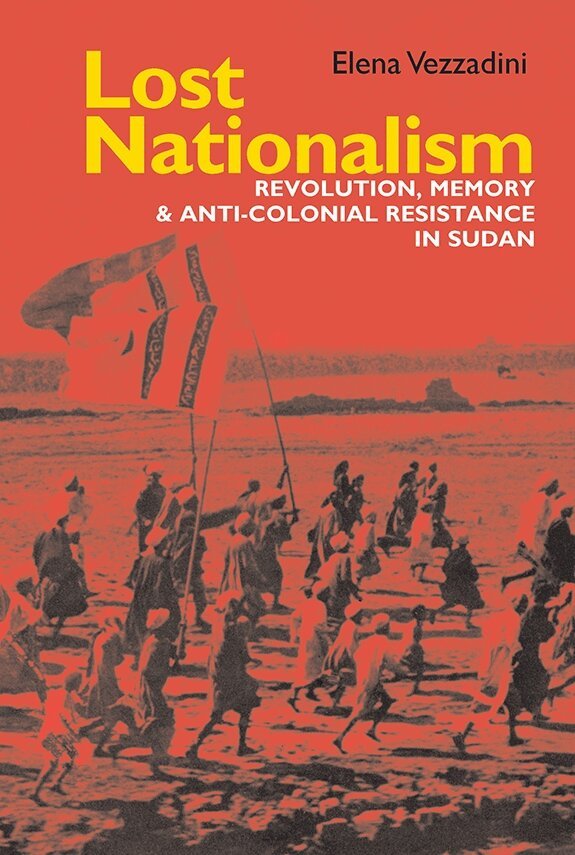
Lost Nationalism
Revolution, Memory and Anti-colonial Resistance in Sudan
Inbunden, Engelska, 2015
1 188 kr
Skickas inom 7-10 vardagar
Winner of the African Studies Association 2016 Bethwell A. Ogot Book Prize A lively account of the 1924 Revolution in Sudan and the way in which the colonial situation has affected its representation, a case in point inthe histories of nationalist anti-colonial movements in Africa and the Middle East.The 1924 Revolution was a watershed in Sudanese history, the first episode of anti-colonial resistance in which a nationalist ideology was explicitly used, and part of a global wave of anti-colonial movements after the First WorldWar that can be seen as the "spring of the colonial nations".This detailed account of the uprising, and its eventual failure, explores the cosmopolitan nationalism embraced by the White Flag League, the movement that sparked the revolution, and its ability to attract people from diverse origins, classes and professions. It examines the international genesis of the movement; the strategies put in place to spread it in different areas of Sudan and among different groups; the movement's inclusive ideology and its definition of the Sudanese nation, as well as the limitations to its inclusiveness; and the way in which this episode reveals deeper questions relating to origins, social hierarchies and power. The book also unravels the complex history of the memory of 1924, the politics of its representation and the underlying power struggles that saw 1924 largely lost from the historical record.ElenaVezzadini is a historian of modern Sudan affiliated to the Centre for Middle Eastern and Islamic Studies, University of Bergen, and Institut des Mondes Africains, Paris.
Del 24 - Eastern Africa Series
Lost Nationalism
Revolution, Memory and Anti-colonial Resistance in Sudan
Häftad, Engelska, 2019
348 kr
Skickas inom 10-15 vardagar
Winner of the African Studies Association 2016 Bethwell A. Ogot Book Prize A lively account of the 1924 Revolution in Sudan and the way in which the colonial situation has affected its representation, a case in point inthe histories of nationalist anti-colonial movements in Africa and the Middle East.Winner of the African Studies Association 2016 Bethwell A. Ogot Book Prize The 1924 Revolution was a watershed in Sudanese history, the first episode of anti-colonial resistance in which a nationalist ideology was explicitly used, and part of a global wave of anti-colonial movements after the First World War that can be seen as the "spring of the colonial nations".This detailed account of the uprising, and its eventual failure, explores the cosmopolitan nationalism embraced by the White Flag League, the movement that sparked the revolution, and its ability to attract people from diverse origins, classes and professions. It examines the international genesisof the movement; the strategies put in place to spread it in different areas of Sudan and among different groups; the movement's inclusive ideology and its definition of the Sudanese nation, as well as the limitations to its inclusiveness; and the way in which this episode reveals deeper questions relating to origins, social hierarchies and power. The book also unravels the complex history of the memory of 1924, the politics of its representation and the underlying power struggles that saw 1924 largely lost from the historical record.Elena Vezzadini is a historian of modern Sudan affiliated to the CNRS, Institut des Mondes Africains, Paris.
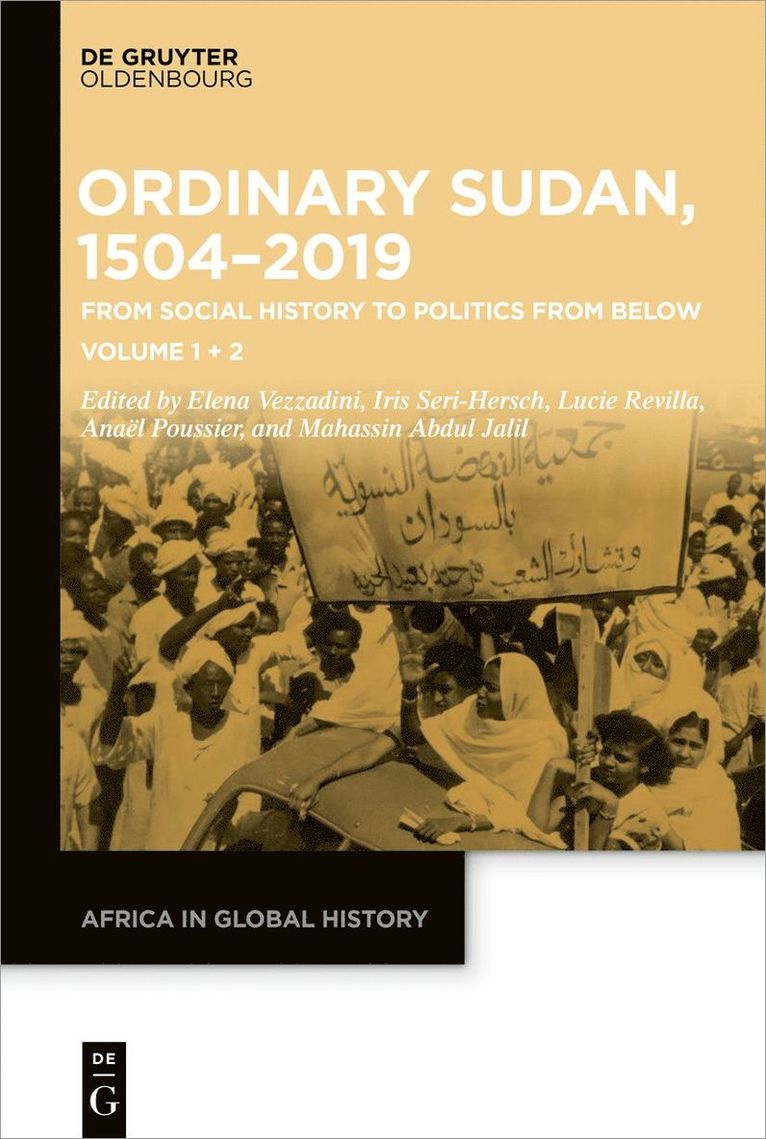
Ordinary Sudan, 1504–2019
From Social History to Politics from Below Volume 1 | Volume 2
Inbunden, Engelska, 2023
996 kr
Skickas inom 7-10 vardagar
This book starts from the premise that the study of "exceptionally normal" women and men – as conceived by microhistory – has radical implications for understanding history and politics, and applies this notion to Sudan. Against a historiography dominated by elite actors and international agents, it examines both how ordinary people have brought about the most important political shifts in the country’s history (including the recent revolution in 2019) and how they have played a role in maintaining authoritarian regimes. It also explores how men and women have led their daily lives through a web of ordinary worries, desires and passions. The book includes contributions by historians, anthropologists, and political scientists who often have a dual commitment to Middle Eastern and African studies. While focusing on the complexity and nuances of Sudanese local lives in both the past and the present, it also connects Sudan and South Sudan with broader regional, global, and imperial trends. The book is divided into two volumes and six parts, ordered thematically. The first part tackles the entanglement between archives, social history, and power. The second focuses on women’s agency in history and politics from the Funj era to the recent 2018-2019 revolution. Part 3 includes contributions on the history and global connections of the Sudanese armed forces. In the second volume, part 4 intersects the themes of urban life, leisure, and colonial attitudes with queerness. In part 5, labour identities, practices, and institutions are discussed both in urban milieus and against the background of war and expropriation in rural areas. Finally, part 6 studies the construction of social consent under various self-styled Islamic regimes, as well as the emergence of alternative imaginaries and acts of citizenship in times of political openness.