Isabel Paterson - Böcker
Visar alla böcker från författaren Isabel Paterson. Handla med fri frakt och snabb leverans.
9 produkter
9 produkter
437 kr
Skickas inom 5-8 vardagar
312 kr
Skickas inom 5-8 vardagar
453 kr
Skickas inom 5-8 vardagar
2 222 kr
Skickas inom 10-15 vardagar
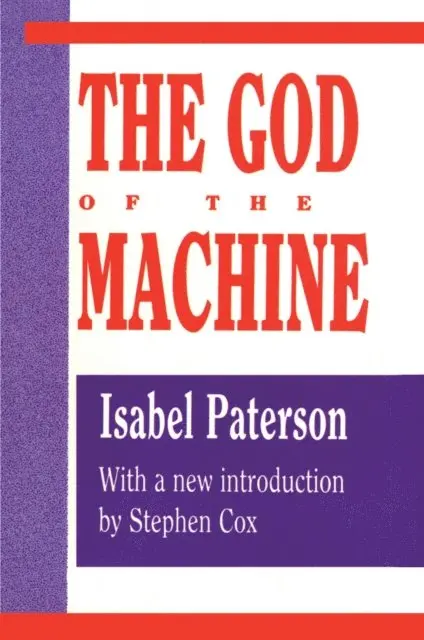
The God of the Machine presents an original theory of history and a bold defense of individualism as the source of moral and political progress. When it was published in 1943, Isabel Paterson's work provided fresh intellectual support for the endangered American belief in individual rights, limited government, and economic freedom. The crisis of today's collectivized nations would not have surprised Paterson; in The God of the Machine, she had explored the reasons for collectivism's failure. Her book placed her in the vanguard of the free-enterprise movement now sweeping the world.Paterson sees the individual creative mind as the dynamo of history, and respect for the individual's God-given rights as the precondition for the enormous release of energy that produced the modern world. She sees capitalist institutions as the machinery through which human energy works, and government as a device properly used merely to cut off power to activities that threaten personal liberty.Paterson applies her general theory to particular issues in contemporary life, such as education, .social welfare, and the causes of economic distress. She severely criticizes all but minimal application of government, including governmental interventions that most people have long taken for granted. The God of the Machine offers a challenging perspective on the continuing, worldwide debate about the nature of freedom, the uses of power, and the prospects of human betterment.Stephen Cox's substantial introduction to The God of the Machine is a comprehensive and enlightening account of Paterson's colorful life and work. He describes The God of the Machine as "not just theory, but rhapsody, satire, diatribe, poetic narrative." Paterson's work continues to be relevant because "it exposes the moral and practical failures of collectivism, failures that are now almost universally acknowledged but are still far from universally understood." The book will be essential to students of American history, political theory, and literature.
2 150 kr
Skickas inom 10-15 vardagar
In The Great Gatsby, F.Scott Fitzgerald told the tale of a high society love affair that became an iconic depiction of life during the Jazz Age of the 1920s. After the 1929 stock market crash, life took an ironic downturn even for the wealthy. Written in light of these events, The Golden Vanity is both a social comedy of errors and a sardonic view of the Jazz Age and the crash, told through the lives of three self-assertive women who could not be more different. Cousins Gina, Geraldine, and Mysie are all inhabitants of New York City, but their lives could not be more different. A secretary starts a new job rife with romantic entanglements, a best-selling novelist is undermined by her husband's attempts to win big on the stock market, and an actress leads an unconventional, yet surprisingly intellectual, life. Isabel Paterson follows their stories through the economic collapse and demonstrates, with sophisticated wit, that "doing what everyone else is doing" is not the best way to survive such times. Originally published in 1934, The Golden Vanity has been out of print for far too long. A new introduction by Stephen Cox illuminates the novel's important historical footprint and places it in a modern context.
787 kr
Skickas inom 10-15 vardagar
In The Great Gatsby, F.Scott Fitzgerald told the tale of a high society love affair that became an iconic depiction of life during the Jazz Age of the 1920s. After the 1929 stock market crash, life took an ironic downturn even for the wealthy. Written in light of these events, The Golden Vanity is both a social comedy of errors and a sardonic view of the Jazz Age and the crash, told through the lives of three self-assertive women who could not be more different. Cousins Gina, Geraldine, and Mysie are all inhabitants of New York City, but their lives could not be more different. A secretary starts a new job rife with romantic entanglements, a best-selling novelist is undermined by her husband's attempts to win big on the stock market, and an actress leads an unconventional, yet surprisingly intellectual, life. Isabel Paterson follows their stories through the economic collapse and demonstrates, with sophisticated wit, that "doing what everyone else is doing" is not the best way to survive such times. Originally published in 1934, The Golden Vanity has been out of print for far too long. A new introduction by Stephen Cox illuminates the novel's important historical footprint and places it in a modern context.
576 kr
Skickas inom 3-6 vardagar
719 kr
Skickas inom 10-15 vardagar
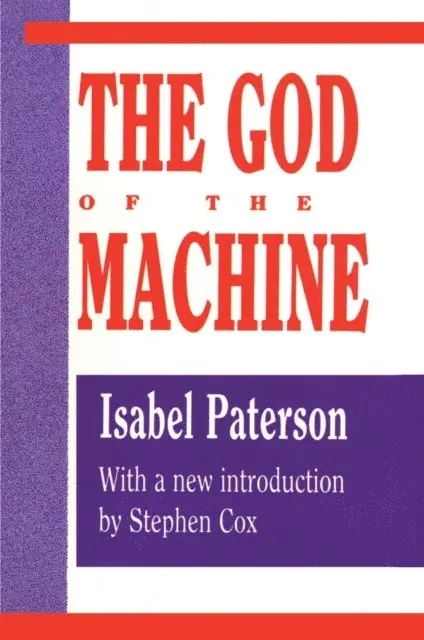
The God of the Machine presents an original theory of history and a bold defense of individualism as the source of moral and political progress. When it was published in 1943, Isabel Paterson's work provided fresh intellectual support for the endangered American belief in individual rights, limited government, and economic freedom. The crisis of today's collectivized nations would not have surprised Paterson; in The God of the Machine, she had explored the reasons for collectivism's failure. Her book placed her in the vanguard of the free-enterprise movement now sweeping the world.Paterson sees the individual creative mind as the dynamo of history, and respect for the individual's God-given rights as the precondition for the enormous release of energy that produced the modern world. She sees capitalist institutions as the machinery through which human energy works, and government as a device properly used merely to cut off power to activities that threaten personal liberty.Paterson applies her general theory to particular issues in contemporary life, such as education, .social welfare, and the causes of economic distress. She severely criticizes all but minimal application of government, including governmental interventions that most people have long taken for granted. The God of the Machine offers a challenging perspective on the continuing, worldwide debate about the nature of freedom, the uses of power, and the prospects of human betterment.Stephen Cox's substantial introduction to The God of the Machine is a comprehensive and enlightening account of Paterson's colorful life and work. He describes The God of the Machine as "not just theory, but rhapsody, satire, diatribe, poetic narrative." Paterson's work continues to be relevant because "it exposes the moral and practical failures of collectivism, failures that are now almost universally acknowledged but are still far from universally understood." The book will be essential to students of American history, political theory, and literature.
150 kr
Skickas inom 5-8 vardagar