Itty Abraham - Böcker
Visar alla böcker från författaren Itty Abraham. Handla med fri frakt och snabb leverans.
4 produkter
4 produkter
Illicit Flows and Criminal Things
States, Borders, and the Other Side of Globalization
Häftad, Engelska, 2005
270 kr
Skickas inom 7-10 vardagar
Illicit Flows and Criminal Things offers a new perspective on illegal transnational linkages, international relations, and the transnational. The contributors argue for a nuanced approach that recognizes the difference between "organized" crime and the thousands of illicit acts that take place across national borders every day. They distinguish between the illegal (prohibited by law) and the illicit (socially perceived as unacceptable), which are historically changeable and contested. Detailed case studies of arms smuggling, illegal transnational migration, the global diamond trade, borderland practices, and the transnational consumption of drugs take us to Asia, Africa, Latin America, Europe, and North America. They allow us to understand how states, borders, and the language of law enforcement produce criminality, and how people and goods which are labeled "illegal" move across regulatory spaces.
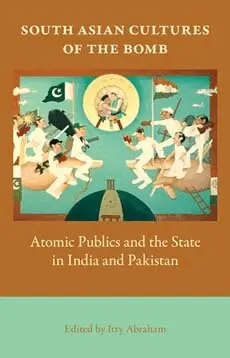
South Asian Cultures of the Bomb
Atomic Publics and the State in India and Pakistan
Häftad, Engelska, 2009
265 kr
Skickas inom 7-10 vardagar
Since their founding as independent nations, nuclear issues have been key elements of nationalism and the public sphere in both India and Pakistan. Yet the relationship between nuclear arms and civil society in the region is seldom taken into account in conventional security studies. These original and provocative essays examine the political and ideological components of national drives to possess and test nuclear weapons. Equal coverage for comparable issues in each country frames the volume as a genuine dialogue across this contested boundary.
1 164 kr
Skickas inom 7-10 vardagar
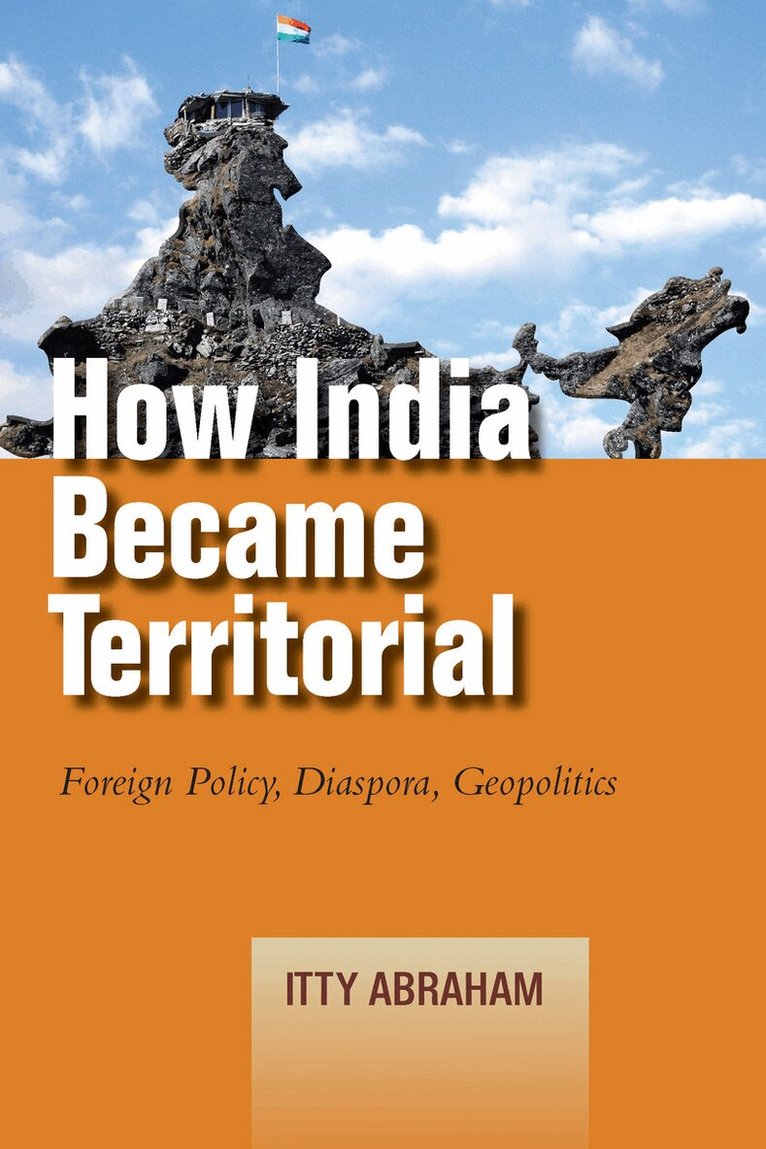
Why do countries go to war over disputed lands? Why do they fight even when the territories in question are economically and strategically worthless? Drawing on critical approaches to international relations, political geography, international law, and social history, and based on a close examination of the Indian experience during the twentieth century, Itty Abraham addresses these important questions and offers a new conceptualization of foreign policy as a state territorializing practice.Identifying the contested process of decolonization as the root of contemporary Asian inter-state territorial conflicts, he explores the political implications of establishing a fixed territorial homeland as a necessary starting point for both international recognition and national identity—concluding that disputed lands are important because of their intimate identification with the legitimacy of the postcolonial nation-state, rather than because of their potential for economic gains or their place in historic grievances. By treating Indian diaspora policy and geopolitical practice as exemplars of foreign policy behavior, Abraham demonstrates how their intersection offers an entirely new way of understanding India's vexed relations with Pakistan and China. This approach offers a new and productive way of thinking about foreign policy and inter-state conflicts over territory in Asia—one that is non-U.S. and non-European focused—that has a number of implications for regional security and for foreign policy practices in the contemporary postcolonial world.
283 kr
Skickas inom 7-10 vardagar
Why do countries go to war over disputed lands? Why do they fight even when the territories in question are economically and strategically worthless? Drawing on critical approaches to international relations, political geography, international law, and social history, and based on a close examination of the Indian experience during the twentieth century, Itty Abraham addresses these important questions and offers a new conceptualization of foreign policy as a state territorializing practice.Identifying the contested process of decolonization as the root of contemporary Asian inter-state territorial conflicts, he explores the political implications of establishing a fixed territorial homeland as a necessary starting point for both international recognition and national identity—concluding that disputed lands are important because of their intimate identification with the legitimacy of the postcolonial nation-state, rather than because of their potential for economic gains or their place in historic grievances. By treating Indian diaspora policy and geopolitical practice as exemplars of foreign policy behavior, Abraham demonstrates how their intersection offers an entirely new way of understanding India's vexed relations with Pakistan and China. This approach offers a new and productive way of thinking about foreign policy and inter-state conflicts over territory in Asia—one that is non-U.S. and non-European focused—that has a number of implications for regional security and for foreign policy practices in the contemporary postcolonial world.