Ivan Sablin – författare
Visar alla böcker från författaren Ivan Sablin. Handla med fri frakt och snabb leverans.
11 produkter
11 produkter
Häftad, Engelska, 2020
677 kr
Skickas inom 10-15 vardagar
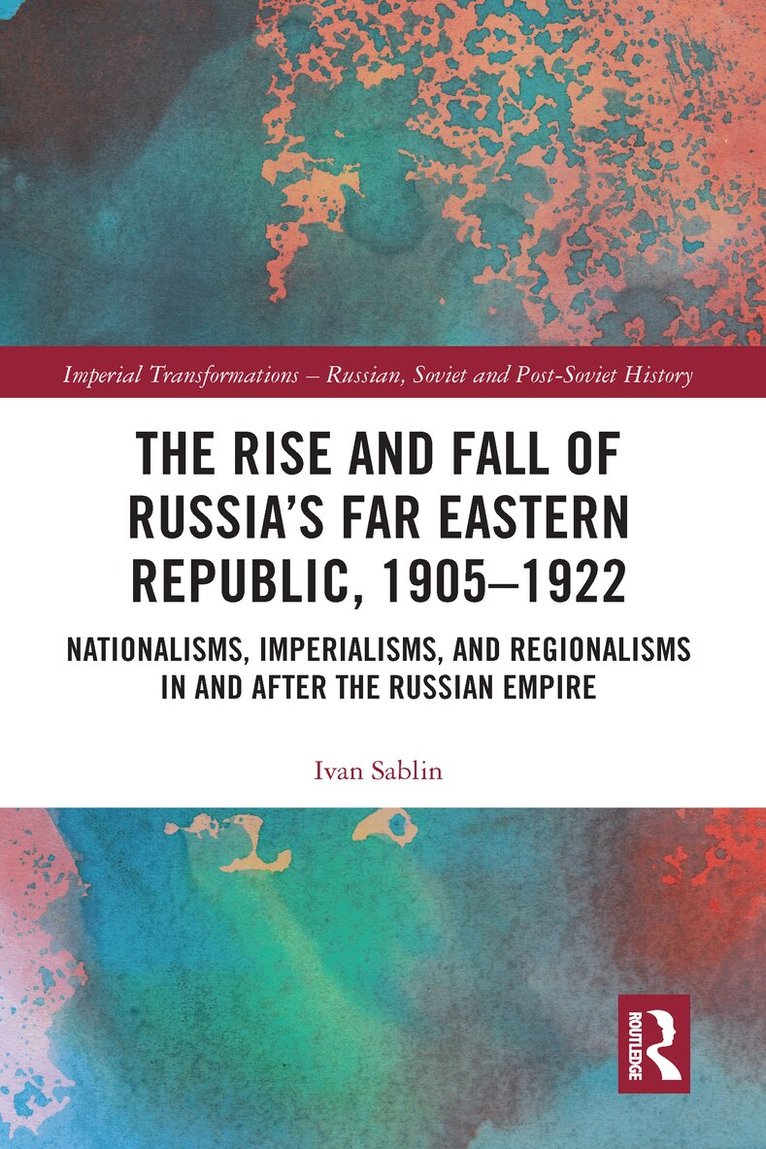
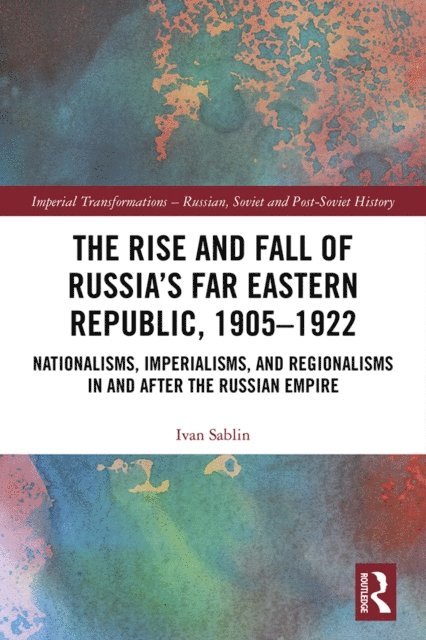
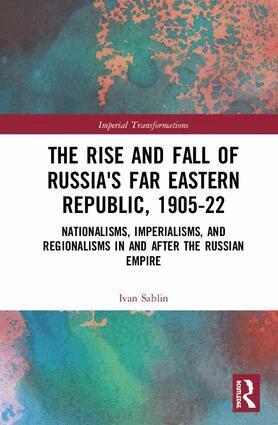
The Russian Far East was a remarkably fluid region in the period leading up to, during, and after the Russian Revolution. The different contenders in play in the region, imagining and working toward alternative futures, comprised different national groups, including Russians, Buryat-Mongols, Koreans, and Ukrainians; different imperialist projects, including Japanese and American attempts to integrate the region into their political and economic spheres of influence as well as the legacies of Russian expansionism and Bolshevik efforts to export the revolution to Mongolia, Korea, China, and Japan; and various local regionalists, who aimed for independence or strong regional autonomy for distinct Siberian and Far Eastern communities and whose efforts culminated in the short-lived Far Eastern Republic of 1920–1922. The Rise and Fall of Russia’s Far Eastern Republic, 1905–1922 charts developments in the region, examines the interplay of the various forces, and explains how a Bolshevik version of state-centered nationalism prevailed.
Inbunden, Engelska, 2021
2 215 kr
Skickas inom 10-15 vardagar
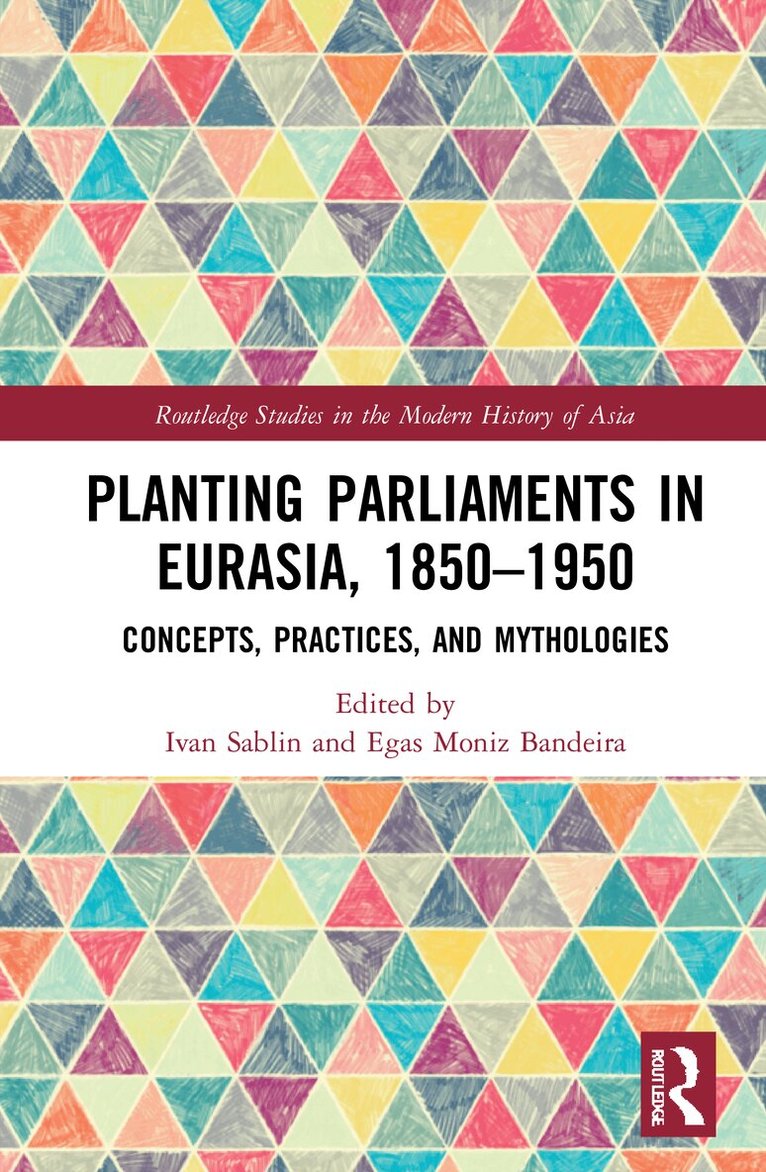
Parliaments are often seen as Western European and North American institutions and their establishment in other parts of the world as a derivative and mostly defective process. This book challenges such Eurocentric visions by retracing the evolution of modern institutions of collective decision-making in Eurasia. Breaching the divide between different area studies, the book provides nine case studies covering the area between the eastern edge of Asia and Eastern Europe, including the former Russian, Ottoman, Qing, and Japanese Empires as well as their successor states. In particular, it explores the appeals to concepts of parliamentarism, deliberative decision-making, and constitutionalism; historical practices related to parliamentarism; and political mythologies across Eurasia. It focuses on the historical and “reestablished” institutions of decision-making, which consciously hark back to indigenous traditions and adapt them to the changing circumstances in imperial and postimperial contexts. Thereby, the book explains how representative institutions were needed for the establishment of modernized empires or postimperial states but at the same time offered a connection to the past. The Open Access version of this book, available at http://www.taylorfrancis.com/books/e/9780367691271, has been made available under a Creative Commons Attribution-Non Commercial-No Derivatives 4.0 licence.
Häftad, Engelska, 2023
605 kr
Skickas inom 10-15 vardagar
Parliaments are often seen as Western European and North American institutions and their establishment in other parts of the world as a derivative and mostly defective process. This book challenges such Eurocentric visions by retracing the evolution of modern institutions of collective decision-making in Eurasia. Breaching the divide between different area studies, the book provides nine case studies covering the area between the eastern edge of Asia and Eastern Europe, including the former Russian, Ottoman, Qing, and Japanese Empires as well as their successor states. In particular, it explores the appeals to concepts of parliamentarism, deliberative decision-making, and constitutionalism; historical practices related to parliamentarism; and political mythologies across Eurasia. It focuses on the historical and “reestablished” institutions of decision-making, which consciously hark back to indigenous traditions and adapt them to the changing circumstances in imperial and postimperial contexts. Thereby, the book explains how representative institutions were needed for the establishment of modernized empires or postimperial states but at the same time offered a connection to the past. The Open Access version of this book, available at http://www.taylorfrancis.com/books/e/9780367691271, has been made available under a Creative Commons Attribution-Non Commercial-No Derivatives 4.0 licence.
Inbunden, Engelska, 2022
2 137 kr
Skickas inom 10-15 vardagar
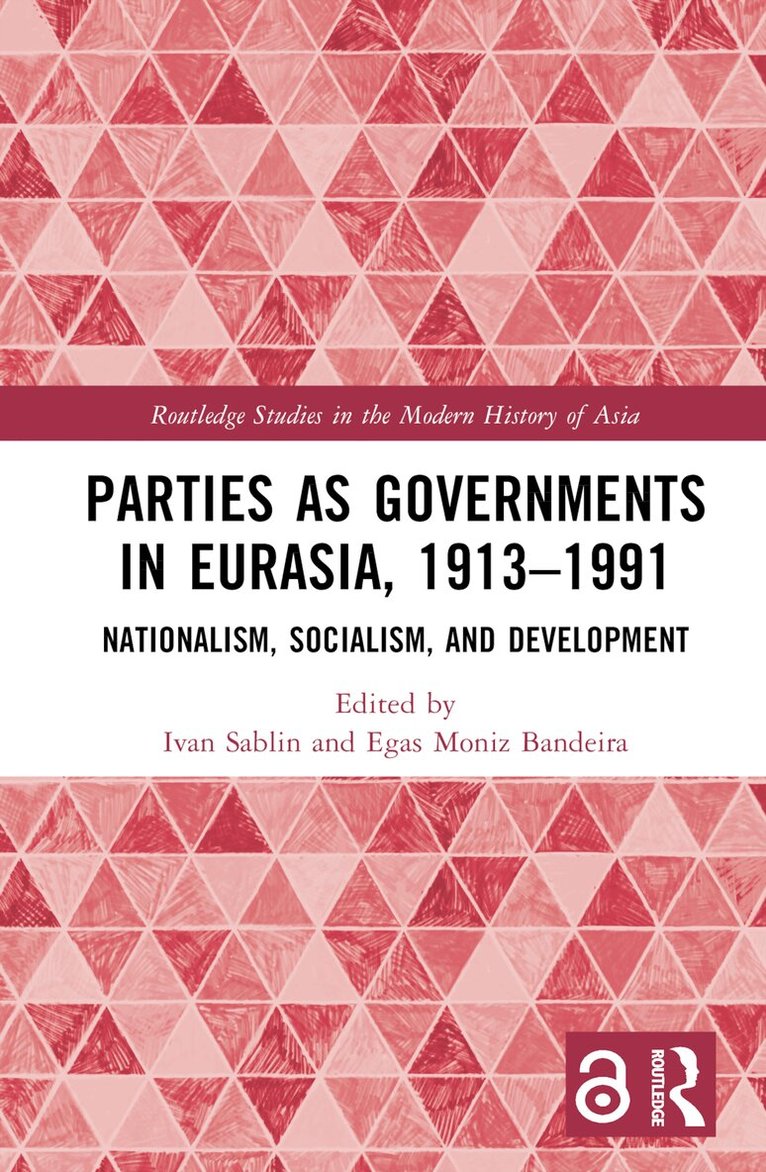
This book examines the political parties which emerged on the territories of the former Ottoman, Qing, Russian, and Habsburg empires and not only took over government power but merged with government itself. It discusses how these parties, disillusioned with previous constitutional and parliamentary reforms, justified their takeovers with programs of controlled or supervised economic and social development, including acting as the mediators between the various social and ethnic groups in the respective territories. It pays special attention to nation-building through the party, to institutions (both constitutional and de facto), and to the global and comparative aspects of one-party regimes. It explores the origins of one-party regimes in China, Czechoslovakia, Korea, the Soviet Union, Turkey, Yugoslavia, and beyond, the roles of socialism and nationalism in the parties’ approaches to development and state-building, as well the pedagogical aspirations of the ruling elites. Hence, by revisiting the dynamics of the transition from the earlier imperial formations via constitutionalism to one-party governments, and by assessing the internal and external dynamics of one-party regimes after their establishment, the book more precisely locates this type of regime within the contemporary world’s political landscape. Moreover, it emphasises that one-party regimes thrived on both sides of the Cold War and in some of the non-aligned states, and that although some state socialist one-party regimes collapsed in 1989–1991, in other places historically dominant parties and new parties have continued to monopolize political power.The Open Access version of this book, available at http://www.taylorfrancis.com, has been made available under a Creative Commons Attribution-Non Commercial-No Derivatives 4.0 license.
Häftad, Engelska, 2024
570 kr
Skickas inom 10-15 vardagar
This book examines the political parties which emerged on the territories of the former Ottoman, Qing, Russian, and Habsburg empires and not only took over government power but merged with government itself. It discusses how these parties, disillusioned with previous constitutional and parliamentary reforms, justified their takeovers with programs of controlled or supervised economic and social development, including acting as the mediators between the various social and ethnic groups in the respective territories. It pays special attention to nation-building through the party, to institutions (both constitutional and de facto), and to the global and comparative aspects of one-party regimes. It explores the origins of one-party regimes in China, Czechoslovakia, Korea, the Soviet Union, Turkey, Yugoslavia, and beyond, the roles of socialism and nationalism in the parties’ approaches to development and state-building, as well the pedagogical aspirations of the ruling elites. Hence, by revisiting the dynamics of the transition from the earlier imperial formations via constitutionalism to one-party governments, and by assessing the internal and external dynamics of one-party regimes after their establishment, the book more precisely locates this type of regime within the contemporary world’s political landscape. Moreover, it emphasises that one-party regimes thrived on both sides of the Cold War and in some of the non-aligned states, and that although some state socialist one-party regimes collapsed in 1989–1991, in other places historically dominant parties and new parties have continued to monopolize political power.The Open Access version of this book, available at http://www.taylorfrancis.com, has been made available under a Creative Commons Attribution-Non Commercial-No Derivatives 4.0 license.
Inbunden, Engelska, 2024
2 571 kr
Skickas inom 10-15 vardagar
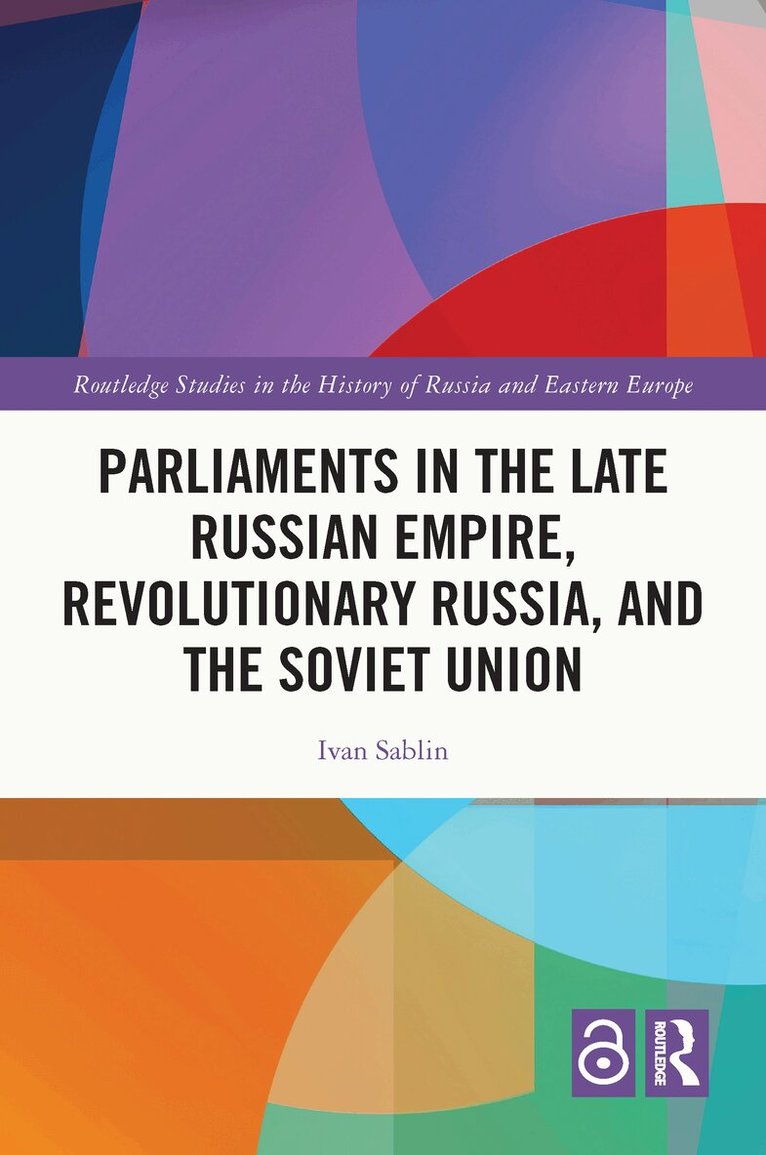
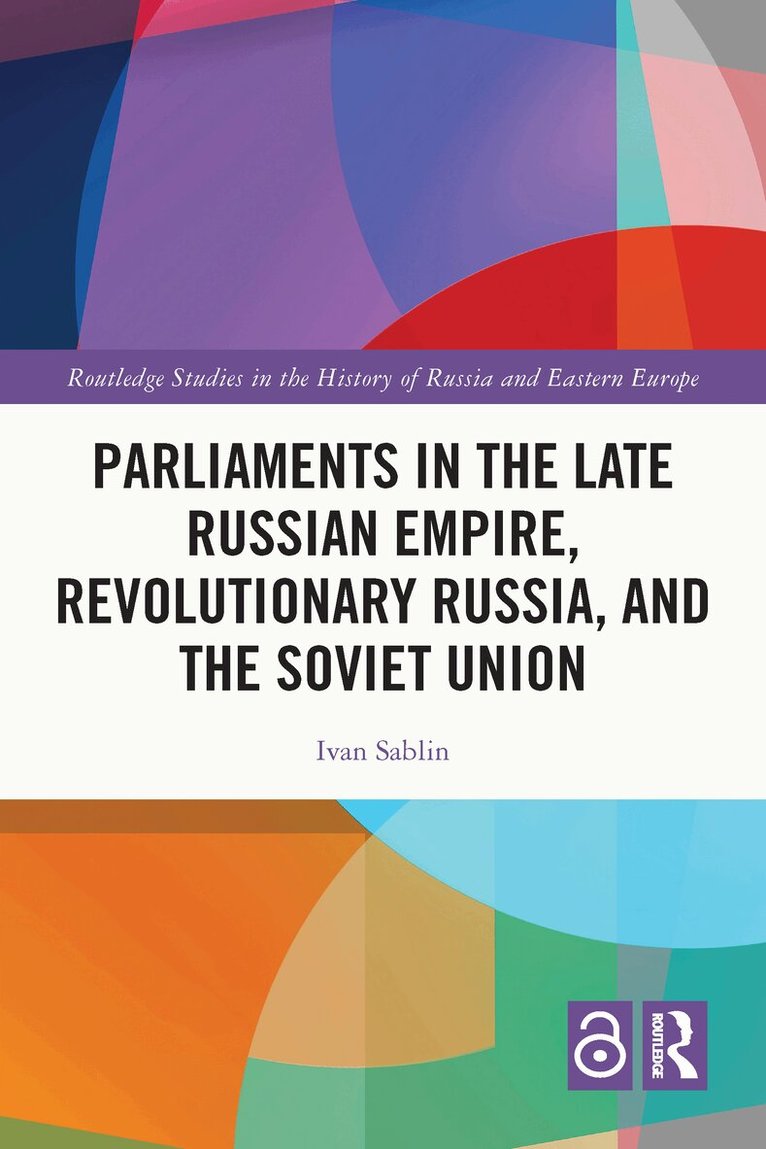
This book examines the meanings that were attached to the terms “parliament” and “parliamentarism” in the different historical and discursive contexts of the late Russian Empire, revolutionary and Soviet Russia, and the Soviet Union. It discusses those institutions referred to as parliaments by contemporaries, gives special attention to their functions, and traces the broader debates on parliamentarism within Russia and the Soviet Union, in Russian émigré circles, and among foreign observers. It highlights that only the late imperial and perestroika assemblies can be considered legislative institutions that expressed dissensus but argues that other assemblies, often referred to as “rubber-stamp” parliaments due to their lack of legislative competence and influence over other authorities, should not be dismissed. The Supreme Soviet, for instance, provided an integrative function binding society and elites in a top-down manner, while its deputies engaged in information acquisition and state micromanagement through interactions with their constituents. It also played an important role in interparliamentary relations and, as one of the first institutions of nominal parliamentarism in an autocratic single-party regime, of which there were many in the twentieth century, served as a model for numerous state socialist regimes. By addressing the role of parliaments in reassembling imperial spaces through political representation and the functions of nominal legislative institutions, the book explores the contribution of Russian and Soviet assemblies to global political modernity.Winner of the 2024 Ab Imperio Best Book Award for the best study in new imperial history and history of diversity in Northern Eurasia, up to the late twentieth century.
Häftad, Engelska, 2025
662 kr
Skickas inom 10-15 vardagar
This book examines the meanings that were attached to the terms “parliament” and “parliamentarism” in the different historical and discursive contexts of the late Russian Empire, revolutionary and Soviet Russia, and the Soviet Union. It discusses those institutions referred to as parliaments by contemporaries, gives special attention to their functions, and traces the broader debates on parliamentarism within Russia and the Soviet Union, in Russian émigré circles, and among foreign observers. It highlights that only the late imperial and perestroika assemblies can be considered legislative institutions that expressed dissensus but argues that other assemblies, often referred to as “rubber-stamp” parliaments due to their lack of legislative competence and influence over other authorities, should not be dismissed. The Supreme Soviet, for instance, provided an integrative function binding society and elites in a top-down manner, while its deputies engaged in information acquisition and state micromanagement through interactions with their constituents. It also played an important role in interparliamentary relations and, as one of the first institutions of nominal parliamentarism in an autocratic single-party regime, of which there were many in the twentieth century, served as a model for numerous state socialist regimes. By addressing the role of parliaments in reassembling imperial spaces through political representation and the functions of nominal legislative institutions, the book explores the contribution of Russian and Soviet assemblies to global political modernity.Winner of the 2024 Ab Imperio Best Book Award for the best study in new imperial history and history of diversity in Northern Eurasia, up to the late twentieth century.
Inbunden, Engelska, 2026
2 215 kr
Skickas inom 10-15 vardagar
Bringing together nine chapters penned by experts in different area studies, From Empire to Federation in Eurasia investigates how empires and postimperial regimes – including the Ottoman, Russian, Habsburg, Qing/Republican Chinese, Japanese, and Siamese polities – grappled with the challenges of diversity, decentralization, and self-determination.Paying attention to both vernacular models and external inspirations, it reframes the study of state-building beyond the Western European and North American contexts. Federalist and autonomist designs served to restructure diversity management, shifting from vertical imperial rights regimes to more horizontal arrangements, often resulting in asymmetric federalism. Although in many cases exclusionary nationalism and centralization triumphed, the diverse visions reveal alternative trajectories of (post)imperial and (post)colonial transformations.A major contribution to the global history of concepts, institutions, and political practices, this book will appeal to scholars and students of global and international history, political science, and area studies – including Eastern European, Eurasian, East Asian, Middle Eastern, and South Asian studies.
Häftad, Engelska, 2017
762 kr
Skickas inom 10-15 vardagar
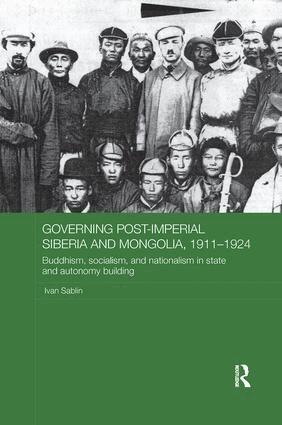
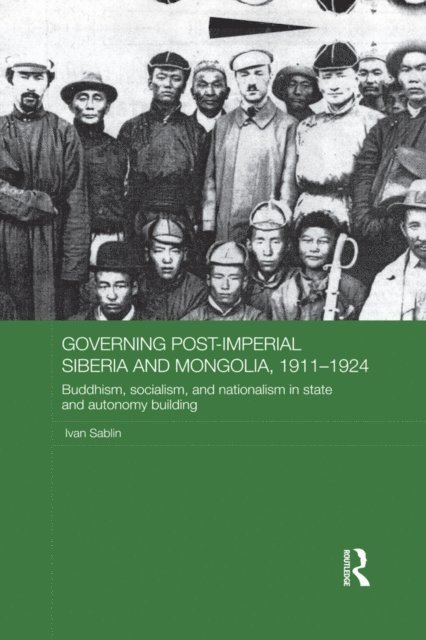
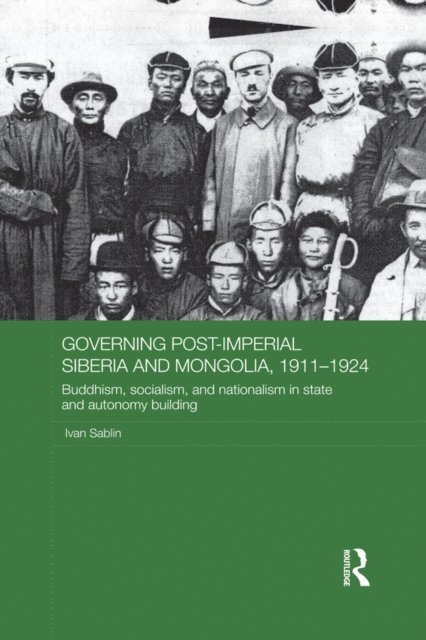
The governance arrangements put in place for Siberia and Mongolia after the collapse of the Qing and Russian Empires were highly unusual, experimental and extremely interesting. The Buryat-Mongol Autonomous Socialist Soviet Republic established within the Soviet Union in 1923 and the independent Mongolian People’s Republic established a year later were supposed to represent a new model of transnational, post-national governance, incorporating religious and ethno-national independence, under the leadership of the coming global political party, the Communist International. The model, designed to be suitable for a socialist, decolonised Asia, and for a highly diverse population in a strategic border region, was intended to be globally applicable. This book, based on extensive original research, charts the development of these unusual governance arrangements, discusses how the ideologies of nationalism, socialism and Buddhism were borrowed from, and highlights the relevance of the subject for the present day world, where multiculturality, interconnectedness and interdependency become ever more complicated.
Inbunden, Engelska, 2018
2 215 kr
Skickas inom 10-15 vardagar
The Russian Far East was a remarkably fluid region in the period leading up to, during, and after the Russian Revolution. The different contenders in play in the region, imagining and working toward alternative futures, comprised different national groups, including Russians, Buryat-Mongols, Koreans, and Ukrainians; different imperialist projects, including Japanese and American attempts to integrate the region into their political and economic spheres of influence as well as the legacies of Russian expansionism and Bolshevik efforts to export the revolution to Mongolia, Korea, China, and Japan; and various local regionalists, who aimed for independence or strong regional autonomy for distinct Siberian and Far Eastern communities and whose efforts culminated in the short-lived Far Eastern Republic of 1920–1922. The Rise and Fall of Russia’s Far Eastern Republic, 1905–1922 charts developments in the region, examines the interplay of the various forces, and explains how a Bolshevik version of state-centered nationalism prevailed.
Inbunden, Engelska, 2016
2 220 kr
Skickas inom 10-15 vardagar
The governance arrangements put in place for Siberia and Mongolia after the collapse of the Qing and Russian Empires were highly unusual, experimental and extremely interesting. The Buryat-Mongol Autonomous Socialist Soviet Republic established within the Soviet Union in 1923 and the independent Mongolian People’s Republic established a year later were supposed to represent a new model of transnational, post-national governance, incorporating religious and ethno-national independence, under the leadership of the coming global political party, the Communist International. The model, designed to be suitable for a socialist, decolonised Asia, and for a highly diverse population in a strategic border region, was intended to be globally applicable. This book, based on extensive original research, charts the development of these unusual governance arrangements, discusses how the ideologies of nationalism, socialism and Buddhism were borrowed from, and highlights the relevance of the subject for the present day world, where multiculturality, interconnectedness and interdependency become ever more complicated.