Egas Moniz Bandeira - Böcker
Visar alla böcker från författaren Egas Moniz Bandeira. Handla med fri frakt och snabb leverans.
5 produkter
5 produkter
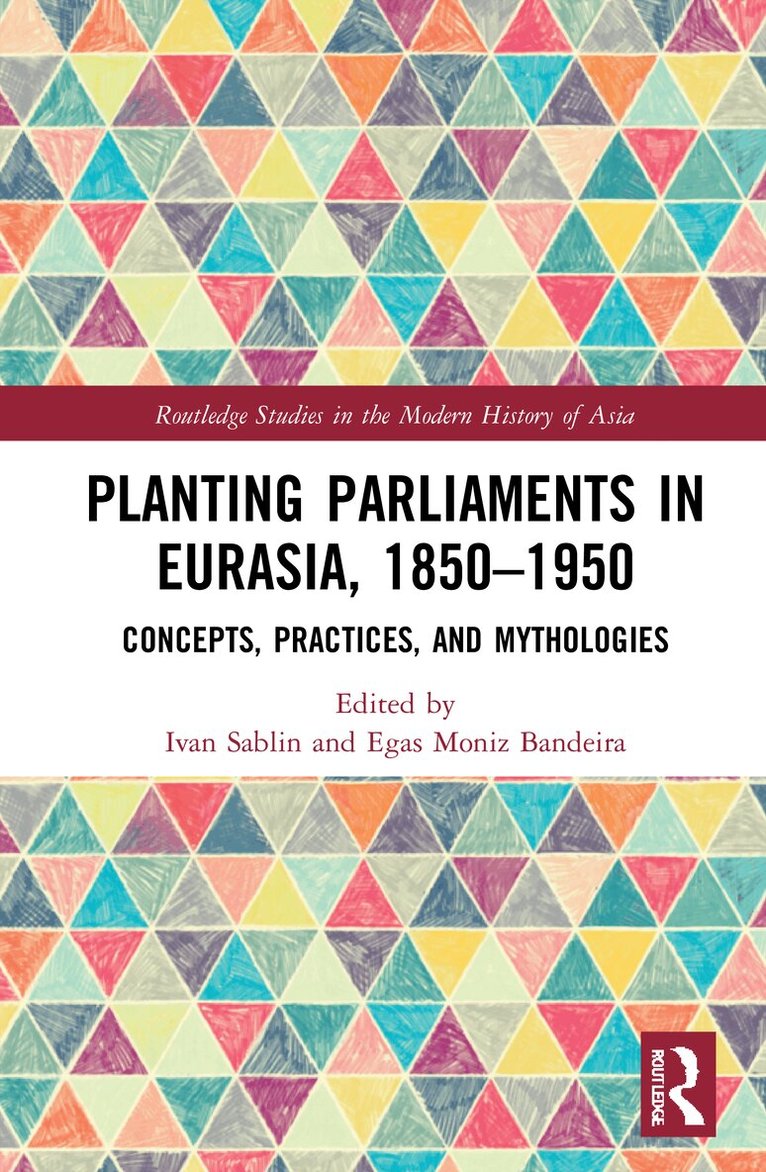
Planting Parliaments in Eurasia, 1850–1950
Concepts, Practices, and Mythologies
Inbunden, Engelska, 2021
2 176 kr
Skickas inom 10-15 vardagar
Parliaments are often seen as Western European and North American institutions and their establishment in other parts of the world as a derivative and mostly defective process. This book challenges such Eurocentric visions by retracing the evolution of modern institutions of collective decision-making in Eurasia. Breaching the divide between different area studies, the book provides nine case studies covering the area between the eastern edge of Asia and Eastern Europe, including the former Russian, Ottoman, Qing, and Japanese Empires as well as their successor states. In particular, it explores the appeals to concepts of parliamentarism, deliberative decision-making, and constitutionalism; historical practices related to parliamentarism; and political mythologies across Eurasia. It focuses on the historical and “reestablished” institutions of decision-making, which consciously hark back to indigenous traditions and adapt them to the changing circumstances in imperial and postimperial contexts. Thereby, the book explains how representative institutions were needed for the establishment of modernized empires or postimperial states but at the same time offered a connection to the past. The Open Access version of this book, available at http://www.taylorfrancis.com/books/e/9780367691271, has been made available under a Creative Commons Attribution-Non Commercial-No Derivatives 4.0 licence.
Planting Parliaments in Eurasia, 1850–1950
Concepts, Practices, and Mythologies
Häftad, Engelska, 2023
595 kr
Skickas inom 10-15 vardagar
Parliaments are often seen as Western European and North American institutions and their establishment in other parts of the world as a derivative and mostly defective process. This book challenges such Eurocentric visions by retracing the evolution of modern institutions of collective decision-making in Eurasia. Breaching the divide between different area studies, the book provides nine case studies covering the area between the eastern edge of Asia and Eastern Europe, including the former Russian, Ottoman, Qing, and Japanese Empires as well as their successor states. In particular, it explores the appeals to concepts of parliamentarism, deliberative decision-making, and constitutionalism; historical practices related to parliamentarism; and political mythologies across Eurasia. It focuses on the historical and “reestablished” institutions of decision-making, which consciously hark back to indigenous traditions and adapt them to the changing circumstances in imperial and postimperial contexts. Thereby, the book explains how representative institutions were needed for the establishment of modernized empires or postimperial states but at the same time offered a connection to the past. The Open Access version of this book, available at http://www.taylorfrancis.com/books/e/9780367691271, has been made available under a Creative Commons Attribution-Non Commercial-No Derivatives 4.0 licence.
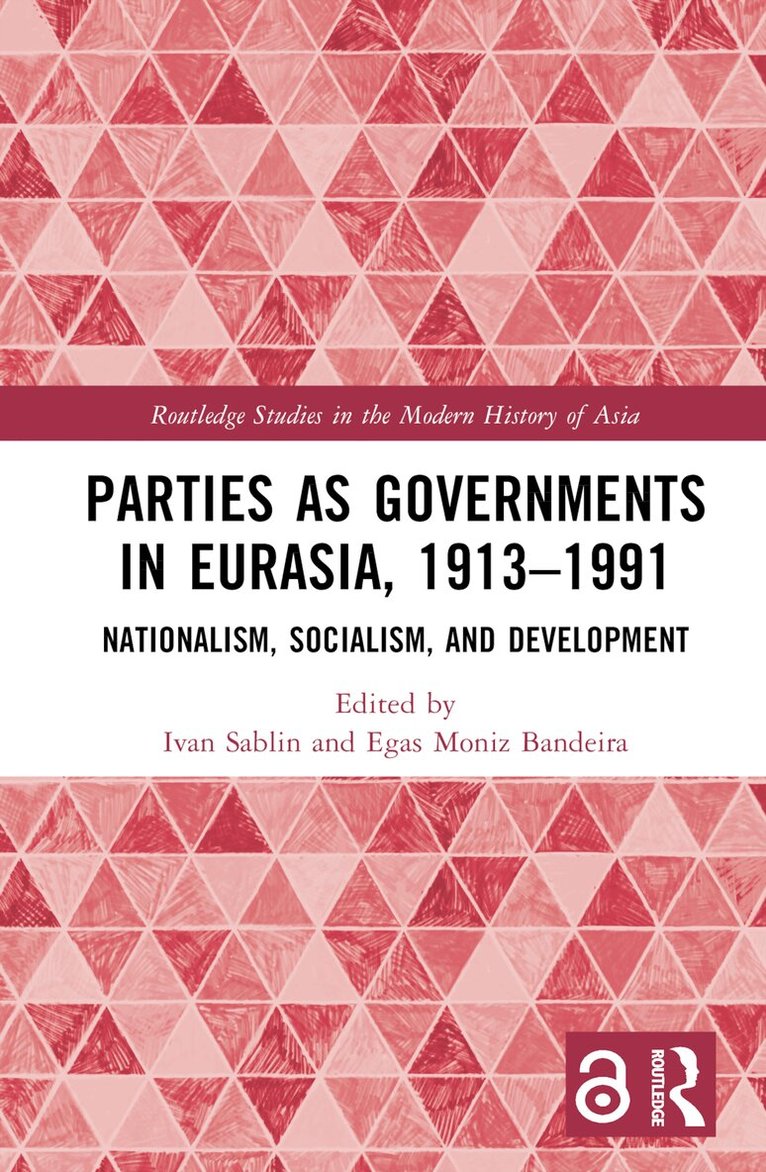
Parties as Governments in Eurasia, 1913–1991
Nationalism, Socialism, and Development
Inbunden, Engelska, 2022
2 113 kr
Skickas inom 10-15 vardagar
This book examines the political parties which emerged on the territories of the former Ottoman, Qing, Russian, and Habsburg empires and not only took over government power but merged with government itself. It discusses how these parties, disillusioned with previous constitutional and parliamentary reforms, justified their takeovers with programs of controlled or supervised economic and social development, including acting as the mediators between the various social and ethnic groups in the respective territories. It pays special attention to nation-building through the party, to institutions (both constitutional and de facto), and to the global and comparative aspects of one-party regimes. It explores the origins of one-party regimes in China, Czechoslovakia, Korea, the Soviet Union, Turkey, Yugoslavia, and beyond, the roles of socialism and nationalism in the parties’ approaches to development and state-building, as well the pedagogical aspirations of the ruling elites. Hence, by revisiting the dynamics of the transition from the earlier imperial formations via constitutionalism to one-party governments, and by assessing the internal and external dynamics of one-party regimes after their establishment, the book more precisely locates this type of regime within the contemporary world’s political landscape. Moreover, it emphasises that one-party regimes thrived on both sides of the Cold War and in some of the non-aligned states, and that although some state socialist one-party regimes collapsed in 1989–1991, in other places historically dominant parties and new parties have continued to monopolize political power.The Open Access version of this book, available at http://www.taylorfrancis.com, has been made available under a Creative Commons Attribution-Non Commercial-No Derivatives 4.0 license.
Parties as Governments in Eurasia, 1913–1991
Nationalism, Socialism, and Development
Häftad, Engelska, 2024
564 kr
Skickas inom 10-15 vardagar
This book examines the political parties which emerged on the territories of the former Ottoman, Qing, Russian, and Habsburg empires and not only took over government power but merged with government itself. It discusses how these parties, disillusioned with previous constitutional and parliamentary reforms, justified their takeovers with programs of controlled or supervised economic and social development, including acting as the mediators between the various social and ethnic groups in the respective territories. It pays special attention to nation-building through the party, to institutions (both constitutional and de facto), and to the global and comparative aspects of one-party regimes. It explores the origins of one-party regimes in China, Czechoslovakia, Korea, the Soviet Union, Turkey, Yugoslavia, and beyond, the roles of socialism and nationalism in the parties’ approaches to development and state-building, as well the pedagogical aspirations of the ruling elites. Hence, by revisiting the dynamics of the transition from the earlier imperial formations via constitutionalism to one-party governments, and by assessing the internal and external dynamics of one-party regimes after their establishment, the book more precisely locates this type of regime within the contemporary world’s political landscape. Moreover, it emphasises that one-party regimes thrived on both sides of the Cold War and in some of the non-aligned states, and that although some state socialist one-party regimes collapsed in 1989–1991, in other places historically dominant parties and new parties have continued to monopolize political power.The Open Access version of this book, available at http://www.taylorfrancis.com, has been made available under a Creative Commons Attribution-Non Commercial-No Derivatives 4.0 license.
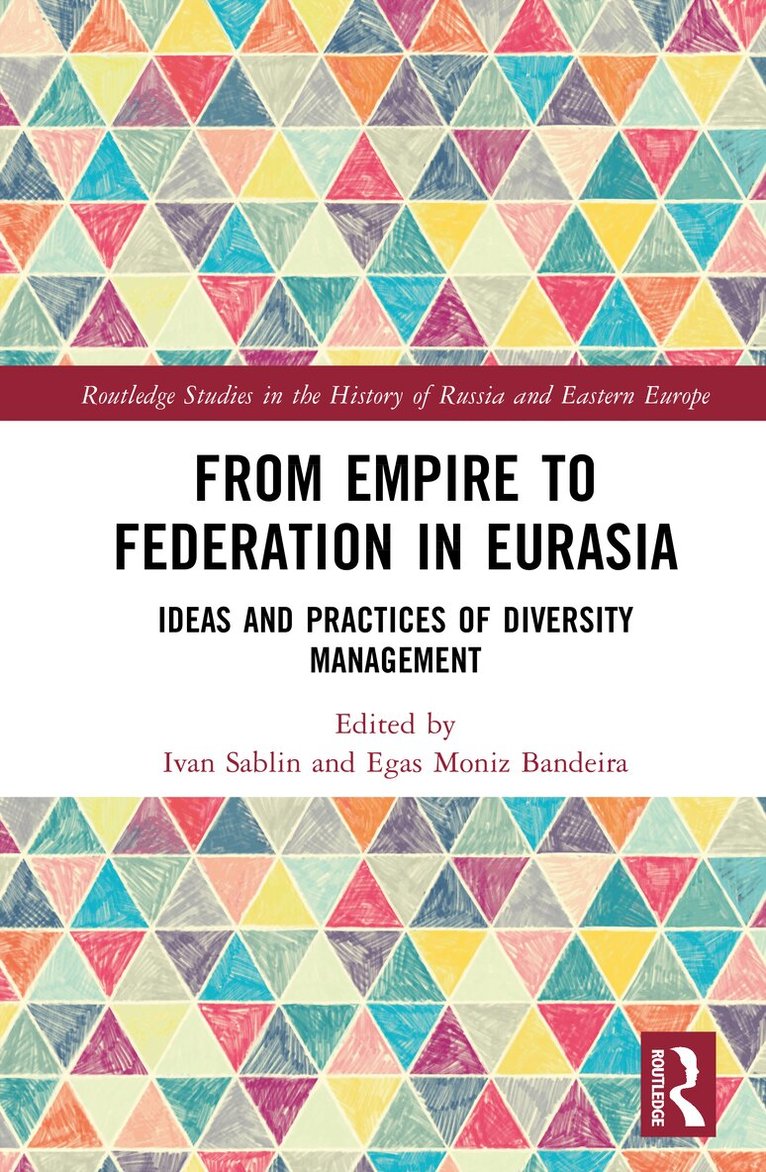
From Empire to Federation in Eurasia
Ideas and Practices of Diversity Management
Inbunden, Engelska, 2026
2 176 kr
Skickas inom 10-15 vardagar
Bringing together nine chapters penned by experts in different area studies, From Empire to Federation in Eurasia investigates how empires and postimperial regimes – including the Ottoman, Russian, Habsburg, Qing/Republican Chinese, Japanese, and Siamese polities – grappled with the challenges of diversity, decentralization, and self-determination.Paying attention to both vernacular models and external inspirations, it reframes the study of state-building beyond the Western European and North American contexts. Federalist and autonomist designs served to restructure diversity management, shifting from vertical imperial rights regimes to more horizontal arrangements, often resulting in asymmetric federalism. Although in many cases exclusionary nationalism and centralization triumphed, the diverse visions reveal alternative trajectories of (post)imperial and (post)colonial transformations.A major contribution to the global history of concepts, institutions, and political practices, this book will appeal to scholars and students of global and international history, political science, and area studies – including Eastern European, Eurasian, East Asian, Middle Eastern, and South Asian studies.