Ivan Vejvoda – författare
Visar alla böcker från författaren Ivan Vejvoda. Handla med fri frakt och snabb leverans.
5 produkter
Yugoslavia and After
A Study in Fragmentation, Despair and Rebirth
Av David A. Dyker, Ivan Vejvoda
Häftad, 1996
1252 kr
Lägg i varukorg
This new book presents contributions by leading authorities on the origins of the Balkan crisis, the reasons for the decay and dissolution of the old Yugoslavia, the nature of the new regimes, the prospects for solution of the remaining conflicts and for the building of viable successor states.
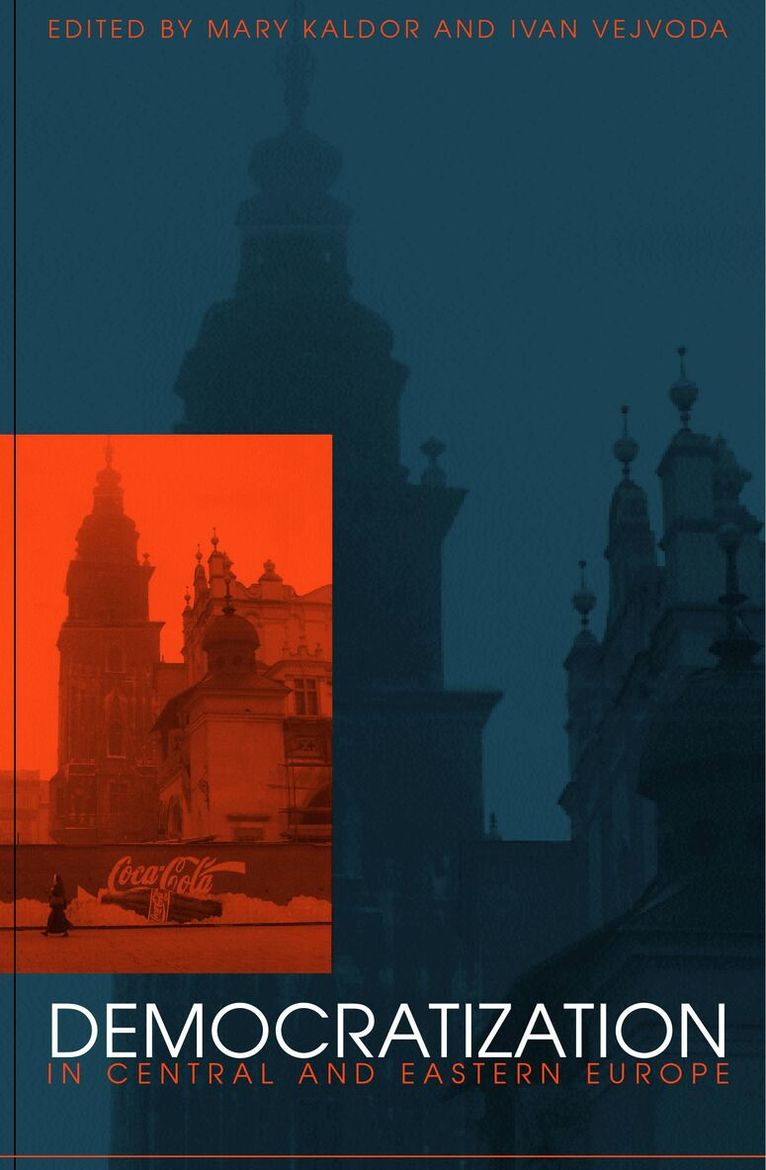
Democratization in Central and Eastern Europe
Häftad, 2002
925 kr
Lägg i varukorg
In December 1995, the European Council in Madrid announced that Central and Eastern European countries would be eligible for EU membership, provided that they met certain political conditions. The Amsterdam summit in July 1997 acknowledged that the CEECs had made impressive steps towards democracy …
Yugoslavia and After
A Study in Fragmentation, Despair and Rebirth
Av David A. Dyker, Ivan Vejvoda
Inbunden, 2017
3065 kr
Lägg i varukorg
This new book presents contributions by leading authorities on the origins of the Balkan crisis, the reasons for the decay and dissolution of the old Yugoslavia, the nature of the new regimes, the prospects for solution of the remaining conflicts and for the building of viable successor states.
Yugoslavia and After
A Study in Fragmentation, Despair and Rebirth
Av Ivan Vejvoda, David A. Dyker
E-bok, 2014
1480 kr
Lägg i varukorg
This new book presents contributions by leading authorities on the origins of the Balkan crisis, the reasons for the decay and dissolution of the old Yugoslavia, the nature of the new regimes, the prospects for solution of the remaining conflicts and for the building of viable successor states.
Yugoslavia and After
A Study in Fragmentation, Despair and Rebirth
Av Ivan Vejvoda, David A. Dyker
E-bok, 2014
1448 kr
Lägg i varukorg
This new book presents contributions by leading authorities on the origins of the Balkan crisis, the reasons for the decay and dissolution of the old Yugoslavia, the nature of the new regimes, the prospects for solution of the remaining conflicts and for the building of viable successor states.