J. Clay Smith Jr. - Böcker
Visar alla böcker från författaren J. Clay Smith Jr.. Handla med fri frakt och snabb leverans.
3 produkter
3 produkter
319 kr
Skickas inom 7-10 vardagar
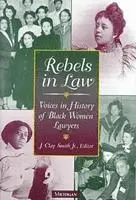
Black women lawyers are not new to the practice of law or to leadership in the fight for justice and quality. Black women formally entered the practice of American law in 1872, the year that Charlotte E. Ray became the first black woman to graduate from an American law school. Rebels in Lawintroduces some of these women and through their own writing tells a compelling story about the little-known involvement of black women in law and politics. Beginning with a short essay written in 1897, the writing collected by J. Clay Smith, Jr., tells us how black women came to the practice of law, the challenges they faced as women and as blacks in making a place for themselves in the legal profession, their fight to become legal educators, and their efforts to encourage other black women and black men to come to the practice of law. The essays demonstrate the involvement of black women lawyers in important public issues of our time and show them addressing the sensitive subjects of race, equality, justice and freedom. Drawing together many writings that have never been published or have been published in obscure journals or newspapers, Rebels in Law is a groundbreaking study. In addition, it offers historical background information on each writer and on the history of black women lawyers. Providing an opportunity to study the origins of black women as professionals, community leaders, wives, mothers, and feminists, it will be of interest to scholars in the fields of law, history, political science, sociology, black studies and women's studies.J. Clay Smith, Jr., is Professor of Law, Howard University Law School. He was formerly a member of the United States Equal Employment Opportunity Commission, Dean of Howard University Law School, and President of the Washington Bar Association. He is the author of Emancipation: The Making of the Black Lawyer, 1844-1944 and numerous articles.
749 kr
Skickas inom 10-15 vardagar
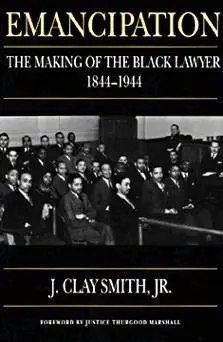
"Emancipation is an important and impressive work; one cannot read it without being inspired by the legal acumen, creativity, and resiliency these pioneer lawyers displayed. . . . It should be read by everyone interested in understanding the road African-Americans have traveled and the challenges that lie ahead."-From the Foreword, by Justice Thurgood Marshall
743 kr
Skickas inom 10-15 vardagar
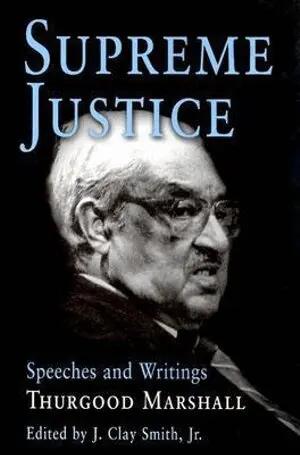
To understand fully the complexities of Thurgood Marshall's work as a practicing lawyer, civil rights advocate for the NAACP Legal Defense Fund, federal judge, and the first African American appointed Solicitor General of the United States and Justice of the United States Supreme Court, these texts are indispensable.The early speeches assembled by J. Clay Smith, Jr., focus on the Detroit riots of the 1940s and 1950s, one of the most important periods of Marshall's life, culminating in his arguments before the Supreme Court in Brown v. Board of Education and Bolling v. Sharpe, which in 1954 struck down de jure segregation in public education. Throughout the materials from the next four decades, Marshall comes to life as a teacher, leader, and strategist, explaining, preaching, and cajoling audiences to stand up for their rights. The addresses collected by Smith present a less formal picture of Marshall, from which one can learn much about the depth of his skills and strategies to conquer racism, promote democracy, and create a world influenced by his vision for a just and moral society.Supreme Justice reveals Marshall as a dogged opponent of unequal schools and a staunch proponent of the protection of black people from violence and the death penalty. Through his own words we see the genius of a man with an ability to inspire diverse crowds in clear language and see him also demonstrate his powers of persuasion in formal settings outside the court. His writings not only enhance our understanding of his groundbreaking advocacy in law and social conflicts, they reveal the names of men and women of all races who made significant contributions leading to Brown v. Board of Education and beyond.