J. Douglas Canfield – författare
Visar alla böcker från författaren J. Douglas Canfield. Handla med fri frakt och snabb leverans.
6 produkter
6 produkter
1 361 kr
Skickas inom 10-15 vardagar
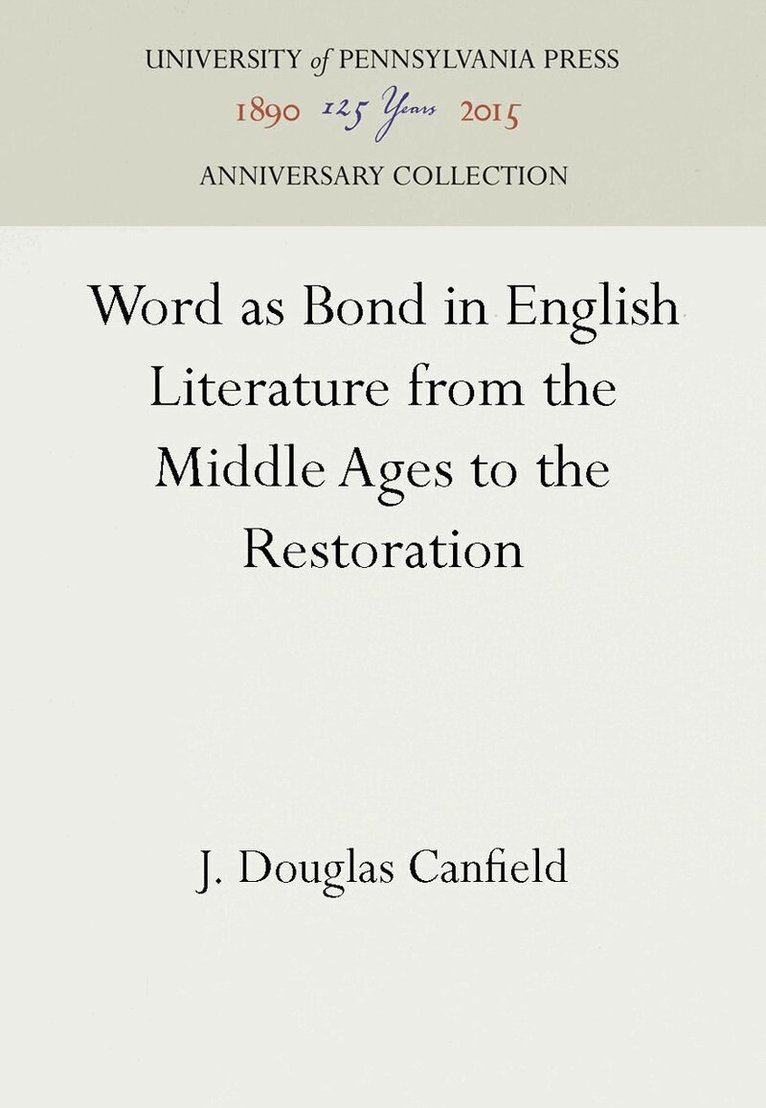
For centuries, the transmission of power in feudal European society depended on a code of fidelity, of political allegiance, and truth to one's word. The word as bond extended to include not only the pledge of allegiance between subject and king, but the troth-plight between lovers, the vow of friendship, and the judicial oath. Society was ultimately based upon a gentleman's or gentlewoman's word that was itself underwritten by the Word of God.J. Douglas Canfield argues that English literature of the feudal epoch placed this master trope of word as bond at the center of conflict. The trope does not passively reflect social reality; rather, it helps to define, to constitute the society and its values. Both society and literature were preoccupied by the contest between fidelity on the one hand and its antithesis, betrayal (with the political and sexual anarchy that it threatened) on the other. In literature, the conflict was usually resolved through supernatural aid, the intervention of the Logos, which guaranteed the validity of the word.Canfield analyzes over 25 representative works, focusing on Chaucer, Shakespeare, and Dryden, in the five dominant modes of aristocratic literature-romance, comedy, lyric, tragedy, and satire. In each chapter, he offers three examples, one from the Middle Ages, one from the Renaissance, and one from the Restoration.Canfield's study proceeds synchronically, attempting to show that the trope is always under stress. The language of heroic romance coexists with the language of subversive comedy and absurdist satire. In an Afterword, he suggests why the trope disappears-not from the discourse, where it remains to this day, but from the center of conflict in English literature after 1688.
652 kr
Skickas inom 3-6 vardagar
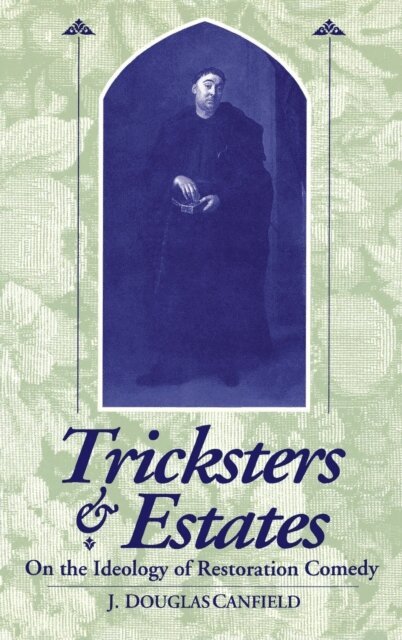
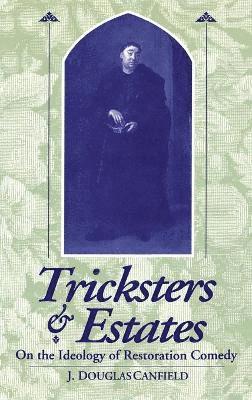
If the Renaissance was the Golden Age of English comedy, the Restoration was the Silver. These comedies are full of tricksters attempting to gain estates, the emblem and the reality of power in late feudal England. The tricksters appear in a number of guises, such as heroines landing their men, younger brothers seeking estates, or Cavaliers threatened with dispossession. The hybrid nature of these plays has long posed problems for critics, and few studies have attempted to deal with their diversity in a comprehensive way. Now one of the leading scholars of Restoration drama offers a cultural history of the period's comedy that puts the plays in perspective and reveals the ideological function they performed in England during the latter half of the seventeenth century.To explain this function, J. Douglas Canfield groups the plays into three categories: social comedy, which underwrites Stuart ideology; subversive comedy, which undercuts it; and comical satire, which challenges it as fundamentally immoral or amoral. Through play-by-play analysis, he demonstrates how most of the comedies support the ideology of the Stuart monarchs and the aristocracy, upholding what they regarded as their natural right to rule because of an innate superiority over all other classes. A significant minority of comedies, however, reveal cracks in class solidarity, portray witty heroines who inhabit the margins of society, or give voice to folk tricksters who embody a democratic force nearly capable of overwhelming class hierarchy. A smaller yet but still significant minority end in no resolution, no restoration, but, at their most radical, playfully portray Stuart ideology as empty rhetoric.Tricksters and Estates is a truly comprehensive work, offering serious critical readings of many plays that have never before received close attention and fresh insights into more familiar works. By juxtaposing the comedies of such lesser-known playwrights as Orrery, Lacy, and Rawlins with those of more familiar figures like Behn, Wycherley, and Dryden, the author invites a greater appreciation than has previously been possible of the meaning and function of Restoration comedy. This intelligent and wide-ranging study promises is a standard work in its field.
652 kr
Skickas inom 3-6 vardagar
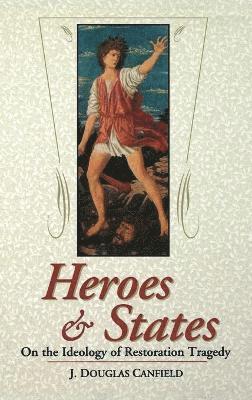
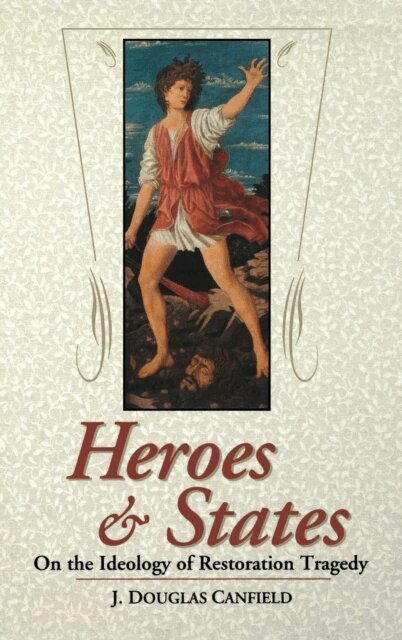
To understand the cultural history of England during the Restoration, one need look no further than the theater, which was attended by the gentry as well as by members of the middle and lower classes. The theater of this period embodied the values, meanings, and power relations of Restoration England. In Heroes and States, Douglas Canfield argues that drama not only represents but actually helps constitute the value and belief systems of an entire culture.Heroes and States completes Canfield's two-volume cultural history of Restoration drama, begun in Tricksters and Estates: On the Ideology of Restoration Comedy. In this second volume Canfield shows how Restoration playwrights attempted to rein scribe late-feudal aristocratic ideology after the English Civil War.In the serious drama of the period, conflict is between noble heroes, upon whom states are built, and transgressors of the established order -- tyrants, traitors, usurpers, rapists, and atheists. Canfield considers several sub genres of tragedy. He argues that most of these sub genres reaffirm the older ideology after testing it in the fires of conflict. Tragical satire, on the other hand, the most subversive of these sub genres, exposes the failure of the ruling class to live up to its own codes and, in some cases, the absurdity of the codes themselves.Canfield also finds playwrights struggling with issues of race and colonialism. He uses the work of modern theorists such as Bakhtin, Girard, Kristeva, Derrida, Althusser, Williams, and Eagleton to illuminate aspects of his inquiries. Restoration tragedy stands on the cusp of a cultural transition from a late feudal to an early bourgeois ideology, and the issues and themes addressed in the theater validate the culture and politics of seventeenth-century England.
572 kr
Skickas inom 3-6 vardagar
Twentieth-century authors and filmmakers have created a pantheon of mavericks -- some macho, others angst-ridden -- who often cross a metaphorical boundary among the literal ones of Anglo, Native American, and Hispanic cultures. Douglas Canfield examines the concept of borders, defining them as the space between states and cultures and ideologies, and focuses on these border crossings as a key feature of novels and films about the region.Canfield begins in the Old Southwest of Faulkner's Mississippi, addressing the problem of slavery; travels west to North Texas and the infamous Gainesville Hanging of Unionists during the Civil War; and then follows scalpers into the Southwest Borderlands. He then turns to the area of the Gadsden Purchase, known for its outlaws and Indian wars, before heading south of the border for the Yaqui persecution and the Mexican Revolution. Alongside such well-known works as Go Down Moses, The Wild Bunch, Broken Arrow, Gringo Viejo, and Blood Meridian, Canfield discusses novels and films that tell equally compelling stories of the region. Protagonists face various identity crises as they attempt border crossings into other cultures or mindsets -- some complete successful crossings, some go native, and some fail. He analyzes figures such as Geronimo, Doc Holliday, and Billy the Kid alongside less familiar mavericks as they struggle for identity, purpose, and justice.
578 kr
Skickas inom 5-8 vardagar
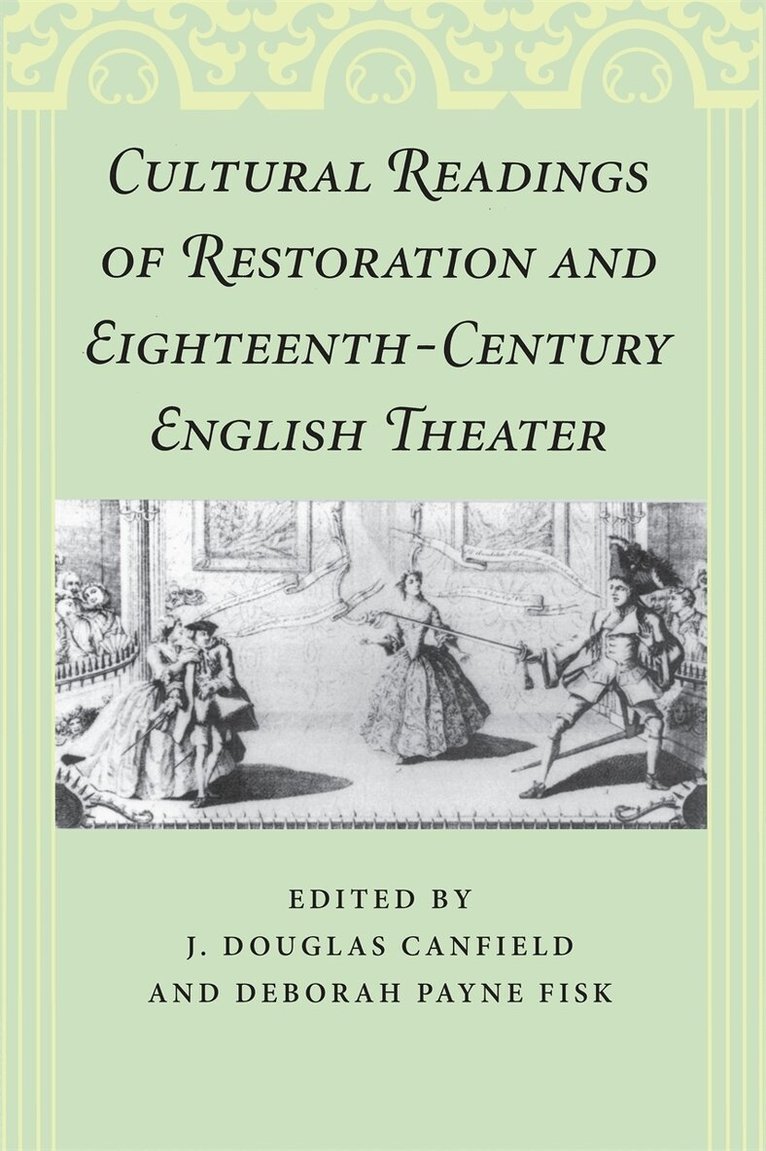
Ranging in approach from feminist to historicist, the eleven essays in this collection share the culturalist premise that the drama of late Stuart and early Georgian England helped to constitute the dominant ideology of the period. The contributors’ varied approaches allow for the reconsideration of libertinism, the politics of sexual desire, and other classic issues, as well as such newer concerns as the social construction of the first English actresses, empiricism as an emergent epistemological discourse, cultural anxiety about novelty and repetition, and shifting tropes of inherent worth.By reading well-known works in unexpected ways and focusing on less frequently studied dramatists, from Sedley, Motteux, Pix, and Behn to Manley, Trotter, and Shadwell, the contributors also test the limits of the canon. In addition, they suggest that earlier critical perceptions, perhaps even more than the “innate worth” of the plays, determined the shape of the canon.These essays present a different image of Restoration and eighteenth-century theater, one that reveals how the drama was a site as important for the negotiation of cultural meaning as were novels and verse satires.
1 347 kr
Skickas