J. L. Anderson - Böcker
Visar alla böcker från författaren J. L. Anderson. Handla med fri frakt och snabb leverans.
12 produkter
12 produkter
Del 10 - New Studies in Economic and Social History
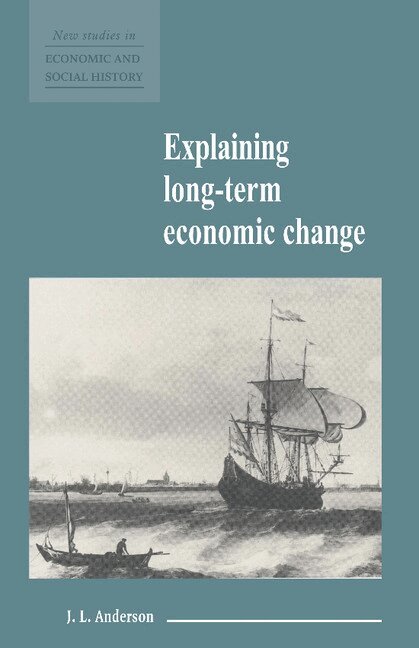
Explaining Long-Term Economic Change
Inbunden, Engelska, 1995
712 kr
Skickas inom 7-10 vardagar
This book provides an introduction to, and critical review of, the competing models that have been developed to explain long-term and large-scale economic change. The global pattern of production and distribution has its origins in the historical heritage of component societies and in their physical difference. Attempts to explain the social and economic dynamics which have produced this pattern are usually couched in the form of 'models'. These theoretical constructions are designed to reduce the infinite variety of historical experience to manageable proportions for analytical purposes and look primarily at causal factors seen to have been crucial in the process of change and development. This book examines and illustrates these factors and the various established models used to explain long-term economic change, with emphasis on European and Asian history over the early modern period, c.1400-1800.
Del 10 - New Studies in Economic and Social History
Explaining Long-Term Economic Change
Häftad, Engelska, 1995
331 kr
Skickas inom 7-10 vardagar
This book provides an introduction to, and critical review of, the competing models that have been developed to explain long-term and large-scale economic change. The global pattern of production and distribution has its origins in the historical heritage of component societies and in their physical difference. Attempts to explain the social and economic dynamics which have produced this pattern are usually couched in the form of 'models'. These theoretical constructions are designed to reduce the infinite variety of historical experience to manageable proportions for analytical purposes and look primarily at causal factors seen to have been crucial in the process of change and development. This book examines and illustrates these factors and the various established models used to explain long-term economic change, with emphasis on European and Asian history over the early modern period, c.1400-1800.
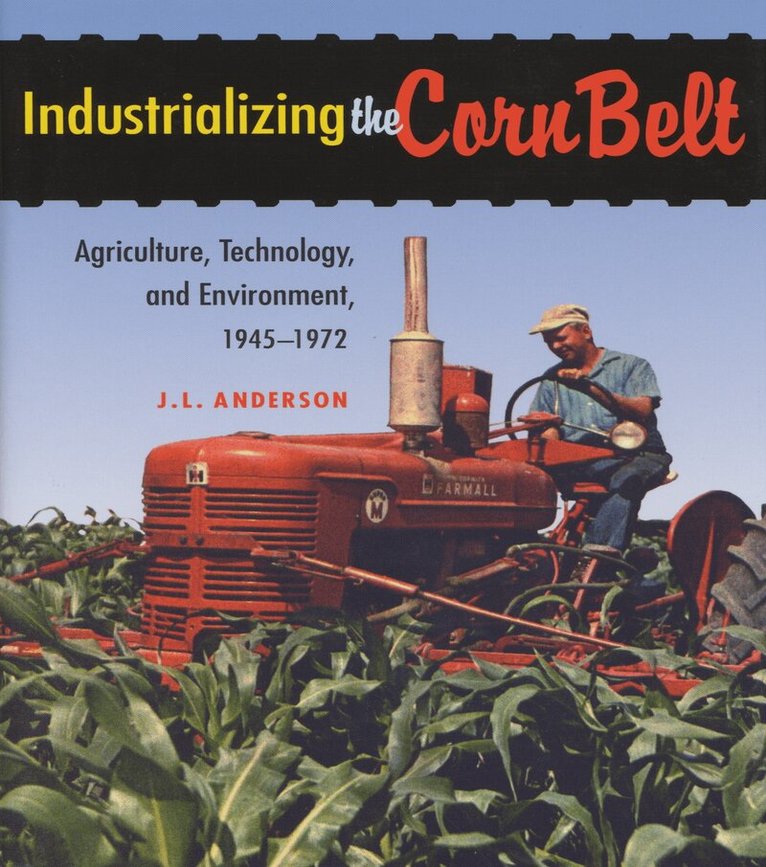
Industrializing the Corn Belt
Agriculture, Technology, and Environment, 1945–1972
Inbunden, Engelska, 2008
364 kr
Skickas inom 10-15 vardagar
From the late 1940s to the early 1970s, farmers in the Corn Belt transformed their region into a new, industrial powerhouse of large-scale production, mechanization, specialization, and efficiency. Many farm experts and implement manufacturers had urged farmers in this direction for decades, but it was the persistent labor shortage and cost-price squeeze following WWII that prompted farmers to pave the way to industrializing agriculture. Anderson examines the changes in Iowa, a representative state of the Corn Belt, in order to explore why farmers adopted particular technologies and how, over time, they integrated new tools and techniques.In addition to the impressive field machinery, grain storage facilities, and automated feeding systems were the less visible, but no less potent, chemical technologies—antibiotics and growth hormones administered to livestock, as well as insecticide, herbicide, and fertilizer applied to crops. Much of this new technology created unintended consequences: pesticides encouraged the proliferation of resistant strains of plants and insects while also polluting the environment and threatening wildlife, and the use of feed additives triggered concern about the health effects to consumers.In Industrializing the Corn Belt, J. L. Anderson explains that the cost of equipment and chemicals made unprecedented demands on farm capital, and in order to maximize production, farmers planted more acres with fewer but more profitable crops or specialized in raising large herds of a single livestock species. The industrialization of agriculture gave rural Americans a lifestyle resembling that of their urban and suburban counterparts. Yet the rural population continued to dwindle as farms required less human labor, and many small farmers, unable or unwilling to compete, chose to sell out.Based on farm records, cooperative extension reports, USDA publications, oral interviews, trade literature, and agricultural periodicals, Industrializing the Corn Belt offers a fresh look at an important period of revolutionary change in agriculture through the eyes of those who grew the crops, raised the livestock, implemented new technology, and ultimately made the decisions that transformed the nature of the family farm and the Midwestern landscape.
309 kr
Skickas inom 10-15 vardagar
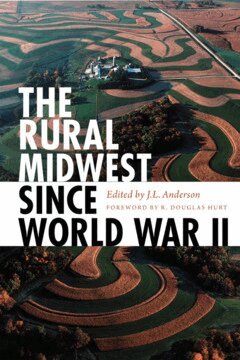
J.L. Anderson seeks to change the belief that the Midwest lacks the kind of geographic coherence, historical issues, and cultural touchstones that have informed regional identity in the American South, West, and Northeast. The goal of this illuminating volume is to demonstrate uniqueness in a region that has always been amorphous and is increasingly so. Midwesterners are a dynamic people who shaped the physical and social landscapes of the great midsection of the nation, and they are presented as such in this volume that offers a general yet informed overview of the region after World War II.The contributors—most of whom are Midwesterners by birth or residence—seek to better understand a particular piece of rural America, a place too often caricatured, misunderstood, and ignored. However, the rural landscape has experienced agricultural diversity and major shifts in land use. Farmers in the region have successfully raised new commodities from dairy and cherries to mint and sugar beets. The region has also been a place where community leaders fought to improve their economic and social well-being, women redefined their roles on the farm, and minorities asserted their own version of the American Dream.The rural Midwest is a regional melting pot, and contributors to this volume do not set out to sing its praises or, by contrast, assume the position of Midwestern modesty and self-deprecation. The essays herein rewrite the narrative of rural decline and crisis, and show through solid research and impeccable scholarship that rural Midwesterners have confronted and created challenges uniquely their own.
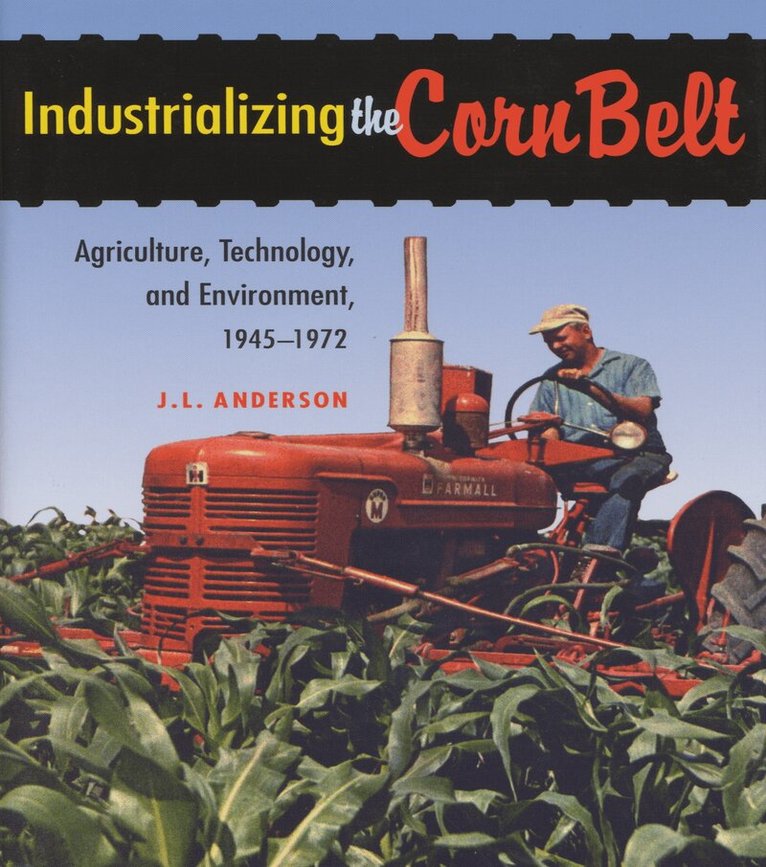
Industrializing the Corn Belt
Agriculture, Technology, and Environment, 1945–1972
Häftad, Engelska, 2016
268 kr
Skickas inom 10-15 vardagar
From the late 1940s to the early 1970s, farmers in the Corn Belt transformed their region into a new, industrial powerhouse of large-scale production, mechanization, specialization, and efficiency. Many farm experts and implement manufacturers had urged farmers in this direction for decades, but it was the persistent labor shortage and cost-price squeeze following WWII that prompted farmers to pave the way to industrializing agriculture. Anderson examines the changes in Iowa, a representative state of the Corn Belt, in order to explore why farmers adopted particular technologies and how, over time, they integrated new tools and techniques.In addition to the impressive field machinery, grain storage facilities, and automated feeding systems were the less visible, but no less potent, chemical technologies—antibiotics and growth hormones administered to livestock, as well as insecticide, herbicide, and fertilizer applied to crops. Much of this new technology created unintended consequences: pesticides encouraged the proliferation of resistant strains of plants and insects while also polluting the environment and threatening wildlife, and the use of feed additives triggered concern about the health effects to consumers.In Industrializing the Corn Belt, J. L. Anderson explains that the cost of equipment and chemicals made unprecedented demands on farm capital, and in order to maximize production, farmers planted more acres with fewer but more profitable crops or specialized in raising large herds of a single livestock species. The industrialization of agriculture gave rural Americans a lifestyle resembling that of their urban and suburban counterparts. Yet the rural population continued to dwindle as farms required less human labor, and many small farmers, unable or unwilling to compete, chose to sell out.Based on farm records, cooperative extension reports, USDA publications, oral interviews, trade literature, and agricultural periodicals, Industrializing the Corn Belt offers a fresh look at an important period of revolutionary change in agriculture through the eyes of those who grew the crops, raised the livestock, implemented new technology, and ultimately made the decisions that transformed the nature of the family farm and the Midwestern landscape.
Reconnaissance geologic map of the Columbia River basalt group, northern Oregon and western Idaho
USGS Open-File Report 81-797
Häftad, Engelska, 2013
253 kr
Skickas inom 3-6 vardagar
681 kr
Skickas inom 3-6 vardagar
164 kr
Skickas inom 5-8 vardagar
157 kr
Skickas inom 5-8 vardagar
213 kr
Skickas inom 5-8 vardagar
355 kr
Skickas inom 5-8 vardagar
237 kr
Skickas inom 5-8 vardagar