Jack Godwin – författare
Visar alla böcker från författaren Jack Godwin. Handla med fri frakt och snabb leverans.
5 produkter
5 produkter
Inbunden, Engelska, 2007
696 kr
Skickas inom 10-15 vardagar
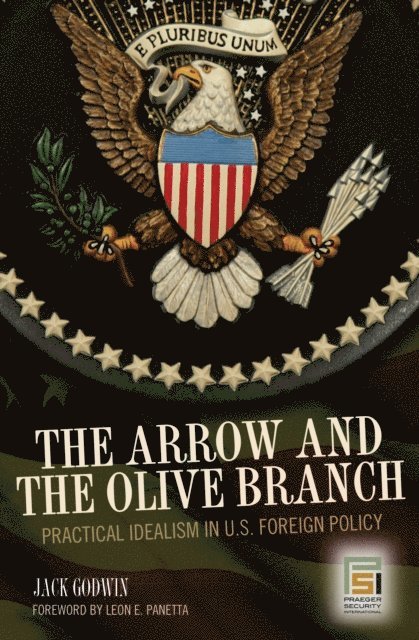
The Arrow and the Olive Branch tells a unique version of American history. Godwin tracks down every major presidential statement on foreign policy from George Washington to George W. Bush, reconstructs the doctrine of practical idealism, and guides the reader on a journey to rediscover America's timeless foreign policy principles.The Arrow and the Olive Branch is a cross between The Federalist Papers, the instructions our founding fathers wrote explaining how the Constitution should work, and The Prince, Niccolo Machiavelli's 16th-century treatise on statecraft. It begins with the 9/11 attacks, and then goes back to George Washington's 1796 Farewell Address, in which he warned his compatriots of the dangers of foreign entanglements. It then reconstructs the doctrine of practical idealism chronologically, examining every foreign policy precedent set by every president since Washington. Less than three decades after Washington left office, for example, James Monroe declared the Western Hemisphere off limits to future European colonization. In the mid-19th century, Ulysses Grant asserted that the Monroe Doctrine gave America the right to intervene in Cuba's fight for independence, but counseled restraint in the use of American power. In the early 20th century, Theodore Roosevelt redefined the scope of the Monroe Doctrine, asserting that America's sphere of influence included the entire world. After World War I, Woodrow Wilson envisioned a new international system based on open diplomacy, free trade, and self-determination.From gunboat diplomacy to dollar diplomacy, from world war to limited war, cold war to preemptive war, The Arrow and the Olive Branch tells a unique version of American history and illuminates many of the international challenges we face today. Anyone who believes the old adage that politics should end at the water's edge will find this book to be an invaluable resource. Relying exclusively on primary documents rather than secondary sources, the book is carefully researched and strictly nonpartisan. Despite shifting alliances, historical events, and technological advances, the doctrine of practical idealism has not changed much in more than 200 years.
E-bok
PDF, Engelska, 2007730 kr
Läs direkt efter köp
The Arrow and the Olive Branch tells a unique version of American history. Godwin tracks down every major presidential statement on foreign policy from George Washington to George W. Bush, reconstructs the doctrine of practical idealism, and guides the reader on a journey to rediscover America's timeless foreign policy principles.The Arrow and the Olive Branch is a cross between The Federalist Papers, the instructions our founding fathers wrote explaining how the Constitution should work, and The Prince, Niccolo Machiavelli's 16th-century treatise on statecraft. It begins with the 9/11 attacks, and then goes back to George Washington's 1796 Farewell Address, in which he warned his compatriots of the dangers of foreign entanglements. It then reconstructs the doctrine of practical idealism chronologically, examining every foreign policy precedent set by every president since Washington. Less than three decades after Washington left office, for example, James Monroe declared the Western Hemisphere off limits to future European colonization. In the mid-19th century, Ulysses Grant asserted that the Monroe Doctrine gave America the right to intervene in Cuba's fight for independence, but counseled restraint in the use of American power. In the early 20th century, Theodore Roosevelt redefined the scope of the Monroe Doctrine, asserting that America's sphere of influence included the entire world. After World War I, Woodrow Wilson envisioned a new international system based on open diplomacy, free trade, and self-determination.From gunboat diplomacy to dollar diplomacy, from world war to limited war, cold war to preemptive war, The Arrow and the Olive Branch tells a unique version of American history and illuminates many of the international challenges we face today. Anyone who believes the old adage that politics should end at the water's edge will find this book to be an invaluable resource. Relying exclusively on primary documents rather than secondary sources, the book is carefully researched and strictly nonpartisan. Despite shifting alliances, historical events, and technological advances, the doctrine of practical idealism has not changed much in more than 200 years.
Häftad, Engelska, 2022
183 kr
Skickas inom 5-8 vardagar
Häftad, Engelska, 2026
342 kr
Kommande
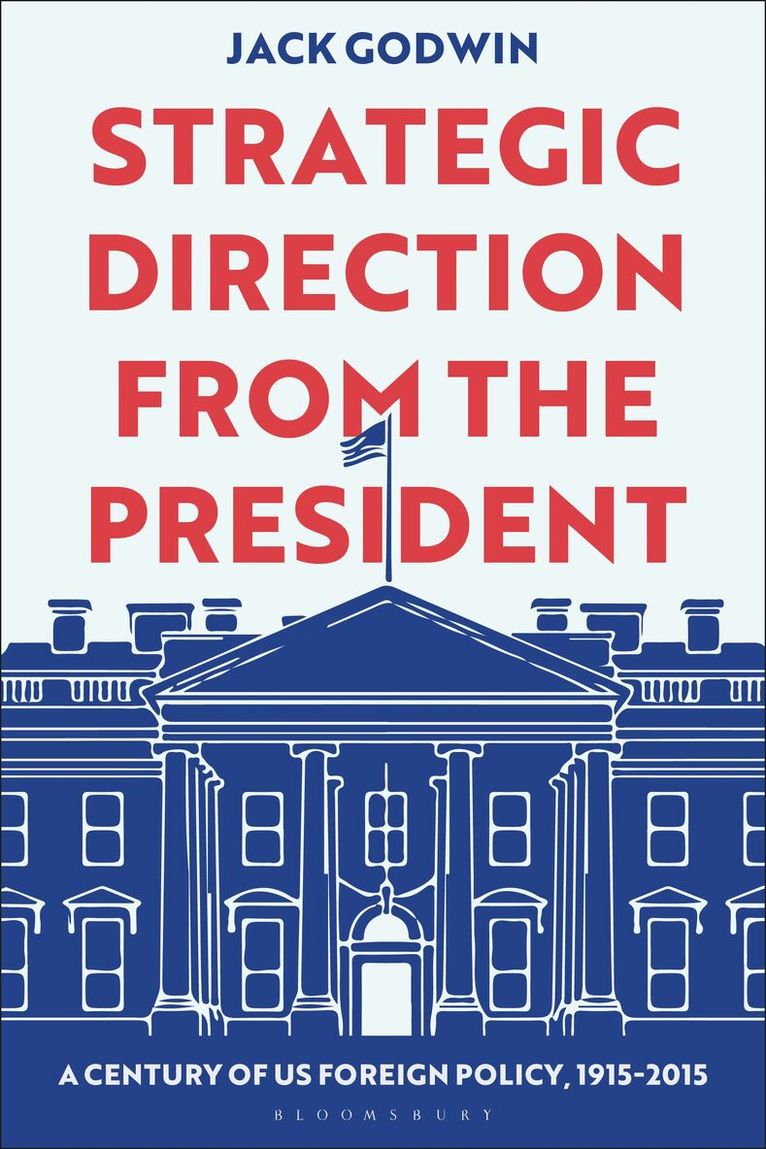
Investigates the strategy and intent of the American president in pursuit of national security, using a case study approach spanning the last century.Strategic Direction takes inspiration from the following sentence in Henry Kissinger’s Diplomacy: “In the American system of government, in which the president is the only nationally elected official, coherence in foreign policy emerges—if at all—from presidential pronouncements.” The conditional phrase—if at all—suggests coherence doesn’t happen by itself, doesn’t happen very often, and doesn’t last very long. Why not?To answer this question, Strategic Direction uses a case study approach spanning 1915-2015. The first case study begins in 1915 when Woodrow Wilson justifies his decision to remain neutral in the first world war. The last case study ends in 2015 with a warning from Barack Obama about the risks of perpetual war. Through an exploration of verbal and written communication, including documents, executive orders, memorandums, and other materials, this book examines how presidents determine and pursue their foreign policy priorities.
Inbunden, Engelska, 2026
1 276 kr
Kommande
Investigates the strategy and intent of the American president in pursuit of national security, using a case study approach spanning the last century.Strategic Direction takes inspiration from the following sentence in Henry Kissinger’s Diplomacy: “In the American system of government, in which the president is the only nationally elected official, coherence in foreign policy emerges—if at all—from presidential pronouncements.” The conditional phrase—if at all—suggests coherence doesn’t happen by itself, doesn’t happen very often, and doesn’t last very long. Why not?To answer this question, Strategic Direction uses a case study approach spanning 1915-2015. The first case study begins in 1915 when Woodrow Wilson justifies his decision to remain neutral in the first world war. The last case study ends in 2015 with a warning from Barack Obama about the risks of perpetual war. Through an exploration of verbal and written communication, including documents, executive orders, memorandums, and other materials, this book examines how presidents determine and pursue their foreign policy priorities.