Jacob Westberg – författare
Visar alla böcker från författaren Jacob Westberg. Handla med fri frakt och snabb leverans.
14 produkter
14 produkter
Häftad, Svenska, 2023
398 kr
Skickas
I denna bok presenteras en analys av de olika säkerhetsstrategier som Sverige tillämpat, från förlusten av Finland 1809 fram till den svenska Natoansökan 2022. Bland dessa strategier återfinns olika former av neutralitetspolitik, militärt samarbete med andra stater och strategier syftande till kollektiv säkerhet. Ansökan om medlemskap i Nato innebär att Sverige valt en försvarsstrategi som inte tidigare prövats under landets 200 år av militär alliansfrihet: kollektivt försvar. De svenska vägvalen förklaras med hjälp av forskning om strategi och internationell politik med ett särskilt fokus på småstaters speciella utmaningar. Denna nya och omarbetade upplaga avslutas med en analys av den utveckling som ledde fram till den svenska Natoansökan och de nya förutsättningar ett Natomedlemskap skapar för försvarssamarbeten med andra stater. Även övriga delar av texten har uppdaterats med hänsyn till ett framtida Natomedlemskap. Svenska säkerhetsstrategier är ett bidrag till forskningen om svensk försvars- och säkerhetspolitik och avsedd som kursbok till studenter vid Försvarshögskolan och vid statsvetenskapliga institutioner.
Inbunden, Engelska, 2020
2 201 kr
Skickas inom 10-15 vardagar
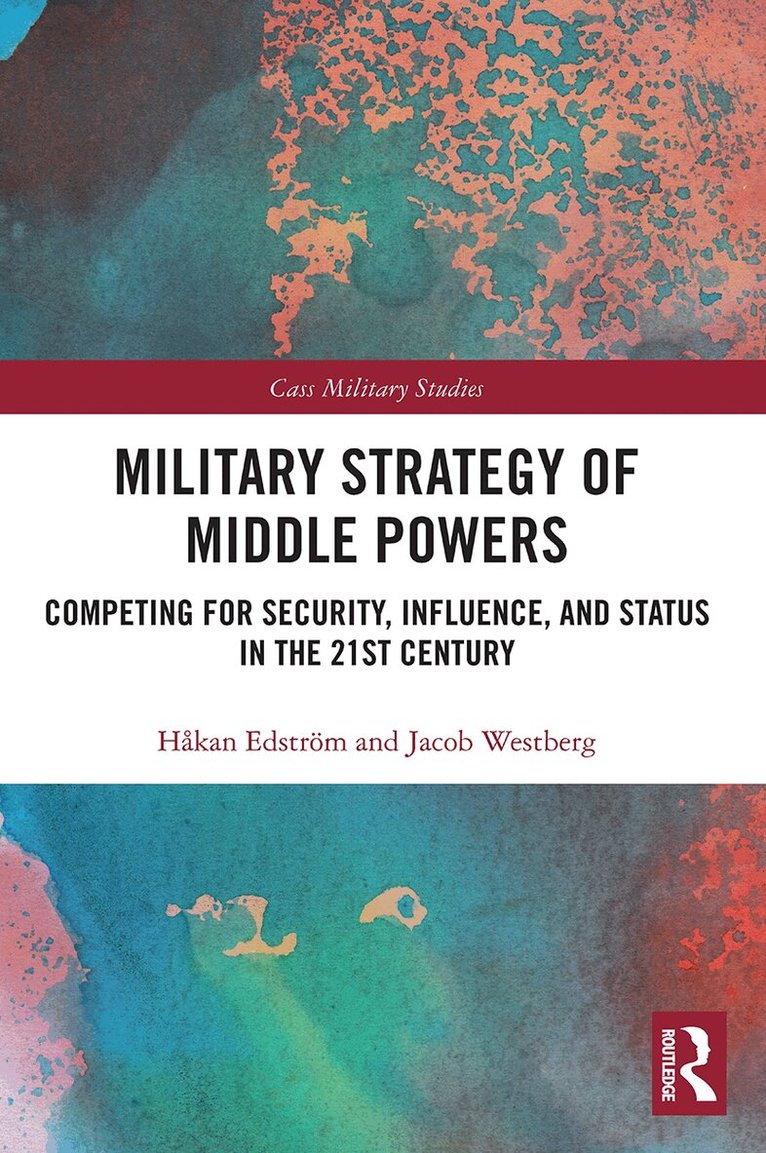
Military Strategy of Middle Powers explores to what degree twenty-first-century middle powers adjust their military strategies due to changes in the international order, such as the decline in US power.The overarching objective of the book is to explain continuity and change in the strategies of a group of middle powers during the twenty-first century. These strategies are described, compared, and explained through the lens of Realism. In order to find potential explanations for change or continuity within the cases, as well as for similarities and differences between the cases, the strategies of 11 ‘middle’ powers are analysed (Canada, Germany, Italy, Spain, Australia, Brazil, Indonesia, South Africa, India, Japan, and South Korea). This group of countries are considered similar in several important aspects, primarily regarding relative power capacity. When searching for potential explanations for different strategic behaviours among the middle powers, their unique regional characteristics are a key focus and, consequently, the impact of the structure and polarity, as well as the patterns of amity and enmity, of the regional context are analysed. The empirical investigation is focused on security strategies used since the terrorist attacks 9/11 2001, which was one of the first major challenges to US hegemony.This book will be of much interest to students of military and strategic studies, foreign policy, and International Relations in general.
Häftad, Engelska, 2022
625 kr
Skickas inom 10-15 vardagar
Military Strategy of Middle Powers explores to what degree twenty-first-century middle powers adjust their military strategies due to changes in the international order, such as the decline in US power.The overarching objective of the book is to explain continuity and change in the strategies of a group of middle powers during the twenty-first century. These strategies are described, compared, and explained through the lens of Realism. In order to find potential explanations for change or continuity within the cases, as well as for similarities and differences between the cases, the strategies of 11 ‘middle’ powers are analysed (Canada, Germany, Italy, Spain, Australia, Brazil, Indonesia, South Africa, India, Japan, and South Korea). This group of countries are considered similar in several important aspects, primarily regarding relative power capacity. When searching for potential explanations for different strategic behaviours among the middle powers, their unique regional characteristics are a key focus and, consequently, the impact of the structure and polarity, as well as the patterns of amity and enmity, of the regional context are analysed. The empirical investigation is focused on security strategies used since the terrorist attacks 9/11 2001, which was one of the first major challenges to US hegemony.This book will be of much interest to students of military and strategic studies, foreign policy, and International Relations in general.
Häftad, Engelska, 2020
672 kr
Skickas inom 10-15 vardagar
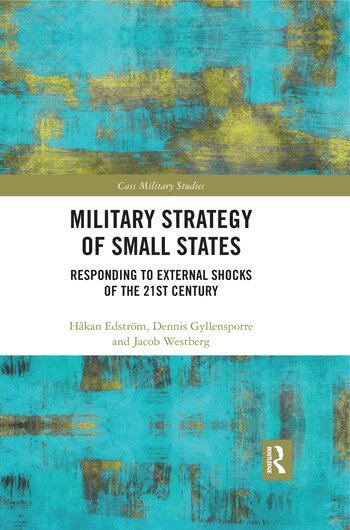
The book explores how small states adjust their military strategies in response to external shocks.Using primary sources from four Nordic countries, (Denmark, Finland, Norway, and Sweden), this volume explores how small states have adjusted their military strategies in response to external shocks of the 21st century. The 9/11 terrorist attacks, the Russian interventions in Georgia and Ukraine, and the rise of the Islamic State have all forced the Nordic states to adopt new strategies. While the responses have not been uniform, their differing relations to the EU and NATO have not prevented these countries from behaving similarly in military affairs. Limitations in military capacity has led all four countries to pursue strategies that include cooperation with more resourceful partners. It is necessary for them to cooperate with others to protect and promote their national interests. Moreover, the Nordic cosmopolitan outlook expresses milieu-shaping ambitions that we generally would not expect small states to pursue against a potential great power aggressor.This book will be of much interest to students of military strategy, defense studies, security studies, and international relations.
Inbunden, Engelska, 2021
2 201 kr
Skickas inom 10-15 vardagar
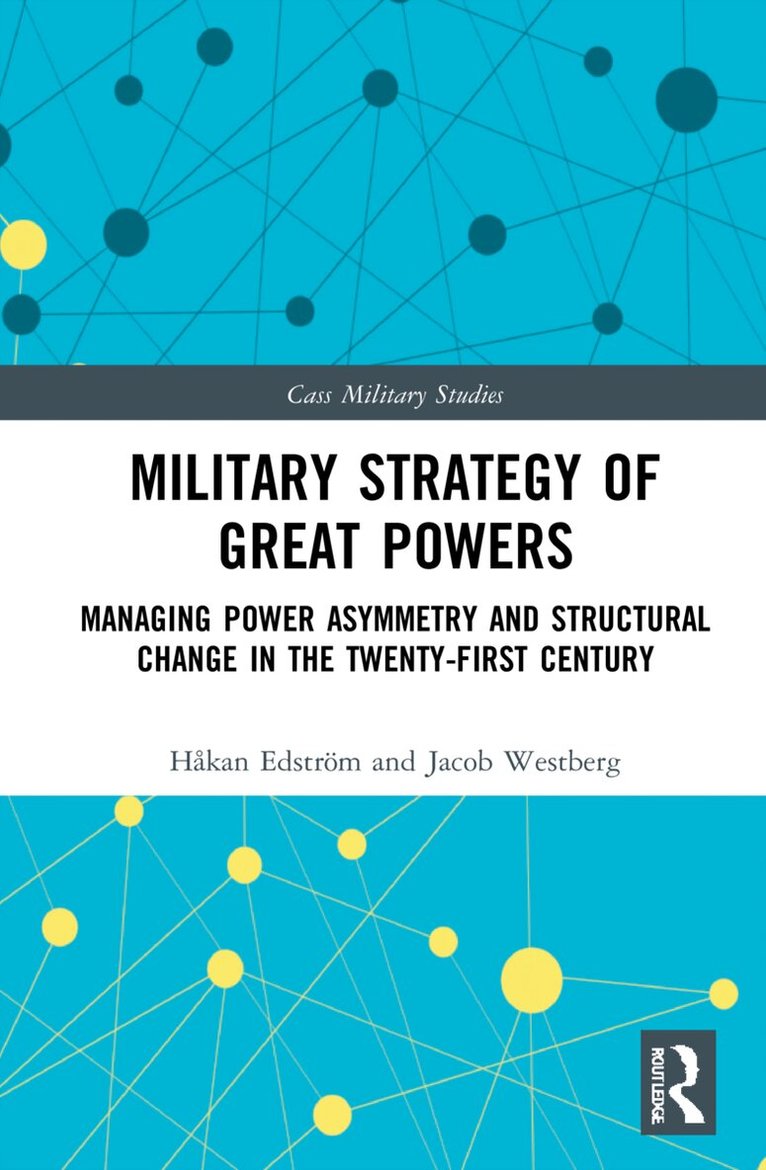
This book explores the military strategies of the five system-determining great powers during the twenty-first century.The book’s point of departure is that analyses of countries’ defence strategies should acknowledge that states come in various shapes and sizes and that their strategic choices are affected by their perceptions of their position in the international system and by power asymmetries between more and less resourceful states. This creates a diversity in strategies that is often overlooked in theoretically oriented analyses. The book examines how five major powers – the United States, China, the United Kingdom, France and Russia – have adjusted their strategies to improve or maintain their relative position and to manage power asymmetries during the twenty-first century. It also develops and applies an analytical framework for exploring and categorising the strategies pursued by the five major powers which combines elements of structural realism with research on power transition theory and status competition. The concluding chapter addresses questions related to stability and change in the present international system.This book will be of interest to students of strategic studies, foreign policy, and International Relations.
Häftad, Engelska, 2023
625 kr
Skickas inom 10-15 vardagar
This book explores the military strategies of the five system-determining great powers during the twenty-first century.The book’s point of departure is that analyses of countries’ defence strategies should acknowledge that states come in various shapes and sizes and that their strategic choices are affected by their perceptions of their position in the international system and by power asymmetries between more and less resourceful states. This creates a diversity in strategies that is often overlooked in theoretically oriented analyses. The book examines how five major powers – the United States, China, the United Kingdom, France and Russia – have adjusted their strategies to improve or maintain their relative position and to manage power asymmetries during the twenty-first century. It also develops and applies an analytical framework for exploring and categorising the strategies pursued by the five major powers which combines elements of structural realism with research on power transition theory and status competition. The concluding chapter addresses questions related to stability and change in the present international system.This book will be of interest to students of strategic studies, foreign policy, and International Relations.
Inbunden, Engelska, 2022
1 931 kr
Skickas inom 10-15 vardagar
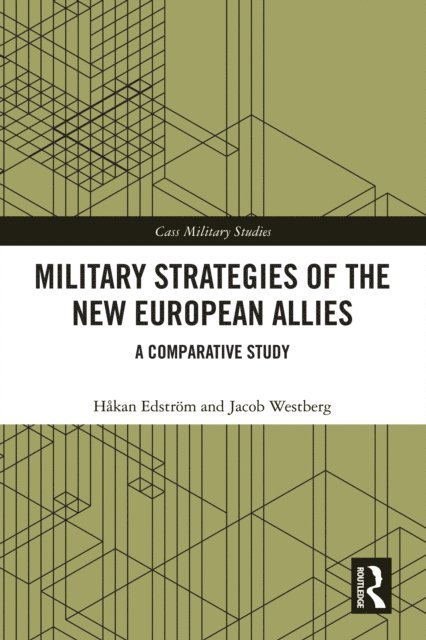
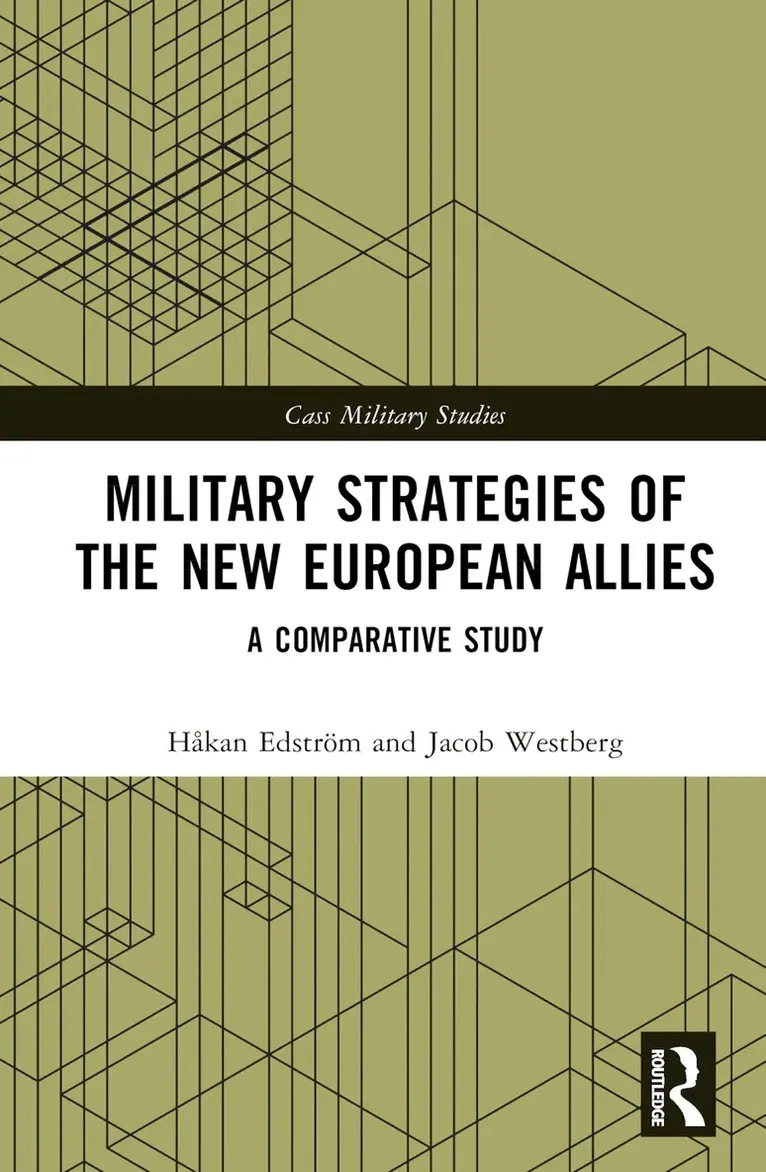
This book analyses how and to what extent ex-communist states have adjusted their defence strategies since joining the EU and NATO, and how differences and similarities between their strategies can be explained. Between 1999 and 2013, four phases of enlargement took place when the European Union (EU) and NATO allowed 11 new former communist states to enter both organisations. These states share some common attributes and experiences related to strategic culture and common experiences during the Cold War era that can potentially explain similarities in behaviour and preferences among them. However, the strategic adjustments among these states are far from uniform. In an effort to explain these differences, the book introduces three intervening variables: (1) differences in relative power and position in the international system, (2) national geographical characteristics; and (3) historical experiences related to formative periods of state-building processes as well as wars and armed conflicts. Empirically, the book strives to present and analyse the defence strategies of each of the new allies by conducting a structured focused comparison of official strategic documents from the twenty-first century for each of the 11 cases. Theoretically and methodologically, it introduces an analytical framework enabling us to explain both similarities and differences in the formulation of the strategies of the 11 states, and to shed light on their external and internal efforts to promote their strategic interest by operationalising the dependent variable - defence strategy. The analytical framework combines elements of structural realism with classical realism, and constructivist research on unit-level characteristics related to relative power and perceptions of strategic exposure. This book will be of much interest to students of strategic studies, European Union policy, NATO and International Relations in general.
Häftad, Engelska, 2024
584 kr
Skickas inom 10-15 vardagar
This book analyses how and to what extent ex-communist states have adjusted their defence strategies since joining the EU and NATO, and how differences and similarities between their strategies can be explained. Between 1999 and 2013, four phases of enlargement took place when the European Union (EU) and NATO allowed 11 new former communist states to enter both organisations. These states share some common attributes and experiences related to strategic culture and common experiences during the Cold War era that can potentially explain similarities in behaviour and preferences among them. However, the strategic adjustments among these states are far from uniform. In an effort to explain these differences, the book introduces three intervening variables: (1) differences in relative power and position in the international system, (2) national geographical characteristics; and (3) historical experiences related to formative periods of state-building processes as well as wars and armed conflicts. Empirically, the book strives to present and analyse the defence strategies of each of the new allies by conducting a structured focused comparison of official strategic documents from the twenty-first century for each of the 11 cases. Theoretically and methodologically, it introduces an analytical framework enabling us to explain both similarities and differences in the formulation of the strategies of the 11 states, and to shed light on their external and internal efforts to promote their strategic interest by operationalising the dependent variable - defence strategy. The analytical framework combines elements of structural realism with classical realism, and constructivist research on unit-level characteristics related to relative power and perceptions of strategic exposure. This book will be of much interest to students of strategic studies, European Union policy, NATO and International Relations in general.
Inbunden, Engelska, 2024
2 000 kr
Skickas inom 10-15 vardagar
This book presents a systematic comparison of the military strategies pursued by five great powers, eight major middle powers and eight middle powers during the early twenty-first century.In addition to mapping the strategic priorities of these states, the study develops and applies a theoretical framework to explain differences and similarities in their strategic priorities. Moreover, the work evaluates how the stability of the present international system, and the US-led liberal international order (LIO), is affected by the strategies pursued by the US and other leading states. The book aims to contribute to previous research in three ways. First, it intervenes in the debate on the stability of the unipolar system and the US-led international order by offering a theoretical framework and an empirical approach for exploring and explaining the strategic priorities and defence strategies of different categories of states. Second, it aims to fill a void in research on strategy – the lack of a comparative and systematic approach to contemporary strategy that facilitates and guides systematic comparisons and analyses of the alignment and military strategies pursued by both major powers and less powerful states. Third, it provides an empirical contribution to the debate on the stability of the unipolar system and the US-led international order by presenting a documentation of the strategic priorities of 21 states based on primary sources, consisting of official documents such as national security and defence strategies and defence bills. In the conclusion, the authors summarise the empirical findings on the system level, the regional level and the unit level and present their overarching conclusions for the whole project.This book will be of much interest to students of military and strategic studies, defence studies, foreign policy and international relations in general.
Häftad, Engelska, 2026
639 kr
Skickas inom 10-15 vardagar
This book presents a systematic comparison of the military strategies pursued by five great powers, eight major middle powers and eight middle powers during the early twenty-first century.In addition to mapping the strategic priorities of these states, the study develops and applies a theoretical framework to explain differences and similarities in their strategic priorities. Moreover, the work evaluates how the stability of the present international system, and the US-led liberal international order (LIO), is affected by the strategies pursued by the US and other leading states. The book aims to contribute to previous research in three ways. First, it intervenes in the debate on the stability of the unipolar system and the US-led international order by offering a theoretical framework and an empirical approach for exploring and explaining the strategic priorities and defence strategies of different categories of states. Second, it aims to fill a void in research on strategy – the lack of a comparative and systematic approach to contemporary strategy that facilitates and guides systematic comparisons and analyses of the alignment and military strategies pursued by both major powers and less powerful states. Third, it provides an empirical contribution to the debate on the stability of the unipolar system and the US-led international order by presenting a documentation of the strategic priorities of 21 states based on primary sources, consisting of official documents such as national security and defence strategies and defence bills. In the conclusion, the authors summarise the empirical findings on the system level, the regional level and the unit level and present their overarching conclusions for the whole project.This book will be of much interest to students of military and strategic studies, defence studies, foreign policy and international relations in general.
Inbunden, Engelska, 2018
2 137 kr
Skickas inom 10-15 vardagar
The book explores how small states adjust their military strategies in response to external shocks.Using primary sources from four Nordic countries, (Denmark, Finland, Norway, and Sweden), this volume explores how small states have adjusted their military strategies in response to external shocks of the 21st century. The 9/11 terrorist attacks, the Russian interventions in Georgia and Ukraine, and the rise of the Islamic State have all forced the Nordic states to adopt new strategies. While the responses have not been uniform, their differing relations to the EU and NATO have not prevented these countries from behaving similarly in military affairs. Limitations in military capacity has led all four countries to pursue strategies that include cooperation with more resourceful partners. It is necessary for them to cooperate with others to protect and promote their national interests. Moreover, the Nordic cosmopolitan outlook expresses milieu-shaping ambitions that we generally would not expect small states to pursue against a potential great power aggressor.This book will be of much interest to students of military strategy, defense studies, security studies, and international relations.
Häftad, Svenska, 2012
362 kr
Skickas
På senare år har konkreta initiativ tagits för att fördjupa samarbetet kring försvars- och säkerhetspolitik mellan de nordiska länderna. Detta har skett genom att kalla kriget tog slut och genom östblockets upplösning.Stoltenbergrapporten från våren 2009, där 13 områden för ett fördjupat och utökat nordiskt säkerhetspolitiskt samarbete och bildandet av Nordic Defence Cooperation (Nordefco) hösten samma år utgör två av de viktigaste exemplen på ett förnyat intresse för nordiskt samarbete i försvars- och säkerhetsfrågor.I denna bok analyseras och diskuteras de långsiktiga förutsättningarna för ett fördjupat nordiskt samarbete inom försvars- och säkerhetspolitiken med utgångspunkt i exempel inriktade mot konkreta samarbetsprojekt som omfattat två eller flera av de nordiska länderna. De olika delstudierna sträcker sig över hela tidsperioden från Napoleonkrigens slut till 2000-talet. Detta 200-åriga perspektiv är motiverat av ambitionen att analysera hur samarbetet påverkats av olikartade internationella förhållanden i fråga om maktfördelningen mellan stormakterna samt närvaro och frånvaro av olika internationella samarbetsorganisationer.Delstudierna syftar till att belysa två övergripande frågeställningar:1. Den eventuella förekomsten av en nordisk säkerhetspolitisk modell, en grundläggande samsyn mellan de nordiska länderna i frågor om mål och metoder för internationellt säkerhetspolitiskt samarbete. Existensen av en sådan samsyn kan förmodas underlätta samarbetet mellan länderna också på lång sikt.2. De internationella och nationella faktorer som verkat pådrivande respektive återhållande på det säkerhetspolitiska samarbetet. Rörande denna andra fråga anknyter de olika delstudierna till generella påverkansfaktorer för länders säkerhetspolitiska vägval som hämtats från forskning kring internationell politik. Studierna omfattar de fyra stora nordiska länderna, Danmark, Finland, Norge och Sverige. Island har inte tagits med i undersökningen på grund av alltför stora skillnader i strategiskt läge och maktresurser jämfört med övriga nordiska länder. Även de baltiska länderna står utanför undersökningen eftersom dessa under större delen av 1800- och 1900-talet inte kunnat bedriva en egen utrikes- och säkerhetspolitik.
Kartonnage, Svenska, 2017
319 kr
Skickas
Det nordiska samarbetet har tjänat de nordiska invånarna väl under efterkrigstiden och kan karakteriseras av fyra spårbyten.Efter det första spårbytet på 1950-talet bildades, efter ett kollapsat försök till en skandinavisk försvarsgemenskap, Nordiska rådet och individens fria rörlighet inom Norden stod i fokus. Det andra spårbytet ägde rum 20 år senare, då man övergick till ett sektorbaserat programsamarbete genom ett fyrtiotal nordiska institutioner och tre centrala politiska sekretariat.Efter ytterligare ungefär 20 år sker ett tredje spårbyte i det finländska och det svenska EU-inträdets fotspår. Då misslyckas försöket att geografiskt bygga upp ett s.k. trepelarsystem inom Nordiska rådet.Det fjärde spårbytet, huvudämnet i denna antologi, började 2007 2009 då ett nordiskt försvarspolitiskt samarbete formades. NORDEFCO bildas, Thorvald Stoltenbergs rapport 2009, en nordisk solidaritetsförklaring antas av utrikesministrarna 2011 och civil säkerhet blir viktigare. Därmed är cirkeln sluten. Samarbetet är tillbaka där man började: säkerheten. För ögonblicket lever vi mellan en europeisk säkerhetsgemenskap och Rysslands geopolitiska återkomst. Att sätta säkerheten främst känns angeläget i Norden.Förord av Björn von Sydow Medverkande författare: Birgitta Agazzi, Alyson Bailes, Mats Bergquist, Bengt Dennis, Jan-Erik Enestam, Lars-Åke Engblom, Gunnel Gustafsson, Henrik Hagemann, Arne Hardis, Guy Lindström, Snjólaug Ólafsdóttir, Carolina Sandö, Hans H. Skei, Fredrik Sterzel, Bengt Sundelius, Jacob Westberg, Claes Wiklund, Lena Wiklund, Henrik Wilén och Henrik Wivel.
Häftad, Svenska, 2015
305 kr
Tillfälligt slut
En nationell säkerhetsstrategi handlar ytterst om hur den politiska ledningen inriktar, utvecklar och utnyttjar olika former av maktmedel för att uppnå landets övergripande säkerhetspolitiska mål.I denna bok presenteras en sammanhållen analys av de olika säkerhetsstrategier som Sverige tillämpat under den 200-åriga fredsperioden sedan Napoleonkrigens slut. Bland dessa säkerhetsstrategier återfinns exempel på såväl olika former av neutralitetspolitik som olika former av allianspolitik samt strategier syftande till kollektiv säkerhet. De svenska vägvalen analyseras och förklaras med hjälp av teorier om säkerhetspolitiska strategier och internationell politik. Boken avslutas med en analys av dagens svenska försvarspolitik.Boken Svenska säkerhetsstrategier är främst avsedd att användas i utbildning på högskolenivå, men den avser också att lämna ett bidrag till forskning och debatt om svensk säkerhetspolitik.