Håkan Edström – författare
Visar alla böcker från författaren Håkan Edström. Handla med fri frakt och snabb leverans.
14 produkter
14 produkter
Inbunden, Engelska, 2020
2 201 kr
Skickas inom 10-15 vardagar
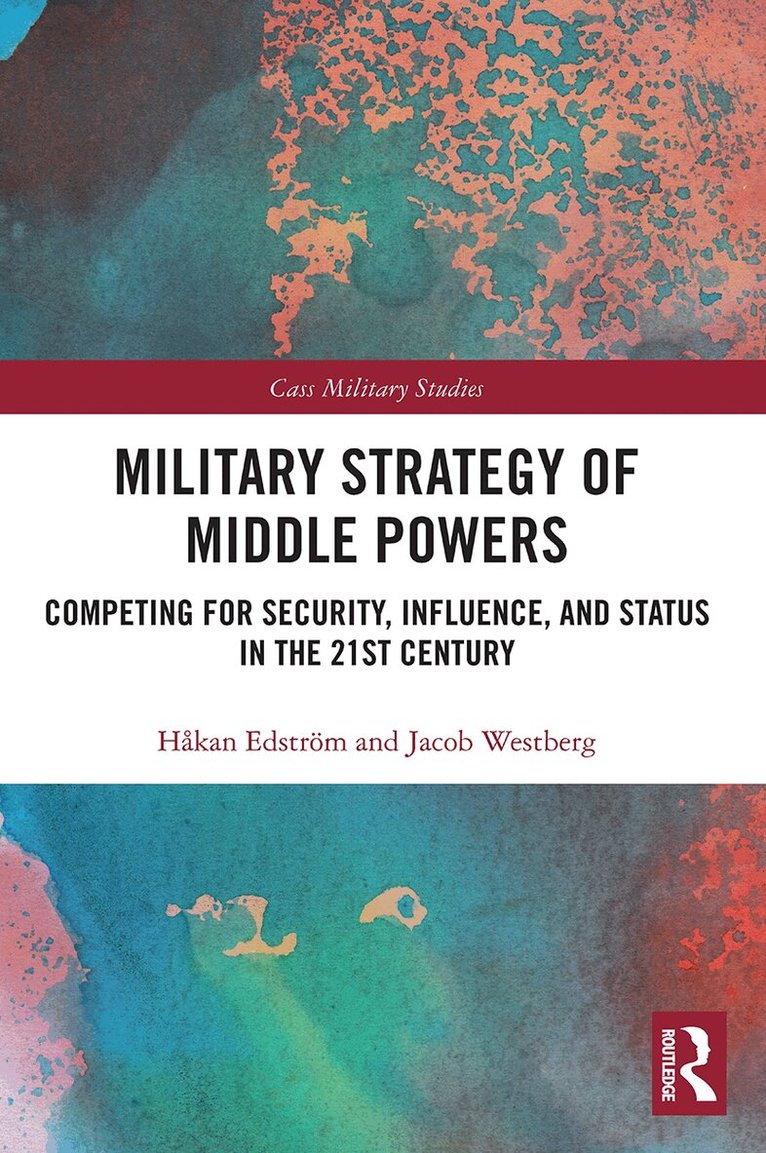
Military Strategy of Middle Powers explores to what degree twenty-first-century middle powers adjust their military strategies due to changes in the international order, such as the decline in US power.The overarching objective of the book is to explain continuity and change in the strategies of a group of middle powers during the twenty-first century. These strategies are described, compared, and explained through the lens of Realism. In order to find potential explanations for change or continuity within the cases, as well as for similarities and differences between the cases, the strategies of 11 ‘middle’ powers are analysed (Canada, Germany, Italy, Spain, Australia, Brazil, Indonesia, South Africa, India, Japan, and South Korea). This group of countries are considered similar in several important aspects, primarily regarding relative power capacity. When searching for potential explanations for different strategic behaviours among the middle powers, their unique regional characteristics are a key focus and, consequently, the impact of the structure and polarity, as well as the patterns of amity and enmity, of the regional context are analysed. The empirical investigation is focused on security strategies used since the terrorist attacks 9/11 2001, which was one of the first major challenges to US hegemony.This book will be of much interest to students of military and strategic studies, foreign policy, and International Relations in general.
Häftad, Engelska, 2022
625 kr
Skickas inom 10-15 vardagar
Military Strategy of Middle Powers explores to what degree twenty-first-century middle powers adjust their military strategies due to changes in the international order, such as the decline in US power.The overarching objective of the book is to explain continuity and change in the strategies of a group of middle powers during the twenty-first century. These strategies are described, compared, and explained through the lens of Realism. In order to find potential explanations for change or continuity within the cases, as well as for similarities and differences between the cases, the strategies of 11 ‘middle’ powers are analysed (Canada, Germany, Italy, Spain, Australia, Brazil, Indonesia, South Africa, India, Japan, and South Korea). This group of countries are considered similar in several important aspects, primarily regarding relative power capacity. When searching for potential explanations for different strategic behaviours among the middle powers, their unique regional characteristics are a key focus and, consequently, the impact of the structure and polarity, as well as the patterns of amity and enmity, of the regional context are analysed. The empirical investigation is focused on security strategies used since the terrorist attacks 9/11 2001, which was one of the first major challenges to US hegemony.This book will be of much interest to students of military and strategic studies, foreign policy, and International Relations in general.
Häftad, Engelska, 2020
672 kr
Skickas inom 10-15 vardagar
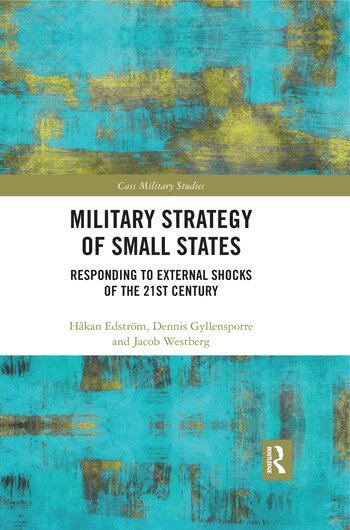
The book explores how small states adjust their military strategies in response to external shocks.Using primary sources from four Nordic countries, (Denmark, Finland, Norway, and Sweden), this volume explores how small states have adjusted their military strategies in response to external shocks of the 21st century. The 9/11 terrorist attacks, the Russian interventions in Georgia and Ukraine, and the rise of the Islamic State have all forced the Nordic states to adopt new strategies. While the responses have not been uniform, their differing relations to the EU and NATO have not prevented these countries from behaving similarly in military affairs. Limitations in military capacity has led all four countries to pursue strategies that include cooperation with more resourceful partners. It is necessary for them to cooperate with others to protect and promote their national interests. Moreover, the Nordic cosmopolitan outlook expresses milieu-shaping ambitions that we generally would not expect small states to pursue against a potential great power aggressor.This book will be of much interest to students of military strategy, defense studies, security studies, and international relations.
Inbunden, Engelska, 2021
2 201 kr
Skickas inom 10-15 vardagar
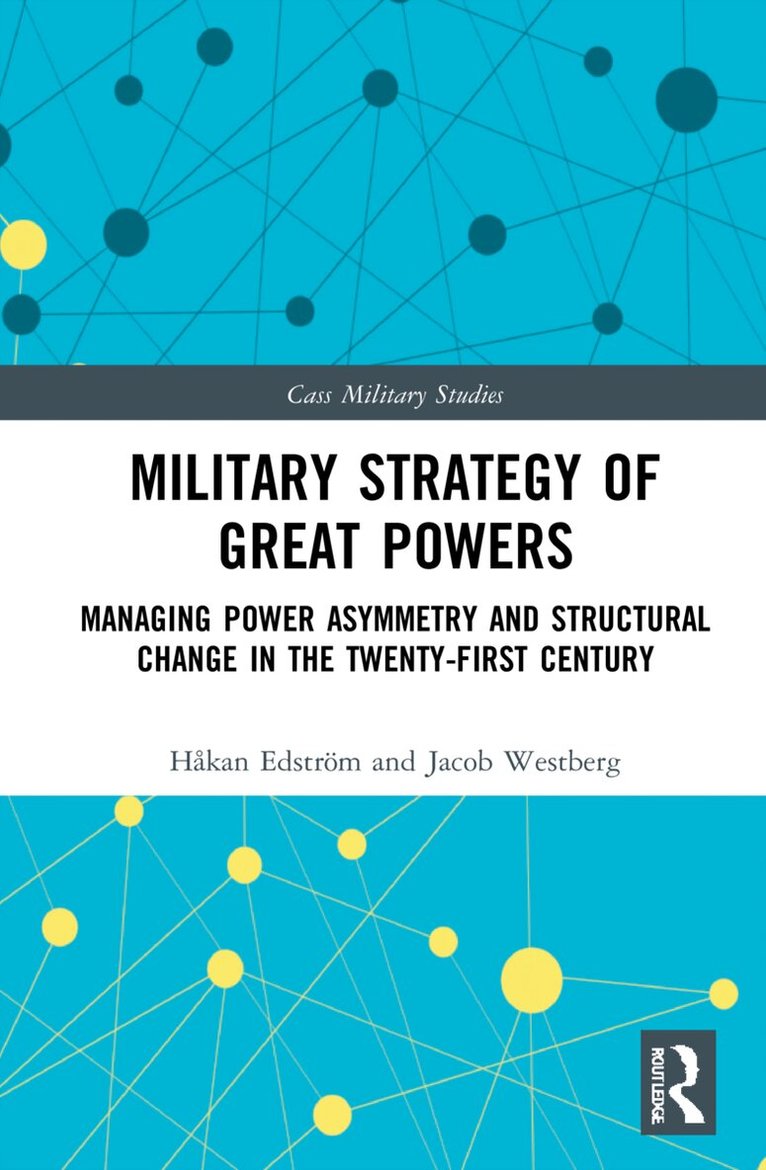
This book explores the military strategies of the five system-determining great powers during the twenty-first century.The book’s point of departure is that analyses of countries’ defence strategies should acknowledge that states come in various shapes and sizes and that their strategic choices are affected by their perceptions of their position in the international system and by power asymmetries between more and less resourceful states. This creates a diversity in strategies that is often overlooked in theoretically oriented analyses. The book examines how five major powers – the United States, China, the United Kingdom, France and Russia – have adjusted their strategies to improve or maintain their relative position and to manage power asymmetries during the twenty-first century. It also develops and applies an analytical framework for exploring and categorising the strategies pursued by the five major powers which combines elements of structural realism with research on power transition theory and status competition. The concluding chapter addresses questions related to stability and change in the present international system.This book will be of interest to students of strategic studies, foreign policy, and International Relations.
Häftad, Engelska, 2023
625 kr
Skickas inom 10-15 vardagar
This book explores the military strategies of the five system-determining great powers during the twenty-first century.The book’s point of departure is that analyses of countries’ defence strategies should acknowledge that states come in various shapes and sizes and that their strategic choices are affected by their perceptions of their position in the international system and by power asymmetries between more and less resourceful states. This creates a diversity in strategies that is often overlooked in theoretically oriented analyses. The book examines how five major powers – the United States, China, the United Kingdom, France and Russia – have adjusted their strategies to improve or maintain their relative position and to manage power asymmetries during the twenty-first century. It also develops and applies an analytical framework for exploring and categorising the strategies pursued by the five major powers which combines elements of structural realism with research on power transition theory and status competition. The concluding chapter addresses questions related to stability and change in the present international system.This book will be of interest to students of strategic studies, foreign policy, and International Relations.
Inbunden, Engelska, 2022
1 931 kr
Skickas inom 10-15 vardagar
This book analyses how and to what extent ex-communist states have adjusted their defence strategies since joining the EU and NATO, and how differences and similarities between their strategies can be explained. Between 1999 and 2013, four phases of enlargement took place when the European Union (EU) and NATO allowed 11 new former communist states to enter both organisations. These states share some common attributes and experiences related to strategic culture and common experiences during the Cold War era that can potentially explain similarities in behaviour and preferences among them. However, the strategic adjustments among these states are far from uniform. In an effort to explain these differences, the book introduces three intervening variables: (1) differences in relative power and position in the international system, (2) national geographical characteristics; and (3) historical experiences related to formative periods of state-building processes as well as wars and armed conflicts. Empirically, the book strives to present and analyse the defence strategies of each of the new allies by conducting a structured focused comparison of official strategic documents from the twenty-first century for each of the 11 cases. Theoretically and methodologically, it introduces an analytical framework enabling us to explain both similarities and differences in the formulation of the strategies of the 11 states, and to shed light on their external and internal efforts to promote their strategic interest by operationalising the dependent variable - defence strategy. The analytical framework combines elements of structural realism with classical realism, and constructivist research on unit-level characteristics related to relative power and perceptions of strategic exposure. This book will be of much interest to students of strategic studies, European Union policy, NATO and International Relations in general.
Häftad, Engelska, 2024
584 kr
Skickas inom 10-15 vardagar
This book analyses how and to what extent ex-communist states have adjusted their defence strategies since joining the EU and NATO, and how differences and similarities between their strategies can be explained. Between 1999 and 2013, four phases of enlargement took place when the European Union (EU) and NATO allowed 11 new former communist states to enter both organisations. These states share some common attributes and experiences related to strategic culture and common experiences during the Cold War era that can potentially explain similarities in behaviour and preferences among them. However, the strategic adjustments among these states are far from uniform. In an effort to explain these differences, the book introduces three intervening variables: (1) differences in relative power and position in the international system, (2) national geographical characteristics; and (3) historical experiences related to formative periods of state-building processes as well as wars and armed conflicts. Empirically, the book strives to present and analyse the defence strategies of each of the new allies by conducting a structured focused comparison of official strategic documents from the twenty-first century for each of the 11 cases. Theoretically and methodologically, it introduces an analytical framework enabling us to explain both similarities and differences in the formulation of the strategies of the 11 states, and to shed light on their external and internal efforts to promote their strategic interest by operationalising the dependent variable - defence strategy. The analytical framework combines elements of structural realism with classical realism, and constructivist research on unit-level characteristics related to relative power and perceptions of strategic exposure. This book will be of much interest to students of strategic studies, European Union policy, NATO and International Relations in general.
Inbunden, Engelska, 2024
2 000 kr
Skickas inom 10-15 vardagar
This book presents a systematic comparison of the military strategies pursued by five great powers, eight major middle powers and eight middle powers during the early twenty-first century.In addition to mapping the strategic priorities of these states, the study develops and applies a theoretical framework to explain differences and similarities in their strategic priorities. Moreover, the work evaluates how the stability of the present international system, and the US-led liberal international order (LIO), is affected by the strategies pursued by the US and other leading states. The book aims to contribute to previous research in three ways. First, it intervenes in the debate on the stability of the unipolar system and the US-led international order by offering a theoretical framework and an empirical approach for exploring and explaining the strategic priorities and defence strategies of different categories of states. Second, it aims to fill a void in research on strategy – the lack of a comparative and systematic approach to contemporary strategy that facilitates and guides systematic comparisons and analyses of the alignment and military strategies pursued by both major powers and less powerful states. Third, it provides an empirical contribution to the debate on the stability of the unipolar system and the US-led international order by presenting a documentation of the strategic priorities of 21 states based on primary sources, consisting of official documents such as national security and defence strategies and defence bills. In the conclusion, the authors summarise the empirical findings on the system level, the regional level and the unit level and present their overarching conclusions for the whole project.This book will be of much interest to students of military and strategic studies, defence studies, foreign policy and international relations in general.
Häftad, Engelska, 2026
639 kr
Skickas inom 10-15 vardagar
This book presents a systematic comparison of the military strategies pursued by five great powers, eight major middle powers and eight middle powers during the early twenty-first century.In addition to mapping the strategic priorities of these states, the study develops and applies a theoretical framework to explain differences and similarities in their strategic priorities. Moreover, the work evaluates how the stability of the present international system, and the US-led liberal international order (LIO), is affected by the strategies pursued by the US and other leading states. The book aims to contribute to previous research in three ways. First, it intervenes in the debate on the stability of the unipolar system and the US-led international order by offering a theoretical framework and an empirical approach for exploring and explaining the strategic priorities and defence strategies of different categories of states. Second, it aims to fill a void in research on strategy – the lack of a comparative and systematic approach to contemporary strategy that facilitates and guides systematic comparisons and analyses of the alignment and military strategies pursued by both major powers and less powerful states. Third, it provides an empirical contribution to the debate on the stability of the unipolar system and the US-led international order by presenting a documentation of the strategic priorities of 21 states based on primary sources, consisting of official documents such as national security and defence strategies and defence bills. In the conclusion, the authors summarise the empirical findings on the system level, the regional level and the unit level and present their overarching conclusions for the whole project.This book will be of much interest to students of military and strategic studies, defence studies, foreign policy and international relations in general.
Inbunden, Engelska, 2018
2 137 kr
Skickas inom 10-15 vardagar
The book explores how small states adjust their military strategies in response to external shocks.Using primary sources from four Nordic countries, (Denmark, Finland, Norway, and Sweden), this volume explores how small states have adjusted their military strategies in response to external shocks of the 21st century. The 9/11 terrorist attacks, the Russian interventions in Georgia and Ukraine, and the rise of the Islamic State have all forced the Nordic states to adopt new strategies. While the responses have not been uniform, their differing relations to the EU and NATO have not prevented these countries from behaving similarly in military affairs. Limitations in military capacity has led all four countries to pursue strategies that include cooperation with more resourceful partners. It is necessary for them to cooperate with others to protect and promote their national interests. Moreover, the Nordic cosmopolitan outlook expresses milieu-shaping ambitions that we generally would not expect small states to pursue against a potential great power aggressor.This book will be of much interest to students of military strategy, defense studies, security studies, and international relations.
Häftad, Svenska, 2014
307 kr
Skickas inom 5-8 vardagar
Att utforma en försvarsdoktrin betyder att inom en given ekonomisk ram balansera förmågan att hantera hot och risker som ligger nära i tiden med behovet av att skapa långsiktig handlingsfrihet genom att utveckla kapacitet mot möjliga framtida hot och risker. Trots att flera argumenterat för vikten av balans finns få exempel på hur detta realiseras. Denna bok förklarar utvecklingen av svensk försvarsdoktrin sedan kalla krigets slut, och stödjer sig främst på officiella tryck från de politiska beslutsprocesserna.Håkan Edström är docent i statsvetenskap och universitetslektor i krigsvetenskap vid Strategiavdelningen vid Försvarshögskolan.Dennis Gyllensporre är fil. dr och gästforskare vid Försvarshögskolan och Uppsala universitet. Han är yrkesofficer och tjänstgör vid Försvarsmaktens högkvarter.
Häftad, Engelska, 2014
254 kr
Skickas inom 5-8 vardagar
Despite their different experiences during the Second World War Denmark, Finland, Norway and Sweden are often regarded as, in many ways, similar welfare states. However, their approach to the EU and Nato in matters of security and defence politics, differs and this indicates that they might not be that similar after all. But they have all been active contributors to the efforts of conflict management by the international community. Providing military units to peace support operations all over the globe is consequently yet another similarity. In this book the strategic decision making procedures of the four states are explored and compared.
Häftad, Engelska, 2024
538 kr
Skickas inom 5-8 vardagar
In today s dynamic geopolitical landscape, Force Commanders in United Nations peacekeeping operations play a pivotal role in the politico-diplomatic process for the accomplishment of the Mission s mandate. Charged with the daunting task of leading multinational forces in some of the world s most complex and often volatile environments, they are the torchbearer of the noble mission of safeguarding peace, protecting civilians, and contributing to the peacemaking and preventive diplomacy process. Lieutenant General Dennis Gyllensporre, drawing from his extensive experience as the Former Force Commander of the United Nations Multidimensional Integrated Stabilization Mission in Mali (MINUSMA), along with the scholarly expertise of Professor Håkan Edström, provides a comprehensive exploration of the multifaceted responsibilities and leadership challenges faced by Force Commanders. The themes covered in this book are not merely academic exercises, but reflections of real-world complexities encountered in peacekeeping operations. From the art of managing nonviolent military measures to the intricacies of military diplomacy and peacekeeping mediation, the book offers a compelling journey into the realm of peacekeeping leadership, drawing upon the rich experiences of former Force Commanders who have served on the frontlines of some of the most challenging peacekeeping missions.
Häftad, Svenska, 2024
502 kr
This book studies why and how Northern Europe needs to further strengthen its deterrence and defence posture, nationally and collectively, against a consistently aggressive Russia. The authors compare developments in nine countries through the lens of physical, conceptual and moral factors, identifies asymmetries and advantages in military power with historical and intellectual context, and relates regional security to developments in NATO and the EU.