Jacqueline Jenkinson - Böcker
Visar alla böcker från författaren Jacqueline Jenkinson. Handla med fri frakt och snabb leverans.
6 produkter
6 produkter
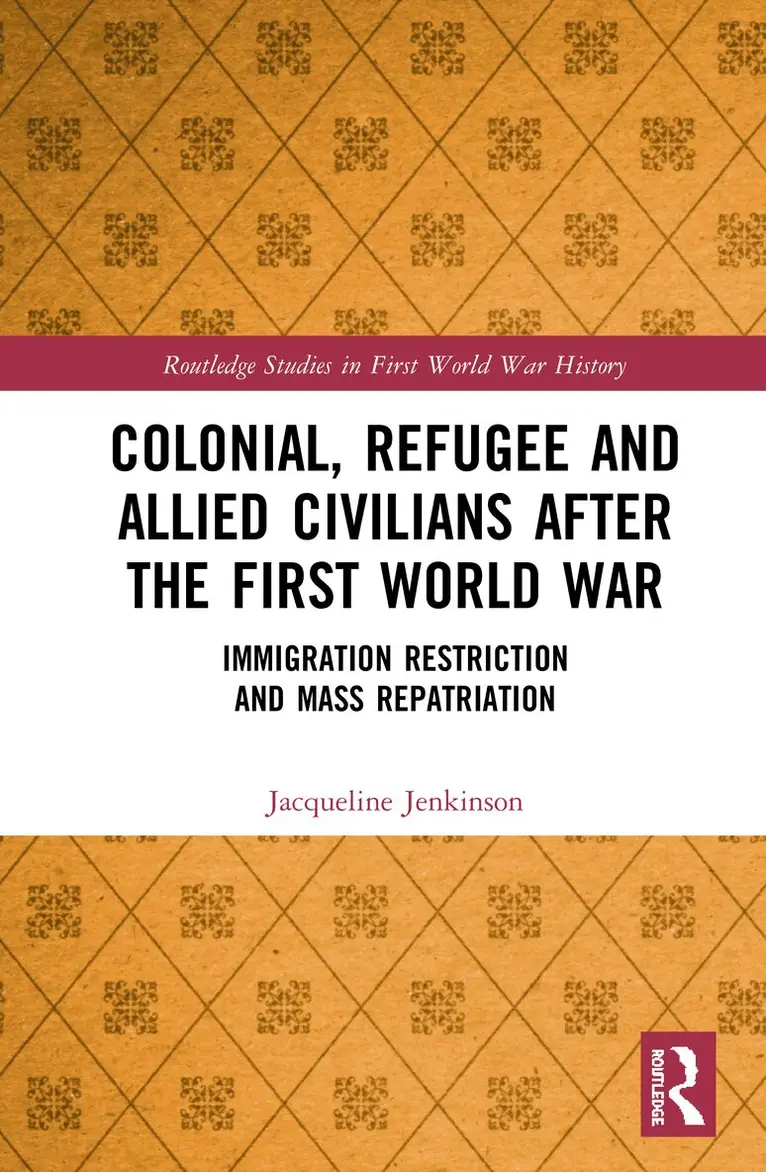
Colonial, Refugee and Allied Civilians after the First World War
Immigration Restriction and Mass Repatriation
Inbunden, Engelska, 2020
2 150 kr
Skickas inom 10-15 vardagar
Following the First World War and in actions that challenged Britain’s reputation as a liberal democracy, various government departments implemented policies of mass repatriation from Britain of populations of colonial and friendly migrants and refugees. Many of those repatriated had played a significant part in the war effort and had given valuable service in the combat zones and on the home front: serving in the armed forces, in labour battalions and employed in key wartime industries, such as munitions work, the merchant navy and wartime construction. This book sets out to uncover why central government decided to implement a policy of repatriation of "friendly" peoples after the war. It also explores the imposition of wartime and post-war legal restrictions on these groups as part of a major shift in policy towards reducing the settlement and limiting the employment of overseas populations in Britain.
663 kr
Skickas inom 10-15 vardagar
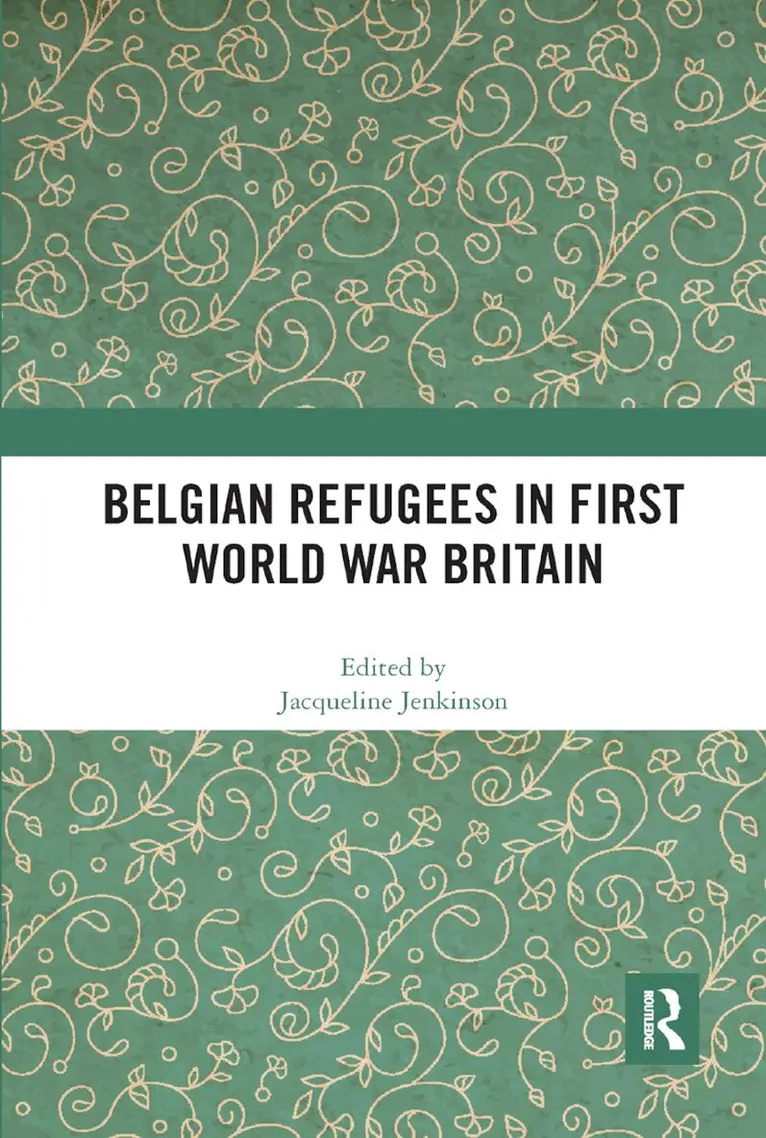
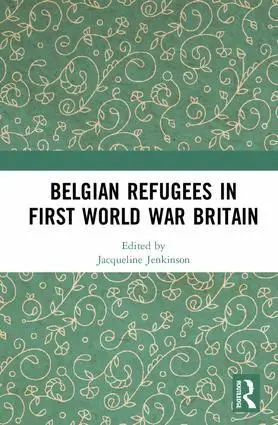
Around 250,000 Belgian refugees who fled the German invasion spent the First World War in Britain – the largest refugee presence Britain has ever witnessed. Welcomed in a wave of humanitarian sympathy for ‘Poor Little Belgium’, within a few months Belgian exiles were pushed off the front pages of newspapers by the news of direct British involvement in the war. Following rapid repatriation at British government expense in late 1918 and 1919 Belgian refugees were soon lost from public memory with few memorials or markers of their mass presence.Reactions to Belgian refugees discussed in this book include the mixed responses of local populations to the refugee presence, which ranged from extensive charitable efforts to public and trade union protests aimed at protecting local jobs and housing. This book also explores the roles of central and local government agencies which supported and employed Belgian refugees en masse yet also used them as a propaganda tool to publicise German outrages against civilians to encourage support for the Allied war effort. This book covers responses to Belgian refugees in England, Scotland, Ireland and Wales in a Home Front wartime episode which generated intense public interest and charitable and government action. This book was originally published as a special issue of Immigrants and Minorities: Historical Studies in Ethnicity, Migration and Diaspora.
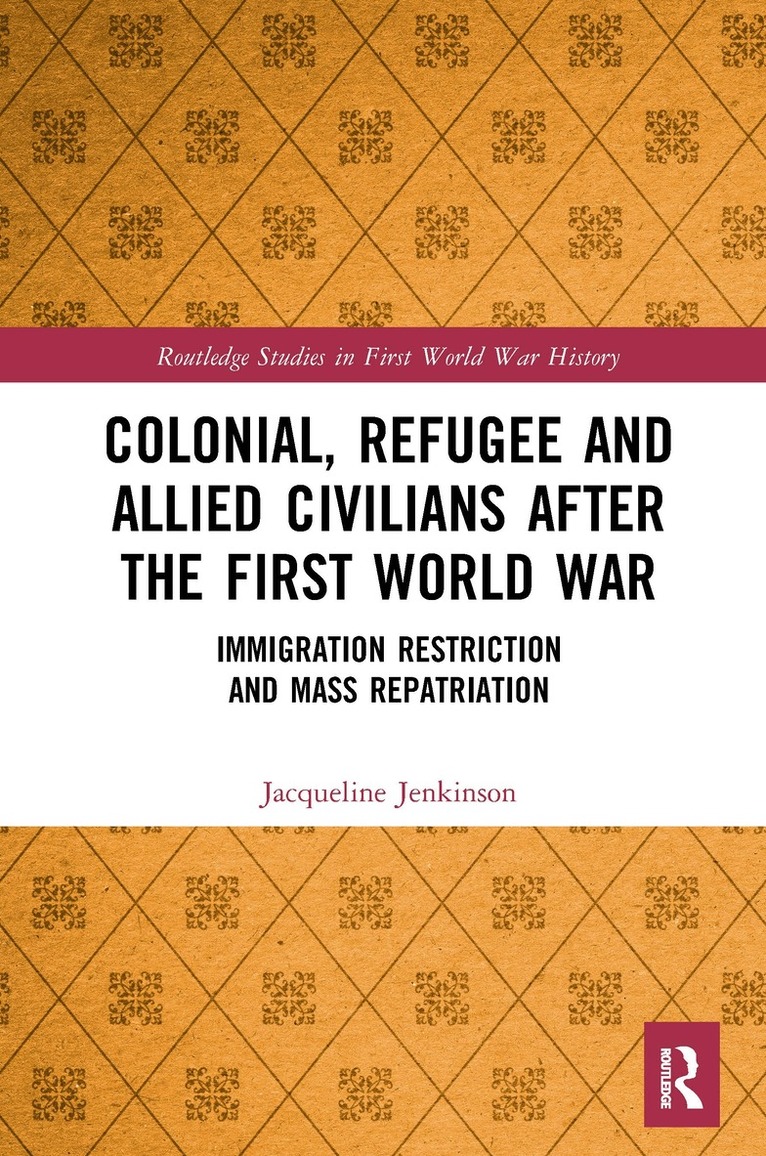
Colonial, Refugee and Allied Civilians after the First World War
Immigration Restriction and Mass Repatriation
Häftad, Engelska, 2021
649 kr
Skickas inom 10-15 vardagar
Following the First World War and in actions that challenged Britain’s reputation as a liberal democracy, various government departments implemented policies of mass repatriation from Britain of populations of colonial and friendly migrants and refugees. Many of those repatriated had played a significant part in the war effort and had given valuable service in the combat zones and on the home front: serving in the armed forces, in labour battalions and employed in key wartime industries, such as munitions work, the merchant navy and wartime construction. This book sets out to uncover why central government decided to implement a policy of repatriation of "friendly" peoples after the war. It also explores the imposition of wartime and post-war legal restrictions on these groups as part of a major shift in policy towards reducing the settlement and limiting the employment of overseas populations in Britain.
2 219 kr
Skickas inom 10-15 vardagar
Around 250,000 Belgian refugees who fled the German invasion spent the First World War in Britain – the largest refugee presence Britain has ever witnessed. Welcomed in a wave of humanitarian sympathy for ‘Poor Little Belgium’, within a few months Belgian exiles were pushed off the front pages of newspapers by the news of direct British involvement in the war. Following rapid repatriation at British government expense in late 1918 and 1919 Belgian refugees were soon lost from public memory with few memorials or markers of their mass presence.Reactions to Belgian refugees discussed in this book include the mixed responses of local populations to the refugee presence, which ranged from extensive charitable efforts to public and trade union protests aimed at protecting local jobs and housing. This book also explores the roles of central and local government agencies which supported and employed Belgian refugees en masse yet also used them as a propaganda tool to publicise German outrages against civilians to encourage support for the Allied war effort. This book covers responses to Belgian refugees in England, Scotland, Ireland and Wales in a Home Front wartime episode which generated intense public interest and charitable and government action. This book was originally published as a special issue of Immigrants and Minorities: Historical Studies in Ethnicity, Migration and Diaspora.
Del 5 - Postcolonialism Across the Disciplines
Black 1919
Riots, Racism and Resistance in Imperial Britain
Häftad, Engelska, 2019
480 kr
Skickas inom 7-10 vardagar
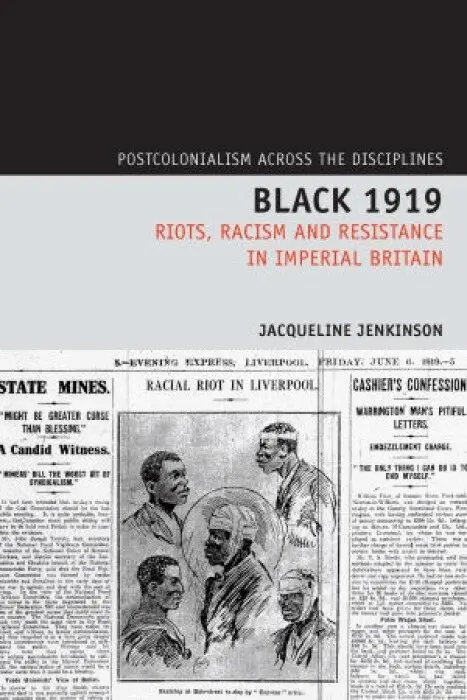
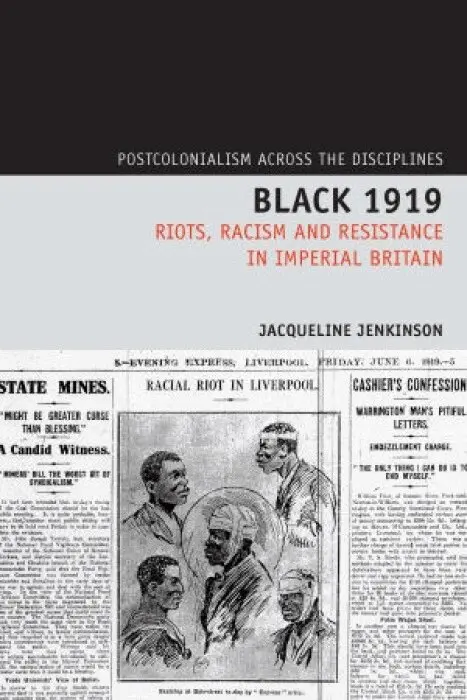
The riots that broke out in various British port cities in 1919 were a dramatic manifestation of a wave of global unrest that affected Britain, parts of its empire, continental Europe and North America during and in the wake of the First World War. During the riots, crowds of white working-class people targeted black workers, their families and black-owned businesses and property. One of the chief sources of violent confrontation in the run-down port areas was the ‘colour’ bar implemented by the sailors’ trades unions campaigning to keep black, Arab and Asian sailors off British ships in a time of increasing job competition. Black 1919 sets out the economic and social causes of the riots and their impact on Britain’s relationship with its empire and its colonial subjects. The riots are also considered within the wider context of rioting elsewhere on the fringes of the Atlantic world as black people came in increased numbers into urban and metropolitan settings where they competed with working-class white people for jobs and housing during and after the First World War. The book details the events of the port riots in Britain, with chapters devoted to assessing the motivations and make-up of the rioting crowds, examining police procedures during the riots, considering the court cases that followed, and looking at the longer-term consequences for the black British workers and their families. Black 1919 is a stark and timely reminder of the violent racist conflict that emerged after the First World War and the shockwaves that reverberated around the Empire.
Del 5 - Postcolonialism Across the Disciplines
Black 1919
Riots, Racism and Resistance in Imperial Britain
Inbunden, Engelska, 2009
1 897 kr
Skickas inom 7-10 vardagar
The riots that broke out in various British port cities in 1919 were a dramatic manifestation of a wave of global unrest that affected Britain, parts of its empire, continental Europe and North America during and in the wake of the First World War. During the riots, crowds of white working-class people targeted black workers, their families and black-owned businesses and property. One of the chief sources of violent confrontation in the run-down port areas was the ‘colour’ bar implemented by the sailors’ trades unions campaigning to keep black, Arab and Asian sailors off British ships in a time of increasing job competition. Black 1919 sets out the economic and social causes of the riots and their impact on Britain’s relationship with its empire and its colonial subjects. The riots are also considered within the wider context of rioting elsewhere on the fringes of the Atlantic world as black people came in increased numbers into urban and metropolitan settings where they competed with working-class white people for jobs and housing during and after the First World War. The book details the events of the port riots in Britain, with chapters devoted to assessing the motivations and make-up of the rioting crowds, examining police procedures during the riots, considering the court cases that followed, and looking at the longer-term consequences for the black British workers and their families. Black 1919 is a stark and timely reminder of the violent racist conflict that emerged after the First World War and the shockwaves that reverberated around the Empire.