
James Beebe – författare
Visar alla böcker från författaren James Beebe. Handla med fri frakt och snabb leverans.
6 produkter
6 produkter
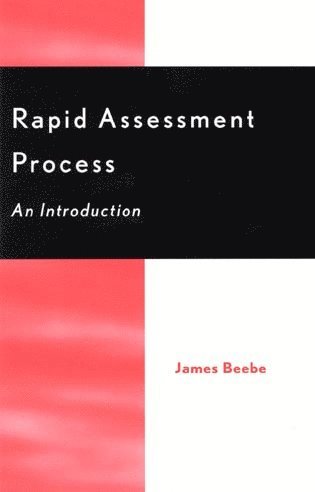
Häftad, Engelska, 2001
674 kr
Skickas inom 5-8 vardagar
A newer edition of this book is available at the following address: https://rowman.com/ISBN/9780759123212RapidAssessment Process (RAP) has gone under many names but invariably uses the techniques of fieldwork and ethnography in a telescoped manner to provide solid, field-based research findings for use by policymakers and program planners. It uses an emic perspective, a team of researchers, triangulation of research findings, and iterative process to produce high-quality research in a fraction of the time taken by traditional ethnography. Long used for third world projects, RAP is now being used to inform policy in many different settings. This volume is the first introduction to this group of methods, explaining to researchers and to students how to do RAP research well. The author, an international development professional who has been doing RAP studies for over two decades, clearly outlines the process, promise and pitfalls of RAP in this brief volume. Included are many examples of successful RAP studies and clear guidance to readers on how to embark on their own RAP research.
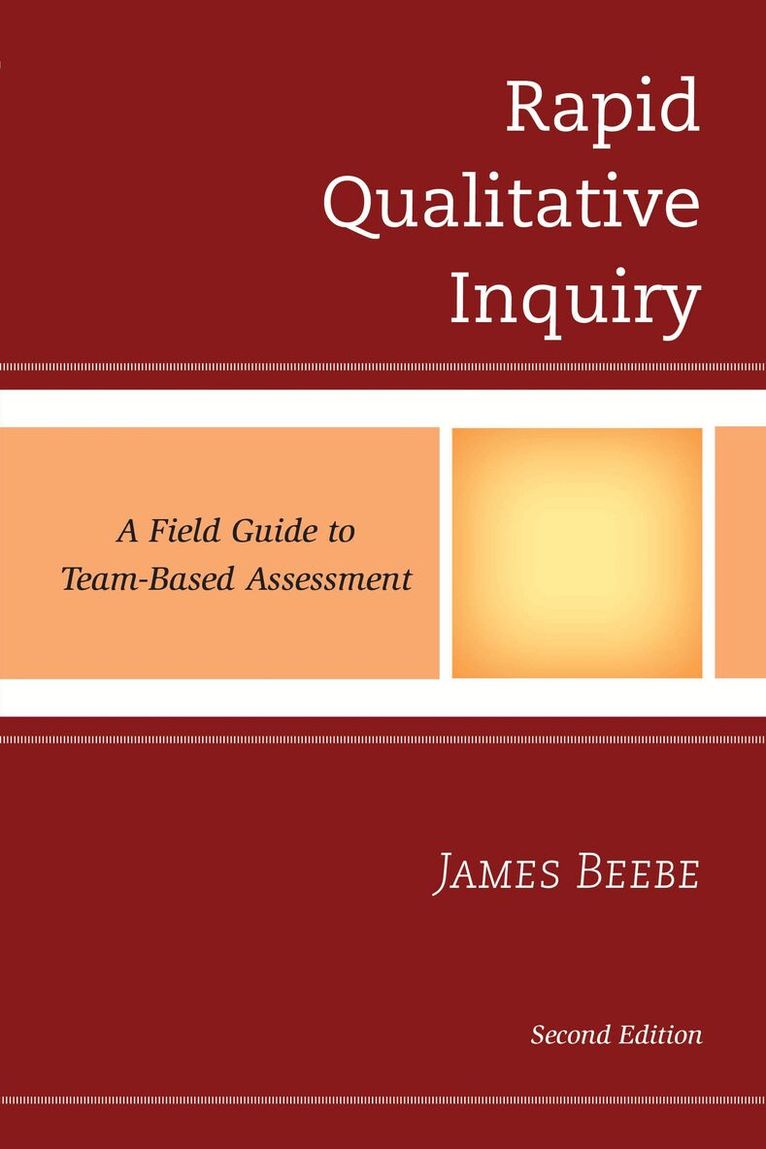
Inbunden, Engelska, 2014
1 292 kr
Skickas inom 10-15 vardagar
Practitioners in need of timely results for program and policy planning—and students looking forrealistic research projects—will find solutions in Rapid Qualitative Inquiry (RQI), a team-based,applied research method designed to quickly develop an insider’s perspective on and preliminaryunderstanding of complicated “on-the-ground” situations.In this accessible field guide to RQI, James Beebe provides an introduction to research thatsubstitutes teamwork for long-term fieldwork; uses iterative data collection, data analysis, andadditional data collection; triangulates data from multiple sources; and applies techniques andconcepts from ethnography and case study research. Extensive examples make clear that “rapid”does not mean “rushed” and that rigorous RQI depends upon flexibility rather than an arbitrarylist of techniques. Throughout, Beebe’s clear prose guides interdisciplinary readers through theprocess, promise, and potential pitfalls of RQI.
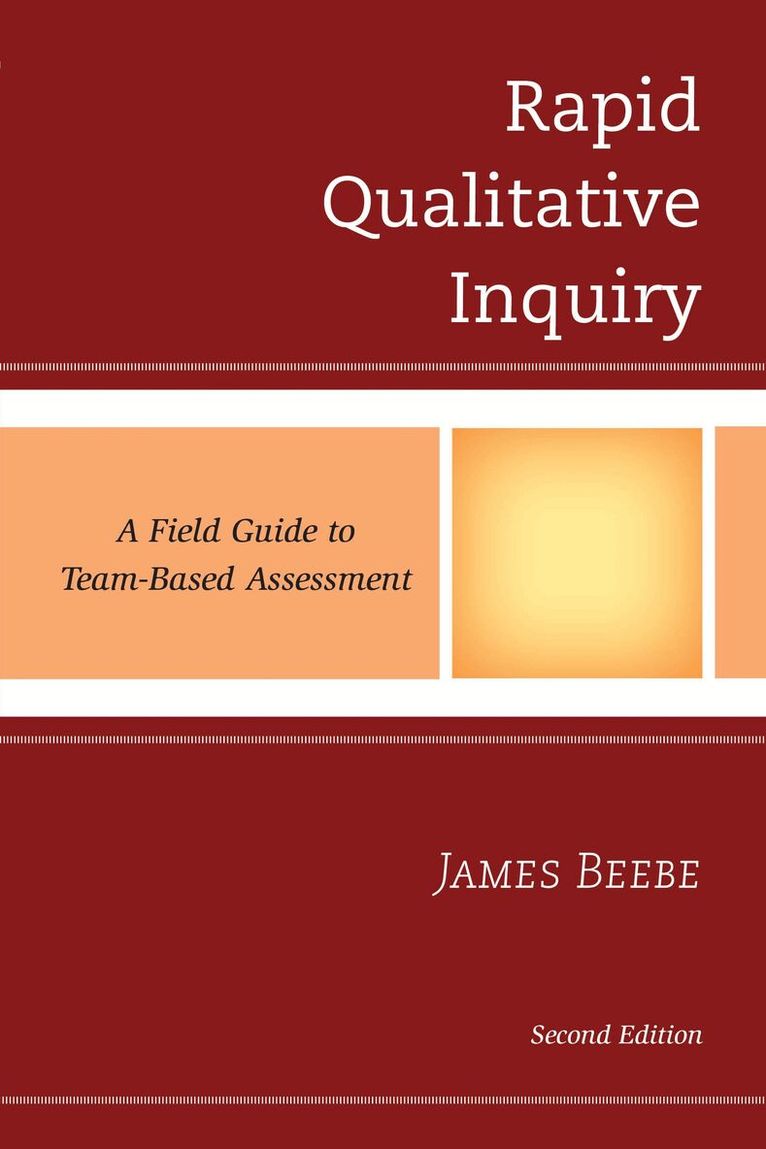
Häftad, Engelska, 2014
683 kr
Skickas inom 10-15 vardagar
Practitioners in need of timely results for program and policy planning—and students looking forrealistic research projects—will find solutions in Rapid Qualitative Inquiry (RQI), a team-based,applied research method designed to quickly develop an insider’s perspective on and preliminaryunderstanding of complicated “on-the-ground” situations.In this accessible field guide to RQI, James Beebe provides an introduction to research thatsubstitutes teamwork for long-term fieldwork; uses iterative data collection, data analysis, andadditional data collection; triangulates data from multiple sources; and applies techniques andconcepts from ethnography and case study research. Extensive examples make clear that “rapid”does not mean “rushed” and that rigorous RQI depends upon flexibility rather than an arbitrarylist of techniques. Throughout, Beebe’s clear prose guides interdisciplinary readers through theprocess, promise, and potential pitfalls of RQI.
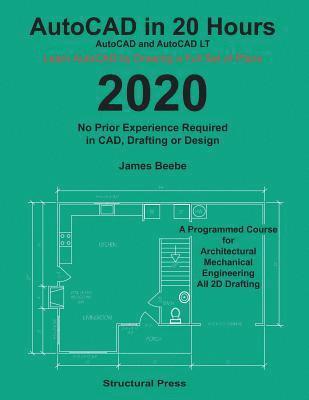
Häftad, Engelska
400 kr
Skickas inom 3-6 vardagar
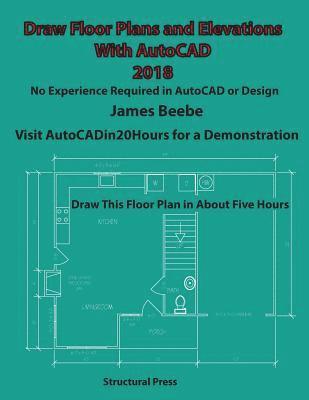
Häftad, Engelska, 2017
193 kr
Skickas inom 3-6 vardagar
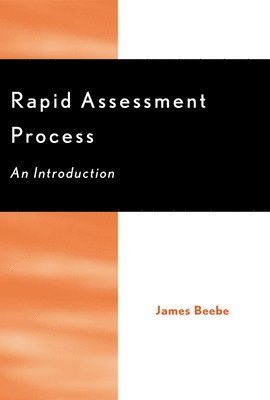
Inbunden, Engelska, 2001
1 815 kr
Tillfälligt slut
A newer edition of this book is available at the following address: https://rowman.com/ISBN/9780759123212Rapid Assessment Process (RAP) has gone under many names but invariably uses the techniques of fieldwork and ethnography in a telescoped manner to provide solid, field-based research findings for use by policymakers and program planners. It uses an emic perspective, a team of researchers, triangulation of research findings, and iterative process to produce high-quality research in a fraction of the time taken by traditional ethnography. Long used for third world projects, RAP is now being used to inform policy in many different settings. This volume is the first introduction to this group of methods, explaining to researchers and to students how to do RAP research well. The author, an international development professional who has been doing RAP studies for over two decades, clearly outlines the process, promise and pitfalls of RAP in this brief volume. Included are many examples of successful RAP studies and clear guidance to readers on how to embark on their own RAP research.