James F Miller - Böcker
Visar alla böcker från författaren James F Miller. Handla med fri frakt och snabb leverans.
9 produkter
9 produkter
114 kr
Skickas inom 5-8 vardagar
172 kr
Skickas inom 5-8 vardagar
259 kr
Skickas inom 5-8 vardagar
Del 4 - Destined, But...
Born Hopeless with All the Answers
Songs for a Dying Generation
Häftad, Engelska, 2025
144 kr
Skickas inom 5-8 vardagar
187 kr
Skickas inom 10-15 vardagar
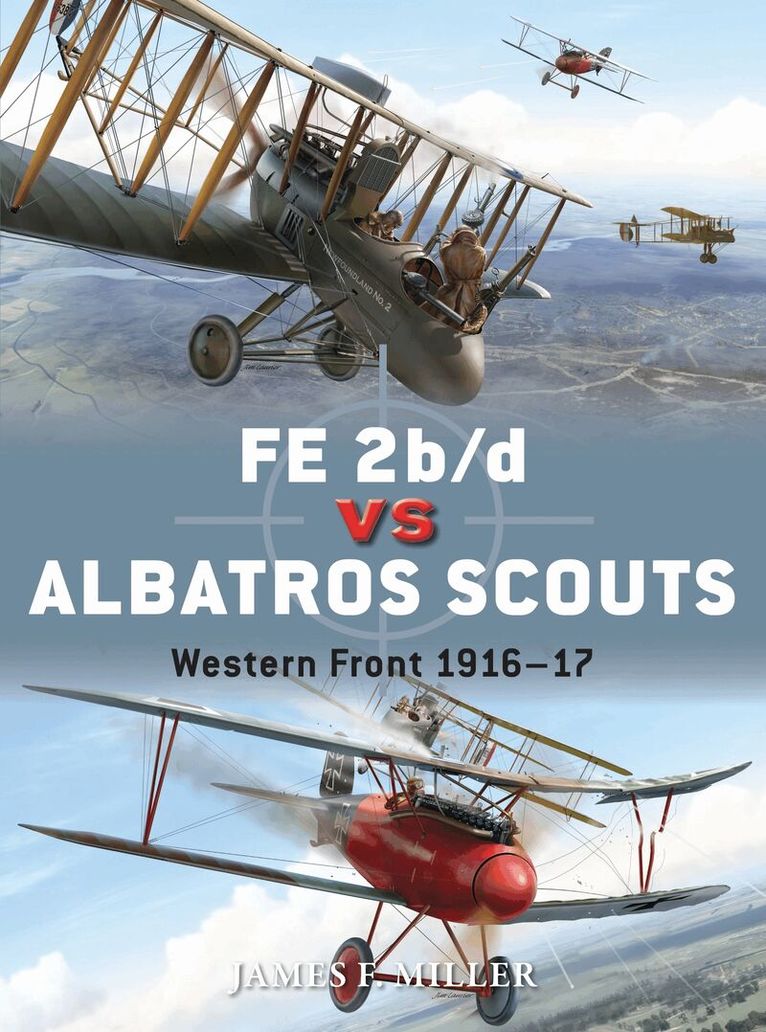
Featuring specially commissioned full-colour artwork, this is the story of the epic confrontation between the FE 2, the British two-seater fighter, and the formidable single-seater Albatros D scouts.In the spring of 1916 the deployment of the RFC’s FE 2 – with its rotary engine ‘pusher’ configuration affording excellent visibility for its pilot and observer, and removing the need for synchronized machine guns – helped wrest aerial dominance from Imperial Germany’s Fokker Eindecker monoplanes, and then contributed to retaining it throughout the Somme battles of that fateful summer.However, by autumn German reorganization saw the birth of the Jagdstaffeln (specialised fighter squadrons) and the arrival of the new Albatros D scout, a sleek inline-engined machine built for speed and twin-gun firepower. Thus, for the remainder of 1916 and well into the next year an epic struggle for aerial superiority raged above the horrors of the Somme and Passchendaele battlefields, pitting the FE 2 against the better-armed and faster Albatros scouts that were focused on attacking and destroying their two-seater opponents.This book analyses these two fighters together and casts new light on the rapid evolution of early aerial warfare. In the end the Germans would regain air superiority, and hold it into the following summer with the employment of their new Jagdgeschwader (larger fighter groupings), but the FE 2 remained a tenacious foe that inflicted many casualties – some of whom were Germany’s best aces (including ‘The Red Baron’).
175 kr
Skickas inom 10-15 vardagar
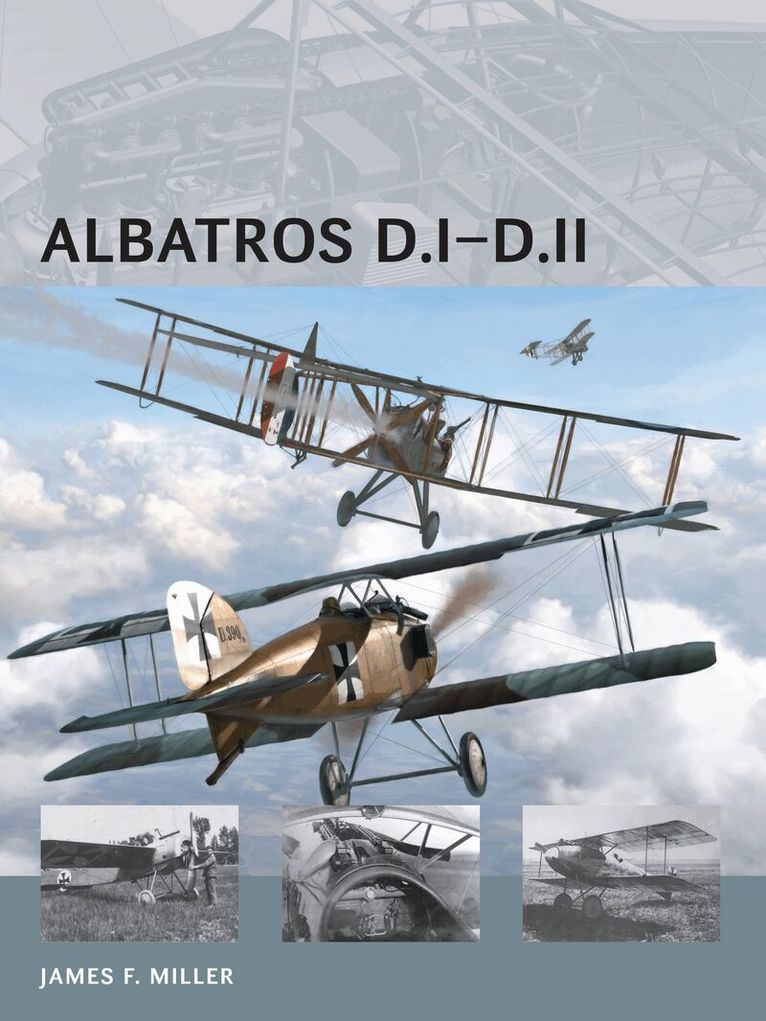
A concise technical history of the German Albatros D.I and D.II type scouts.In 1916 German aerial domination had been lost to the French and British fighters. German fighter pilots requested an aircraft that was more powerful and more heavily armed, and the Albatros design bureau set to work on what was to become an iconic aircraft design. By April 1916, they had developed the Albatros D.I, that featured the usual Albatros semi-monocoque wooden construction with a 160hp Mercedes engine and two forward-firing machine guns.Alongside the development of the D.I, Albatros had also designed and built a second machine that was similar to the D.I – the Albatros D.II. Although there were several external differences between the two aircraft, it is important to note that these machines evolved simultaneously and that the D.II was not the result of post-combat feedback from D.I pilots. With the inclusion of these aircraft into their reorganized air force, Germany was able to regain control of the skies by autumn 1916.This history shows that, along with the later designs they inspired, the Albatros D.I and D.II were instrumental in allowing the Germans to prosecute their domination through ‘Bloody April’ and well into the summer months that followed.
175 kr
Skickas inom 10-15 vardagar
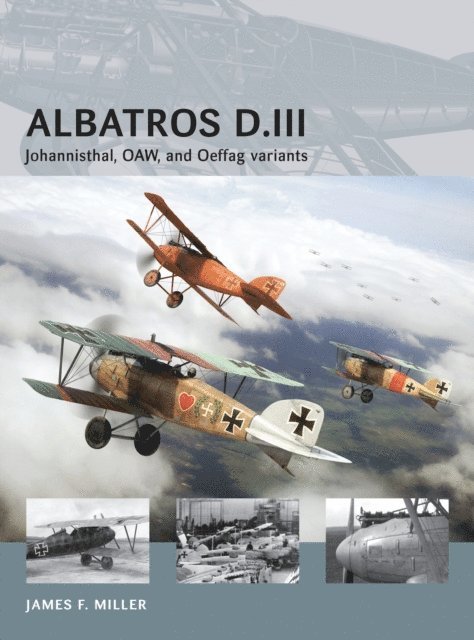
A concise technical history of the German Albatros D.III and D.III(OAW) type scouts.In 1916 German aerial domination, once held sway by rotary-engined Fokker and Pfalz E-type wing-warping monoplanes, had been lost to the more nimble French Nieuports and British DH 2s which not only out-flew the German fighters but were present in greater numbers. Born-from-experience calls from German fighter pilots requested that, rather than compete with the maneuverability of these adversaries, new single-engine machines should be equipped with higher horsepower engines and armed with two rather than the then-standard single machine gun.The Robert Thelen-led Albatros design bureau set to work on what became the Albatros D.I and D.II and by April 1916, they had developed a sleek yet rugged machine that featured the usual Albatros semi-monocoque wooden construction and employed a 160hp Mercedes D.III engine with power enough to equip the aeroplane with two forward-firing machine guns.As this book details, in all, 500 D.IIIs and 840 D.III(OAW)s were produced and saw heavy service throughout 1917.
187 kr
Skickas inom 10-15 vardagar
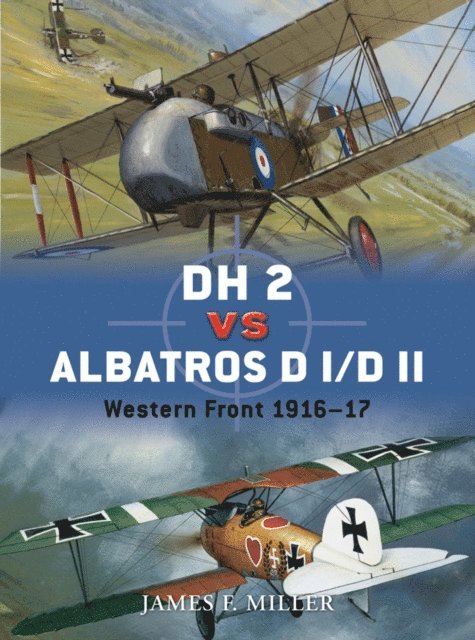
An illustrated account of the DH 2, the most successful 'pusher' fighter of World War I, against the Albatros D II, part of a long family of fighters that in many ways symbolized German aerial might in the conflict.Flown by Victoria Cross recipient Lanoe Hawker and the members of No 24 Sqn, the ungainly yet nimble DH 2 helped the Allies attain air superiority over the Somme in early 1916 and hold it through the summer. With its rotary engine 'pusher' configuration affording excellent visibility and eliminating the need for a synchronized machine gun, the DH 2 was more than a match for anything the Germans could put in the air. That is, until the arrival of the Albatros D II, a sleek inline-engined machine built for speed and with twin-gun firepower.This book dissects the epic struggle in the skies above the Somme in 1916, pitting the manoeuvrable yet under-gunned DH 2s against the less nimble yet better armed and faster Albatros D IIs. In the end the Germans would regain air superiority, three squadron commanders – two of whom were considered pinnacles of their respective air forces – would lose their lives, and an up-and-coming pilot (Manfred von Richthofen) would triumph in a legendary dogfight and attain unimagined heights fighting with tactics learned from a fallen mentor.
113 kr
Skickas inom 5-8 vardagar